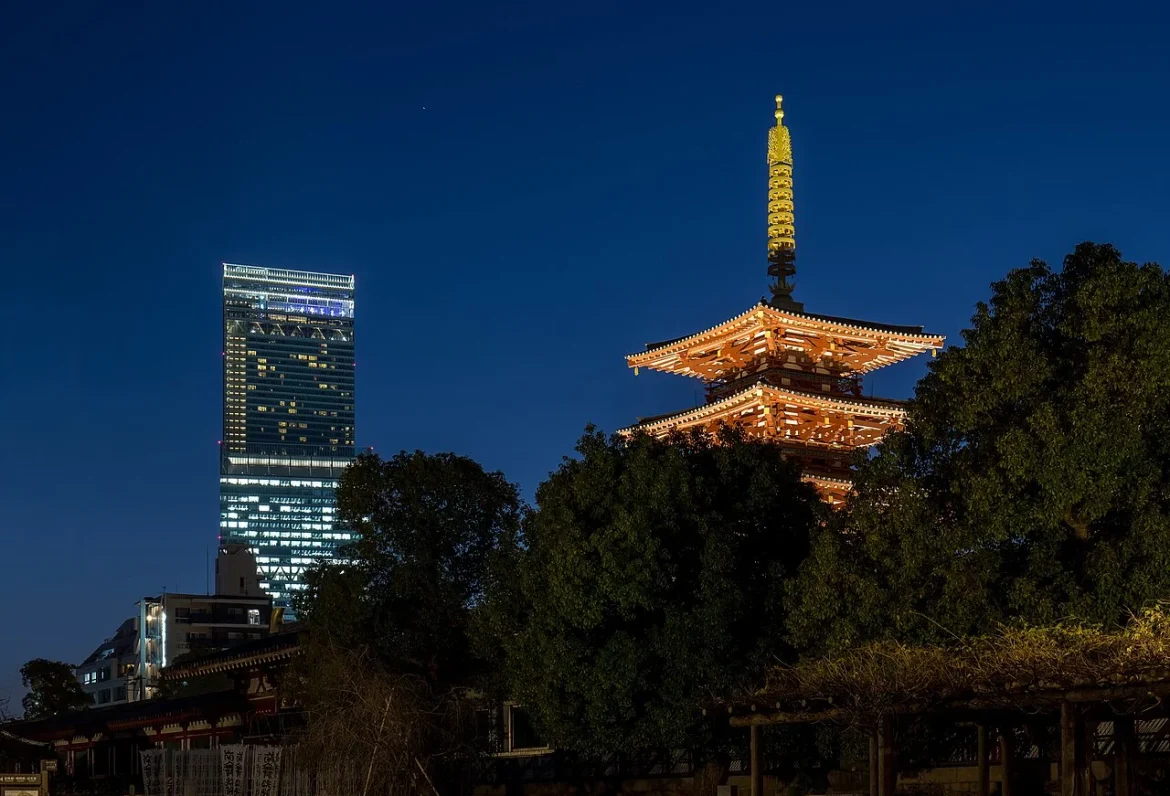
Abeno Harukas 300 Observatory is the highest observation deck in Osaka, occupying floors 58 to 60 of the 300-metre Abeno Harukas skyscraper above Tennoji Station. Its strongest feature is not simply the height: visitors can move between an enclosed glass corridor, an open-roof garden and a café while watching Osaka change from daylight to sunset and neon.
It is worth prioritising if this is your first Osaka skyline experience, you are staying around Tennoji or Namba, or you want an observation deck that is easy to reach without a long outdoor walk. Travellers who have already booked another Osaka observation deck and have only one or two days in the city may not need both.
The most important 2026 update is the revised admission price. Regular admission is now ¥2,200 for visitors aged 15 or older and ¥900 for children aged 6–14, while children aged five or younger enter free. The venue’s online advance ticket costs 10% less when purchased by the previous day.
First-time visitors should also understand the entrance route before arriving. Do not spend time searching for a direct observatory lift on the first floor. Follow signs to the Harukas Shuttle on B1F or 2F, travel to the 16th-floor entrance, and then use the dedicated observatory lift to reach the 60th floor.
Travellers who prefer an English booking interface can compare the selected-date price of the HARUKAS 300 Observatory admission ticket with the venue’s advance and same-day options. The venue’s advance ticket is normally the clearest value choice for a fixed date, while a mobile booking platform may be more convenient when organising several Osaka activities together.
For a broader city plan, use this visit as the sunset anchor in an Osaka travel itinerary rather than treating it as an isolated one-hour stop.

Admission, guided activities and transport are separate products; compare the selected package, date, final price and cancellation terms.

Is Abeno Harukas 300 Observatory Worth Visiting?
| Decision point | Editor’s assessment |
|---|---|
| Is it worth visiting? | Yes for first-time Osaka visitors who want one convenient, weather-resistant skyline experience. |
| Best suited to | Couples, photographers, first-time visitors, families with school-age children and travellers based in southern Osaka. |
| Who may prefer to skip it | Travellers already visiting another observation deck, visitors with no interest in city views, or anyone travelling on a day with completely obscured visibility. |
| Main highlight | Watching the city change from daylight through sunset to the night view from the 60th-floor glass corridor. |
| Main disadvantage | The best sunset period can be crowded, and the view depends heavily on haze, cloud and rain. |
| Recommended duration | About 1 to 1.5 hours; allow 2 hours if staying through sunset, dining or joining an optional activity. |
| Transport difficulty | Low. The building is directly connected to several Tennoji and Osaka-Abenobashi railway stations. |
| Children | Generally suitable, although there is no nursing room inside the observatory. |
| Older travellers | Suitable because the standard route uses lifts and requires little outdoor walking. |
| Wheelchair access | The main floors are served by lifts. The optional helipad tour requires stairs. |
| Overnight stay required? | No. Staying in Tennoji is useful for early Kansai Airport departures or a south-Osaka itinerary, but not necessary solely for the observatory. |
| Best time | Arrive roughly 60–90 minutes before sunset and remain until the city lights appear. |
The observatory deserves space in a half-day itinerary when combined with Tennoji Park, Shitennoji or Shinsekai. It is less compelling as a rushed daytime stop between distant attractions because the transition into sunset and night is what makes the ticket feel worthwhile.
Abeno Harukas 300 Essential Information
| Item | Current information |
|---|---|
| Official name | HARUKAS 300 Observatory |
| Location | Floors 58–60 of Abeno Harukas |
| Address | 1-1-43 Abenosuji, Abeno Ward, Osaka |
| Regular hours | 9:00–22:00 |
| Final admission | 21:30 |
| Regular adult admission | ¥2,200 for visitors aged 15 or older |
| Regular child admission | ¥900 for ages 6–14 |
| Preschool admission | Free for children aged five or younger |
| venue’s online advance ticket | ¥1,980 adult and ¥810 child when purchased by the previous day |
| Recommended duration | 1–1.5 hours, or about 2 hours around sunset |
| Nearest stations | JR and Osaka Metro Tennoji; Kintetsu Osaka-Abenobashi; Hankai Tennoji-ekimae |
| Entrance route | Harukas Shuttle from B1F or 2F to the 16th-floor entrance |
| Standard-ticket re-entry | Not permitted |
| Accessibility | Lifts serve the regular observation floors; accessible toilets and limited wheelchairs are available |
| Large luggage | Not recommended; locker capacity is limited |
Hours and ticket conditions can change for private events, seasonal programmes or operational reasons. Check the selectable date before paying, particularly when planning a late-evening visit.
2026 Ticket Prices and Date-Specific Opening Hours
On 17 October 2026, regular admission operates 09:00–17:00 (last entry 16:00) and 20:30–22:00 (last entry 21:30). The 17:45–20:30 fireworks session requires a separate ticket, marked sold out in the dated notice. A normal ticket therefore cannot be used for the usual continuous sunset plan that day. Read the dated operator notice before booking.
HARUKAS 300 is currently operating with regular hours of 9:00–22:00 and final entry at 21:30. The observation floors remain open, although temporary restrictions can apply during special events or private operations.
The major current change is the ticket-price revision introduced on July 23, 2026. Older travel pages may still display ¥1,500 or ¥2,000 adult admission. Those figures should not be used when preparing the current trip budget.
The observatory also runs limited seasonal programmes on the 58th-floor Sky Garden and other floors. Current 2026 programmes may include collaboration exhibitions, projection events, dining plans or character activities. Some areas can feel busier during these events, and special tickets may require counter exchange rather than direct QR entry.
Tickets, Reservations and Osaka Passes
The age bands have school-stage exceptions: a six-year-old preschool child enters free, and a 15-year-old junior-high student pays the child rate. Check the ticket age bands and conditions. Advance prices of ¥1,980 adult/¥810 child require purchase by the previous day; they are not a universal reseller quote.
| Option | What it offers | Best suited to | Main limitation |
|---|---|---|---|
| venue’s online advance ticket | 10% below regular admission and direct QR entry | Visitors with a fixed date who can buy by the previous day | Less flexible if the weather forecast changes |
| venue’s online same-day ticket | Regular-price mobile ticket with direct QR entry | Last-minute visitors who want to bypass the counter | No price saving |
| On-site standard ticket | Purchased at the 16th-floor counter | Visitors who want to decide after checking the weather | Possible queue or numbered-entry control during busy periods |
| Klook ticket | English interface and mobile booking | Travellers consolidating several Osaka reservations | Price and package conditions vary by selected date |
| One-day ticket | Unlimited same-day re-entry | Visitors who want both a daytime and evening visit with a long break between | Sold at the on-site counter rather than as the normal advance ticket |
| Osaka Amazing Pass discount | 10% reduction from regular admission | Pass holders already visiting several included Osaka attractions | HARUKAS 300 admission is not free with the pass |
Best Choice for Most Visitors
Buy the venue’s online advance ticket if the date is fixed, the forecast is acceptable and saving 10% matters more than last-minute flexibility. It is the simplest choice for a normal one-time visit.
Choose an on-site or same-day mobile ticket when visibility is uncertain. Paying slightly more after checking the cloud and rain forecast can be better than locking in a cheaper sunset ticket for a day when Osaka is hidden.
When Klook Is Useful
Klook is useful when its selected-date package is convenient, when you prefer to manage several Osaka tickets in one account, or when the displayed package provides a practical booking advantage. Compare the final price and voucher conditions rather than assuming it is automatically cheaper than the venue’s advance rate.
Check HARUKAS 300 Ticket Availability
Does the Osaka Amazing Pass Include HARUKAS 300?
No. The Osaka Amazing Pass does not currently include free observatory admission. It provides a 10% discount on regular admission under the current benefit conditions.
This means the pass is worthwhile only when the rest of your itinerary already uses enough included attractions and transport. It should not be bought solely to visit HARUKAS 300. Travellers considering it can review the Osaka Amazing Pass options alongside their complete Osaka schedule.
Can You Re-enter?
Advance-ticket holders can ask at the 16th-floor counter about paying the difference for a same-day one-day ticket, subject to availability and special-event restrictions. Standard tickets are not refundable or reissued when lost; check separate seller-specific conditions for any reseller package.
Regular advance, same-day and counter tickets do not permit re-entry. Visitors who want to see the daytime view, leave for several hours and return after dark should ask about the one-day re-entry ticket at the counter before entering.
Best Time to Visit Abeno Harukas 300
All normal-hours and sunset plans below exclude 17 October 2026. Ordinary visitors must leave by 17:00 that day; ordinary admission resumes at 20:30. The intervening fireworks session requires a separate sold-out ticket.
| Time | Advantages | Disadvantages | Best for |
|---|---|---|---|
| Opening time | Usually calmer, clearer glass and easier photography | No sunset or night view | Families, quiet visits and daytime city orientation |
| Late morning | Easy to combine with lunch in Abeno Harukas | Midday light can look flat or hazy | Short itineraries |
| Mid-afternoon | Often easier to enter than during sunset | May require a long wait for darkness | Visitors using a one-day re-entry ticket |
| 60–90 minutes before sunset | Daylight, golden hour, sunset and night view with one entry | Most popular period and greater reflection near the glass | First-time visitors and couples |
| After darkness | Strong city lights and potentially shorter visit | No daylight orientation or visible distant landscape | Night-view specialists and late arrivals |
| Near final admission | Potentially quieter | Limited time and risk of missing café orders or optional activities | Visitors who only need a brief night view |
For a first visit, arrive roughly 60–90 minutes before the published sunset time. Go first to the western side of the 60th floor for the changing sky, then move to the 58th-floor Sky Garden while the city lights intensify.
Clear winter days often provide the longest-distance visibility, but sunset is earlier. Summer provides later sunsets and more itinerary time before entering, although humidity and haze can reduce distant views. The 60th floor is enclosed, while the 58th-floor garden can feel hot, cold or windy depending on the season.
The Correct First-Time Entrance Route
- Arrive at JR Tennoji, Osaka Metro Tennoji or Kintetsu Osaka-Abenobashi Station.
- Follow signs for Abeno Harukas and the Kintetsu department store.
- Reach the Harukas Shuttle boarding area on B1F or 2F.
- Take the Harukas Shuttle to the 16th floor.
- Use the ticket counter if necessary, or proceed to the gate with an eligible QR ticket.
- Take the dedicated observatory lift from the 16th floor to the 60th floor.
- Explore the 60th-floor Sky Corridor first.
- Descend to the 58th-floor Sky Garden and café.
- Exit through the 59th-floor shop and departure area.
Which Station Gate Should You Use?
- JR Tennoji: use the Central Gate and follow signs toward Abeno Harukas and Kintetsu.
- Osaka Metro Midosuji Line: the West Gate is convenient for Abeno Harukas.
- Osaka Metro Tanimachi Line: use the South Gate side.
- Kintetsu Osaka-Abenobashi: the West Gate provides convenient access.
- Hankai Tramway: alight at Tennoji-ekimae and follow the Abeno Harukas signs.
The station complex is large, but the route is indoors and well signposted. The common mistake is reaching street level too early and circling the tower from outside.
Main Highlights Inside HARUKAS 300
60th-Floor Sky Corridor
The Sky Corridor is the main observation level. Floor-to-ceiling glass surrounds the tower, creating a 360-degree view over central Osaka, Osaka Bay, the Ikoma mountain area and, in very clear weather, more distant parts of Kansai.
The enclosed floor is the most reliable part of the experience during rain, summer heat or winter cold. It is also where visitors should begin, because the dedicated lift arrives directly on this level.
Glass-Floor Sections
Sections of glass flooring create a direct view down the side of the building. They are small compared with the overall deck but provide one of the clearest physical reminders of the tower’s height.
58th-Floor Sky Garden
The Sky Garden is an open-roof atrium with wooden decking and seating. It feels less like a conventional observation corridor and more like an elevated public square.
This floor is particularly enjoyable after sunset, when visitors can sit beneath the open sky while remaining surrounded by the tower structure. Weather can affect comfort even when the enclosed 60th floor remains pleasant.
Sky Garden 300 Café
The café provides drinks, snacks and selected meals on the 58th floor. Food and drinks purchased there may be consumed on the 58th floor, but outside food and consumption on floors 59 and 60 are not permitted.
59th-Floor Shop
The exit floor contains the observatory shop, including Abeno Harukas and Abeno Bear merchandise. Visit it after completing the observation floors because it forms part of the normal exit sequence.
Optional Helipad Tour
The helipad tour costs ¥1,500 in addition to observation admission, for ages 4 and above. Register after entering at the 60th-floor information counter on the same day; spaces are first come, first served, with no pre-entry reservation. Allow about 25 minutes overall, including about 10 minutes on the heliport. Access is stairs-only: children aged 3 and under and visitors unable to climb the stairs unaided cannot participate. Weather can cancel the tour without notice.
The rooftop helipad tour is a separate paid activity rather than part of standard admission. The programme takes approximately 25 minutes, including around 10 minutes on the helipad, and may be cancelled because of wind, rain or other conditions.
Registration is normally handled on the 60th floor on a first-come basis. Participants must be capable of using stairs independently, and children aged three or younger cannot join. Anyone with limited mobility should treat the regular 58th–60th-floor observatory as the complete experience rather than planning around the rooftop.
Walking, Luggage and Physical Difficulty
The standard visit is physically easy compared with many observation decks. The building connects directly to the station complex, the route is mainly indoors, and lifts cover the journey from the lower floors to the entrance and observation levels.
There is no long uphill approach, exposed staircase or outdoor queue required for the normal route. Visitors who can manage a large railway station should generally find the observatory straightforward.
Large luggage is the main practical problem. Coin lockers are available in limited numbers, and they may only be used during the observatory visit. Travellers arriving from Kansai Airport or checking out of a hotel should leave suitcases at the hotel or use larger lockers elsewhere in Tennoji Station.
The optional helipad tour is different. It includes stairs and requires each participant to climb without being carried or physically assisted through the stair section.
Families, Older Travellers and Accessibility
Families with Children
The observatory is suitable for children who enjoy trains, city lights or high viewpoints. The enclosed 60th floor reduces weather concerns, and children aged five or younger enter free under the standard age rules.
Strollers can be used on the main route, but the observatory does not provide loan strollers. There is also no nursing room inside HARUKAS 300, so families with babies should use suitable facilities elsewhere in the Abeno Harukas complex before entering.
The easiest family plan is Tennoji Zoo or Tenshiba during the day, an early meal, and HARUKAS 300 before sunset. Avoid stretching the visit too late if younger children are likely to become tired during the busiest period.
Older Travellers
The direct station connection and lift-based route make this one of Osaka’s easier major viewpoints for older travellers. Seating is available on the 58th floor, and the café creates a natural rest point.
Arriving before the sunset rush is more comfortable than joining the densest crowd immediately before the sun disappears. A morning visit is the calmest alternative when distant views matter more than city lights.
Travellers with Limited Mobility
The regular observation floors are served by lifts, and accessible toilets are available. A limited number of wheelchairs can be borrowed from the 16th floor.
The main 360-degree view remains worthwhile without joining the helipad tour. The rooftop programme should be skipped by anyone unable to use stairs independently.
Travellers using disability documentation issued outside Japan should not assume that the local discounted admission rate will apply. Confirm eligibility before relying on the discount in the trip budget.
How to Get to Abeno Harukas 300
| Starting point | Recommended route | Approximate journey | Best feature |
|---|---|---|---|
| Osaka or Umeda | JR Osaka Loop Line to Tennoji, or Osaka Metro Midosuji Line to Tennoji | About 15–20 minutes, depending on service and walking | Direct journey without a complicated transfer |
| Namba | Osaka Metro Midosuji Line directly to Tennoji | Roughly 7–10 minutes on the train | Fastest route from central southern Osaka |
| Shin-Osaka | Osaka Metro Midosuji Line directly to Tennoji | Roughly 25 minutes | No transfer with luggage |
| Kansai Airport | JR Haruka Airport Express directly to Tennoji | Many services take approximately 35–40 minutes | Direct and luggage-friendly |
| Nara | JR Yamatoji Line from JR Nara to Tennoji, or Kintetsu Nara Line to Tsuruhashi and transfer to JR for Tennoji | Varies by departure station and train | Convenient final stop for a Nara-to-Osaka evening |
| Kyoto | JR to Osaka or Shin-Osaka, then continue to Tennoji | Usually around 50–70 minutes in total | Possible as an evening extension, though not the most relaxed plan |
From Kansai Airport
The linked discounted JR HARUKA product requires a non-Japanese passport and Temporary Visitor entry status. It offers electronic and physical-ticket variants, so check the selected ticket’s redemption, seat-reservation and validity instructions. HARUKA the airport train and HARUKAS 300 the observatory are separate products.
The JR Haruka Airport Express is the easiest public-transport option when travelling directly from Kansai Airport to Tennoji. It avoids changing trains with suitcases and places you inside the same wider station complex as Abeno Harukas.
A JR Haruka Airport Express ticket to Tennoji can be useful for travellers who prefer to organise the airport journey before arrival. Check the chosen station, direction and redemption instructions carefully.
Check JR Haruka Airport Train Tickets
Do not take large luggage into the observatory simply because the train arrives directly below the building. Leave it at the hotel or in an appropriately sized station locker first.
Using an Osaka Metro Pass
A metro pass can make sense when the same day includes Tennoji, Namba, Shinsaibashi, Umeda or Nagai. It covers transport rather than HARUKAS 300 admission.
Compare the cost of individual rides with the Osaka Metro Pass only after finalising the route. A pass is unnecessary when travelling to Tennoji once and returning by the same inexpensive route.
Should You Drive?
Driving is rarely the best choice. Tennoji is served by JR, Osaka Metro, Kintetsu and the Hankai Tramway, while central Osaka traffic and parking add unnecessary complexity.
A car becomes reasonable only when HARUKAS 300 is the final stop after a wider self-drive itinerary outside central Osaka. Even then, return the rental car before beginning a nightlife-focused Osaka stay when possible.
Abeno Harukas 300 Half-Day Itinerary
This sunset itinerary is for normal operating dates. On 17 October 2026, regular visitors must leave by 17:00 and ordinary admission resumes only at 20:30; follow the dated notice above instead of staying through sunset.
Three-Hour Sunset Plan
- Arrive at Tennoji about two and a half hours before sunset.
- Walk through Tenshiba and Tennoji Park for approximately 30–45 minutes.
- Return to Abeno Harukas and reach the 16th floor about 75 minutes before sunset.
- Enter HARUKAS 300 and begin on the 60th floor.
- Watch the sunset, then descend to the 58th-floor Sky Garden.
- Finish with dinner in Abeno Harukas Dining or the surrounding Tennoji district.
This is the best route for travellers who want the observatory to be the focus without losing an entire day.
Full-Day Tennoji and Shinsekai Itinerary
All normal-hours and sunset plans below exclude 17 October 2026. Ordinary visitors must leave by 17:00 that day; ordinary admission resumes at 20:30. The intervening fireworks session requires a separate sold-out ticket.
- Begin at Shitennoji in the morning.
- Continue to Tennoji Park, the zoo or the Osaka City Museum of Fine Arts area.
- Have lunch around Tenshiba or Tennoji Station.
- Walk toward Shinsekai and explore the streets surrounding Tsutenkaku.
- Return to Abeno Harukas around 60–90 minutes before sunset.
- Stay through the night view and finish with dinner in Tennoji.
Shitennoji, Tennoji and Shinsekai are close enough to create a coherent day. Adding Osaka Castle, Umeda and Universal Studios Japan to the same itinerary would turn it into a transport exercise rather than an enjoyable visit.
Travellers planning a second day outside the city can continue with the Osaka to Nara transportation guide. Tennoji is one of the more practical Osaka bases for that route.
Tsutenkaku Combination
Tsutenkaku and HARUKAS 300 offer contrasting views: Tsutenkaku provides retro Shinsekai atmosphere, while HARUKAS 300 delivers the broader modern skyline. Visit Tsutenkaku earlier and save HARUKAS 300 for sunset.
Advance booking is most useful when your Shinsekai visit falls on a busy weekend or holiday. Compare the selected package for the Tsutenkaku Tower admission ticket before finalising the timing.
Check Tsutenkaku Tower Ticket Options
Family Itinerary Around Tennoji
All normal-hours and sunset plans below exclude 17 October 2026. Ordinary visitors must leave by 17:00 that day; ordinary admission resumes at 20:30. The intervening fireworks session requires a separate sold-out ticket.
- Visit Tennoji Zoo during the earlier part of the day.
- Take a break or early meal around Tenshiba.
- Enter HARUKAS 300 before the densest sunset crowd.
- Leave after the first city lights appear rather than keeping young children out until closing.
This route reduces transport and gives children two very different experiences without crossing Osaka repeatedly. Families who prefer to reserve in advance can check the current Tennoji Zoo ticket options.
Check Tennoji Zoo Ticket Options
Nearby Attractions to Combine with HARUKAS 300
| Attraction | Approximate position | Best planning advice |
|---|---|---|
| Tenshiba and Tennoji Park | Immediately west of Tennoji Station | Use as an easy pre-sunset walk without buying another ticket. |
| Tennoji Zoo | Within the wider Tennoji Park area | Best daytime family combination; do not leave the zoo until late afternoon if sunset timing matters. |
| Shitennoji | North of Tennoji Station | Visit in the morning, then return to Tennoji for lunch and the observatory. |
| Shinsekai and Tsutenkaku | Northwest of Abeno Harukas | Explore during the afternoon and return to HARUKAS 300 for sunset. |
| teamLab Botanical Garden Osaka | At Nagai Botanical Garden, reached along the Midosuji Line | Use as a separate evening extension when sunset at HARUKAS 300 is not the priority. |
HARUKAS 300 and teamLab Botanical Garden Osaka
Both are evening-oriented experiences, so combining them requires discipline. The smoother order is an early HARUKAS 300 visit followed by the Midosuji Line to Nagai for teamLab after dark.
Trying to watch the full sunset and night transition at HARUKAS 300 before travelling to Nagai may leave too little time for a relaxed garden visit. Check the admission session for teamLab Botanical Garden Osaka before committing to both.
Check teamLab Botanical Garden Osaka Tickets
Seasonal and Weather Planning
Clear Winter Days
Winter often provides stronger long-distance visibility and earlier sunsets. This makes it easier to see daylight and darkness without staying out late, but the open-roof 58th floor can feel cold and windy.
Summer
The enclosed 60th floor is air-conditioned, making HARUKAS 300 a useful break from Osaka’s heat. However, humidity and haze can reduce distant views, while the 58th-floor garden may remain warm after sunset.
Rain and Cloud
The observatory remains a practical rainy-day attraction because the main viewing corridor is indoors. The problem is visibility rather than comfort: low cloud can remove almost the entire skyline.
When the visit is flexible, wait until the same day before buying. When the date is fixed, treat the café, architecture and indoor atmosphere as part of the experience rather than expecting a clear panoramic view.
Sunset Reflections
Internal lights and bright clothing can reflect in the glass after sunset. Wear darker clothing, place the camera close to the glass without touching it, and avoid standing directly beneath bright fixtures.
Tripods may be used under normal conditions, but staff can restrict them during busy periods. Never block the walking route or occupy a prime window position for an extended period.
Food and Dining
Sky Garden 300 on the 58th floor is the only place within the observatory where visitors may consume food and drinks, and items must be purchased from the café. Regular café hours are shorter than the observatory’s opening hours, with food orders ending before final admission.
For a full meal, eat before entering or dine after leaving. Abeno Harukas Dining on the restaurant floors is the most convenient option, while Shinsekai is better for a casual Osaka-style evening involving kushikatsu and retro streets.
The smoothest sunset plan is a light snack before entry and dinner afterward. Booking a restaurant during the exact sunset window wastes the strongest part of the observatory visit.
Where to Stay
An overnight stay is not necessary solely for HARUKAS 300. Tennoji is nevertheless a useful accommodation base for travellers using Kansai Airport, visiting Nara, exploring southern Osaka or preferring a major transport hub that is calmer than Namba.
Stay in Tennoji when an early airport train, a Nara day trip or the observatory is central to the itinerary. Stay in Namba when food, nightlife and Shinsaibashi are higher priorities. Choose Umeda when most planned attractions are in northern Osaka or when travelling frequently toward Kyoto.
Travellers continuing north can use the Osaka to Kyoto transportation guide and Kyoto travel guide to decide whether Osaka or Kyoto should be the longer base.
Families planning Universal Studios Japan should usually give the park its own day rather than combining it with Tennoji. Review the Osaka to Universal Studios Japan transportation guide before selecting a hotel area.
First-Time Mistakes to Avoid
1. Budgeting with an Old Ticket Price
Older guides may still show ¥1,500 or ¥2,000. Use the current ¥2,200 regular adult price and compare it with the discounted venue’s advance option.
2. Looking for the Observatory Lift on the First Floor
The normal route begins from B1F or 2F. Follow signs for the Harukas Shuttle rather than repeatedly changing lifts on street level.
3. Assuming the Osaka Amazing Pass Includes Free Entry
The current benefit is a 10% discount, not complimentary admission.
4. Entering Too Late for Sunset
Arriving at the published sunset time is too late. Allow time for the station, shuttle, 16th-floor gate and lift.
5. Bringing a Large Suitcase
Locker capacity is limited. Store luggage elsewhere before entering.
6. Expecting Re-entry with a Standard Ticket
Normal tickets allow one entry. Ask about the one-day ticket before passing through the gate if you intend to leave and return.
7. Booking a Fixed Sunset Ticket Without Checking Weather
A discounted advance ticket saves money, but a flexible same-day decision can be more valuable during unstable weather.
8. Assuming the Helipad Is Included
The rooftop tour costs extra, has limited capacity, depends on weather and requires stairs.
9. Planning Dinner During the Best Viewing Period
Use the sunset period for the view and eat afterward.
10. Trying to Combine Every Osaka Viewpoint
One carefully timed skyline experience is usually more satisfying than rushing between multiple towers on the same day.
11. Expecting a Nursing Room Inside the Observatory
Families with babies should use suitable facilities in the wider building before entering.
12. Eating on Floors 59 or 60
Food and drinks are restricted to purchases from Sky Garden 300 and consumption on the 58th floor.
For other trip options, browse our Japan travel deals collection and check the dates and conditions of each package.
Abeno Harukas 300 FAQ
How much is Abeno Harukas 300 admission in 2026?
Regular admission is ¥2,200 for visitors aged 15 or older and ¥900 for children aged 6–14.
Do young children enter free?
Yes. Children aged five or younger enter free. A six-year-old who has not yet begun primary school is also treated as a preschool child.
Is the venue’s advance ticket cheaper?
Yes. The venue’s online advance ticket is currently 10% below regular admission and must normally be purchased by the previous day.
Do I need to reserve in advance?
Not on most ordinary dates. Advance purchase is useful around weekends, holidays and sunset, but an on-site ticket preserves weather flexibility.
Can I buy a same-day mobile ticket?
Yes. The venue’s same-day web ticket uses a QR code but costs the regular same-day price.
Is a Klook ticket available?
Yes. Check the selected date, final price, voucher instructions and package conditions before purchasing.
Does the Osaka Amazing Pass include admission?
No. It currently provides a 10% admission discount rather than free entry.
Can I re-enter after leaving?
Not with a standard ticket. Ask about the separately sold one-day re-entry ticket before entering.
What are the opening hours?
17 October 2026 is an exception: regular sessions run 09:00–17:00, last entry 16:00, and 20:30–22:00, last entry 21:30. The separate fireworks session is not included in an ordinary ticket.
Regular hours are 9:00–22:00, with final entry at 21:30. Special events may affect operations.
How long should I spend there?
Allow 1–1.5 hours for a normal visit and about 2 hours when staying from daylight through sunset and night.
What is the best time to visit?
The usual sunset advice does not apply to ordinary tickets on 17 October 2026 because of the separate fireworks session and afternoon closure.
Arrive approximately 60–90 minutes before sunset for the most complete experience.
Which station is closest?
JR and Osaka Metro Tennoji stations and Kintetsu Osaka-Abenobashi Station connect directly to the building.
Where is the entrance?
Take the Harukas Shuttle from B1F or 2F to the 16th-floor entrance gate.
Is it easy to reach from Kansai Airport?
Yes. The JR Haruka Airport Express provides a direct service from Kansai Airport to Tennoji on many departures.
Can I bring a stroller?
Strollers can use the standard lift route, but loan strollers are not provided inside the observatory.
Is there a nursing room?
No. Use the family facilities elsewhere in the Abeno Harukas complex before entering.
Is it wheelchair accessible?
The main observation floors are served by lifts, and accessible toilets are available. The optional helipad tour requires stairs.
Can I borrow a wheelchair?
A limited number are available from the 16th floor, subject to availability.
Can I bring luggage?
Small bags are manageable, but large suitcases should be stored elsewhere because locker capacity is limited.
Is it worth visiting in the rain?
The indoor deck remains comfortable, but low cloud may hide the view. Buy on the same day when weather flexibility matters.
Is the helipad tour included?
No. It is a separate paid, first-come activity and can be cancelled because of weather.
Are tripods allowed?
They are generally permitted but may be restricted during crowded periods. Do not block other visitors.
Can I eat inside?
Only food and drinks purchased from Sky Garden 300 may be consumed, and only on the 58th floor.
Do I need to stay overnight in Tennoji?
No. Stay there when it improves airport, Nara or southern Osaka transport rather than solely for the observatory.
Final Recommendation
Abeno Harukas 300 is worth visiting when you want one polished, convenient Osaka skyline experience. Its advantage over many viewpoints is the combination of a fully enclosed 60th-floor corridor, an open-roof 58th-floor garden and direct access from one of Osaka’s largest transport hubs.
The most rewarding approach is to arrive 60–90 minutes before sunset and remain until the city lights appear. This produces three different views with one entry and gives the ticket more value than a brief midday visit.
Use the venue’s online advance ticket when the date and forecast are secure. Choose a same-day or on-site ticket when weather flexibility is more important. Klook is a useful alternative when its selected package, interface or combined trip management better suits your plans.
The current ¥2,200 adult admission, no-re-entry rule and B1F/2F entrance route are the three details most likely to conflict with older online guides. Plan around the current information rather than screenshots or articles published before the latest revision.
For a half day, combine Tenshiba, sunset at HARUKAS 300 and dinner in Tennoji. For a full day, add Shitennoji, Tennoji Zoo or Shinsekai, but avoid pulling in distant northern Osaka attractions.
Families and older travellers should find the standard route manageable. The main cautions are the lack of a nursing room, limited luggage storage and the stair requirement for the optional helipad tour.
For most first-time visitors, the smoothest decision is simple: choose a reasonably clear day, reserve only after considering the weather, arrive early enough for sunset and allow the skyline to change rather than rushing back to the station.