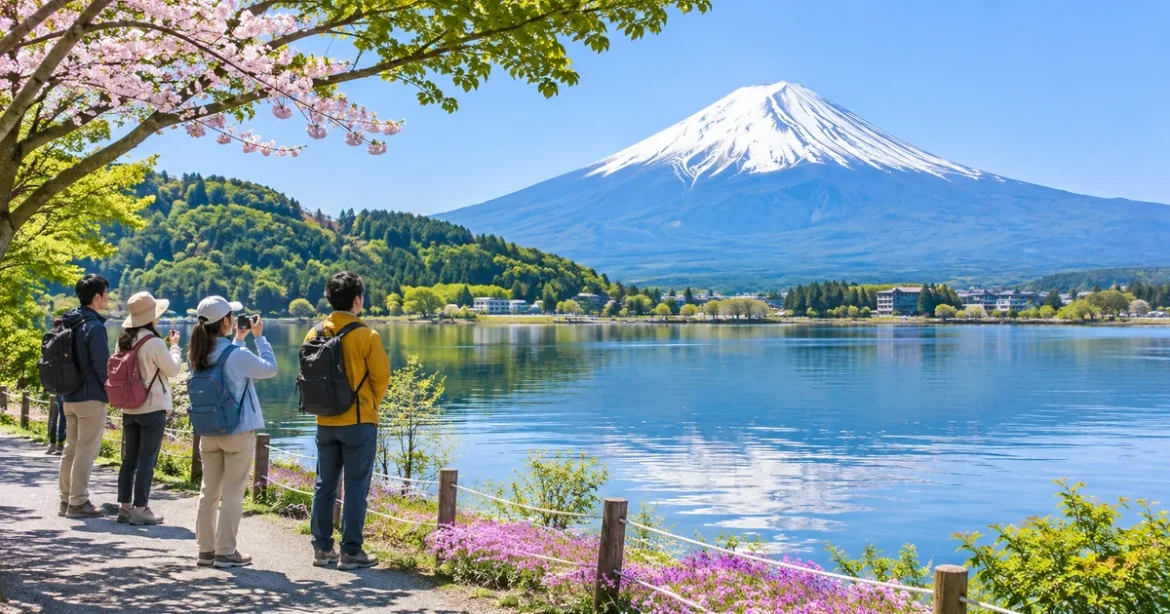
Mount Fuji day tours from Tokyo may look similar on a booking page, but Kawaguchiko, Hakone and the Fuji Subaru Line 5th Station provide three very different days. Choosing the tour with the longest attraction list is rarely the best strategy.
For most first-time visitors whose main goal is to see and photograph Mount Fuji, a Kawaguchiko-focused tour is the strongest overall choice. The northern side of the mountain offers the classic lake, village and pagoda compositions that many travellers expect when they imagine a Mount Fuji day trip.
A Fuji and Hakone loop is better when variety matters more than spending a long time at one viewpoint. It can combine the mountain, Owakudani, the Hakone Ropeway and Lake Ashi, but it is also the longest, most operationally complicated option. Wind, fog, traffic or maintenance can affect several parts of the itinerary.
A 5th Station tour brings you physically closer to Mount Fuji, usually to an elevation of about 2,300 metres on the Yamanashi side. However, being on the mountain does not mean you will see its full shape. Access can change because of snow, wind, road conditions and seasonal traffic controls.
Our recommendation for 2026 is to decide what would make the day successful even if Mount Fuji remains behind cloud. Choose Kawaguchiko for iconic scenery, Hakone for a varied sightseeing loop, the 5th Station for elevation and proximity, or a private tour when your group needs a slower and more adaptable pace. Before booking, also plan your wider stay with our Tokyo travel guide.

Best Mount Fuji Day Tours from Tokyo 2026: Quick Verdict
The best tour depends on whether your priority is the view of Mount Fuji, the experience of being on Mount Fuji, or the number of different landscapes included in the day.
| Tour style | Best for | Main strength | Main compromise | Our verdict |
|---|---|---|---|---|
| Kawaguchiko-focused tour | First visits, photographers and travellers who primarily want Mount Fuji views | Classic full-mountain compositions from the Fuji Five Lakes area | Photo stops can feel repetitive if the mountain is hidden | Best overall choice for most first-time visitors |
| Fuji and Hakone loop | Travellers who want scenery, volcanic landscapes, a ropeway and a cruise | The day still contains several experiences if Fuji visibility is poor | Long itinerary with several weather-sensitive components | Best for variety rather than unhurried Fuji photography |
| Mount Fuji 5th Station tour | Visitors who want to stand high on Mount Fuji and experience the mountain environment | Closest standard sightseeing access to the upper mountain | Seasonal access risk and limited views of the complete cone | Best as an experience, not necessarily as the best viewpoint |
| Private Kawaguchiko or Fuji tour | Families, elderly travellers, small groups and visitors needing flexibility | Adjustable pace, hotel pickup and fewer compromises | Higher total price | Best comfort-focused option when the budget allows |
Choose Kawaguchiko when you would be disappointed to return without seeing the familiar lake-and-mountain scenery.
Choose Hakone when your group wants a complete sightseeing day and can accept that the Fuji view may be distant, brief or absent.
Choose the 5th Station when reaching a high point on the mountain is more important than photographing the whole mountain from below.
Choose a private tour when your group includes a stroller, an elderly relative, a slow walker or several people who want different things from the day.
Is a Mount Fuji Day Tour from Tokyo Worth It?
A Mount Fuji day tour is worth booking when you have only one available day, do not want to coordinate several rural bus connections, and are comfortable accepting that no tour can guarantee an unobstructed mountain view.
The organised-tour advantage is logistical rather than magical. A coach can connect distant places such as Chureito Pagoda, Oshino Hakkai, Lake Kawaguchiko and the 5th Station more efficiently than most first-time visitors could manage independently. A guide also handles the day’s sequence when traffic or road access changes.
The disadvantage is loss of control. You may receive only 40 to 60 minutes at a major stop, wait for other passengers, eat at a predetermined venue and return to Tokyo later than planned. A crowded coach tour is not the same experience as spending a night beside Lake Kawaguchiko and deciding where to go after checking the morning weather.
| Decision factor | What to expect |
|---|---|
| Is it worth booking? | Yes for a time-limited first visit; less compelling for travellers who can stay overnight near Fuji |
| Typical duration | About 10 to 12 hours, with longer days possible when traffic is heavy |
| Transport difficulty | Low after boarding, but finding the correct Tokyo meeting point can be stressful |
| Main attraction | Efficient access to several viewpoints or experiences in one day |
| Main challenge | Weather uncertainty, short stop times and possible return delays |
| Family suitability | Good on a simple route; weaker on tours with many transfers or long shopping stops |
| Elderly suitability | Depends on walking, stairs, altitude, boarding frequency and overall duration |
| Overnight stay needed? | No, but one night at Kawaguchiko offers more weather flexibility |
| Best general timing | Depart early and avoid placing a fixed evening booking immediately after the tour |
A tour may not be worthwhile when Mount Fuji is the only reason you are travelling and you can move your plans to another day. In that situation, independent travel using our Tokyo to Kawaguchiko transportation guide gives you more control over the date and length of stay.
Choose DIY transport or a tour around your itinerary, not both automatically. Check the actual departure point, destination stop, date and return option; an area sightseeing-bus pass does not include the trip from Tokyo. For tours, verify guide language, included stops and entry fees, child seats and luggage. Weather and road closures can change the route; a clear Fuji view is not guaranteed.
Kawaguchiko-Focused Tours: Best for Classic Fuji Views
Kawaguchiko-focused tours are the safest default for a first Mount Fuji day trip. They usually remain on the northern or northeastern side of the mountain and concentrate on recognisable viewpoints rather than trying to combine the Fuji Five Lakes area with distant Hakone attractions.
Why Kawaguchiko usually wins for photography
From Kawaguchiko and the surrounding Yamanashi viewpoints, you look towards the complete mountain rather than standing on its slope. This creates the classic full-cone composition with a lake, flowers, a traditional village, a street or a pagoda in the foreground.
Common stops include Oishi Park on the northern shore of Lake Kawaguchiko, Oshino Hakkai, Arakurayama Sengen Park, Honcho Street and seasonal flower locations. The strongest tours select three or four of these rather than attempting every possible photo stop.
Which Kawaguchiko stops are genuinely different?
- Oishi Park: A relatively easy lakeside viewpoint with a broad mountain panorama. It is one of the better choices for families and visitors who want limited walking.
- Oshino Hakkai: A village environment with spring ponds, traditional architecture, shops and food. It adds more than another distant photograph, although the central area can become crowded.
- Arakurayama Sengen Park: The famous pagoda viewpoint. It provides a distinctive image but requires a substantial stair climb and can consume much of a short stop.
- Honcho Street: A road-level urban composition facing Mount Fuji. The appeal is photographic rather than a long sightseeing experience, and visitors must follow traffic and pedestrian-safety instructions.
- Seasonal flower parks: Attractive when flowers are actually in season, but much less important outside the relevant blooming period.
Who should choose this route?
Choose a Kawaguchiko-focused tour when this is your first trip, you want the most recognisable photographs, or your group would rather spend longer in one region than cross from Fuji to Hakone.
A currently active panoramic itinerary combines Arakurayama, Oshino Hakkai, Lake Kawaguchiko and Oishi Park. It is best suited to travellers who want several classic viewpoints and accept a full day of scheduled photo stops.
The weakness of this itinerary is also its strength: if Mount Fuji remains completely hidden, several stops may feel like variations of the same unsuccessful photo attempt. Oshino Hakkai and the lake still provide atmosphere, but the route has less built-in variety than Hakone.
Hakone and Mount Fuji Loop Tours: Best for Variety
Fuji and Hakone loop tours appeal to travellers who want to see more than viewpoints. A typical route may visit Mount Fuji 5th Station, continue towards Owakudani, cross part of Hakone by ropeway, take a sightseeing cruise on Lake Ashi and return by coach or Shinkansen.
Why choose Hakone?
Hakone provides several distinct experiences in one day: volcanic terrain, sulphurous scenery, mountain transport, a lake cruise and occasional views of Mount Fuji. Even when cloud hides the mountain, the route can still feel like a complete excursion.
For a broader explanation of the area, see our guide to the best things to do in Hakone.
The itinerary trade-off
Kawaguchiko and Hakone are not neighbouring districts that can be explored casually in a few minutes. Combining them requires substantial driving around Mount Fuji. The day therefore depends on a precise sequence and offers less freedom to linger.
The ropeway and cruise are also operationally vulnerable. Strong wind, fog, weather or maintenance may cause suspension or substitution. A replacement attraction can preserve the schedule, but it may not reproduce the experience you expected when booking.
Motorcoach or Shinkansen return?
A motorcoach return is simpler because you stay with the tour vehicle to Tokyo. Its weakness is exposure to evening road congestion.
A Shinkansen-return package usually transfers travellers to Odawara Station after the Hakone section. It can reduce the risk of spending several extra hours in road traffic, but the ticket may be for an unreserved seat and the guide may not accompany you after the station handover. You need to locate the platform, board the correct service and continue from the arrival station in Tokyo independently.
The current Fuji and Hakone tour below offers several package combinations, including coach or Shinkansen return and lunch or no-lunch options.
This route is best for energetic first-time visitors who want a varied one-day overview. It is less suitable for anyone who dislikes repeated boarding, has difficulty with a long schedule, or wants two uninterrupted hours beside Lake Kawaguchiko.
Mount Fuji 5th Station Tours: Best for Getting Close
The “5th Station” included in most Tokyo sightseeing tours is the Fuji Subaru Line 5th Station on the Yamanashi side. It should not be confused with Fujisan Station, which is a railway station, or with the separate 5th Stations serving other climbing routes.
What the 5th Station experience is really like
The main appeal is elevation. You arrive at approximately 2,300 metres, feel the colder and windier mountain environment, see the upper slopes at close range and visit the facilities around the road terminus.
On a clear day, views across the surrounding landscape can be impressive. However, you are standing on Mount Fuji rather than viewing the complete symmetrical cone from a distance. For the iconic full-mountain photograph, Kawaguchiko is usually better.
How much time do tours provide?
One currently active group itinerary allocates about 40 minutes to the 5th Station. That is enough for a short walk, photographs, a restroom visit and perhaps a quick shop or shrine stop. It is not enough for a hike or an unhurried exploration of the area.
The same itinerary continues to Lake Kawaguchiko, Oshino Hakkai and Gotemba Premium Outlets. It therefore suits travellers who want a broad sampler, but the outlet visit occupies a significant part of the day.
What happens when the road closes?
Access may be prevented by snow, wind, ice, an accident or other road conditions. A responsible listing should state the alternative rather than simply promising “Mount Fuji.” The active product below specifies Kitaguchi Hongu Fuji Sengen Shrine as the substitute when the 5th Station cannot be reached.
Choose this tour when standing high on Mount Fuji matters to you, the seasonal road is expected to be open, and you also want a lake, village and shopping stop. For independent access alternatives, consult our Tokyo to Mount Fuji 5th Station transport guide.
Best Active Klook Mount Fuji Day Tours in 2026
The products below were active during our August 2026 review. Availability, guide language, pickup packages and prices can change by departure date, so select the date and open every package description before paying.
| Tour | Best suited to | Important feature | Condition to check |
|---|---|---|---|
| Mount Fuji Panoramic Day Trip | Classic Kawaguchiko scenery and first-time visitors | Photo-oriented route covering several northern Fuji viewpoints | Whether the selected package includes meeting-point or eligible hotel pickup |
| 5th Station, Kawaguchiko, Oshino Hakkai and Gotemba | Travellers who want elevation, a lake, village scenery and shopping | Published stop times and a named replacement when the 5th Station is inaccessible | Whether the outlet stop is valuable to you |
| Mount Fuji and Hakone Day Tour | Travellers prioritising a varied full-day route | Coach and Shinkansen return packages | Weather-related substitutions and whether the guide accompanies the final rail journey |
| Private Mount Fuji and Lake Kawaguchiko Tour | Families, elderly visitors and small groups | Private vehicle and a more adaptable pace | Pickup area, included admissions, vehicle size and overtime terms |
Best private option for flexibility
A private vehicle does not remove traffic or weather risk, but it changes how your group responds. A driver can often adjust the order of stops, reduce walking, allow longer restroom breaks or remove an attraction that no longer suits the group.
This is especially valuable when travelling with a toddler, an elderly parent, several large bags or four to six people who can divide the total cost. Confirm the authorised pickup area and any additional charge before booking.
Do not assume that “private” means every admission, meal, toll or parking fee is included. Read the inclusions and exclusions for the exact vehicle package, not only the main product description.
Mount Fuji Visibility: How Weather Should Change Your Choice
No tour operator can guarantee that Mount Fuji will be visible. The mountain creates and attracts rapidly changing cloud, and a forecast that looks promising in Tokyo may not reflect conditions around Kawaguchiko two hours later.
The most useful planning principle is to select an itinerary with a good secondary experience. When visibility is uncertain, ask whether you would still enjoy the lake, village, volcanic valley, ropeway, cruise, shrine or private scenic drive.
| Period | General planning implication | Most suitable tour approach |
|---|---|---|
| Winter | Often favoured for clearer air, but cold, snow and road restrictions can affect high-elevation access | Kawaguchiko viewpoints or a flexible private route |
| Spring | Popular for blossoms and seasonal scenery; visibility can vary throughout the day | Kawaguchiko-focused route with meaningful village or lakeside stops |
| Summer | Warmer and greener, but cloud often develops around the mountain and road traffic can be heavy | Choose a route you would enjoy without a full Fuji view |
| Autumn | Potentially attractive foliage and cooler conditions, with strong demand on peak weekends | Kawaguchiko for scenery or Hakone for a broader autumn day |
Morning usually matters more than adding another stop
Early departures are useful because the mountain may be clearer before daytime cloud develops and because the coach can leave Tokyo before the heaviest congestion. A tour that reaches the Fuji area early may offer better practical value than one advertising an extra late-afternoon viewpoint.
Do not interpret a cloud forecast too literally
Conditions can improve or deteriorate rapidly. A cloudy symbol does not prove the mountain will remain invisible all day, while a sunny Tokyo forecast does not guarantee a clear summit. Check local live cameras on the morning of travel, but do not cancel outside the product’s refund conditions merely because one camera view is temporarily cloudy.
What if seeing Fuji is non-negotiable?
Stay at least one night near Kawaguchiko and keep part of your schedule flexible. A fixed day tour from Tokyo gives you only one weather window. An overnight stay provides an evening, sunrise and following-morning opportunity.
Seasonal Access to Mount Fuji 5th Station in 2026
Road access to the Fuji Subaru Line 5th Station is seasonal and operational rather than guaranteed by the tour calendar.
The official 2026 private-vehicle restriction period runs from 6:00 p.m. on July 3 to 6:00 p.m. on September 10. During this period, private-car visitors normally use designated park-and-ride arrangements. Sightseeing coaches and authorised vehicles operate under different rules, so the restriction should not automatically be interpreted as a complete closure to organised tours.
Private-vehicle controls are not the same as road closure
A product may continue to advertise the 5th Station during the summer restriction period because the coach can still be permitted to use the road. Nevertheless, congestion, capacity controls or an operational decision can still change the visit.
Snow and severe weather can reduce access
Outside summer, the road may open only to a lower station or close completely because of snow, ice or wind. Local bus services can also be suspended or turned back. Tour operators usually replace the 5th Station with a lower-elevation shrine, visitor facility or other attraction.
How to assess a 5th Station booking
- Check whether the listing says “subject to road conditions.”
- Find the named replacement attraction.
- Decide whether you would still take the tour if that replacement is used.
- Read whether an itinerary substitution qualifies for any refund.
- Check the expected clothing conditions at high elevation.
- Review the final operating message sent before departure.
The most important point is not whether the product uses “5th Station” in its title. It is whether the alternative still creates a worthwhile day for you.
Pickup Locations, Travel Time and Return Delays
Most group tours depart from Shinjuku, Tokyo Station, Ginza or Ueno. These names describe large districts and transport complexes, not precise meeting points. Missing the tour because you went to the wrong side of Shinjuku Station is normally treated differently from an operator cancellation.
Read the landmark, exit and check-in time
One active 5th Station itinerary currently lists JR Ueno Station Park Gate and a meeting point near Shinjuku Post Office. “Shinjuku” alone is therefore insufficient. Save a screenshot of the map, Japanese address, landmark photograph and emergency contact information.
| Pickup type | Advantage | Common misunderstanding |
|---|---|---|
| Major-station meeting point | Usually the lowest-cost package and easiest for operators to organise | The point may be 10 to 20 minutes from your train platform |
| Hotel pickup | Reduces the risk of navigating a large station early in the morning | Pickup may be available only in selected districts and may transfer guests to a main coach |
| Small central-city pickup | Fewer passengers may make boarding faster | The vehicle may still collect guests from several locations |
| Private hotel pickup | Best for luggage, children and slower-moving groups | Outer districts may incur an additional charge or be outside the service area |
How long does the journey take?
Under favourable conditions, the road journey between central Tokyo and the Fuji area commonly requires around two hours. The day becomes longer when the coach collects passengers from several points, enters weekend expressway traffic or crosses between Kawaguchiko and Hakone.
A tour advertised as 10 or 12 hours should not be treated like a train arriving at a guaranteed minute. Traffic near Tokyo, Gotemba, popular flower events and holiday-period roads can move the return time substantially.
Protect your evening schedule
Do not book a non-refundable dinner, observation-deck admission, theatre performance, airport transfer or final intercity train immediately after the scheduled return. Leave at least several hours of flexibility, especially on weekends and public holidays.
Travellers flying from Japan on the same evening should not take a full-day Mount Fuji road tour. An accident or expressway closure can create a delay that neither the operator nor the traveller can control.
Free Time, Walking and Physical Difficulty
Tour listings often look generous because they name many attractions. The more useful measure is how much independent time is provided after parking, restroom instructions and the guide’s meeting explanation.
A verified example of stop allocation
One active 5th Station itinerary currently publishes approximately:
| Stop | Scheduled time | What is realistic |
|---|---|---|
| Mount Fuji 5th Station | About 40 minutes | Photographs, a short walk, restroom and one quick shop or shrine visit |
| Lake Kawaguchiko | About 60 minutes | A lakeside viewpoint, photographs and a quick meal or seasonal attraction |
| Oshino Hakkai | About 50 minutes | Central ponds, village photographs and a snack |
| Gotemba Premium Outlets | About 90 minutes | Focused shopping at selected stores rather than exploring the whole complex |
Actual time can shrink when traffic delays the arrival. Operators may shorten a later stop to protect the overall route, although the exact response depends on the day and product conditions.
Chureito Pagoda requires a real climb
The famous viewpoint at Arakurayama Sengen Park involves a long stair ascent, commonly described as approximately 398 steps to the main pagoda area. The path is manageable for many active visitors, but it is not a quick, level photo stop.
A 60-minute visit must cover walking from the vehicle area, climbing, photography and returning before departure. Travellers who need frequent rests may reach the viewpoint only briefly.
Easier viewpoints
Oishi Park and accessible lakeside areas around Kawaguchiko are generally easier than Chureito Pagoda. Oshino Hakkai is mostly a walking visit, but crowds, uneven surfaces and narrow passages can slow stroller or wheelchair movement.
Altitude and temperature at the 5th Station
The 5th Station can feel much colder and windier than Tokyo. Some visitors experience headache, breathlessness or light-headedness at elevation, even during a short visit. Walk slowly, stay hydrated and return to the coach if you feel unwell.
Best Tour for Families, Elderly Visitors and Limited Mobility
A tour described as family-friendly may still involve an early start, a full day on a coach and repeated time pressure. Match the route to the least mobile member of the group rather than to the fastest adult.
| Traveller | Best option | Route to approach carefully |
|---|---|---|
| Family with a toddler | Simple Kawaguchiko route or private tour | Long Fuji–Hakone loop with frequent transfers |
| Family using a stroller | Oishi Park, lakeside and village-focused route | Chureito Pagoda stair itinerary |
| Active school-age children | Kawaguchiko or Hakone route with varied experiences | Shopping-heavy itinerary unless the family wants the outlet stop |
| Elderly visitor who walks comfortably | Moderate Kawaguchiko route with limited climbing | Very long day combining 5th Station, Hakone and a late return |
| Limited mobility | Private vehicle with pre-agreed accessible stops | Fixed coach route with stairs and strict meeting times |
| Traveller sensitive to altitude | Kawaguchiko or Hakone low-elevation sightseeing | Fuji Subaru Line 5th Station |
Families with young children
Prioritise a tour with fewer stops, predictable restroom access and minimal vehicle changes. Confirm whether the child needs a separate seat, whether an appropriate child seat can be requested and whether a folded stroller fits in the luggage compartment.
Bring snacks, water, an extra layer and quiet activities for traffic delays. A 90-minute outlet stop may provide indoor facilities but can also make the day unnecessarily long for a child who is not interested in shopping.
Elderly visitors
Avoid assuming that a coach tour requires little walking. Passengers must board and leave the vehicle repeatedly, reach viewpoints within fixed times and sometimes stand while waiting for the group.
A private route is often the better choice when an elderly visitor requires a slower pace, a front vehicle seat, regular toilet stops or door-to-door pickup. Confirm these requirements with the operator before the free-cancellation deadline.
Limited mobility and wheelchair users
Ask about the actual vehicle rather than only the attractions. A location may have an accessible viewpoint while the tour coach itself requires several high steps and cannot carry an occupied wheelchair.
Provide the folded dimensions and weight of mobility equipment, ask whether the driver assists with loading, and request written confirmation. A private accessible vehicle may need to be arranged separately from the standard private-tour package.
Group Bus, Small Group or Private Tour?
Large group coach
A large coach usually offers the lowest per-person cost and the widest selection of departure dates. It is efficient for major attractions but requires strict punctuality. Waiting for dozens of passengers, multilingual announcements and several pickup points may reduce sightseeing time.
This is the right choice for budget-conscious travellers who can follow a fixed schedule and do not need personalised assistance.
Small-group tour
A small group can board more quickly and may provide more guide interaction. However, “small group” does not automatically mean a flexible itinerary. The operator may still follow fixed stops and strict times.
Check the maximum group size, vehicle type and whether the guide drives as well as leads the tour.
Private tour
A private tour provides the most control over pace and stop selection. It becomes financially more reasonable when several adults share the vehicle.
The main advantage is not luxury. It is the ability to remove an unsuitable stair climb, spend longer at a clear viewpoint, eat when the group is hungry or leave the Fuji area before traffic becomes severe.
What to compare before booking
- Exact meeting point or eligible hotel pickup area.
- Guide language for the selected package.
- Maximum group size.
- Vehicle type and luggage space.
- Whether lunch is included or merely scheduled.
- Admission, ropeway, cruise, toll and parking inclusions.
- Named alternatives when an attraction cannot operate.
- Whether itinerary substitutions qualify for a refund.
- Customer cancellation deadline.
- Coach or Shinkansen return.
- Expected final drop-off point.
- Overtime or late-return conditions for private vehicles.
Do not select a package from the headline price alone. The cheapest option may exclude the guide language, pickup method, lunch or return arrangement you expected.
Realistic One-Day Itineraries and Booking Strategy
Best first-time Kawaguchiko itinerary
6:45–7:30 a.m.: Reach the confirmed Tokyo meeting point and check in.
7:30–10:00 a.m.: Leave Tokyo and travel towards Yamanashi, including any passenger collection or rest stop.
10:00 a.m.–12:00 p.m.: Visit one major viewpoint such as Arakurayama Sengen Park or an easier lakeside alternative.
12:00–2:00 p.m.: Oshino Hakkai, lunch or village exploration.
2:00–3:30 p.m.: Lake Kawaguchiko and Oishi Park.
3:30–7:00 p.m.: Return towards Tokyo, allowing for road traffic.
This is the strongest general route because each stop supports the central Mount Fuji experience without requiring a cross-region journey to Hakone.
Best Fuji and Hakone variety itinerary
7:00–8:00 a.m.: Depart from Shinjuku.
Morning: Travel to the Fuji area and attempt the 5th Station or the specified substitute.
Early afternoon: Continue towards Owakudani and Hakone.
Afternoon: Use the ropeway and Lake Ashi cruise if operating.
Late afternoon: Transfer towards Odawara or begin the coach return.
Evening: Return by Shinkansen or coach, depending on the selected package.
Choose this route only when every group member is comfortable with a tightly sequenced day.
Best family or elderly itinerary
8:00–8:30 a.m.: Private pickup from an eligible Tokyo hotel.
Late morning: Begin with a low-walking lakeside viewpoint.
Lunch: Eat before the busiest afternoon period at a venue with seating and restrooms.
Afternoon: Visit Oshino Hakkai or another village stop, adapting the duration to the group.
3:00–3:30 p.m.: Start the return before the latest tour coaches when traffic conditions justify it.
This version sacrifices one or two attractions but usually produces a more comfortable day.
When to book
Book early for weekends, cherry-blossom periods, autumn foliage, public holidays and school vacations. Private vehicles and tours with English-speaking guides have lower capacity than large coaches.
Before the free-cancellation deadline, review the weather trend, road status and any operator message. Do not rely on a forecast as a reason to ignore the cancellation terms.
Food and clothing strategy
Eat a proper breakfast before departure. Some itineraries schedule lunch late, and a traffic delay may reduce the available meal period. Carry water and a compact snack without bringing food that is difficult to eat discreetly on the vehicle.
Use layers throughout the year. The 5th Station can be substantially colder than Tokyo, while the coach interior may be warm. Wear shoes suitable for stairs and uneven paths rather than planning around the urban parts of your Tokyo trip.
Where to stay before the tour
For a Tokyo departure, Shinjuku is often the most convenient base because many tours meet on the west side or near major hotels. Tokyo Station and Ginza are better when your selected tour departs from the east side of central Tokyo.
Review the pickup point before choosing accommodation. Our Tokyo accommodation and travel guide explains the main areas and their transport advantages.
An overnight stay at Kawaguchiko is worthwhile when seeing Mount Fuji is a major trip priority, when you want sunrise photographs, or when a 12-hour group schedule feels too rushed. Staying overnight is not necessary for a standard tour, but it provides more than one visibility window.
Travellers including Gotemba can also review our Tokyo to Gotemba transportation guide before deciding whether an outlet-focused tour is better than independent travel.
Common Mount Fuji Day Tour Mistakes
- Choosing the tour with the most stops. A long attraction list often means short visits, more boarding and less time to respond when the mountain becomes clear.
- Assuming the 5th Station provides the best complete Fuji view. It provides proximity and altitude; Kawaguchiko normally provides the more recognisable full-mountain composition.
- Ignoring the replacement itinerary. The substitute destination can determine whether a road closure creates a worthwhile day or a major disappointment.
- Booking an evening commitment immediately afterwards. Expressway traffic can move the return time well beyond the published estimate.
- Searching only for the station name at pickup. Shinjuku and Tokyo Station have multiple exits and large underground areas. Use the exact landmark and meeting instructions.
- Underestimating the Chureito Pagoda climb. The stair ascent and return can consume most of a short stop for slower walkers.
- Selecting an outlet-heavy tour without wanting to shop. Ninety minutes at Gotemba can be valuable to shoppers but represents lost Fuji sightseeing time for everyone else.
- Assuming the guide stays with a Shinkansen-return group to Tokyo. Some packages end guided assistance at Odawara, leaving passengers to use the rail ticket independently.
- Believing an included lunch always saves time. A fixed lunch can improve organisation, but it can also add a group restaurant stop that does not suit dietary needs or the clearest viewing window.
- Using a fixed coach tour for a group with incompatible mobility. A private vehicle may cost more, but it avoids turning every stop into a race against the meeting time.
Best Mount Fuji Day Tours from Tokyo 2026 Frequently Asked Questions
1. Which Mount Fuji day tour is best for a first visit?
A Kawaguchiko-focused tour is best for most first-time visitors because it prioritises the classic full-mountain views associated with Mount Fuji.
2. Is Kawaguchiko or Hakone better for seeing Mount Fuji?
Kawaguchiko is generally better for close, recognisable views. Hakone is better for a varied sightseeing day in which Mount Fuji is only one component.
3. Is Mount Fuji 5th Station worth visiting?
Yes, when experiencing the mountain’s elevation and upper slopes matters to you. It is not necessarily the best location for photographing the complete mountain.
4. Which months offer the best Mount Fuji visibility?
Cooler months often provide clearer air, especially in the morning, but no month guarantees visibility and winter weather can restrict high-elevation access.
5. Do Mount Fuji tours operate when the mountain is hidden?
Usually yes. Cloud covering the mountain normally does not cancel a tour, and poor visibility generally does not qualify passengers for a refund.
6. How long is a Mount Fuji day tour from Tokyo?
Most full-day tours require around 10 to 12 hours. Traffic can make the actual day longer than the published schedule.
7. Where do Mount Fuji tours depart in Tokyo?
Common areas include Shinjuku, Tokyo Station, Ginza and Ueno. Always use the exact exit, building or landmark shown on the voucher.
8. Is hotel pickup worth paying for?
It is useful for families, elderly visitors and travellers unfamiliar with large Tokyo stations. Confirm whether it is direct pickup or a transfer to the main coach.
9. How much free time do group tours provide?
Many stops provide about 40 to 60 minutes. Longer shopping visits may receive around 90 minutes, depending on the itinerary.
10. Which Mount Fuji tour is best for children?
A simple Kawaguchiko route with lakeside stops is usually best. Avoid excessive transfers, long stair climbs and itineraries dominated by coach time.
11. Which tour suits elderly visitors?
A low-walking Kawaguchiko itinerary or private tour is usually most comfortable. Check stairs, altitude, boarding frequency and total duration.
12. What happens if the Mount Fuji 5th Station road is closed?
The operator normally uses a substitute attraction or lower-elevation stop. Read the product’s named alternative and refund conditions before booking.
13. Is the Shinkansen return from Hakone worth it?
It can reduce exposure to Tokyo-bound road congestion. It is best for travellers comfortable navigating Odawara Station and using an unreserved train ticket independently.
14. Is a private Mount Fuji tour worth the cost?
It is worthwhile for families, elderly visitors, groups sharing the price or anyone needing flexible stop times, hotel pickup and fewer mobility compromises.
15. How far ahead should I book a Mount Fuji tour?
Book several weeks ahead for ordinary dates and earlier for weekends, blossom periods, autumn foliage and Japanese holiday seasons. Private vehicles sell out first.
Which Mount Fuji Day Tour Should You Choose?
For most travellers choosing only one Mount Fuji day tour from Tokyo in 2026, the clearest recommendation is a Kawaguchiko-focused itinerary. It gives the strongest chance of experiencing the scenery that motivates most first visits and avoids spending a large part of the day crossing to Hakone.
Choose the Fuji and Hakone loop when the ropeway, volcanic landscape and Lake Ashi are as important to you as Mount Fuji. The route is more resilient as a general sightseeing day, but it requires more travel and is more vulnerable to individual components being replaced.
Choose a 5th Station tour for the feeling of reaching high onto Mount Fuji. Book it with the understanding that seasonal access can change and that a lakeside viewpoint is normally better for seeing the mountain’s full form.
A private tour is the strongest choice for mixed-age groups, visitors with limited mobility and travellers willing to pay for control over pace. It cannot change the weather or remove traffic, but it can prevent an inflexible itinerary from making the day unnecessarily difficult.
Whatever route you choose, protect the evening from fixed reservations, check the exact pickup landmark, read the substitution policy and judge the tour by what remains enjoyable when Mount Fuji is behind cloud. For additional ideas before or after the excursion, see our guide to the best things to do in Tokyo.