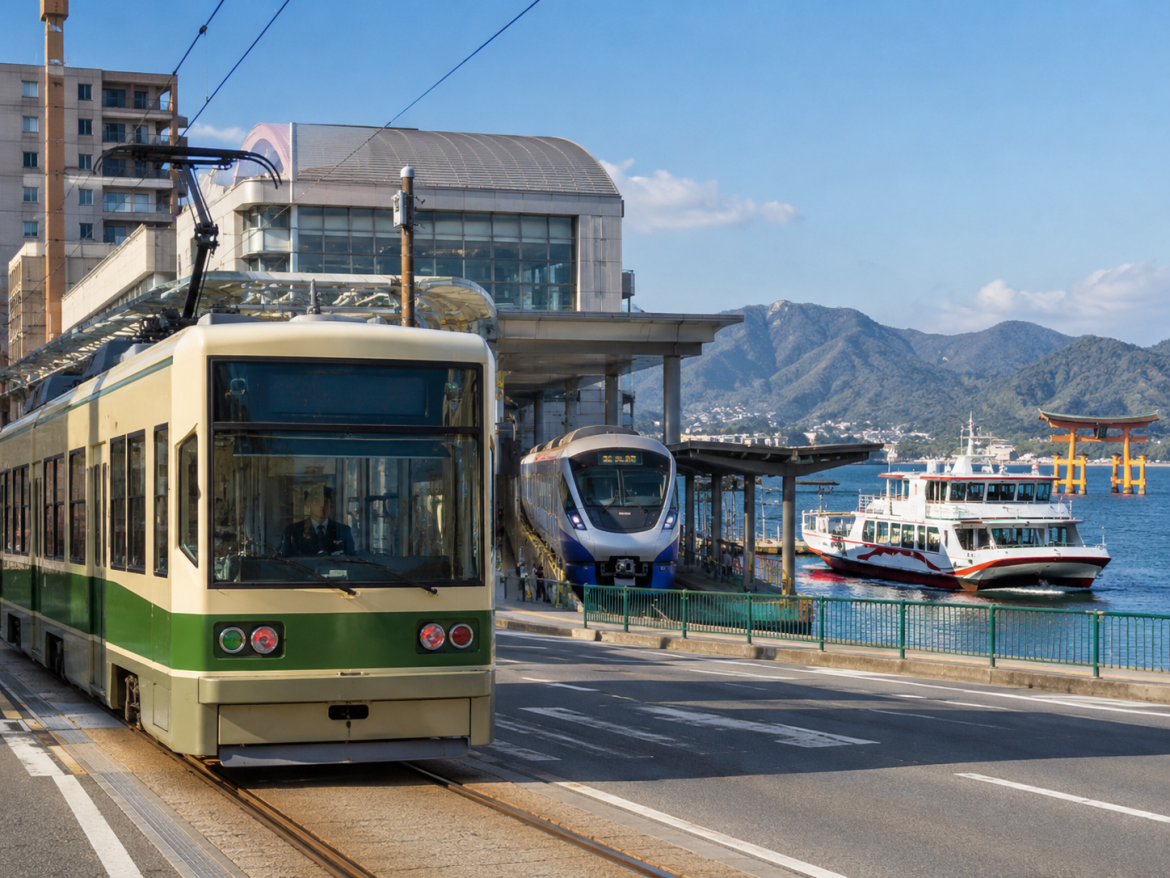
Hiroshima pairs a reflective city visit with island scenery, local food and regional day trips. Its compact sightseeing areas and rail connections make it a practical base for exploring western Japan. For first-time visitors, Hiroshima is especially popular for the Hiroshima Peace Memorial Park, the Atomic Bomb Dome, Hiroshima Peace Memorial Museum, Miyajima Island, Itsukushima Shrine, Hiroshima-style okonomiyaki, oysters, and day trips to Onomichi, Rabbit Island, Kure, and Iwakuni.
For a first visit, split your time between the city and Miyajima. Two full sightseeing days cover Hiroshima city and Miyajima; a third full day allows a separate excursion. Arrival and departure time must be counted separately, so three calendar days and two nights do not automatically provide three usable days. If you are coming from Osaka or Kyoto, Hiroshima can also be added to a Kansai itinerary by Shinkansen or JR pass. If you are traveling from Fukuoka, Hiroshima works well as part of a western Japan route.
Before planning your route, it helps to check the related guides: Where to Stay in Hiroshima, Hiroshima Transportation Guide, Hiroshima Transport Pass Guide, Hiroshima Food Guide, Hiroshima to Miyajima Guide, and Best Day Trips from Hiroshima.
For tickets and guided experiences, you can pre-book popular options such as the Hiroshima Peace Memorial Museum Ticket, Peaceful Hiroshima & Miyajima UNESCO 1 Day Bus Tour, Hiroshima & Miyajima 1 Day Bus Tour With Lunch, or Hiroshima Bar Hopping Food Tour.

Hiroshima Travel Guide Overview
| Topic | Recommendation |
|---|---|
| Best length of stay | two full sightseeing days, with a third full day for a side trip |
| Best for | History, culture, food, Miyajima, day trips |
| Main station | Hiroshima Station |
| Best areas to stay | Hiroshima Station, Hatchobori, Hondori, Peace Park area |
| Must-see places | Peace Memorial Park, Atomic Bomb Dome, Peace Memorial Museum, Miyajima |
| Best food | Hiroshima-style okonomiyaki, oysters, anago meshi, tsukemen, sake |
| Best day trips | Miyajima, Onomichi, Rabbit Island, Kure, Iwakuni |
| Easy transport | Streetcars, JR trains, buses, ferries |
| Best first-time route | Hiroshima city + Miyajima |
Museum admission and guided tours are separate bookings, not an unlimited transport pass. Choose a museum option that includes admission rather than audio-guide rental alone; tours have fixed meeting points, walking requirements and package-specific inclusions.
How Many Days Do You Need in Hiroshima?
Is 1 day enough for Hiroshima?
One full day works well for the city alone: Peace Memorial Park, the Atomic Bomb Dome and the museum, followed by Hondori and dinner. Miyajima is an alternative full-day choice. Combining both is a compressed option for early starters, without Mount Misen or a relaxed museum visit; it is not the default recommendation.
Is 2 days enough for Hiroshima?
Two full sightseeing days are the recommended first-visit core: one city day and one Miyajima day. Two calendar dates that include a late arrival or early departure are a different proposition. Keep luggage storage and onward travel outside these two sightseeing blocks.
Is 3 days better?
A third full sightseeing day allows one separate trip to Onomichi, Okunoshima, Kure, Iwakuni or Saijo. A three-day, two-night stay works best with an early arrival and late departure; a four-day, three-night trip is more forgiving for the city and island core.
| Usable time | Recommended route |
|---|---|
| Half day | Peace Park area and museum if admission timing allows |
| One full day | City only, or Miyajima only; combined route is a compressed alternative |
| Two full days | City + Miyajima |
| Three full days | City + Miyajima + one excursion |
| Four or more full days | Slower city/island visits and separate regional day trips |
Best Things to Do in Hiroshima
1. Hiroshima Peace Memorial Park
Hiroshima Peace Memorial Park is the most important place to visit in the city. It is a large public park built near the hypocenter of the atomic bombing. The park includes memorial monuments, museums, open spaces, and quiet areas for reflection.
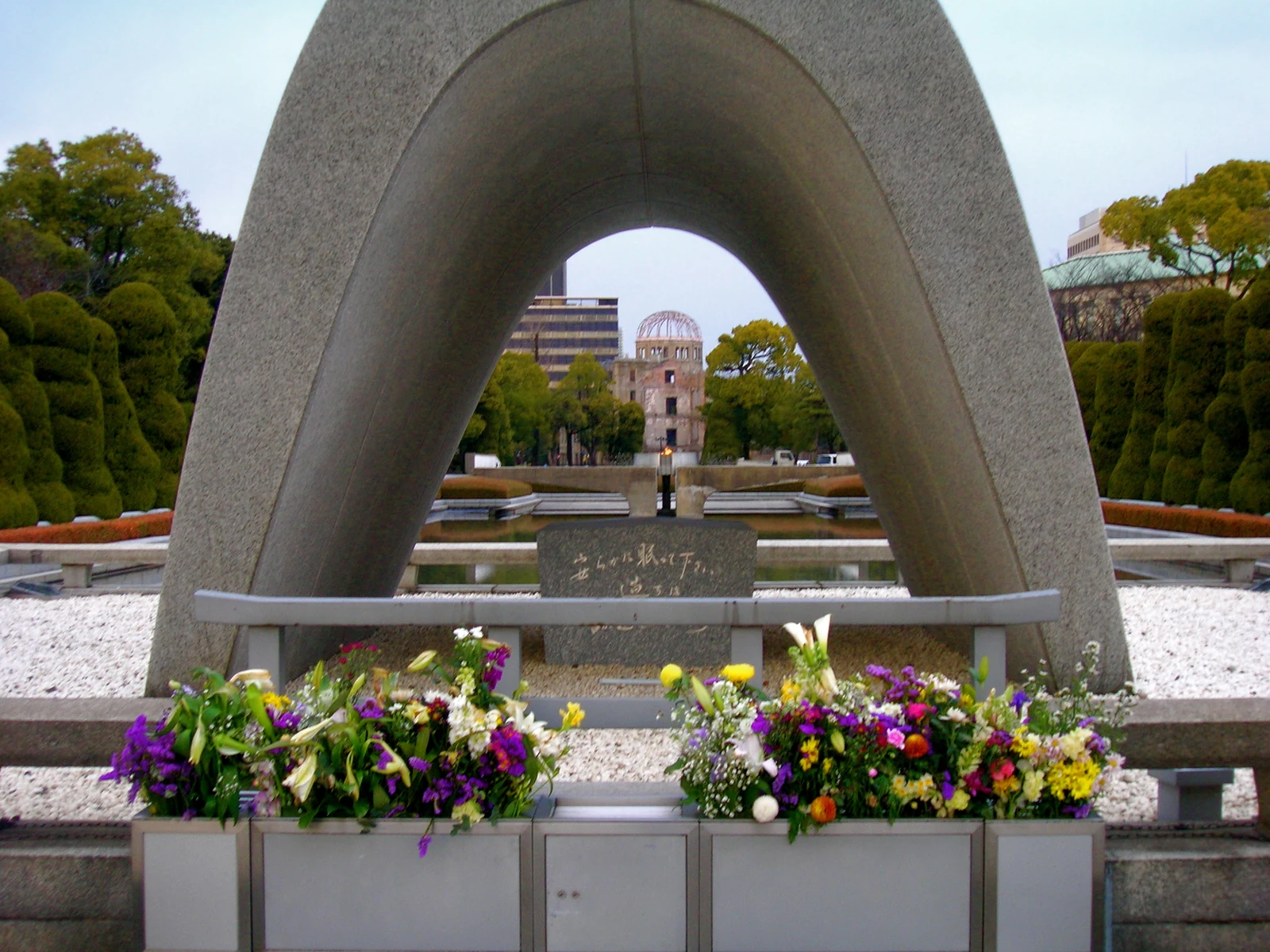
Most visitors combine the Peace Memorial Park with the Atomic Bomb Dome and Hiroshima Peace Memorial Museum. You should allow at least half a day for this area if you want to visit the museum properly.
Recommended time: 2 to 4 hours
Best for: History, reflection, first-time visitors
Nearby: Atomic Bomb Dome, Peace Memorial Museum, Orizuru Tower, Hondori
2. Atomic Bomb Dome
The Atomic Bomb Dome is one of Hiroshima’s most recognized landmarks and a UNESCO World Heritage Site. It stands as a preserved ruin from the atomic bombing and is located beside the Motoyasu River.
The site is free to visit and is usually the starting point for many Hiroshima city routes. From here, you can walk to Peace Memorial Park, the museum, Orizuru Tower, and Hondori Shopping Street.
Recommended time: 20 to 40 minutes
Best for: History, photography, first-time visitors
Nearby: Peace Memorial Park, Orizuru Tower, Hondori
3. Hiroshima Peace Memorial Museum
The Hiroshima Peace Memorial Museum is one of the most important museums in Japan. It explains the events before, during, and after the atomic bombing, with personal stories, historical materials, and exhibits about the impact on the city and its people.
The museum can be emotionally heavy, so avoid rushing through it. Early-morning and designated late admission slots require advance online tickets. Daytime entry can have queues, and special reservation-only dates must be checked. You can reserve the Hiroshima Peace Memorial Museum Ticket.
Recommended time: 1.5 to 2.5 hours
Best for: History, first-time visitors, educational travel
Nearby: Peace Memorial Park, Atomic Bomb Dome
4. Orizuru Tower
Orizuru Tower is located beside the Atomic Bomb Dome and offers one of the best city views in Hiroshima. From the observation deck, you can see the Peace Memorial Park, Atomic Bomb Dome, and on clear days, the surrounding mountains and Miyajima direction.
It is a good add-on after visiting the Peace Memorial Museum. You can book the Hiroshima Orizuru Tower Ticket.
Recommended time: 1 to 1.5 hours
Best for: City views, photography, easy add-on
Nearby: Atomic Bomb Dome, Hondori, Peace Park
5. Hondori Shopping Street
Hondori is Hiroshima’s main covered shopping arcade. It is a convenient place for restaurants, cafés, local snacks, drugstores, fashion shops, and souvenirs. Since it is close to Peace Memorial Park, many visitors stop here for lunch or dinner after sightseeing.
Recommended time: 1 to 2 hours
Best for: Shopping, food, rainy days
Nearby: Hatchobori, Peace Park, Atomic Bomb Dome
6. Hiroshima Castle
Hiroshima Castle is a reconstructed castle north of the city center, but its keep closed to visitors at the end of March 22, 2026. You can still see the exterior and moat, with the Ninomaru restored buildings and Sannomaru area remaining separate visits. Check the official closure notice; do not plan to climb the keep.
Allow about 45–60 minutes for a selective exterior walk, longer if you explore the other facilities. Pair it with Shukkeien or the Hiroshima Museum of Art if you have a spare city half day; skip the detour if the museum and Peace Park are your priorities.
7. Shukkeien Garden
Shukkeien is a traditional Japanese garden in central Hiroshima. It is smaller and quieter than many famous gardens in Kyoto, but it is a lovely place for a peaceful walk.
It is especially good if you want a softer, slower activity after the Peace Memorial Museum. You can book the Shukkeien Garden Admission Ticket.
Recommended time: 45 minutes to 1.5 hours
Best for: Gardens, quiet walks, photography
Nearby: Hiroshima Station, Hiroshima Castle
8. Miyajima Island
Miyajima is the best side trip from Hiroshima and one of the most beautiful places in western Japan. The island is famous for Itsukushima Shrine, the floating torii gate, wild deer, Mount Misen, shopping streets, oysters, and momiji manju sweets.
Most visitors visit Miyajima as a full-day trip from Hiroshima. For detailed route planning, see Hiroshima to Miyajima Guide.
If you prefer a guided option, consider the Peaceful Hiroshima & Miyajima UNESCO 1 Day Bus Tour or Hiroshima & Miyajima 1 Day Bus Tour With Lunch.
Recommended time: Full day
Best for: First-time visitors, scenery, culture, food
Main sights: Itsukushima Shrine, floating torii gate, Mount Misen, Omotesando Street
Hiroshima Itinerary Ideas
Count full sightseeing days before counting hotel nights. The following blocks are planning allowances, not train or ferry timetables; walking, queues, meals and weather need extra room.
Half a day or one day: choose the city or Miyajima
With half a day, prioritize the Atomic Bomb Dome, Peace Memorial Park and the museum, adjusting the order around your admission slot. A full city day adds lunch, either Orizuru Tower or Shukkeien, then Hondori and an okonomiyaki dinner in Hatchobori. Alternatively, spend the whole day on Miyajima.
A compressed city-and-island day
| Part of day | Plan and trade-off |
|---|---|
| Morning | Museum, Dome and park; reserve any early admission slot and allow roughly 1.5–2.5 hours for the museum |
| Around midday | Travel to Miyajimaguchi and transfer to a ferry; allow for walking and waiting rather than using only the train ride time |
| Afternoon | Itsukushima Shrine, waterfront and a simple lunch or shopping; omit the ropeway, Mount Misen and aquarium |
| Late afternoon or evening | Return on a checked ferry service, leaving a generous margin before any onward train or flight |
This is a compressed alternative, not a relaxed first choice. If the museum queue or a late arrival eats into the morning, keep the city day instead of rushing the exhibits. A guided city-and-island tour removes transfer planning but still involves walking, fixed stops and possible attraction substitutions.
Two full sightseeing days: the first-visit core
| Day | Morning | Afternoon and evening |
|---|---|---|
| City day | Atomic Bomb Dome → Motoyasu Bridge → Children’s Peace Monument → Cenotaph → museum, reordered for admission | Lunch and reflection time → either Orizuru Tower or Shukkeien → Hondori and Kamiyacho → dinner in Hatchobori or Nagarekawa |
| Miyajima day | Travel via Miyajimaguchi; choose the shrine or an earlier Mount Misen slot around tides and reservations | Omotesando lunch; choose one main add-on: Daisho-in, Momijidani/ropeway/Misen, or aquarium → waterfront → return |
The Mount Misen version needs several hours for access, queues, both ropeway sections and any summit walk. Do not add Daisho-in and the aquarium to the same afternoon. A gentler version keeps the shrine, waterfront, lunch and shops, with a short Momijidani walk if suitable.
Three days and two nights: arrival time matters
An early arrival on Day 1 and a late departure on Day 3 can fit the main city sights on the first day, Miyajima on the second, then Shukkeien, castle exteriors or shopping before departure. If you arrive in the afternoon, use it for Hondori and dinner and finish the city sights on Day 3 only if there is enough time. Otherwise drop optional stops or stay longer; the overnight count alone does not make the route work.
Four days and three nights: a more forgiving plan
| Date | Plan |
|---|---|
| Day 1 | Arrival and luggage drop; Shukkeien only if time allows, then dinner near the station or downtown |
| Day 2 | Full city day |
| Day 3 | Full Miyajima day, optionally staying overnight with a luggage plan |
| Day 4 | Nearby breakfast, shopping or a short castle-exterior walk, with generous onward-travel and airport-bus buffers |
A distant excursion is not automatically available on Day 4. Add Onomichi, Okunoshima, Kure, Iwakuni or Saijo only when you genuinely have a third full sightseeing day clear of arrival or departure commitments. Choose one destination per excursion day.
Where to Stay in Hiroshima
The best area to stay depends on your itinerary. For most first-time visitors, Hiroshima Station and Hatchobori/Hondori are the easiest choices.
| Area | Best For | Pros |
|---|---|---|
| Hiroshima Station | Day trips, JR travel, Shinkansen | Best for Miyajima, Onomichi, Kure, Rabbit Island |
| Hatchobori | Food, shopping, nightlife | Central and convenient |
| Hondori | Shopping, restaurants, city sightseeing | Walkable to Peace Park |
| Peace Park area | History, slower travel | Quiet and close to major sights |
| Miyajima | Ryokan, romantic stays, early/late shrine views | Best for overnight island experience |
For a full hotel and area breakdown, see Where to Stay in Hiroshima.
Hiroshima Transportation Guide
Hiroshima is easy to get around once you understand the basic transport pattern.
Inside the city, use streetcars, buses, taxis, and walking. For nearby destinations such as Miyajima, Onomichi, Kure, and Iwakuni, use JR trains and ferries. For Rabbit Island, you need to combine JR train access with a ferry from Tadanoumi Port.
| Route | Best Transport |
|---|---|
| Hiroshima Station to Peace Park | Streetcar, bus, taxi |
| Hiroshima city to Miyajima | JR or streetcar to Miyajimaguchi, then ferry |
| Hiroshima to Onomichi | JR or Shinkansen + JR transfer |
| Hiroshima to Rabbit Island | JR to Tadanoumi, then ferry |
| Hiroshima to Kure | JR |
| Hiroshima to Iwakuni | JR |
For detailed routes, see Hiroshima Transportation Guide.
Hiroshima Transport Pass Guide
You do not always need a transport pass in Hiroshima. If you only visit Hiroshima city and Miyajima, single tickets, IC cards, JR tickets, and ferry tickets may be enough.
A larger JR pass is more useful if you are traveling from Osaka, Kyoto, Fukuoka, Yamaguchi, or combining Hiroshima with multiple cities.
| Travel Style | Suggested Pass/Ticket |
|---|---|
| Hiroshima city only | Streetcar day pass or IC card |
| Hiroshima + Miyajima | JR/streetcar + ferry |
| Several eligible paid attractions | Klook Pass Hiroshima attraction package |
| Osaka/Kyoto + Hiroshima | Kansai-Hiroshima Area Pass may be worth comparing |
| Fukuoka/Yamaguchi + Hiroshima | Compare the currently sold JR West passes against your exact route |
| Hiroshima + many side trips | Compare JR West passes |
For a full comparison, see Hiroshima Transport Pass Guide.
You can also compare attraction passes such as the Klook Pass Hiroshima attraction package.
What to Eat in Hiroshima
Hiroshima is one of Japan’s best food cities. The must-try dishes are Hiroshima-style okonomiyaki, oysters, anago meshi, Hiroshima tsukemen, Onomichi ramen, Kure cold noodles, sake, and momiji manju.
| Food | Where to Try |
|---|---|
| Hiroshima-style okonomiyaki | Hiroshima city, Hondori, Hatchobori |
| Oysters | Hiroshima city, Miyajima |
| Anago meshi | Miyajima, Miyajimaguchi |
| Hiroshima tsukemen | Hiroshima city |
| Onomichi ramen | Onomichi |
| Kure cold noodles | Kure |
| Momiji manju | Miyajima, Hiroshima Station |
| Sake | Saijo, Higashi-Hiroshima |
For a full restaurant and food breakdown, see Hiroshima Food Guide.
If you prefer a guided food experience, consider the Hiroshima Bar Hopping Food Tour or the Saijo Kamotsuru Sake Brewery Private Tour.
Best Day Trips from Hiroshima
1. Miyajima
Miyajima is the most important day trip from Hiroshima. It is easy to reach and should be included in almost every first-time Hiroshima itinerary.
Best for: First-time visitors, scenery, culture, food
Recommended time: Full day
2. Onomichi
Onomichi is a scenic Setouchi town known for temples, cats, hillside streets, Onomichi ramen, the waterfront, and the Shimanami Kaido cycling route. It is slower and more local than central Hiroshima.
Best for: Slow travel, photography, ramen, seaside walks
Recommended time: Full day
3. Rabbit Island
Rabbit Island, officially Okunoshima, is famous for its free-roaming rabbits and quiet island scenery. It takes more planning because you need to combine trains and ferry schedules.
Best for: Animal lovers, families, unusual day trips
Recommended time: Full day
4. Kure
Kure is a port city known for the Yamato Museum, JMSDF Kure Museum, naval history, and local food such as Kure cold noodles and naval curry.
Best for: Museums, naval history, rainy-day plans
Recommended time: Half day to full day
5. Iwakuni
Iwakuni is known for Kintaikyo Bridge, Iwakuni Castle, riverside scenery, and a quieter historical atmosphere. It is a good choice if you already have 3 or more days in Hiroshima.
Best for: History, bridges, quiet side trips
Recommended time: Half day to full day
For a full comparison, see Best Day Trips from Hiroshima.
Hiroshima Travel Tips
1. Do not rush the Peace Memorial Museum
The museum is powerful and emotional. Allow enough time, and avoid placing too many heavy sightseeing spots immediately afterward.
2. Spend a full day in Miyajima
Miyajima is not just a quick shrine visit. It is worth spending time on the shrine, shopping street, waterfront, oysters, momiji manju, and possibly Mount Misen.
3. Stay near Hiroshima Station for day trips
If you plan to visit Miyajima, Onomichi, Kure, Rabbit Island, or Iwakuni, Hiroshima Station is the most convenient base.
4. Stay near Hondori or Hatchobori for food and nightlife
If you care more about restaurants, shopping, and evening atmosphere, Hondori or Hatchobori is more enjoyable than staying near the station.
5. Check ferry schedules for Rabbit Island
Rabbit Island requires careful timing. Do not treat it like a simple city attraction.
6. Compare passes only after planning your route
Do not buy a JR pass before deciding whether you are visiting Osaka, Kyoto, Fukuoka, Yamaguchi, or multiple side-trip destinations.
Admission, Reservations and Island Access
Peace Memorial Museum: which times require booking?
General adult permanent-exhibition admission is ¥200. The early 7:30–8:30 window and designated late admission windows require advance online tickets. Ordinary daytime admission can be bought on site, but queues are possible, and special busy dates may switch to reservation-only entry throughout the day. Use the official visitor information and date-specific announcements before choosing a slot. A rental audio guide may be sold separately without admission, and a daytime electronic ticket does not guarantee no queue.
Itsukushima Shrine, ferry fare and visitor tax
The Atomic Bomb Dome exterior and Peace Park are free; visitors cannot enter the Dome ruins. Ordinary adult admission to Itsukushima Shrine is ¥300, with treasury and combination tickets separate. The shrine normally opens at 6:30, with seasonal closing times; check the shrine’s admission page. Ordinary worship does not require the same reservation process as the ropeway or a guided tour.
The short ferry crossing from Miyajimaguchi takes about ten minutes, before boarding queues and station-to-pier walking. JR West Miyajima Ferry and Miyajima Matsudai Kisen are different operators. The JR ferry costs ¥200 each way for an adult, plus the ¥100 Miyajima Visitor Tax on entry: ¥500 for one return trip and one taxable island entry. A valid rail pass may cover the JR ferry fare but not the visitor tax; check the exact pass, operator and whether a combined ticket already includes the tax.
Ropeway reservations and the walk to Mount Misen
The normal adult ropeway fare is ¥2,000 return or ¥1,100 one way. Check the official fare page and operation and reservation calendar. Advance online reservations are mandatory on designated dates. Wind, thunderstorms and maintenance can stop service, so a reservation is not an operating guarantee.
The ropeway ends at Shishiiwa, not the summit of Mount Misen. Allow around 30 minutes or more each way for the summit approach depending on pace, with steps and gradients, and preserve enough time for the final descent. There are no elevators; strollers and wheelchairs cannot be ridden onto the circulating ropeway and must be left at the Momijidani office. Ask the operator about individual access needs before booking. Treat the mountain as the day’s main optional activity rather than a quick extra.
Arriving in Hiroshima and Choosing Tickets
Airport buses, Shinkansen and city trams
Hiroshima Airport is outside the city. Choose an airport limousine bus for Hiroshima Station if your hotel is near the rail hub, or Hiroshima Bus Center for Kamiyacho and the central shopping area. Allow roughly an hour on the road, then add waiting, hotel access and traffic contingency. Do not choose a departure solely because it leaves first if it means another luggage transfer afterward.
From Kansai, the Sanyo Shinkansen runs from Shin-Osaka to Hiroshima; Kyoto has through trains and connections via Shin-Osaka. From Fukuoka, the Shinkansen departure station is Hakata. Compare the exact train and pass restrictions after choosing the route, and keep station-transfer time separate from advertised train time. The official Kansai-Hiroshima Area Pass is worth calculating for a Kansai–Hiroshima return journey, not automatically for a stay limited to the city and Miyajima.
From Hiroshima Station, streetcar routes 2 or 6 serve Genbaku Dome-mae. The ride is roughly 20 minutes as a planning allowance, followed by walking through the park to the museum. Hotels around Hondori, Kamiyacho and Hatchobori can reduce the need to take a tram for every short city segment.
The fastest practical island route depends on your hotel
From Hiroshima Station, JR to Miyajimaguchi, a walk to the terminal and the ferry are usually the straightforward choice: the train ride is roughly half an hour, but the whole journey is longer. Hiroden streetcars are slower, taking around an hour or more depending on the starting point and service. A boat from the Peace Park area can reduce land transfers, but has its own timetable, price and operating restrictions; verify these before using it as the link in a tight day plan.
For a tram-heavy day, compare the Hiroden ticket range. Its tram-and-ferry products use the specified Matsudai ferry and include visitor tax according to their terms; they are not interchangeable with the JR ferry. A few trips or mostly walking may cost less with individual fares or an IC card. Attraction bundles are a separate category. Klook Pass Hiroshima requires attraction reservations after purchase.
Luggage, driving and accessibility
Leave large bags at the hotel or an available Hiroshima Station storage facility before a Miyajima day trip. Facilities can fill up. For an island overnight, ask your hotels about forwarding the large bag and carry only what you need. The waterfront is easier than the hills, but Daisho-in, Momijidani and the mountain involve slopes or steps. A car is unnecessary for the city-and-island core; consider one only for rural destinations where it genuinely reduces awkward transfers.
Miyajima Pacing, Photography and Traveler Fit
Tides, shopping hours and optional walks
High tide can give the shrine and torii their floating appearance; low tide reveals the foreshore. Check the day’s Miyajima tide information and select the year and month of your visit; the linked table may initially display a different month. Check local access conditions rather than assuming every low tide exposes a safe walking route. Keep clear of restricted areas and returning water. Schedule the shrine around the view you want, then lunch and one main add-on. Omotesando food shops and restaurants often wind down in the late afternoon; do not postpone all eating and shopping until after a late mountain descent.
Daisho-in suits visitors happy with temple steps; Momijidani is a wooded approach toward the ropeway; the aquarium is a separate family-oriented option. Rain or low cloud reduces the appeal of the mountain views. In strong wind or heavy rain, check transport operations and favor a city indoor plan rather than insisting on the island.
Photo viewpoints and respectful behavior
Across the Motoyasu River and near Motoyasu Bridge, the Dome can be framed with water and the modern city. The Cenotaph aligns toward the Flame of Peace and Dome, but give mourners space and do not block the central path. Keep voices low and avoid theatrical posing in memorial areas. Orizuru Tower is an optional elevated viewpoint, with weather-dependent visibility; it is not essential if you would rather keep the time and budget for a garden or meal.
On Miyajima, the waterfront by Mikasa-hama and the shrine’s vermilion corridors offer different angles on the torii. Keep walkways clear and follow tripod restrictions. Early or late island time is easiest with an overnight stay, but never wait for sunset on the mountain at the expense of the last ropeway. Shishiiwa and Mount Misen depend on clear visibility, not simply the time of day.
Families, older travelers and rainy days
The ferry, island waterfront, sweets and aquarium can work well for families. The Peace Memorial Museum contains distressing material, so parents should decide the extent of the visit according to each child’s readiness. Miyajima’s deer are wild: do not feed or chase them, and put maps, food and bags away.
For older travelers or anyone with limited mobility, favor the city’s shorter walks and Miyajima’s shrine, waterfront, lunch and shops. Daisho-in is not a step-free substitute for Mount Misen. Shukkeien also has uneven paths and bridges. Couples or photographers may prefer an island ryokan overnight for quieter early and late hours, after confirming dinner arrangements because the shopping street is not a late-night dining district.
Rainy-day city choices include the museum, Orizuru Tower subject to facility restrictions, Hondori’s covered arcade, station shops and art museums. Keep an indoor alternative ready and shorten outdoor walks in heat or bad weather. For a short half day, stay in the city instead of spending most of it transferring to Miyajima.
Food, Shopping and Extra-Day Choices
Hiroshima-style okonomiyaki layers noodles and cabbage; oysters come grilled, fried or in rice dishes. Miyajima and Miyajimaguchi are natural places for anago rice, while the city also offers soupless tantanmen and Hiroshima tsukemen. Add Setouchi lemon sweets and fresh or fried momiji manju to a snack stop rather than planning an entire shopping day. Hondori and Hatchobori cover everyday shopping; Hiroshima Station is convenient for boxed souvenirs before departure.
Onomichi deserves its own day for the waterfront, hillside temples, lanes and ramen; the Shimanami Kaido cycle route requires a separate distance and return-transport plan rather than a casual extra. Okunoshima needs the JR journey to Tadanoumi and a checked ferry connection in both directions. Kure combines port history, the Yamato Museum and JMSDF museum, with opening calendars checked first. The Yamato Museum reopened on April 23, 2026 after renovation; do not use the old closure as a reason to exclude Kure. Iwakuni offers Kintaikyo Bridge and the castle area, with onward local transport after the JR station. These are alternatives, not a single circuit.
Saijo is another half- to full-day choice for the sake-brewery district. The Kamotsuru private-tour listing is based there and lists Japanese-language guiding, so check language and meeting point; it is not a central Hiroshima bar tour. The Hiroshima bar-hopping food tour is the city nightlife option. Do not plan to drive after a tasting.
Booking Optional Activities Without Buying the Wrong Package
Check the selected date, departure point, included admissions, guiding language and cancellation rules; similarly named packages can follow different itineraries. The Peaceful Hiroshima & Miyajima UNESCO tour currently shows a Hiroshima departure with lunch, and the castle is a drive-by, not keep entry. The Hiroshima & Miyajima lunch tour has several departure-city and Shinkansen options. That lunch tour is not wheelchair-accessible. Both require you to assess walking and access needs; bus transport does not make a tour automatically suitable for every older traveler.
The museum listing separates admission from audio-guide rental. The attraction pass depends on the selected attractions and requires attraction reservations after purchase. For Shukkeien or Orizuru Tower, read voucher validity, exchange requirements and facility restrictions rather than assuming instant entry or free cancellation. Prices and availability depend on your date and selected package.
Hiroshima Travel FAQ
Is Hiroshima worth visiting?
Yes, especially for history, World Heritage sites, Setouchi scenery and local food. The city and Miyajima offer contrasting experiences; it is less of a priority for a trip centered entirely on shopping or theme parks.
How many days do I need?
Allow one full city day and one full Miyajima day, excluding arrival and departure. Three days and two nights can work with an early arrival and late departure; four days and three nights is more forgiving. A side trip needs a third full day.
What is Hiroshima famous for?
The Atomic Bomb Dome, Peace Park and museum, plus Miyajima’s Itsukushima Shrine and torii. Signature foods include layered okonomiyaki, oysters, anago rice and momiji manju.
Can I visit the city and Miyajima in one day?
It is possible as a compressed early-start route: museum and park, then shrine and waterfront. Omit the ropeway, Mount Misen and aquarium. Book any early museum slot first, and stay in the city if delays leave too little island time.
Where should I stay in Hiroshima?
Hiroshima Station suits Shinkansen travel, luggage and day trips. Hondori, Hatchobori and Kamiyacho work well for restaurants, shopping and city walks. The Peace Park area suits early visits, with each hotel’s exact location still worth checking.
Should I stay in Hiroshima or on Miyajima?
The city is the practical first-visit base. Choose an island night for a ryokan and early or late waterfront time, after arranging meals and luggage; the shopping street is not a late-night dining area.
Is Hiroshima easy to get around?
Use streetcars, buses and walking in the city, with JR and ferries for Miyajima and regional trips. Choose the route around your hotel; the city-and-island core does not require a rental car.
How do I get from Hiroshima Airport to the city?
Airport limousine buses are the main option. Choose Hiroshima Station for station hotels or Hiroshima Bus Center for the central district, allowing for road delays, waiting and the onward walk or transfer.
How do I reach the Atomic Bomb Dome from Hiroshima Station?
Take Hiroden route 2 or 6 to Genbaku Dome-mae, using roughly 20 minutes as a planning allowance. The museum is a further walk through the park.
What is the practical route to Miyajima?
From Hiroshima Station, take JR to Miyajimaguchi, walk to the terminal and board the correct ferry. Hiroden is slower but may suit a tram-and-ferry ticket; direct boats from the Peace Park area have separate timetables and restrictions.
Do I need a JR Pass or local transport pass?
Not necessarily. Add up the journeys you will actually take. Individual fares often work for the city and Miyajima; longer intercity routes may justify a regional JR pass. An attraction bundle is not an unlimited transport ticket.
Does the Peace Memorial Museum require reservations?
Advance online tickets are required for 7:30–8:30 and designated late windows. Ordinary daytime counter sales may be available, except on announced reservation-only dates. Allow for queues and distinguish admission from an audio-guide-only package.
How long should I spend on Miyajima?
Allow about three to four hours on the island for the shrine, waterfront and shops, plus travel. A full day is better with the ropeway, Mount Misen, Daisho-in or aquarium, choosing one major add-on rather than all of them.
Must I reserve the ropeway, and does it reach the summit?
Reserve online on designated dates. It reaches Shishiiwa; the summit still involves around 30 minutes or more of slopes and steps. Check operation and last descent, and note that wheelchairs and strollers cannot board the circulating ropeway in use.
Does a JR Pass cover the Miyajima Visitor Tax?
Treat the ferry fare and visitor tax separately. The normal visitor tax is ¥100 on entry; standard JR adult ferry fare is ¥200 each way. If a particular combined ticket includes the tax, follow its terms rather than paying twice.
Is Hiroshima suitable for families and older travelers?
Yes with a suitable pace. Parents should assess children’s readiness for the museum. Favor the waterfront, ferry and aquarium where useful, and remember that Daisho-in has steps and Mount Misen is not a step-free outing.
What can I do in rain?
Consider the museum, art museums, covered Hondori and station shopping. Orizuru Tower facilities can be weather affected. In strong wind or heavy rain, do not insist on ferries, the ropeway or mountain views.
What food should I try?
Choose okonomiyaki, oysters, anago rice, Hiroshima tsukemen, soupless tantanmen, lemon sweets and momiji manju. Add Onomichi ramen, Kure cold noodles or naval curry, and Saijo sake only when those places fit your route.
Which day trips should I choose?
Miyajima is part of the two-day core. With another full day choose Onomichi, Okunoshima, Kure, Iwakuni or Saijo. Coordinate Rabbit Island trains and ferries in both directions, and avoid tight long-distance excursions on departure day.
Can I enter Hiroshima Castle’s keep?
The keep closed at the end of March 22, 2026. Plan for its exterior and moat, with Ninomaru and Sannomaru facilities as separate visits; do not plan to climb the keep.
Choosing your Hiroshima route
The recommended first-time core is one full sightseeing day in Hiroshima city and another on Miyajima, with arrival and departure time counted separately. Start with the Peace Memorial Park, Atomic Bomb Dome, and Hiroshima Peace Memorial Museum, then explore Hondori, Orizuru Tower, and Hiroshima-style okonomiyaki. On the next day, take a full-day trip to Miyajima for Itsukushima Shrine, the floating torii gate, oysters, momiji manju, and island scenery.
With a third full sightseeing day, add one separate excursion; do not use an early flight or train departure day for a distant island trip. Choose Onomichi for scenic streets and ramen, Rabbit Island for animals and island scenery, Kure for museums and naval history, or Iwakuni for Kintaikyo Bridge and a quieter historical route.
To plan the full trip, use Where to Stay in Hiroshima, Hiroshima Transportation Guide, Hiroshima Transport Pass Guide, Hiroshima Food Guide, Hiroshima to Miyajima Guide, and Best Day Trips from Hiroshima as your supporting guides.
For pre-booked activities, the most useful options are the Hiroshima Peace Memorial Museum Ticket, Peaceful Hiroshima & Miyajima UNESCO 1 Day Bus Tour, Hiroshima & Miyajima 1 Day Bus Tour With Lunch, and Hiroshima Bar Hopping Food Tour.
Related Guides
- Where to Stay in Hiroshima
- Hiroshima Transportation Guide
- Hiroshima Transport Pass Guide
- Best Things to Do in Hiroshima
- Hiroshima Food Guide
- Hiroshima to Miyajima Guide
- Best Day Trips from Hiroshima