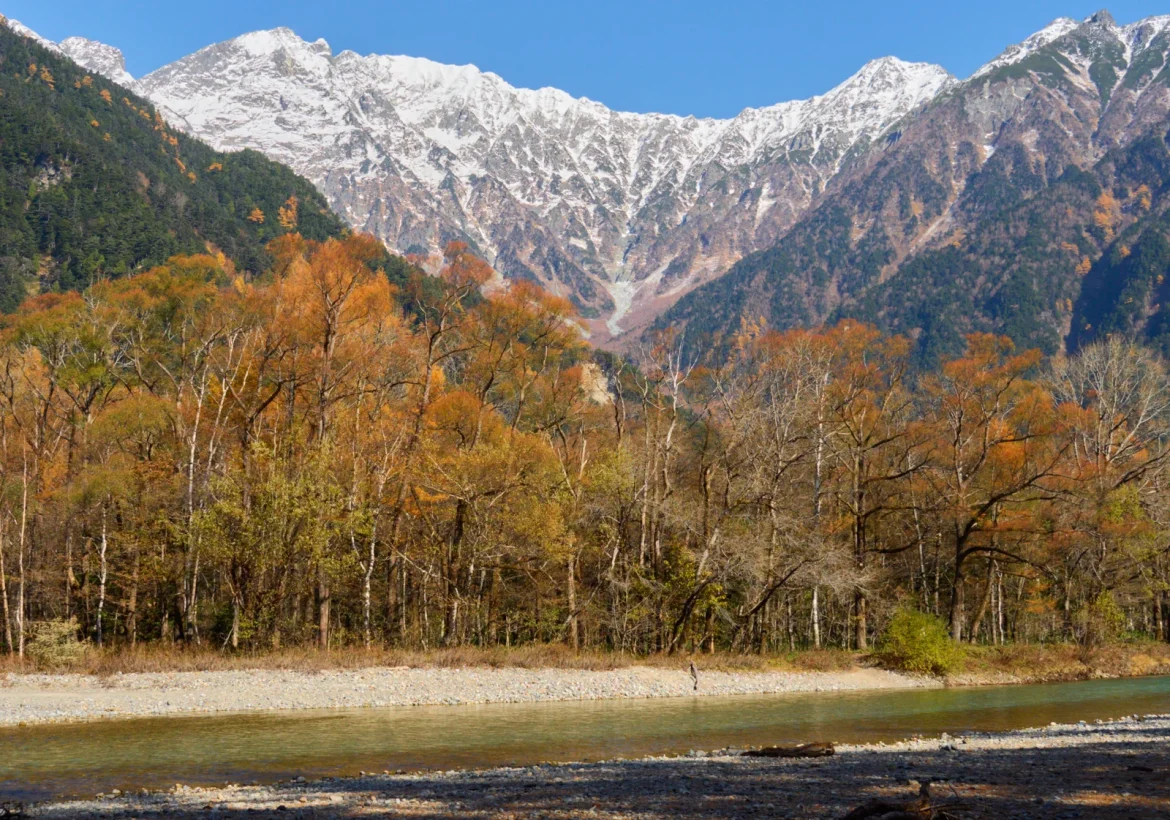
Kamikochi is a high-altitude river valley in the Northern Japan Alps, known for clear mountain water, larch forests, views of the Hotaka range and easy riverside walks that do not require technical hiking experience. The landscape feels remote, but the most popular routes around Taisho Pond, Kappa Bridge and Myojin are gentler than the word “Alps” may suggest.
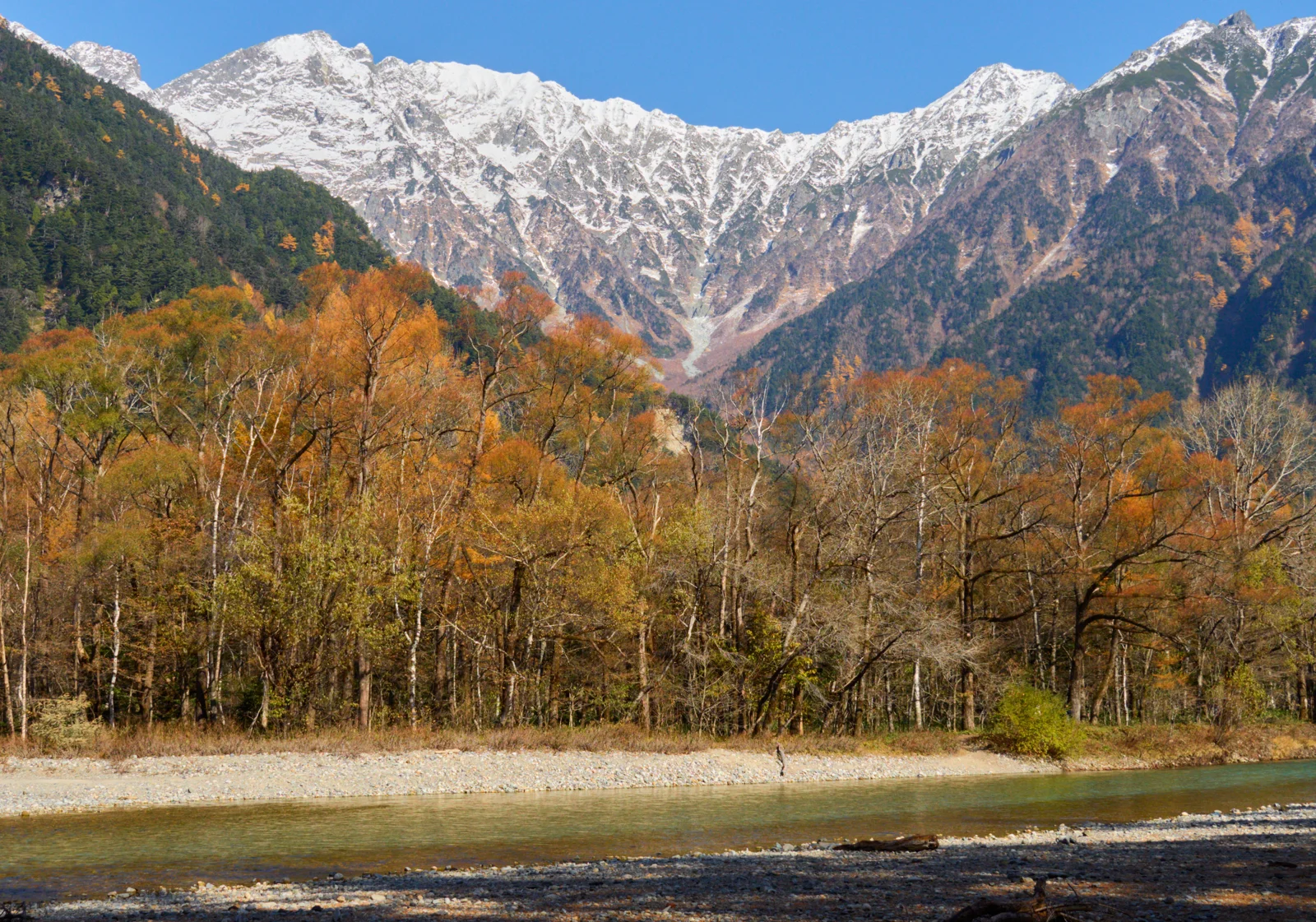
It is worth visiting for travelers who want dramatic mountain scenery without committing to a difficult summit hike. The strongest first-visit experience is not simply taking a photograph at Kappa Bridge. It is walking through the valley, watching the scenery change between Taisho Pond, Tashiro Marsh, the Azusa River and the central bridge area.
The main challenge is transport rather than terrain. Private vehicles cannot enter, buses can sell out, and travelers using the Matsumoto route should book ahead and secure the reservation-required return bus. Arriving without a confirmed return journey is now one of the easiest ways to create unnecessary stress.
The standard first-visit walk connects Taisho Pond, Tashiro and Kappa Bridge. Check the official trail notices before travel and follow any signed diversion; an earlier reopening notice does not guarantee every path remains open after heavy rain.
For a first visit, allow at least three to five hours inside Kamikochi. Get off at Taisho Pond when practical, walk toward Kappa Bridge and finish near Kamikochi Bus Terminal. Travelers who have a full day can continue to Myojin, while visitors with limited walking ability can stay around the bus terminal, Kappa Bridge and nearby riverside paths.
Visitors starting in Nagoya who do not want to manage trains, bus transfers and a separate return reservation can compare this Kamikochi full-day trip from Nagoya. Independent travel remains better for travelers who want a long hike or an overnight stay, but a tour is often more efficient for a first day trip from Nagoya.
Travelers building a wider Chubu itinerary may also find the Nagoya travel guide, Nagoya to Takayama transportation guide and Takayama travel guide useful for deciding which side of Kamikochi to approach from.
Before booking, compare the current Japan travel deals; eligibility depends on the selected offer and its current terms.

Is Kamikochi Worth Visiting?
| Question | Editor’s assessment |
|---|---|
| Is Kamikochi worth visiting? | Yes for mountain scenery, nature walks and photography; less essential for travelers who dislike outdoor walking or have only one rushed day in the region. |
| Best suited to | Couples, photographers, families with school-age children, casual walkers and travelers exploring Matsumoto, Takayama or the Japan Alps. |
| Who may prefer to skip it? | Travelers visiting outside the open season, people who want mainly indoor attractions, or anyone unable to tolerate a long bus journey and changing mountain weather. |
| Admission | Kamikochi itself is free. Myojin Pond has a separate admission charge. |
| Suggested duration | Three to five hours for the standard route; six to eight hours for a longer walk to Myojin. |
| Transport difficulty | Moderate. The route is straightforward once booked, but reservations and the final return bus require planning. |
| Main highlight | The combination of the Azusa River, forest paths, ponds and close mountain views rather than one single attraction. |
| Main disadvantage | Infrequent access, weather sensitivity and heavy crowds during peak foliage and holiday periods. |
| Children | Good for children comfortable with several kilometers of walking. A baby carrier is generally more practical than a stroller. |
| Older travelers | The central valley is relatively flat, but distance, uneven surfaces and bus access can still be tiring. |
| Limited mobility | The bus-terminal and Kappa Bridge area is the easiest section. Transport vehicles and woodland paths create more limitations than the central paved areas. |
| Overnight stay | Not essential for a standard visit, but worthwhile for sunrise, quieter trails and longer hikes. |
| Best season | Late spring for fresh greenery, summer for alpine scenery and October for autumn color. |
| Best time of day | Early morning, before the largest tour groups and day-trip crowds arrive. |
Prioritize Kamikochi when natural scenery is one of the main reasons for your Japan trip. It deserves at least half a day and should not be treated as a brief photo stop between several distant attractions.
Travelers expecting dramatic mountain scenery directly beside the bus terminal may be underwhelmed if they only walk to Kappa Bridge and leave. The trip becomes much more worthwhile once Taisho Pond, Tashiro Marsh or Myojin is included.
Kamikochi Essential Information
| Item | Current information |
|---|---|
| Name | Kamikochi / 上高地 |
| Location | Azumi, Matsumoto, Nagano Prefecture, within Chubu Sangaku National Park |
| Regular 2026 season | April 17 to November 15 |
| Admission | Free for the general Kamikochi area |
| Myojin Pond | Separate admission: ¥500 adult, ¥200 elementary-school child |
| Recommended duration | Three to five hours for a first visit; a full day for Myojin and longer walks |
| Main transport points | Taisho Ike bus stop, Teikoku Hotel-mae and Kamikochi Bus Terminal |
| Private vehicles | Not permitted beyond the access gates |
| Public transport gateways | Matsumoto and Shin-Shimashima from the east; Takayama, Hirayu Onsen and Akandana from the west |
| Visitor Center | Near Kamikochi Bus Terminal; admission is free |
| Luggage | Staffed baggage room at the bus terminal; no ordinary coin-locker bank |
| Cash | Recommended for the Alpico railway, small facilities and minor admission charges |
| Pets | Not permitted within the protected Kamikochi area |
| Winter sightseeing | Ordinary buses, hotels and visitor facilities close; winter entry requires mountaineering preparation |
Latest Kamikochi Opening and Trail Status
Plan with the official route map and Alpico reservation and fare details. Hotaka Shrine lists Myojin Pond admission at ¥500 for adults and ¥200 for elementary-school children.
Kamikochi is open for its regular 2026 sightseeing season. The general opening period runs from April 17 to November 15, while hotels, restaurants and individual facilities may begin or end operations on slightly different dates.
Use the current official walking map for the Taisho Pond–Tashiro–Kappa Bridge route, and check road and trail notices on the day. Temporary closures can change the available riverside or forest course.
Mountain access can still change at short notice. Heavy rain, landslides, fallen trees or road inspections may temporarily stop buses even when the destination is officially within its open season. Check road and transport notices on the morning of travel, especially after prolonged rain.
Do not confuse the road’s operating hours with the last scheduled passenger bus. The access road may remain open after the final practical public-transport departure. Always work from the bus timetable and the reservation shown on your ticket.
Kamikochi Tickets, Bus Reservations and Tour Options
Is There an Admission Ticket?
There is no general admission ticket for Kamikochi. Visitors pay for transportation, food, accommodation and any separately charged sites such as Myojin Pond.
Buying an attraction ticket through a third-party platform is therefore unnecessary. The important advance purchase is the bus or complete day-tour arrangement, not admission to the valley.
Independent Travel from Matsumoto
The usual route is the unreserved Alpico train from Matsumoto to Shin-Shimashima, followed by a bus to Kamikochi. Advance booking is recommended for the outbound non-direct bus; same-day tickets are possible only when seats remain.
Current one-way fares are ¥710 for the train and ¥3,100 for the Shin-Shimashima–Kamikochi bus. The Matsumoto railway ticket is cash-only, so do not rely entirely on an IC card or credit card.
Every return bus from Kamikochi toward Shin-Shimashima or Matsumoto also requires a reservation. Same-day seats may be sold when space remains, but this is not a sensible plan during weekends, holidays or autumn foliage.
Direct Matsumoto Buses
The current timetable includes a small number of direct buses from Matsumoto. These avoid the Shin-Shimashima transfer but are capacity-limited and frequently sell out. Reserve as soon as your travel date becomes available if the direct service is important to your itinerary.
Independent Travel or Day Tour?
The linked Nagoya Kamikochi and Kappa Bridge hiking tour lists Chinese, English and Japanese guide-language choices. Confirm the actual language, departure point and time for your selected option; other Nagoya operators offer different language arrangements. The Takayama cultural-and-alpine tour also visits a Hida heritage museum and squirrel park, so it is not a full day of independent valley walking. The Nagano private nature tour lists an approximately nine-hour English-guided programme with lunch; wheelchair suitability still needs direct confirmation.
Private transport does not automatically mean a licensed guide or a drive to every walking destination. Confirm the actual operator’s vehicle access arrangements, pickup city, guide language, accessible boarding and excluded admission costs. A combined excursion also leaves less walking time than a dedicated Kamikochi visit.
| Option | What it includes | Best suited to | Main advantage | Main limitation |
|---|---|---|---|---|
| Independent via Matsumoto | Alpico train and reserved local bus | Travelers staying in Matsumoto and wanting control over the walking route | Flexible arrival and departure choices | Separate train payment and bus reservations |
| Independent via Takayama | Bus to Hirayu Onsen and transfer to Kamikochi | Travelers combining Takayama, Okuhida and the Japan Alps | Logical for a west-side itinerary | Requires a transfer and attention to the return connection |
| Nagoya day tour | Round-trip tour transport and free time in Kamikochi | First-time visitors based in Nagoya | Avoids multiple public-transport bookings | Walking time is limited by the fixed departure |
| Matsumoto Castle combination tour | Transport and visits to both Kamikochi and Matsumoto Castle | Travelers with only one sightseeing day in Nagano | Combines two highlights efficiently | Less time for a long Kamikochi hike |
| Private tour | Private vehicle, guide or driver and flexible pickup depending on package | Families, groups and travelers who find transfers difficult | Simplifies the journey and allows a customized pace | Higher total cost than public transport |
The Nagoya tour is most useful when Kamikochi is the main objective and you do not plan to stay in Matsumoto or Takayama. Check the amount of free time carefully: approximately three to four hours is enough for Taisho Pond to Kappa Bridge, but not for a relaxed Myojin extension.
Best Time to Visit Kamikochi
| Time or season | Advantages | Limitations | Best for |
|---|---|---|---|
| Opening time to approximately 9:00 | Quieter paths, clear light and better chance of reflections on calm water | Requires an early bus or overnight stay | Photography and travelers avoiding crowds |
| Late morning | More facilities open and easier transport choices | Tour groups begin arriving | Standard day trips |
| Midday | Comfortable for lunch and clear route visibility | Kappa Bridge is busiest and mountain light can be harsh | Families and casual visitors |
| Late afternoon | Crowds gradually decrease | Return-bus pressure and changing weather | Overnight guests |
| Late April to June | Fresh greenery, cool air and remaining snow on surrounding peaks | Cool mornings and variable early-season conditions | Landscape photography |
| July and August | Full summer scenery and the widest range of services | Holiday crowds, heat in exposed areas and afternoon rain | Families and first-time visitors |
| October | Autumn foliage and strong color contrast with the mountains | Peak crowds, cold mornings and bus demand | Autumn scenery |
| Early November | Quieter final weeks of the season | Cold weather, bare trees and possible frost or snow | Travelers comfortable with winter-like conditions |
The best balance for most first-time visitors is an early bus followed by a Taisho Pond start. Autumn visitors should reserve transport immediately after confirming their itinerary rather than waiting for the foliage forecast.
The Best First-Time Kamikochi Route
Recommended Route
- Get off the inbound bus at Taisho Ike when your ticket and luggage situation permit.
- Spend time at Taisho Pond rather than photographing it only from the bus stop.
- Follow the woodland path toward Tashiro Pond and Tashiro Marsh.
- Continue on the signed open course toward Tashiro Bridge.
- Cross into the central hotel and riverside area.
- Walk along the Azusa River to Kappa Bridge.
- Continue to Dakesawa Marsh when time and energy allow.
- Finish at Kamikochi Bus Terminal for the reserved return bus.
This route works because the scenery develops naturally and the day ends beside the transport hub. Walking in the opposite direction is possible, but it creates more pressure if you need to reach Taisho Pond and then return for a fixed bus.
Published walking estimates assume continuous movement and do not include photography, rest stops, queues or lunch. The Taisho Pond–Kappa Bridge section may look short on a map, but most visitors should reserve approximately two to three hours for an enjoyable walk.
Important Taisho Pond Bus Rule
Travelers arriving from the Matsumoto side can normally get off at Taisho Pond and continue on foot. Alpico permits later boarding from Taisho Pond to Kamikochi Bus Terminal only when you hold a return bus ticket toward Shin-Shimashima or Matsumoto; show it to the driver. Confirm the conditions attached to your ticket rather than assuming that a new short-distance ride will be available immediately.
Anyone carrying a large suitcase should generally continue to the bus terminal first and use the baggage room. There is no practical large-luggage strategy on the forest trail from Taisho Pond.
Kamikochi Walking Route Comparison
| Route | Suggested time | Difficulty | Best suited to | Main trade-off |
|---|---|---|---|---|
| Bus Terminal → Kappa Bridge → riverside area → Bus Terminal | One to two hours | Easy | Travelers with limited time or mobility | Misses Taisho Pond and the quieter forest scenery |
| Taisho Pond → Tashiro Marsh → Kappa Bridge → Bus Terminal | Three to four hours including stops | Easy to moderate | Most first-time visitors | Requires enough time and manageable luggage |
| Bus Terminal → Kappa Bridge → Dakesawa Marsh → return | Approximately two hours | Easy | Short visits and families | Does not include Taisho Pond |
| Kappa Bridge → Myojin → Kappa Bridge | Three to four hours plus stops | Moderate due to distance | Active walkers and repeat visitors | Longer than many first-time visitors expect |
| Taisho Pond → Kappa Bridge → Myojin → Bus Terminal | Most of a full day | Moderate | Fit travelers with an early arrival | Limited margin for lunch delays or poor weather |
| Kappa Bridge → Tokusawa or beyond | Full day or overnight | Moderate to advanced depending on destination | Hikers rather than ordinary sightseers | Requires hiking preparation and careful return planning |
Normal athletic shoes may be sufficient on the central valley routes in dry weather. Waterproof walking or hiking shoes are much more comfortable after rain because woodland sections can become muddy and boardwalks may be slippery.
Main Kamikochi Highlights
Taisho Pond
Taisho Pond was formed after an eruption of Mount Yakedake in 1915. Its appeal is the contrast between still water, forest and volcanic mountain scenery. Reflections are most likely early in the morning before wind disturbs the surface.
Do not treat the roadside viewpoint as the entire experience. Walk a short distance around the pond and continue through the forest to understand why this is the best opening section of the standard route.
Tashiro Pond and Tashiro Marsh
This quieter wetland area provides a change from the broad river landscape. Mist, marsh vegetation and wooden walking surfaces create a more intimate atmosphere than Kappa Bridge.
The area can be wet and slippery after rain. Travelers using a stroller or walking aid should assess the path rather than assuming that the entire route will resemble the paved bus-terminal area.
Azusa River
The turquoise Azusa River connects the major sights and is the defining visual feature of Kamikochi. Several sections allow visitors to walk close to the water, while others open toward the Hotaka mountains.
The best photographs usually come from stepping away from the busiest bridge position and using the riverbank, trees and mountain ridge to frame the scene.
Kappa Bridge
Kappa Bridge is Kamikochi’s symbolic landmark and the busiest part of the valley. It offers an open view toward the Hotaka range and is convenient for restaurants, hotels and the bus terminal.
It is worth visiting, but it should be treated as the center of the route rather than the only destination. Around midday, the bridge can feel more like a transport and lunch hub than a wilderness viewpoint.
Dakesawa Marsh
Dakesawa Marsh is only a short walk beyond Kappa Bridge and provides a useful extension for visitors who do not have enough time to reach Myojin. Clear water, fallen timber and forest reflections make it especially attractive in soft morning or afternoon light.
Myojin and Myojin Pond
Myojin is approximately an hour’s walk from Kappa Bridge at a steady pace. It feels quieter and more spiritual than the central area, with forest paths, Hotaka Shrine and the separately charged Myojin Pond.
The extension is worthwhile for active visitors with a full day. It is not the best addition when the return bus is close, someone in the group is already tired or rain is increasing.
Kamikochi Visitor Center
The Visitor Center near the bus terminal is useful for trail conditions, wildlife information, exhibits and last-minute route decisions. It is a practical stop before beginning a longer walk or when weather makes the original plan uncertain.
Walking Difficulty, Stairs and Trail Conditions
The main Kamikochi valley is comparatively flat. Visitors do not need to climb a mountain to enjoy Taisho Pond, Kappa Bridge or Myojin. However, “flat” does not mean effortless.
- The standard route still involves several kilometers of walking.
- Forest surfaces may include gravel, exposed roots, damp soil and wooden boardwalks.
- Rain can make paths muddy and slippery.
- Cold mornings may produce frost late in the season.
- There are limited shortcuts once you begin walking between major bus stops.
- Rest areas are concentrated around the bus terminal, hotels, Kappa Bridge and Myojin.
- Mobile reception should not replace a downloaded map or knowledge of the return route.
The Taisho Pond–Kappa Bridge route is manageable for most people with ordinary fitness. Travelers with knee pain may find the distance more difficult than the gradient. Build in time for sitting, photography and a slow lunch rather than using the minimum map estimate.
Kamikochi with Children, Older Travelers and Limited Mobility
Families with Children
Kamikochi works best for school-age children who enjoy nature and can walk for several hours. Taisho Pond, the river and easy forest trails provide more variety than a single viewpoint.
A compact stroller may be usable around the bus terminal, Kappa Bridge and some smoother paths, but it becomes inconvenient on gravel, roots, narrow boardwalks and crowded buses. For babies and toddlers, a secure carrier is generally the more practical option.
Bring snacks, water, rain protection and an extra layer. Do not assume that a child who walks comfortably in a city will maintain the same pace on damp forest paths.
Older Travelers
The best low-strain plan is to arrive at Kamikochi Bus Terminal, walk to Kappa Bridge and explore the nearby riverbanks. A taxi or bus can also reduce the need to complete the entire Taisho Pond route on foot, subject to availability and ticket conditions.
Avoid combining Taisho Pond, Myojin and a rushed lunch unless everyone in the group regularly walks long distances. The central landscape remains worthwhile even without completing the longest route.
Travelers with Limited Mobility
Barrier-free paths exist in parts of Kamikochi, and the central bus-terminal and Kappa Bridge area offers the most practical experience. Some accommodations may also provide assistance or wheelchair services for guests.
The main complication is reaching the destination. The confirmed Alpico Matsumoto and Sawando route buses do not provide a wheelchair lift or designated onboard wheelchair space; other operators and charters require separate confirmation. A foldable manual wheelchair may be carried in the luggage compartment, but the passenger must normally board and sit in a regular seat.
Travelers who cannot transfer from a wheelchair should contact the operator or arrange suitable private transport before traveling. Do not assume that the presence of barrier-free paths means the complete journey is step-free.
A private arrangement such as this private Kamikochi nature tour may reduce train and bus transfers for families or small groups. Confirm the vehicle’s wheelchair capacity and pickup details directly for the selected package.
How to Get to Kamikochi
From Matsumoto
Child-ticket rules differ by operator. Alpico requires a child seat reservation for ages one to six on the Matsumoto route; Nohi also requires tickets and seats for infants on its Kamikochi services, with an under-one exception stated separately. Check your operator rather than assuming free lap travel. Alpico prohibits bear spray in the passenger cabin and specifies secured, sealed storage in a backpack in the luggage compartment.
When booking the return online, selecting Matsumoto Station as the drop-off point includes both bus and onward train fare. Check the ticket before buying a separate return train ticket, so you do not pay twice.
The most common independent route is:
Matsumoto Station → Alpico railway to Shin-Shimashima → reserved bus to Taisho Pond or Kamikochi Bus Terminal.
Allow approximately one and a half to two hours depending on the connection. The train is unreserved; book the outbound bus ahead rather than relying on remaining same-day seats. Buy the cash-only outward railway ticket at Matsumoto and leave transfer time at Shin-Shimashima.
The current fares are:
- Matsumoto to Shin-Shimashima railway: ¥710 adult, ¥360 child
- Shin-Shimashima to Kamikochi bus: ¥3,100 adult, ¥1,550 child
A small number of direct buses depart Matsumoto without the railway transfer. Current adult one-way fares vary by service, with listed prices of ¥5,000 and ¥4,600. These buses are convenient but sell out quickly.
Reserve the return bus before beginning the walk. There is no useful reason to gamble on same-day capacity when your hotel, onward train or dinner depends on returning at a specific time.
From Takayama
A critical west-side connection: the published 2026 Nohi timetable shows the 17:30 final Kamikochi shuttle reaching Hirayu at 17:55, after the 17:30 final Hirayu departure for Takayama. If sleeping in Takayama, take an earlier shuttle and leave room for queues and delays. The last bus out of the valley is not the last usable connection to your hotel. Check the dated Nohi timetable.
The standard route is:
Takayama Nohi Bus Center → Hirayu Onsen → transfer to a Kamikochi bus.
The bus center is beside Takayama Station. At Hirayu, follow the signs for the Kamikochi service and confirm the correct boarding line. The current Hirayu–Kamikochi fare is ¥1,500 one way for an adult, with children generally charged half fare.
This is the most logical route when Kamikochi is part of a Takayama or Okuhida itinerary. Travelers planning several days in the region can continue with the Takayama itinerary or compare onward routing in the Nagoya to Shirakawa-go transportation guide.
Visitors who prefer not to manage the Hirayu connection can check the available dates and package details for a Kamikochi alpine tour from Takayama.
From Nagoya
Independent travelers normally travel toward Matsumoto or Takayama and then use the local Kamikochi route. This is possible, but the number of connections makes a same-day return long and vulnerable to delays.
A guided day tour is usually the smoother choice when staying in Nagoya and not planning an overnight stop. Independent travel becomes more attractive when Kamikochi is combined with one or two nights in Matsumoto, Takayama or Hirayu.
From Tokyo
The most comfortable independent strategy is to travel to Matsumoto the previous evening, stay near the station and take an early Kamikochi connection the next morning.
A same-day trip from Tokyo is technically possible through limited seasonal highway buses, a very early rail journey or an organized tour. It creates a long day and gives little protection against a missed return connection. Kamikochi deserves an overnight base rather than being treated as a quick Tokyo excursion.
By Rental Car
Rental cars and motorcycles cannot enter Kamikochi. Drivers must park and transfer:
- From Matsumoto: park in the Sawando area and use the shuttle bus or taxi.
- From Takayama or Okuhida: park at Akandana and use the shuttle bus.
Current parking charges are approximately ¥800 per day at Sawando and ¥600 per day at Akandana. Sawando shuttle buses currently cost ¥1,600 one way or ¥3,000 round trip for an adult.
The Sawando shuttle is not normally reserved. Buy the ticket and join the queue. Extra buses may operate during busy periods, but a seat on the first departure is not guaranteed.
Does the JR Pass Cover Kamikochi?
No. The nationwide JR Pass does not cover the Alpico railway from Matsumoto, the Shin-Shimashima bus, or the local Nohi buses through Hirayu. Do not buy a national rail pass specifically for this journey.
Half-Day and Full-Day Kamikochi Itineraries
Half-Day First-Visit Itinerary
- 08:30–09:00: Arrive at Taisho Pond
- 09:00–09:30: Explore the pond and surrounding viewpoints
- 09:30–10:15: Walk through the forest to Tashiro Pond and Tashiro Marsh
- 10:15–11:00: Continue beside the Azusa River to Tashiro Bridge
- 11:00–11:40: Walk to Kappa Bridge
- 11:40–12:40: Lunch and riverside photography
- 12:40–13:10: Walk to the bus terminal and check in for the reserved return
This sample spans about four to five hours. For a tour allowing only three and a half hours, shorten the lunch and central riverside stops, or use a Kappa Bridge-based walk instead; follow the operator’s pickup point and return deadline. Do not add Myojin to the shortened plan.
Full-Day Independent Itinerary
- 08:00: Arrive at Taisho Pond
- 08:00–10:15: Walk through Tashiro Marsh to Kappa Bridge with photography stops
- 10:15–11:00: Early lunch or snack around Kappa Bridge
- 11:00–12:00: Walk toward Myojin using one side of the river
- 12:00–13:00: Visit Hotaka Shrine and Myojin Pond
- 13:00–14:15: Return using the opposite bank where trail conditions permit
- 14:15–15:00: Stop at Dakesawa Marsh or the Visitor Center
- 15:00 onward: Collect luggage and board the reserved bus
Leave a buffer of at least 30 minutes before the bus. The terminal can be busy, and a late arrival may mean losing a reserved seat.
Kamikochi and Matsumoto Castle Itinerary
The castle combination has Nagano or Matsumoto pickup choices and options that return or finish in Takayama. Match the selected departure and drop-off option to your hotel and luggage plan; a tour title alone does not guarantee a Nagano round trip.
Travelers with only one day in Nagano can visit Matsumoto Castle and complete a shorter Kamikochi walk, but independent timing is tight. The castle belongs earlier in the day only when transport has been carefully coordinated; otherwise Kamikochi should receive the early-morning slot.
A structured Kamikochi and Matsumoto Castle day tour is useful when seeing both attractions matters more than completing the longer Myojin route.
Nearby Destinations to Combine with Kamikochi
Matsumoto
Matsumoto is the best east-side base and the easiest place to combine with a Kamikochi day trip. Stay near Matsumoto Station for the earliest Alpico departure, then visit Matsumoto Castle on the afternoon before or morning after Kamikochi.
Trying to give both destinations a full visit on the same independent day is rushed. A two-night Matsumoto stay creates a more reliable itinerary.
Takayama
Takayama works well as a west-side base. Visit the old town on one day and use the Hirayu route to Kamikochi on another. This combination suits travelers continuing toward Shirakawa-go or Nagoya.
Do not place the Takayama morning markets, a long Kamikochi hike and an evening transfer to another city into the same day.
Hirayu Onsen and Okuhida
Hirayu is the most convenient base for combining Kamikochi with an onsen stay. The local bus transfer is simple, and staying nearby allows an earlier arrival than traveling from central Takayama.
This is particularly useful for older travelers or anyone who wants a quiet evening after walking.
Shinhotaka Ropeway
Shinhotaka Ropeway can be combined with Kamikochi as part of a two-day Okuhida itinerary. Attempting both in one public-transport day creates too much dependence on rural bus connections.
Shirakawa-go
Shirakawa-go and Kamikochi fit naturally into the same multi-day Chubu route but not the same sightseeing day. Use Takayama as the connecting base and allow separate days for each destination.
Seasonal Kamikochi Planning
Spring and Fresh Greenery
Late April and May bring cool temperatures, bare or emerging foliage and snow remaining on surrounding peaks. Morning frost is possible, and shaded areas can feel much colder than Matsumoto or Takayama.
Bring gloves, layers and a waterproof outer shell during the opening weeks.
Summer
Summer provides the broadest choice of accommodation and transport, but the valley is not immune to heat. Exposed stretches near the river can be warm at midday, while sudden rain and cooler mountain air may arrive quickly.
July weekends, August holidays and the Obon period are especially busy. Reserve transport and accommodation well in advance.
Autumn Leaves
October is one of Kamikochi’s most popular periods. Larch foliage, mountain views and cool air create excellent scenery, but buses and hotels can fill before the exact color peak is known.
Book based on an acceptable seasonal window rather than waiting for a perfect forecast. Wear warm clothing for the morning and avoid scheduling a tight evening connection after the return bus.
Rain
Light rain can produce atmospheric mist and quieter paths, but waterproof footwear becomes important. Heavy rain may affect paths, road access and bus operations.
Carry a proper rain jacket rather than relying only on a small umbrella. Check current transport announcements before leaving Matsumoto, Takayama or Hirayu.
Winter
Kamikochi is not an ordinary winter sightseeing destination. Public buses, hotels and visitor services close after November 15. Entering during the closed period involves winter mountain conditions and should not be treated as a casual self-guided walk.
Food and Dining in Kamikochi
The most convenient dining area is around Kappa Bridge and Kamikochi Bus Terminal. Hotels, cafés and restaurants serve dishes such as soba, curry, mountain-style meals, cakes and apple desserts.
Eat before beginning the Myojin extension if your group is already hungry. Dining choices become more limited away from the central area, and food queues can consume valuable walking time during weekends.
Bring a compact snack and water, but take all waste with you. Kamikochi has very few public trash cans because of its protected environment.
Do not depend on a late dinner inside Kamikochi before the final bus. Restaurant hours may end earlier than expected, and the return schedule should remain the priority.
Should You Stay Overnight in Kamikochi?
Two days with an optional Tokusawa extension
On day one, walk from Taisho Pond through Tashiro to Kappa Bridge, leave your luggage with the accommodation and enjoy the central valley without the pressure of a same-day return bus. Day two can continue toward Myojin and, for capable walkers with enough daylight, Tokusawa. Tokusawa is a longer walking commitment, not a quick detour from Kappa Bridge: set a turnaround time from your actual return transport and shorten the route if anyone is tired or conditions deteriorate.
Choose the bus-terminal or Kappa Bridge area for convenient arrival and dining, Taisho Pond for its quieter lakeside setting, and Myojin or Tokusawa for a walking-focused stay. Book meals where available and check the property’s own last operating night. The 2026 facility closing notices matter because some lodges finish before the general November 15 season end.
An overnight stay is not necessary for the standard Taisho Pond–Kappa Bridge route. Matsumoto, Takayama and Hirayu all work as day-trip bases.
Staying inside Kamikochi becomes worthwhile for:
- Sunrise and early-morning photography
- Quieter Kappa Bridge and Taisho Pond conditions
- A relaxed walk to Myojin or Tokusawa
- Travelers who dislike rushing for the return bus
- Autumn visitors who want to experience the valley before day tours arrive
Kappa Bridge and the bus-terminal area are best for first-time visitors who value restaurants and easy transport. Myojin and more distant lodges suit hikers who prioritize quiet surroundings over convenience.
Accommodation demand is high during summer holidays and October foliage. Book early and check whether meals are included, as evening dining alternatives may be limited.
Luggage, Facilities and Practical Information
Luggage Storage
Kamikochi Bus Terminal has a staffed baggage room rather than a standard bank of coin lockers. Current listed charges are:
- Small item: ¥350
- Medium item: ¥400
- Large item: ¥500
- Oversized item: ¥600
The listed hours are 6:00–17:00. Do not book a later return without confirming how you will retrieve stored luggage.
Luggage Delivery
A same-area delivery service may transfer bags from the bus terminal to participating Kamikochi accommodations. Confirm that your hotel participates before relying on the service.
Cash and ATMs
There is no dependable ATM network inside Kamikochi. Carry sufficient cash before leaving Matsumoto, Takayama or Hirayu, particularly for the Alpico train and small purchases.
Wildlife
Kamikochi is a natural habitat, not a controlled urban park. Follow warning signs, do not feed monkeys or other animals and keep food secured.
Travelers concerned about regional wildlife can review the Japan bear safety and sighting guide before visiting mountain areas.
First-Time Kamikochi Mistakes to Avoid
- Arriving without a return-bus reservation. Book the Matsumoto-route outward bus ahead and secure the reservation-required return; peak services may have no same-day capacity.
- Assuming the JR Pass covers the full route. It does not cover the Alpico railway or local Kamikochi buses.
- Taking only cards and an IC transport card. The Matsumoto–Shin-Shimashima railway ticket currently requires cash.
- Going directly to Kappa Bridge without considering Taisho Pond. The one-way Taisho Pond route produces a more complete first visit.
- Treating walking estimates as total sightseeing times. Photography, lunch, queues and rest stops can make a visit much longer than the minimum walking estimate.
- Carrying a suitcase onto the trail. Store it at the bus terminal or send it to a participating hotel.
- Assuming every path is paved and barrier-free. Forest routes include gravel, roots, wet ground and boardwalks.
- Using a stroller as though Kamikochi were a city park. A carrier is often easier beyond the Kappa Bridge area.
- Trying to visit Taisho Pond and Myojin in a short tour window. Choose one route and protect the return-bus buffer.
- Ignoring mountain weather. Carry layers and rain protection even when Matsumoto or Takayama is warm and dry.
- Waiting for the exact autumn peak before booking. Transport and accommodation may sell out before foliage timing is certain.
- Assuming the road closing time is the last bus. Follow the passenger timetable shown on your reservation.
- Leaving food and trash behind. Trash facilities are limited, and wildlife must not be attracted to visitor areas.
- Planning a normal winter visit. The public-transport sightseeing season ends on November 15.
Kamikochi FAQ
Is Kamikochi free to enter?
Yes. The general valley has no admission fee. Myojin Pond and certain individual facilities charge separately.
Do I need a reservation for Kamikochi?
Entry to Kamikochi is not reserved. Book the Matsumoto-side outbound non-direct bus ahead; same-day seats may remain. All return buses toward Shin-Shimashima or Matsumoto require reservations. Hirayu and Sawando shuttles are non-reserved.
Is Kamikochi open in 2026?
Yes during the regular April 17–November 15 season, subject to temporary weather or road closures.
Can I visit Kamikochi in winter?
Not as a normal sightseeing trip. Public transport and visitor facilities close, and winter entry requires mountain preparation.
How long should I spend in Kamikochi?
Allow three to five hours for Taisho Pond and Kappa Bridge. Reserve a full day when adding Myojin.
What is the best Kamikochi walking route?
For a first visit, start at Taisho Pond and walk through Tashiro Marsh toward Kappa Bridge and the bus terminal.
Is Kamikochi difficult to walk?
The central valley is mostly flat, but several kilometers of gravel, roots and wet woodland surfaces can still be tiring.
Can children visit Kamikochi?
Yes. It is particularly suitable for school-age children comfortable with a few hours of walking.
Can I use a stroller?
A stroller works in some central areas but is inconvenient on forest trails and crowded buses. A baby carrier is usually easier.
Is Kamikochi suitable for older travelers?
Yes when the route is shortened. The bus terminal, Kappa Bridge and nearby riverbanks provide a worthwhile low-distance visit.
Is Kamikochi wheelchair accessible?
Parts of the central area are barrier-free, but the confirmed Alpico route buses lack wheelchair lifts. Confirm transport arrangements before traveling.
Can I take luggage to Kamikochi?
Yes, but large luggage should be stored at the bus terminal or delivered to a participating hotel rather than taken onto the trail.
Are there coin lockers?
The bus terminal primarily uses a staffed baggage room instead of ordinary coin lockers.
Can I drive directly into Kamikochi?
No. Private cars must stop at Sawando or Akandana, followed by a shuttle bus or taxi.
Does the JR Pass cover Kamikochi?
No. It does not cover the Alpico railway or the local buses from Matsumoto, Shin-Shimashima, Takayama or Hirayu.
Should I start at Taisho Pond or Kappa Bridge?
Start at Taisho Pond when you have at least three hours and manageable luggage. Start at Kappa Bridge for a shorter or lower-strain visit.
Is Myojin Pond worth visiting?
Yes for active travelers with a full day. Skip it when the return bus is close or someone in the group is already tired.
What is the best month for Kamikochi?
May and June suit fresh greenery, July and August provide full summer access, and October is best for autumn color.
What happens when it rains?
Light rain usually means wet trails rather than closure. Heavy rain can affect roads and buses, so check current notices.
Are there bears in Kamikochi?
Kamikochi is wildlife habitat. Follow current warnings, keep food controlled and never approach or feed animals.
Can I visit Kamikochi from Tokyo in one day?
It is technically possible but very long. Staying in Matsumoto the night before produces a much better trip.
Is Kamikochi possible as a day trip from Nagoya?
Yes, but an organized tour is normally easier than arranging several independent connections for the same-day return.
Do I need a Klook ticket for Kamikochi?
No admission ticket is required. Klook is useful mainly for day tours or private transport rather than entry.
Should I stay overnight?
Stay overnight for sunrise, quiet trails or a longer hike. A standard Taisho Pond–Kappa Bridge visit works as a day trip.
What time should I arrive?
Arrive before approximately 9:00 when possible. Early light, calmer water and smaller crowds materially improve the experience.
Final Kamikochi Recommendation
Kamikochi is worth prioritizing when mountain scenery and gentle outdoor walking are central to your Japan itinerary. It offers a convincing alpine experience without requiring a technical climb, but it rewards visitors who spend several hours walking rather than stopping only at Kappa Bridge.
The best first-time route begins at Taisho Pond, follows Tashiro Marsh and the Azusa River, and finishes at Kappa Bridge and Kamikochi Bus Terminal. Allow three to five hours and add Myojin only when you have a full day.
The most important current planning rule is to secure the reservation-required Matsumoto-side return bus and book the outward bus ahead. Carry cash for the Alpico railway, store large luggage at the terminal and leave a generous buffer before the return departure.
Matsumoto is the best base for most independent visitors. Takayama or Hirayu works better when Kamikochi belongs to a wider Hida and Okuhida route. Travelers coming only from Nagoya may find a day tour more efficient than arranging several connections.
Families should choose a manageable route rather than forcing the full valley walk. Older travelers and people with limited mobility can still enjoy the central riverside area, but the suitability of the bus journey must be checked separately from the park’s barrier-free sections.
Book in advance for weekends, national holidays, August travel and October foliage. An overnight stay is especially valuable for photographers and anyone who wants to experience Kamikochi before the daytime crowds arrive.
For a straightforward Nagoya day trip with return transport already organized, compare the current packages and walking time before reserving.