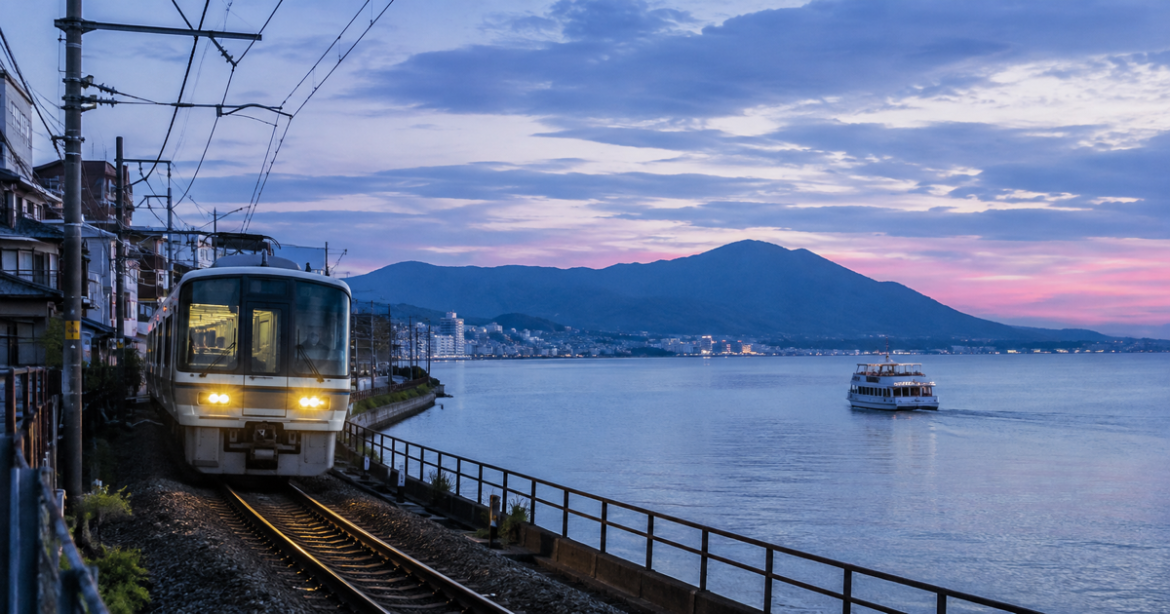

Kyoto to Lake Biwa Transportation Guide 2026: Otsu, Omihachiman, Hikone & Lakeside Access
Lake Biwa is not a single destination with one arrival station. Japan’s largest lake stretches across Shiga Prefecture, and the best route from Kyoto depends on whether you want the convenient southern waterfront at Otsu, the historic canals of Omihachiman, Hikone Castle on the eastern shore, an onsen stay around Ogoto, or quieter scenery on the western and northern sides of the lake.
For most travelers, JR is the easiest answer. Otsu is only about 10 minutes from Kyoto Station on the JR Biwako Line, while Special Rapid trains continue east toward Omihachiman and Hikone. The JR Kosei Line instead follows the western side of Lake Biwa toward Ogoto-onsen, Katata, Omi-Takashima and Omi-Imazu.
If you are making a simple day trip, Otsu, Omihachiman and Hikone are all practical without a car. Driving becomes much more attractive when your priority is the rural western shore, Shirahige Shrine, several spread-out lakeside viewpoints, or a multi-stop circuit. Travelers who prefer not to coordinate trains and local buses can also compare a Lake Biwa and La Collina day tour from Kyoto.
Quick Kyoto to Lake Biwa Transportation Comparison
| Destination / Option | Otsu |
|---|---|
| Best For | First visit, easiest day trip |
| Route from Kyoto | JR Biwako Line to Otsu |
| Approx. Travel Time | About 10 minutes |
| Editor’s Tip | Best choice if you mainly want a quick Lake Biwa waterfront visit |
| Destination / Option | Biwako-Hamaotsu / Otsu Port |
|---|---|
| Best For | Lake cruises and waterfront |
| Route from Kyoto | JR to Otsu plus local transport/walk, or subway + Keihan from central Kyoto |
| Approx. Travel Time | About 25 minutes from Sanjo area by through railway service |
| Editor’s Tip | Better arrival point than JR Otsu Station for Otsu Port |
| Destination / Option | Omihachiman |
|---|---|
| Best For | Canals, old merchant town, La Collina |
| Route from Kyoto | JR Biwako Line Special Rapid to Omi-Hachiman |
| Approx. Travel Time | Roughly 30–40 minutes |
| Editor’s Tip | Allow for a bus after arriving because the old town is not beside the station |
| Destination / Option | Hikone |
|---|---|
| Best For | Castle, history, full-day trip |
| Route from Kyoto | JR Biwako Line Special Rapid to Hikone |
| Approx. Travel Time | About 45–50 minutes |
| Editor’s Tip | One of the easiest substantial Lake Biwa day trips from Kyoto |
| Destination / Option | Ogoto-onsen |
|---|---|
| Best For | Ryokan and hot springs |
| Route from Kyoto | JR Kosei Line to Ogoto-onsen |
| Approx. Travel Time | Short regional train journey |
| Editor’s Tip | Excellent for an overnight stay rather than rushed sightseeing |
| Destination / Option | Katata / Ukimido |
|---|---|
| Best For | Traditional lakeside scenery |
| Route from Kyoto | JR Kosei Line to Katata, then local bus |
| Approx. Travel Time | Varies by connection |
| Editor’s Tip | Public transport works, but local connections matter |
| Destination / Option | Omi-Takashima / Shirahige Shrine |
|---|---|
| Best For | Floating torii photography |
| Route from Kyoto | JR Kosei Line to Omi-Takashima, then bus or taxi |
| Approx. Travel Time | Longer than southern Lake Biwa |
| Editor’s Tip | Do not expect the shrine to be directly beside the station |
| Destination / Option | Self-driving |
|---|---|
| Best For | Multiple rural lakeside stops |
| Route from Kyoto | Rental car from Kyoto |
| Approx. Travel Time | Highly route-dependent |
| Editor’s Tip | Best for western and northern Lake Biwa |
Is There a Direct Train from Kyoto to Lake Biwa?
Yes, but the important point is that there are several useful Lake Biwa stations rather than one “Lake Biwa Station.”
The JR Biwako Line runs from Kyoto toward Otsu, Kusatsu, Omihachiman, Hikone and Maibara. For eastern-shore destinations, Special Rapid services are usually the most useful because they cover longer distances quickly without requiring a Shinkansen reservation.
The JR Kosei Line leaves Kyoto in the direction of the western shore, serving areas such as Otsukyo, Hieizan-Sakamoto, Ogoto-onsen, Katata, Omi-Takashima and Omi-Imazu. Shiga’s official tourism guide specifically recommends the Biwako Line for much of the eastern side and the Kosei Line for the western side.
There is therefore no reason to take the Tokaido Shinkansen merely to reach ordinary Lake Biwa sightseeing areas from Kyoto. Conventional JR trains are normally simpler.
Which Lake Biwa Area Should You Choose?
Otsu: Best for the Easiest First Visit
Otsu is the closest major Lake Biwa city to Kyoto. JR Otsu Station is approximately 10 minutes from Kyoto Station, making this one of the easiest day trips you can add to a Kyoto itinerary.
Choose Otsu for waterfront walks, Lake Biwa cruises, Mii-dera, the Lake Biwa Canal and a relaxed change of atmosphere without spending much of the day on transportation.
For Otsu Port and the Michigan sightseeing cruise, Keihan Biwako-Hamaotsu Station is particularly convenient. The waterfront attractions cluster much closer to this station than to JR Otsu Station.
Omihachiman: Best for Canals and Traditional Townscapes
Omihachiman offers a very different experience from central Otsu. The highlights are the Hachiman-bori canal district, old merchant streets, Himure Hachimangu, Hachimanyama Ropeway and the wider Lake Nishinoko area.
Take a JR Biwako Line Special Rapid from Kyoto to Omi-Hachiman Station. The sightseeing district is not immediately outside the station: Hachiman-bori is reached by local bus, with the official Shiga tourism guide listing approximately 12 minutes to the Osugi-cho stop.
This is an important planning detail. Omihachiman is easy to reach from Kyoto, but it is not a “leave the station and start sightseeing” destination.
Hikone: Best for a Full Historical Day Trip
Hikone is farther from Kyoto but remains straightforward. The official Hikone tourism association lists Kyoto to Hikone at approximately 46 minutes by JR Special Rapid.
From Hikone Station, Hikone Castle is approximately a 15-minute walk. This makes Hikone unusually convenient for travelers who want a major sightseeing attraction without adding a bus transfer after the train.
Hikone works well as a full-day destination when combined with Genkyu-en Garden, Yumekyobashi Castle Road and the castle-town streets. If your priority is history rather than simply seeing the lake, this is one of the strongest choices from Kyoto.
Kyoto to Western Lake Biwa: Ogoto, Katata and Takashima
The western shore uses the JR Kosei Line rather than the JR Biwako Line. This is the route to choose for Ogoto-onsen, Katata, Omi-Takashima and Omi-Imazu.
Ogoto-onsen
Ogoto-onsen is one of the easiest ways to turn Lake Biwa into an overnight side trip from Kyoto. JR Ogoto-onsen Station is on the Kosei Line, and many ryokan in the area provide station pickups for staying guests.
For couples, families or travelers who want an onsen stay between busy Kyoto sightseeing days, this can be more rewarding than making another rushed return trip to Kyoto at night.
Katata and Ukimido
Katata is the rail gateway for Ukimido, the distinctive temple hall extending over Lake Biwa. From JR Katata Station, use a local bus and walk from the appropriate stop; the official tourism information notes a seven-minute walk after getting off at Demachi.
Omi-Takashima and Shirahige Shrine
Shirahige Shrine is considerably less convenient by public transport. Take the Kosei Line to Omi-Takashima Station, then continue by bus or taxi. The official tourism guide lists approximately 13 minutes by taxi from the station.
The famous torii stands beside a busy national road. Visitors should use the designated observation area rather than attempting to cross the highway for photographs.
If Shirahige Shrine is one of several western-shore stops, this is where renting a car or joining an organized tour becomes much more attractive.
Kyoto to Northern Lake Biwa: Nagahama, Omi-Imazu and Chikubushima
Northern Lake Biwa requires more travel time, so it is better for a full day or overnight itinerary.
Nagahama sits on the eastern side and is reached using JR services toward Maibara and Nagahama. The historic center and waterfront are reasonably compact once you arrive.
Omi-Imazu is on the western shore and is reached via the Kosei Line. Both Nagahama and Omi-Imazu are gateways for cruises to Chikubushima Island. Nagahama Port is about a 10-minute walk from JR Nagahama Station, while Imazu Port is around five minutes on foot from JR Omi-Imazu Station. Cruise schedules vary seasonally.
A useful advanced itinerary is to travel up one side of Lake Biwa, cross the lake by a Chikubushima cruise when the seasonal timetable works, and return toward Kyoto on the other rail line. This requires careful timetable planning but gives you a much broader sense of the lake.
Kyoto to Lake Biwa by Car
Driving is unnecessary for Otsu, Omihachiman or Hikone if those are your only destinations. JR is usually easier because you avoid Kyoto traffic, parking and navigation.
A car becomes worthwhile when you want Shirahige Shrine, rural Takashima scenery, lakeside beaches, small temples, countryside cafés or several widely separated stops in one day. Shiga’s official tourism guide specifically identifies driving as particularly useful for exploring rural western and northern areas where public transportation is less frequent.
Travelers who want this flexibility can compare Kyoto car rentals. Remember that parking fees, expressway tolls and fuel are separate from the rental price.
Lake Biwa Day Tour from Kyoto
An organized tour makes the most sense when the itinerary combines places that would otherwise require several train, bus and taxi connections.
One current option is the Lake Biwa and La Collina day tour, which offers Kyoto boarding and combines several Shiga sightseeing areas by road. Current itineraries can include Shirahige Shrine, Ukimido and La Collina, with seasonal variations, so check the exact route for your travel date before booking.
This option is most attractive for first-time visitors who specifically want scattered western-shore attractions. It is less compelling if your only goal is Hikone Castle or Hachiman-bori, because those are manageable independently by train.
Which JR Pass Is Worth Using?
| Ticket / Pass | Regular JR ticket / IC card |
|---|---|
| Best For | One Lake Biwa day trip |
| Lake Biwa Use | Otsu, Omihachiman, Hikone and many Kosei Line stations |
| Worth It? | Usually the simplest choice |
| Ticket / Pass | JR West Kansai Area Pass |
|---|---|
| Best For | Several JR trips around Kansai |
| Lake Biwa Use | Eligible JR conventional trains within the pass area |
| Worth It? | Compare total itinerary cost first |
| Ticket / Pass | JR Kansai Wide Area Pass |
|---|---|
| Best For | Longer regional journeys |
| Lake Biwa Use | Useful only when Lake Biwa is part of a wider JR itinerary |
| Worth It? | Normally excessive for Lake Biwa alone |
| Ticket / Pass | Nationwide Japan Rail Pass |
|---|---|
| Best For | Long-distance Japan itinerary |
| Lake Biwa Use | JR sections can be covered |
| Worth It? | Do not buy it specifically for Kyoto–Lake Biwa |
The basic rule is simple: do not buy an expensive regional pass solely for a short Kyoto–Otsu return journey. JR West’s current Kansai Area Pass includes Special Rapid, Rapid and Local services in its designated area, but a pass should be evaluated against your entire Kansai itinerary rather than one Lake Biwa day trip.
Suggested Kyoto to Lake Biwa Itineraries
Itinerary 1: Easy Otsu Half-Day Trip
Route: Kyoto Station → Otsu → waterfront → Biwako-Hamaotsu / Otsu Port → Kyoto.
This is best for travelers with limited time. You can leave Kyoto after breakfast, enjoy the lake, add a cruise or temple, and still return for dinner.
Itinerary 2: Omihachiman Full Day
Route: Kyoto → Omi-Hachiman Station → Hachiman-bori → Himure Hachimangu → Hachimanyama Ropeway → La Collina → Kyoto.
Allow a full day because local buses and walking add time beyond the JR journey.
Itinerary 3: Hikone Castle Day Trip
Route: Kyoto → Hikone Station → Hikone Castle → Genkyu-en → Yumekyobashi Castle Road → Kyoto.
This is the strongest option for history-focused travelers and remains very manageable without a car.
Itinerary 4: Western Shore Scenic Route
Route: Kyoto → Shirahige Shrine → Katata / Ukimido → lakeside stops → Kyoto.
A rental car, charter vehicle or organized tour is usually more efficient than repeatedly connecting between JR stations and local buses.
Itinerary 5: Lake Biwa Overnight
Route: Kyoto → daytime sightseeing → Ogoto-onsen ryokan → next-day western or northern Lake Biwa sightseeing → Kyoto.
This is the most relaxed choice for couples and travelers who want Lake Biwa to feel like a destination rather than a quick Kyoto side trip.
Common Mistakes to Avoid
- Searching for “Lake Biwa Station.” Choose your actual destination first: Otsu, Omihachiman, Hikone, Katata, Takashima or another area.
- Using Otsu Station for every Otsu attraction. Biwako-Hamaotsu is often more convenient for the port and waterfront.
- Assuming Omihachiman’s old town is beside the JR station. Budget time for a bus.
- Trying to combine Omihachiman, Hikone and the western shore in one public-transport day. Lake Biwa is much larger than it appears on a regional map.
- Buying a JR pass automatically. Regular tickets are often better for a single short return trip.
- Taking the Shinkansen unnecessarily. Conventional JR services are the normal solution from Kyoto.
- Planning Shirahige Shrine like an urban attraction. The final connection requires more effort than reaching Otsu or Hikone.
- Ignoring boat timetables. Chikubushima services vary by season, so organize the rail journey around the cruise rather than the reverse.
FAQ
What is the best way to get from Kyoto to Lake Biwa?
For most travelers, take JR. Use the Biwako Line for Otsu, Omihachiman and Hikone, or the Kosei Line for the western shore.
How long does Kyoto to Lake Biwa take?
It depends on the destination. Otsu is only about 10 minutes from Kyoto, while Hikone takes approximately 46 minutes by Special Rapid. Western and northern Lake Biwa destinations take longer.
Can I visit Lake Biwa as a day trip from Kyoto?
Yes. Otsu, Omihachiman and Hikone are all realistic day trips. Choose one main area rather than trying to circle the lake.
Is Otsu or Hikone better?
Choose Otsu for convenience, waterfront scenery and a short trip. Choose Hikone for a more substantial historical day centered on Hikone Castle.
Is Omihachiman easy from Kyoto?
Yes by JR, but the main canal and old-town sights require an onward bus from Omi-Hachiman Station.
Do I need a car at Lake Biwa?
Not for Otsu, Omihachiman or Hikone. A car is much more useful for Shirahige Shrine and multiple rural western or northern lakeside stops.
Is the JR Kansai Area Pass worth buying?
Usually not for one Lake Biwa return journey. It becomes more useful if you are also making several eligible JR trips around Kansai during the validity period.
Where should I stay overnight at Lake Biwa?
Ogoto-onsen is convenient for ryokan and hot springs. Hikone suits history-focused travelers, while Otsu is easiest for travelers who still want fast access to Kyoto.
How do I reach Shirahige Shrine from Kyoto?
Take the JR Kosei Line toward Omi-Takashima, then continue by local bus or taxi. The official tourism guide lists roughly 13 minutes by taxi from Omi-Takashima Station.
Can I travel around the entire Lake Biwa by train?
Railways cover large parts of both shores, but they do not form a simple tourist loop immediately beside every attraction. Local buses, taxis, bicycles, boats or a car may still be necessary.
Final Recommendation
For a first Lake Biwa trip from Kyoto, keep the plan simple. Choose Otsu if convenience matters most, Omihachiman for canals and merchant-town atmosphere, or Hikone for the strongest history-focused day trip. Use the JR Kosei Line when your target is the western shore.
If you want Shirahige Shrine, Ukimido and several rural viewpoints in one day, consider a Lake Biwa day tour from Kyoto or renting a car in Kyoto. The biggest planning mistake is treating Lake Biwa as one compact attraction; choosing the correct shore and station first will make the entire trip much easier.