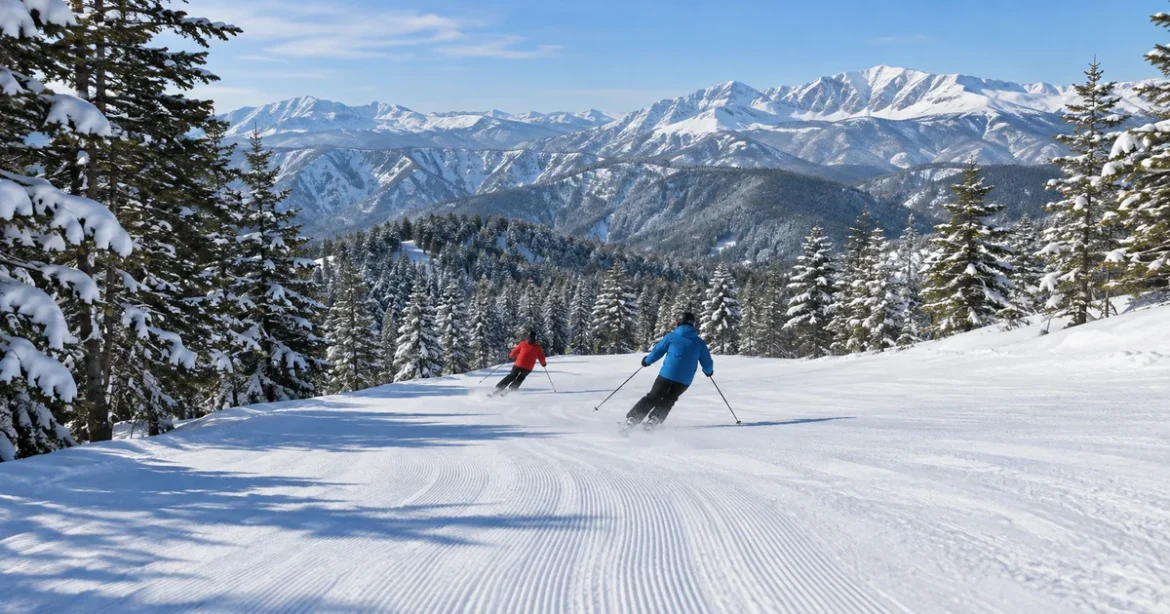
Marunuma Kogen suits travellers who want skiing to be the focus of the trip, with long descents from the area around 2,000 metres above sea level. Lower learning terrain, intermediate cruising and more demanding ungroomed runs give different abilities useful choices. A day trip from Tokyo is possible to plan, but transport connections and the return deadline often matter more than the headline lift price.
The operator has announced planned 2026–27 dates and early-bird tickets, while general fare, transport and school pages still contain some 2025–26 information. Always check the season and travel date attached to a product.

Marunuma Kogen’s planned 2026–27 dates
The new-season announcement plans operation from December 4, 2026 to May 5, 2027, with general hours of 08:30–16:00. Individual lift hours differ, and weather, snow and other operating conditions may change the service. These dates do not promise that every run will open every day.
The plan lists the Nikko Shirane Ropeway plus four other lifts on weekdays and six on weekends and holidays, with a snow park planned beside Lift 8. Check the daily lift and course status before travelling. Early winter, spring and windy days can offer a different mountain from peak-season photographs.
Choosing terrain: do not start with the four-kilometre descent
Beginners: build confidence lower down
The lower map includes Red, Orange and Yellow runs and nearby learning terrain. Discuss a suitable starting point with your instructor. Read the local legend: green denotes beginner, pink intermediate and blue advanced on this map. The name “Red” is a course name, not a universal difficulty rating.
The previous season’s Friendly Pass covered Lift 1, Lift 4 and the Central Lift, excluding the ropeway. That limited-area format is worth asking about if you will stay low, but its 2026–27 availability, price and upgrade terms need separate confirmation. Let the school advise which ticket the lesson requires before buying an all-mountain day pass.
Intermediates: plan a long ropeway-served run
The operator advertises a longest connected descent of approximately four kilometres. It is more useful once you can link turns, control speed and handle successive pitches. A long descent crosses different surfaces and junctions, so use the first run to learn the route before committing to repeated ropeway laps.
The ropeway reaches the area around 2,000 metres, not the 2,578-metre summit of Mount Nikko Shirane. Skiing and winter mountaineering are different activities. A mountain drawn above the pistes is not an invitation to leave the permitted ski area. Non-ski sightseeing rides also need their own operating and return arrangements checked.
Advanced skiers and riders: the Silver course
Silver is an ungroomed run of approximately 755 metres with a maximum gradient of 32 degrees, often with sustained moguls. Fresh snow changes its character again. Confidence on a groomed piste does not automatically translate to this terrain; judge visibility, snow and fatigue before entering. Off-course riding is prohibited.
The piste map and its edition
Use the Marunuma map and operating-status page, which includes a map-download link. The full map labels runs, lifts, the ropeway and base buildings. No season is visibly printed on it; use it as a layout reference, not a confirmed 2026–27 opening map.
The map source and copyright credit are MARUNUMA KOGEN. Locate Center Station, Kogen no Eki, the ropeway and your parking or bus stop before planning a route back. A line on a map does not establish that the piste is open today.
2026–27 tickets: early-bird price and coverage
The early-bird announcement lists a one-day ticket at ¥5,000, with online sales through November 30, 2026 at 23:59 Japan time. It compares this with a ¥7,000 adult day ticket on designated peak dates. That comparison is not a flat walk-up price for every day, and the older general tariff should not be used to invent next season’s weekday budget.
Check redemption as well as payment. The operator’s early-bird sales instructions describe using a QR code at an on-site machine to obtain an IC card; buying online is not necessarily the same as going straight through the lift gate. Verify validity, date exclusions, cancellation and disruption terms, and the applicable age category.
Add rentals, outerwear, helmets, lessons, parking and return travel separately. For one or two visits, a season-pass headline is unlikely to be the right comparison. Frequent visitors should calculate against the days they will realistically use, rather than the full advertised season length.
Getting there: plan the winter road approach from Numata
Driving and the Nikko-side winter closure
The access guide uses Numata Interchange on the Kan-etsu Expressway, with an indicative drive of around 50 minutes beyond it. The operator warns that navigation may suggest the Nikko side despite a winter closure. Plan via Numata and read current road notices. Actual barriers and traffic controls take priority over any old website comment about a mapping error.
Arrange winter tyres, check chain requirements and allow for snowfall and queues. Parking location affects the walk to changing rooms, ticket collection and the slopes, particularly with children or several bags. The parking information still refers to 2025–26; confirm new-season charges before budgeting.
Without a car: direct coach versus a Katashina connection
The resort lists Tokyo-area day coaches and a separate Katashina Snow Express from Shinjuku to Katashina/Kamata with a reserved Marunuma connection. The latter timetable and fares still covered December 2025 to March 2026 on the current page. They do not establish an on-sale 2026–27 service.
When the correct-season offer is available, check whether it reaches the ski resort, needs a transfer at the roadside station, limits the shuttle to particular coach passengers and has an advance-booking deadline. A ticket to Kamata is not a complete ticket to Marunuma. A package-only shuttle should not be treated as an unrestricted local bus.
Calculate usable skiing time before choosing a day trip
Put arrival, rental fitting, lesson check-in and the return meeting time on one schedule. A late-morning arrival and early connecting departure may leave much less skiing time than the resort’s opening hours suggest. An overnight stay can make a beginner family trip more relaxed, provided accommodation transfers are also confirmed.
Leave time for the descent, equipment return, changing and walking to the stop. Last uphill boarding, resort closing and coach departure are separate deadlines. A hot-spring stop after skiing needs its own time allowance rather than being squeezed into the final minutes.
Rentals, schools and children’s snow play
The rental guide lists ski sets with skis, boots and poles, and snowboard sets with a board and boots. Identification is required and stock is limited. Goggles, gloves and hats are not offered for rental in the published guide, so bring these yourself. Check outerwear and helmet inclusion separately.
The school directory introduces snowboard, SAJ and SIA schools, but the lesson dates still refer to 2025–26. Do not carry forward old start times, minimum ages or walk-in arrangements as new-season promises. Confirm language, age, experience, booking method and whether equipment and lift tickets cost extra.
The children’s-area guide places snow play and sledging near Kogen no Eki. It describes free access, no snow conveyor and normally no sled lending. Check daily preparation and opening before visiting, and bring appropriate snow-play equipment and waterproof clothing. A free play area does not include supervision or instruction.
Base facilities, hot springs and overnight stays
Center Station contains changing and storage facilities, rest space and the day-use Zazen Onsen. Mixed-ability groups can use a clearly agreed base location for meeting between runs. An indoor children’s space is a rest facility, not unattended childcare.
If staying overnight is meant to increase skiing time, compare Chalet Marunuma or accommodation in Katashina by location, meals, transfers and luggage arrangements after checkout. Check the property-to-slope transfer before choosing a room.
For a Tokyo day trip where a straightforward rail journey is the priority, also read the GALA Yuzawa ski guide. Marunuma’s long runs deserve time, but nearby-looking destinations on a regional map can involve very different journeys.
Marunuma Kogen frequently asked questions
1. What are the planned 2026–27 dates?
December 4, 2026 to May 5, 2027, generally 08:30–16:00. Individual lifts and daily terrain remain subject to conditions.
2. Is it suitable for a complete beginner?
Yes, starting lower down with suitable instruction. Do not make the four-kilometre ropeway descent your first attempt before an instructor has checked your control.
3. Does the ropeway reach Mount Nikko Shirane’s summit?
No. It reaches the area around 2,000 metres, not the mountain’s 2,578-metre summit. Winter mountaineering requires separate planning.
4. How difficult is Silver?
The operator lists approximately 755 metres, a maximum 32-degree gradient and ungroomed terrain. Moguls and changing snow make it inappropriate to force as a new skier.
5. How much is the 2026–27 early-bird day ticket?
The announcement lists ¥5,000, on sale through November 30, 2026 at 23:59 Japan time. Check validity and redemption before buying.
6. Does the Friendly Pass include the ropeway?
The published previous-season format covered only Lift 1, Lift 4 and the Central Lift. Confirm whether that product continues for 2026–27 and on what terms.
7. Can I drive in from Nikko in winter?
Do not plan that as the default approach. The operator warns of the Nikko-side winter closure; use the Numata approach and follow current road controls.
8. Does the Shinjuku bus go directly to the ski resort?
It depends on the product. Direct day tours and Katashina services requiring a shuttle are different. Verify the new-season terminus, transfer eligibility and return.
9. Can I rent gloves and goggles?
The published rental guide excludes gloves, goggles and hats. Bring them rather than assuming a ski set contains every clothing accessory.
10. Where can I read the map?
Use the lift-and-course page and its download entry. The full map is undated, so read it alongside the current operating status.