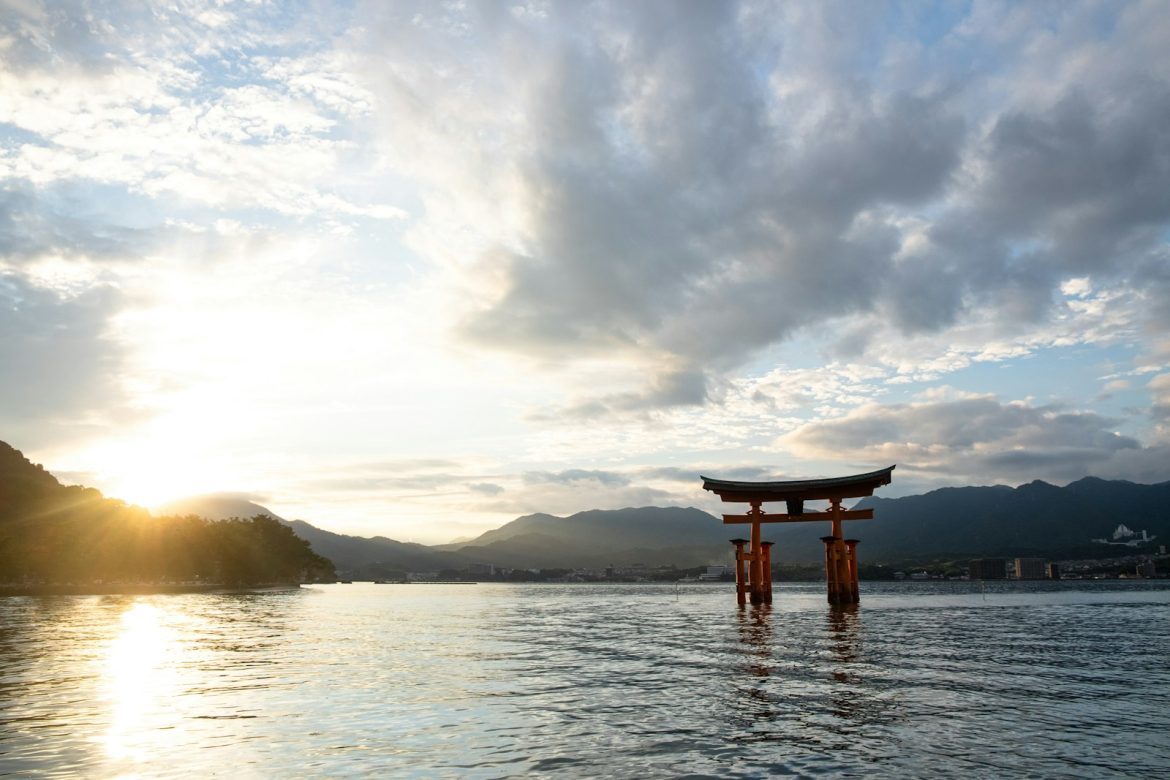
What makes Itsukushima Shrine worth visiting is not simply the famous vermilion torii gate. The entire experience changes as the Seto Inland Sea rises and falls around the shrine’s corridors, stages and wooden halls. At high tide, the complex appears to float. At low tide, the exposed shore lets visitors approach the Great Torii on foot.
For a first visit, Miyajima deserves at least half a day. The shrine itself is compact, but the ferry journey, waterfront walk, tide timing, food stops and nearby temples turn it into a much larger outing. Travellers who also want Mount Misen should allow most of a day rather than trying to squeeze everything into two or three hours.
The main current update is construction. Structural reinforcement is continuing around the East Corridor through December 2026, while restoration of the Five-Storied Pagoda is a longer project. Itsukushima Shrine remains open, but some angles may include protective structures or work areas.
The smoothest first-time plan is to reach Miyajima in the morning, enter the shrine before the busiest period, eat lunch after leaving the shrine and then choose either Daisho-in Temple or Mount Misen. Trying to visit every major island attraction while also covering central Hiroshima usually produces a rushed day.
Independent travel is straightforward from Hiroshima. Travellers who prefer not to arrange the train, ferry, city sightseeing and return journey separately can compare this Hiroshima and Miyajima one-day bus tour with lunch.
For a detailed door-to-door transport comparison, see the Hiroshima to Miyajima transportation guide.

Is Miyajima Itsukushima Shrine Worth Visiting?
| Question | Editor’s recommendation |
|---|---|
| Is it worth visiting? | Yes, particularly for a first Hiroshima trip, cultural travel and photography. |
| Best suited to | First-time visitors, photographers, couples, families, shrine enthusiasts and travellers interested in the Seto Inland Sea. |
| Who may prefer to skip it? | Travellers with only a few hours in Hiroshima who are more interested in the Peace Memorial Museum than an island excursion. |
| Admission required? | Yes for the shrine corridors. The waterfront and distant views of the Great Torii are free. |
| Suggested shrine time | Approximately 30–60 minutes inside the paid shrine route. |
| Suggested Miyajima time | Four to six hours for a comfortable first visit; longer with Mount Misen. |
| Transport difficulty | Easy from Hiroshima, but it requires a train or streetcar, a ferry and a final waterfront walk. |
| Main highlight | The changing relationship between the shrine, Great Torii and tide. |
| Main disadvantage | Heavy midday crowds and a visit that can feel disappointing when planned without checking the tide. |
| Children | Suitable, especially when combined with snacks, deer watching or the aquarium. |
| Older travellers | The shrine and waterfront are manageable, but Mount Misen is a separate and more demanding addition. |
| Wheelchair access | The shrine’s main route is barrier-free and has a ramped entrance. |
| Overnight stay | Not essential, but worthwhile for quiet evening and early-morning scenery. |
| Best time of day | Early morning for lower crowds, adjusted to the day’s tide. |
Itsukushima Shrine should be a priority for travellers spending two or more days in Hiroshima. It combines architecture, landscape and ferry travel in a way that feels different from visiting a city-centre shrine.
It is less essential when a traveller has only one short day in Hiroshima and wants to spend meaningful time inside the Peace Memorial Museum. In that situation, dividing a few hurried hours between the museum and Miyajima can weaken both experiences.
These are different guided itineraries, not standalone shrine, ferry or ropeway tickets. You do not need both to explore independently. Check the departure city, meeting point, guide language, walking and child requirements, and exactly which ferry trips, admission fees and meals your selected package includes. A tour does not guarantee a particular tide or an operating ropeway.
Essential Information
| Item | Current details |
|---|---|
| Official name | Itsukushima Shrine |
| Japanese name | 嚴島神社 / 厳島神社 |
| Address | 1-1 Miyajima-cho, Hatsukaichi, Hiroshima |
| Adult admission | ¥300 |
| High-school admission | ¥200 |
| Elementary and junior-high admission | ¥100 |
| Shrine and Treasure Hall combination | Adult ¥500; high-school student ¥300; elementary or junior-high student ¥150 |
| Closed days | None under the regular annual schedule |
| Nearest arrival point | Miyajima Ferry Terminal |
| Final walk | Approximately ten minutes along the waterfront |
| Reservation | Not normally required for individual shrine admission |
| Suggested shrine duration | 30–60 minutes |
| Suggested island duration | Four to six hours |
Itsukushima Shrine Opening Hours
| Period | Opening hours |
|---|---|
| January 1 | 00:00–18:30 |
| January 2–3 | 06:30–18:30 |
| January 4–end of February | 06:30–17:30 |
| March 1–October 14 | 06:30–18:00 |
| October 15–November 30 | 06:30–17:30 |
| December 1–31 | 06:30–17:00 |
A separate final-admission time is not normally emphasised. Do not interpret the closing time as the ideal time to enter. The shrine follows a one-way route, so arriving shortly before closure leaves little margin for photography or delays.
Latest Opening and Construction Status
Itsukushima Shrine remains open during the current works. The main trip is therefore still worthwhile, but visitors should understand which structures may be affected.
East Corridor Reinforcement
Structural reinforcement of the East Corridor is scheduled through December 2026. The corridor forms part of the normal route shortly after the entrance, so temporary surfaces, partitions or visible work areas may affect some photographs.
Five-Storied Pagoda Restoration
The hilltop Five-Storied Pagoda near Senjokaku is undergoing a longer restoration project. It is not inside the shrine’s paid corridor route, so this does not prevent visitors from entering Itsukushima Shrine. It can, however, change the appearance of one of Miyajima’s best-known skyline views.
Great Torii Status
The major Great Torii restoration has been completed. The gate is visible without the large scaffolding that affected previous visits. Tide level, weather and light are now the principal factors determining the view.
Should You Visit at High Tide or Low Tide?
The biggest mistake first-time visitors make is treating the tide as a minor photography detail. It changes the physical character of the shrine.
| Tide condition | What you see | Best for | Main limitation |
|---|---|---|---|
| High tide | Water beneath the shrine corridors and around the Great Torii | The classic floating-shrine view | You cannot walk to the gate |
| Falling or rising tide | A mixture of water, exposed sand and reflections | Varied photography and watching the landscape change | The scene may not match the postcard image perfectly |
| Low tide | Exposed seabed between the shore and the Great Torii | Walking close to the gate and understanding its scale | The shrine does not appear to float |
Best Choice for a First Visit
Choose high tide when the floating appearance is your main priority. Choose low tide when you care more about approaching the Great Torii and examining it from below.
Neither condition is objectively better. High tide gives the more elegant overall composition, while low tide creates the more unusual physical experience.
Can You See Both Tides in One Day?
Sometimes, but only when the daily timetable works with shrine opening hours and your wider route. The interval between a high and low tide can occupy much of the day.
A sensible both-tides itinerary uses the time between them for the shrine, lunch, Daisho-in Temple, Momijidani Park or Mount Misen. Waiting beside the waterfront for several hours is unnecessary.
Check the official Miyajima tide tool for your exact date rather than using a generic “best time.” Tide times change every day.
Tickets, Reservations and Transport Passes
Standard Shrine Admission
Buying the standard ticket directly at the entrance is sufficient. There is no strong reason to use a third-party platform for admission alone.
Admission covers the shrine’s wooden corridor route and central structures. It does not include ferry transportation, the Miyajima Visitor Tax, Mount Misen Ropeway or other paid island attractions.
Shrine and Treasure Hall Combination Ticket
The combination ticket makes sense for travellers with a specific interest in religious objects, historical materials and shrine treasures. For a short first visit focused on the architecture and Great Torii, standard shrine admission is enough.
Bring Japanese yen. The official information specifically states that credit-card payment is not available at the Treasure Hall.
Visit Hiroshima Tourist Pass
The Visit Hiroshima Tourist Pass is useful when your itinerary includes Hiroden streetcars, central buses and a Miyajima ferry within the same validity period. It does not cover the JR train between Hiroshima Station and Miyajimaguchi.
This means it suits travellers staying around Peace Memorial Park, Hondori or Hatchobori who plan to take the streetcar toward Miyajimaguchi. It is less compelling for someone staying beside Hiroshima Station who intends to use JR trains.
The separate ¥100 Miyajima Visitor Tax is not included.
JR Regional Passes
A JR regional pass should not be purchased for the shrine trip alone. The local Hiroshima–Miyajima journey is inexpensive compared with the cost of a multi-day regional pass.
The pass becomes useful when Miyajima is part of a wider route from Osaka, Kyoto, Fukuoka, Yamaguchi or other destinations. Travellers coming from Kansai can compare the JR Kansai–Hiroshima Area Pass. A Hiroshima, Iwakuni and Yamaguchi itinerary may fit the JR Hiroshima–Yamaguchi Area Pass.
Use the JR West Miyajima Ferry when relying on JR pass coverage. A pass for one operator should not be assumed to cover every ferry departing from Miyajimaguchi.
Ticket and Pass Comparison
| Option | What it covers | Best suited to | Main limitation |
|---|---|---|---|
| Direct shrine ticket | Itsukushima Shrine admission | Almost every independent visitor | No transport included |
| Shrine and Treasure Hall ticket | Shrine plus Treasure Hall | History and religious-art enthusiasts | Unnecessary for a quick visit |
| Visit Hiroshima Tourist Pass | Hiroden streetcars, selected buses and Miyajima ferry routes | Visitors sightseeing around central Hiroshima and Miyajima | JR conventional trains and visitor tax are excluded |
| JR Kansai–Hiroshima Area Pass | Covered JR travel from Kansai plus JR ferry | Osaka or Kyoto regional itineraries | Poor value for Hiroshima and Miyajima alone |
| Guided day tour | Transport, guiding and selected inclusions | Travellers avoiding transfers or combining city and island sights | Less freedom around tide timing |
For a deeper pass comparison, use the Hiroshima transport pass guide.
How to Get to Itsukushima Shrine
From Hiroshima Station: Best Route for Most Visitors
- Take a JR Sanyo Line train from Hiroshima Station to Miyajimaguchi.
- Leave JR Miyajimaguchi Station and follow signs toward the ferry terminal.
- Cross to Miyajima using the JR West Miyajima Ferry or Miyajima Matsudai Kisen.
- Leave Miyajima Ferry Terminal and turn right toward the waterfront.
- Continue past the harbour-front area and shopping-street approaches.
- Reach Itsukushima Shrine in approximately ten minutes.
Allow approximately 45–60 minutes from Hiroshima Station to the island when train, walking, ferry and normal waiting time are combined.
From Peace Memorial Park, Hondori or Hatchobori
Travellers based in central Hiroshima can use a Hiroden streetcar toward Hiroden-miyajima-guchi, followed by the ferry. This journey is slower than JR from Hiroshima Station but may be more convenient than travelling back to the station first.
The Visit Hiroshima Tourist Pass is designed around this style of trip because it includes Hiroden streetcars and the participating ferry routes.
Which Miyajima Ferry Should You Take?
Both principal Miyajimaguchi ferry operators make the short crossing to the same island terminal.
- Use JR West Miyajima Ferry when your JR pass explicitly covers it.
- Use either operator when buying ordinary single tickets.
- Do not forget the separate ¥100 visitor tax when entering Miyajima.
- Check the day’s timetable when travelling early or returning late.
The island terminal is the same practical arrival point regardless of which principal ferry you choose.
From Osaka or Kyoto
Take the Shinkansen to Hiroshima, transfer to the JR Sanyo Line for Miyajimaguchi and then take the ferry. A same-day return is technically possible, but it produces a long day and leaves less flexibility for tide timing.
Travellers arriving from Kansai should read the Osaka to Hiroshima transportation guide before deciding whether a JR regional pass makes sense.
Driving and Parking
For most visitors, driving onto Miyajima is unnecessary. Passenger areas are compact, central streets can be busy and the shrine has no private visitor car park.
The smoother self-drive plan is to park around Miyajimaguchi on the mainland and continue as a foot passenger. During weekends, public holidays and peak foliage periods, arrive early because mainland parking demand can be high.
The Correct First-Time Route
The shrine itself follows a largely one-way route. Plan the island walk so that you do not repeatedly double back through the busiest waterfront sections.
Recommended Order
- Miyajima Ferry Terminal
- Waterfront approach and first Great Torii view
- Itsukushima Shrine entrance
- East Corridor
- Marodo Shrine
- Main Shrine
- High Stage and open platform
- Western Corridor
- Noh Stage and arched bridge
- Shrine exit
- Daiganji Temple
- Great Torii approach at low tide, when conditions permit
- Lunch or Omotesando Shopping Street
- Daisho-in, Momijidani Park, aquarium or Mount Misen
Why Enter the Shrine Before Lunch?
Late morning and lunchtime bring heavier day-trip crowds. Entering earlier also protects the shrine visit from delays caused by restaurant queues, snack stops and deer encounters around the shopping streets.
After leaving through the western side, continuing toward Daiganji and Daisho-in is more efficient than immediately returning to the ferry terminal.
Main Highlights Inside and Around the Shrine
1. The Great Torii
The Great Torii is the visual symbol of Miyajima, but its scale is easiest to understand at low tide. From the shrine platform, it creates the classic framed composition. From the exposed shore, it feels far larger and more structural.
Do not spend all your time at the first waterfront viewpoint. The angle changes as you move through and beyond the shrine.
2. The East and West Corridors
The long vermilion corridors connect the shrine’s halls above the tidal shore. They are not merely access walkways: their changing lines, shadows and reflections are central to the architecture.
The floorboards have deliberate gaps that allow water pressure to pass through during unusually high water. Avoid narrow heels, which can become caught.
3. The Main Shrine
The main worship area explains why Itsukushima is more than a photography stop. Pause rather than moving immediately toward the torii viewpoint, especially when a queue forms around the central approach.
4. The High Stage and Open Platform
This is one of the strongest positions for seeing the shrine, torii and surrounding mountains as a unified landscape. At high tide, water beneath the platform intensifies the floating appearance.
5. The Noh Stage
The offshore Noh stage shows how performance, worship and the sea are integrated into the complex. Its appearance changes dramatically between high and low tide.
6. Soribashi, the Arched Bridge
The steep ceremonial bridge is normally viewed rather than crossed. Its curved profile provides a useful architectural contrast with the shrine’s long horizontal corridors.
7. The View After the Exit
Do not assume the experience ends at the gate. The western waterfront, Daiganji area and low-tide shore offer several of the best perspectives back toward the shrine.
Walking, Footwear and Physical Difficulty
The waterfront route between the ferry terminal and shrine is mostly straightforward. The shrine section is far less physically demanding than Mount Misen.
| Section | Difficulty | What to expect |
|---|---|---|
| Ferry terminal to shrine | Easy | Approximately ten minutes on a busy waterfront route |
| Inside Itsukushima Shrine | Easy | Wooden corridors, gentle ramps and one-way movement |
| Low-tide walk to Great Torii | Moderate | Uneven, wet or muddy shore depending on conditions |
| Shrine to Daisho-in | Moderate | Uphill sections and temple steps |
| Momijidani to ropeway | Moderate | Uphill walking before the ropeway journey |
| Ropeway station to Mount Misen summit | Demanding | Substantial outdoor walking with slopes and steps |
Footwear
Wear flat, stable shoes. This matters inside the shrine because of the gaps between corridor boards and at low tide because the shore can be damp, irregular or slippery.
Large Luggage
Do not take a large suitcase around Miyajima unless you are checking into an island hotel. Store it at your Hiroshima accommodation, Hiroshima Station or another suitable facility before boarding the ferry.
Summer Heat
The waterfront has limited shade in places, and a Mount Misen addition substantially increases heat exposure. In hot weather, complete the shrine early and decide about the ropeway only after assessing the conditions.
Families, Older Travellers and Accessibility
Families with Children
The shrine works well for school-age children when it is part of a varied island outing rather than a long sequence of historical explanations. Combine it with momiji manju, deer watching, the waterfront or Miyajima Aquarium.
A compact stroller can use the ramped route, but crowded corridors require patience. Keep small wheels clear of the gaps between wooden boards.
Families should avoid promising children that they can always walk to the Great Torii. That depends entirely on the tide.
Older Travellers
The ferry terminal, waterfront and main shrine form the easiest Miyajima route. A visitor can have a worthwhile experience without adding Daisho-in’s upper levels or Mount Misen.
There are no sitting chairs inside the shrine buildings, so take breaks before entering and after leaving. The surrounding grounds provide better opportunities to rest.
Travellers with Limited Mobility
Itsukushima Shrine is designated barrier-free. A wheelchair ramp is positioned to the left of the main entrance, and the main route includes step-free adjustments.
An accessible toilet and nursing room are available. Free wheelchairs can also be borrowed from the tourist information centre at Miyajima Ferry Terminal during its operating hours, subject to same-day availability.
The main shrine remains worthwhile even without Daisho-in or Mount Misen. Those uphill attractions should be treated as optional rather than essential components.
Best Time to Visit
| Time | Crowds | Advantages | Disadvantages |
|---|---|---|---|
| 06:30–08:30 | Lowest | Quiet corridors, soft light and relaxed photography | Many shops and restaurants are not yet open |
| 08:30–10:30 | Moderate | Best overall balance for first-time visitors | Tour groups begin arriving |
| 10:30–14:30 | Highest | All shops, food stalls and attractions are operating | Busy shrine entrance and restaurant queues |
| 14:30–closing | Gradually falling | Better atmosphere after some day-trippers leave | Less time for other attractions and earlier winter closure |
| After shrine closure | Low | Atmospheric waterfront and illuminated gate views | No shrine admission and fewer open businesses |
Best First-Time Strategy
Arrive on the island before 09:30 when possible, but adjust the plan when a particularly favourable high or low tide occurs later in the day.
Photography Strategy
High tide produces reflections and cleaner water compositions. Low tide provides close-up scale and structural details. Late afternoon can be attractive, but the seasonal shrine closing time limits how late you can enter.
Seasonal Planning
Spring
Spring combines mild walking weather with cherry blossoms around parts of Miyajima. Crowds rise during peak bloom and holiday periods, so early arrival becomes more valuable.
Summer
The shrine remains manageable, but a full Mount Misen itinerary can become exhausting in heat and humidity. Carry water and avoid treating the ropeway as a fully effortless summit trip.
Autumn
Autumn is one of Miyajima’s strongest seasons, particularly around Momijidani Park. The trade-off is heavier ferry, ropeway and restaurant demand.
For wider seasonal planning, see the Hiroshima autumn leaves guide.
Winter
Winter brings earlier shrine closing hours and quieter weekdays. Clear air can produce crisp views across the Seto Inland Sea, but visitors should plan the final ferry connection rather than lingering without checking the timetable.
Rain
The shrine corridors are partly sheltered, making Itsukushima more workable in light rain than Mount Misen. Wet wooden boards and the exposed shore require extra care.
Half-Day Miyajima Itinerary
This route suits travellers who want the shrine, food and atmosphere without Mount Misen.
| Time | Plan |
|---|---|
| 08:30 | Depart central Hiroshima or Hiroshima Station |
| 09:30 | Arrive on Miyajima and walk along the waterfront |
| 09:45 | Visit Itsukushima Shrine |
| 10:30 | Explore Daiganji and the western waterfront |
| 11:00 | Visit Daisho-in’s lower area or approach the Great Torii at low tide |
| 12:00 | Lunch: anago meshi or oysters |
| 13:00 | Omotesando Shopping Street and momiji manju |
| 14:00 | Return by ferry |
This is the best plan when Miyajima forms one part of a two-day Hiroshima itinerary. The broader Hiroshima travel guide explains how to divide the city and island across separate days.
Full-Day Miyajima Itinerary
A full day is appropriate when Mount Misen, Daisho-in or both tide conditions matter.
| Time | Plan |
|---|---|
| 08:00 | Leave Hiroshima |
| 09:00 | Arrive on Miyajima |
| 09:15 | Waterfront and Itsukushima Shrine |
| 10:15 | Daiganji and Daisho-in Temple |
| 11:30 | Early lunch |
| 12:30 | Walk through Momijidani Park to the ropeway |
| 13:00 | Ropeway and Mount Misen area |
| 15:30 | Return to the waterfront |
| 16:00 | Shopping street, snacks or second tide view |
| 17:00 | Return ferry |
The summit section requires more walking than many visitors expect. Travellers who want interpretation and help coordinating the island route can consider a guided option covering the shrine, Daisho-in, ropeway and Mount Misen.
Can You Visit Hiroshima and Miyajima in One Day?
Yes, but the day needs a clear priority. The most workable combination is:
- Early Miyajima ferry
- Itsukushima Shrine
- Short island lunch
- Return to central Hiroshima
- Atomic Bomb Dome
- Peace Memorial Park
- Peace Memorial Museum, with sufficient time before closing
Do not add the Mount Misen summit to this plan unless you are prepared to rush the island and shorten the museum visit.
A guided tour is useful when you have only one sightseeing day, dislike checking multiple transport connections or are travelling from Osaka or Kyoto.
For alternatives and realistic regional combinations, see the best day trips from Hiroshima.
Nearby Attractions on Miyajima
Daiganji Temple
Daiganji is directly beside the shrine exit and requires almost no detour. It is the easiest addition for every first-time visitor.
Daisho-in Temple
Daisho-in is one of Miyajima’s strongest cultural attractions and provides a contrasting Buddhist experience. Allow at least 45–60 minutes and expect uphill walking and steps.
Senjokaku
Senjokaku offers a spacious wooden interior and views over the surrounding town. The adjacent Five-Storied Pagoda restoration currently affects the classic combined view.
Momijidani Park
Momijidani is the logical route toward the ropeway and especially worthwhile in autumn. Outside foliage season, it still provides a quieter green break from the waterfront.
Miyajima Aquarium
The aquarium works well for families, rainy weather or visitors skipping Mount Misen. It requires additional walking beyond the shrine but remains within the developed part of the island.
Mount Misen
Mount Misen turns a shrine visit into a full nature-and-scenery day. The ropeway reduces the climb but does not eliminate summit walking, slopes or steps.
What to Eat on Miyajima
Anago Meshi
Grilled conger eel over rice is the most distinctive full meal associated with the Miyajima area. Eat it before the peak lunch rush or reserve enough time for a queue.
Hiroshima Oysters
Grilled, fried and baked oysters are widely available. They work as either a meal or a snack, but several oyster dishes in succession can make the shopping-street section slower and heavier than expected.
Momiji Manju
The maple-leaf-shaped cake is the easiest local snack. Traditional red-bean filling remains common, while custard, chocolate and other variations are widely sold.
Best Meal Timing
Eat before 11:30 or after 13:30 when possible. A long midday restaurant queue can disrupt the tide plan and reduce time available for Daisho-in or the ropeway.
Should You Stay Overnight on Miyajima?
An overnight stay is not necessary for a standard shrine visit. Hiroshima city is the better base for most first-time travellers because it offers easier Shinkansen access, more restaurants and a wider range of hotels.
Staying on Miyajima becomes worthwhile when you want:
- Quiet streets after day-trippers leave
- An early-morning shrine visit
- Both high- and low-tide views
- A ryokan dinner and traditional stay
- A slower romantic or photography-focused trip
- Less pressure to complete Mount Misen before returning
Miyajima shops and casual restaurants become quieter or close earlier than central Hiroshima. Book accommodation with meals when the evening dining situation matters.
Travellers staying in the city can compare transport convenience and neighbourhood atmosphere in the Hiroshima accommodation area guide.
First-Time Mistakes to Avoid
1. Not Checking the Tide
The floating view and the walk to the Great Torii are different experiences at different times. Check the date-specific tide before fixing the island route.
2. Assuming Shrine Admission Includes the Ferry
The shrine ticket, ferry fare and Miyajima Visitor Tax are separate payments unless a transport product covers part of the journey.
3. Buying a Regional JR Pass for One Cheap Day Trip
A multi-day regional pass makes sense only when the wider intercity itinerary justifies it.
4. Boarding the Wrong Ferry with a JR Pass
JR pass coverage applies to the JR West Miyajima Ferry when the relevant pass includes it. Do not assume every operator is covered.
5. Arriving Near Shrine Closing Time
The route is one-way and photography takes time. Seasonal closing hours are earlier in winter.
6. Treating the Ropeway as a Direct Ride to the Summit
Walking remains after the ropeway. Visitors with knee, balance or stamina concerns should assess the route separately from the shrine.
7. Wearing Narrow Heels
The corridor floorboards contain gaps. Flat shoes are safer and more comfortable.
8. Carrying a Large Suitcase
The ferry, crowds and waterfront walk become inconvenient with bulky luggage. Store it before the excursion.
9. Trying to Do Mount Misen and the Peace Museum Too Quickly
Both deserve time. A shrine-only Miyajima visit combines better with central Hiroshima than a full summit outing.
10. Planning Lunch at the Busiest Time
Queues between roughly late morning and early afternoon can consume the time intended for the tide or ropeway.
11. Assuming Construction Means the Shrine Is Closed
The shrine remains open. Current works affect specific structures and views rather than cancelling the main visit.
12. Expecting Every Shop to Stay Open into the Evening
Miyajima becomes much quieter after day visitors leave. Overnight guests should plan dinner rather than relying on late casual dining.
Miyajima Itsukushima Shrine FAQ
How much is admission to Itsukushima Shrine?
Standard admission is ¥300 for adults, ¥200 for high-school students and ¥100 for elementary or junior-high students.
Do I need to reserve Itsukushima Shrine?
No. Ordinary individual admission is normally purchased at the entrance without a timed reservation.
Is Itsukushima Shrine open during construction?
Yes. The shrine remains open, although East Corridor reinforcement and the separate pagoda restoration may affect some views.
How long should I spend inside the shrine?
Allow 30–60 minutes. Photography, crowds and worship can extend the visit.
How long should I spend on Miyajima?
Allow four to six hours for the shrine, food and one nearby attraction. Add more time for Mount Misen.
Is high tide or low tide better?
High tide is better for the floating-shrine image. Low tide is better for walking close to the Great Torii.
Can I walk to the Great Torii?
Yes, when the tide is sufficiently low and shore conditions allow it.
How far is the shrine from the ferry terminal?
The waterfront walk takes approximately ten minutes without long stops.
Which ferry should I take?
Either principal operator works with ordinary tickets. Use the JR West ferry when relying on relevant JR pass coverage.
How much is the Miyajima ferry?
The JR West ferry’s standard one-way fare is ¥200 for adults and ¥100 for children aged 6 to under 12. A separate ¥100 Miyajima Visitor Tax normally applies per person when entering the island; preschool children who have not yet entered elementary school are exempt.
What is the Miyajima Visitor Tax?
It is a separate ¥100 charge collected when most visitors enter Miyajima by boat.
Does the JR Pass cover the visitor tax?
No. Even when a pass covers the JR ferry fare, the ¥100 visitor tax remains separate.
Is Itsukushima Shrine wheelchair accessible?
Yes. A ramped entrance and barrier-free main route are provided.
Can I borrow a wheelchair on Miyajima?
Yes. The tourist information centre offers free same-day loans, subject to availability and operating hours.
Is Itsukushima Shrine suitable for a stroller?
The ramped route reduces stairs, but narrow corridors, crowds and floorboard gaps require care.
Is Miyajima good for children?
Yes. Combine the shrine with snacks, deer watching, the aquarium or a shorter waterfront route.
Is the shrine difficult for older travellers?
The shrine route is manageable. Daisho-in and Mount Misen are more physically demanding and can be skipped.
Can I visit Miyajima in the rain?
Yes. Parts of the shrine route are sheltered, although wet boards and the exposed shore can be slippery.
Can I visit Hiroshima and Miyajima in one day?
Yes, but keep Miyajima to the shrine, food and a short walk. Do not add the Mount Misen summit unless you accept a rushed day.
Do I need a tour?
No. Independent access from Hiroshima is straightforward. A tour is useful when combining Miyajima and Hiroshima city in one limited day.
Is the Visit Hiroshima Tourist Pass worth it?
It can be worthwhile when using Hiroden streetcars, buses and the Miyajima ferry. It does not cover JR conventional trains or the visitor tax.
Should I stay overnight?
Stay overnight for quiet evening streets, early shrine access, both tides or a ryokan experience. Otherwise, Hiroshima city is a practical base.
Where should I leave large luggage?
Use your hotel, Hiroshima Station or another suitable mainland storage facility before travelling to Miyajima.
Final Recommendation
Itsukushima Shrine is worth prioritising on a first Hiroshima trip. The combination of ferry travel, tidal scenery, religious architecture and local food makes it more than a quick landmark photograph.
Allow at least half a day. Enter the shrine in the morning, plan around the tide and add Daisho-in or a relaxed lunch rather than immediately attempting every attraction on the island.
The standard ¥300 shrine ticket is the correct choice for most independent visitors. The combination ticket is useful only when the Treasure Hall is a genuine interest.
From Hiroshima Station, use JR to Miyajimaguchi and continue by ferry. From Hondori, Hatchobori or Peace Memorial Park, the Hiroden route may be geographically easier despite taking longer.
The Visit Hiroshima Tourist Pass is useful for a city-and-island itinerary built around streetcars, buses and ferry travel. Regional JR passes make sense only when Miyajima is part of a broader intercity journey.
Current corridor and pagoda restoration should not stop you from visiting. The shrine remains open, and the Great Torii is visible, but travellers focused on pristine architecture photography should expect some construction-related changes.
Book a guided tour when you have only one sightseeing day, are arriving from Osaka or Kyoto, or want to combine Miyajima with the Peace Memorial area without managing each connection yourself.