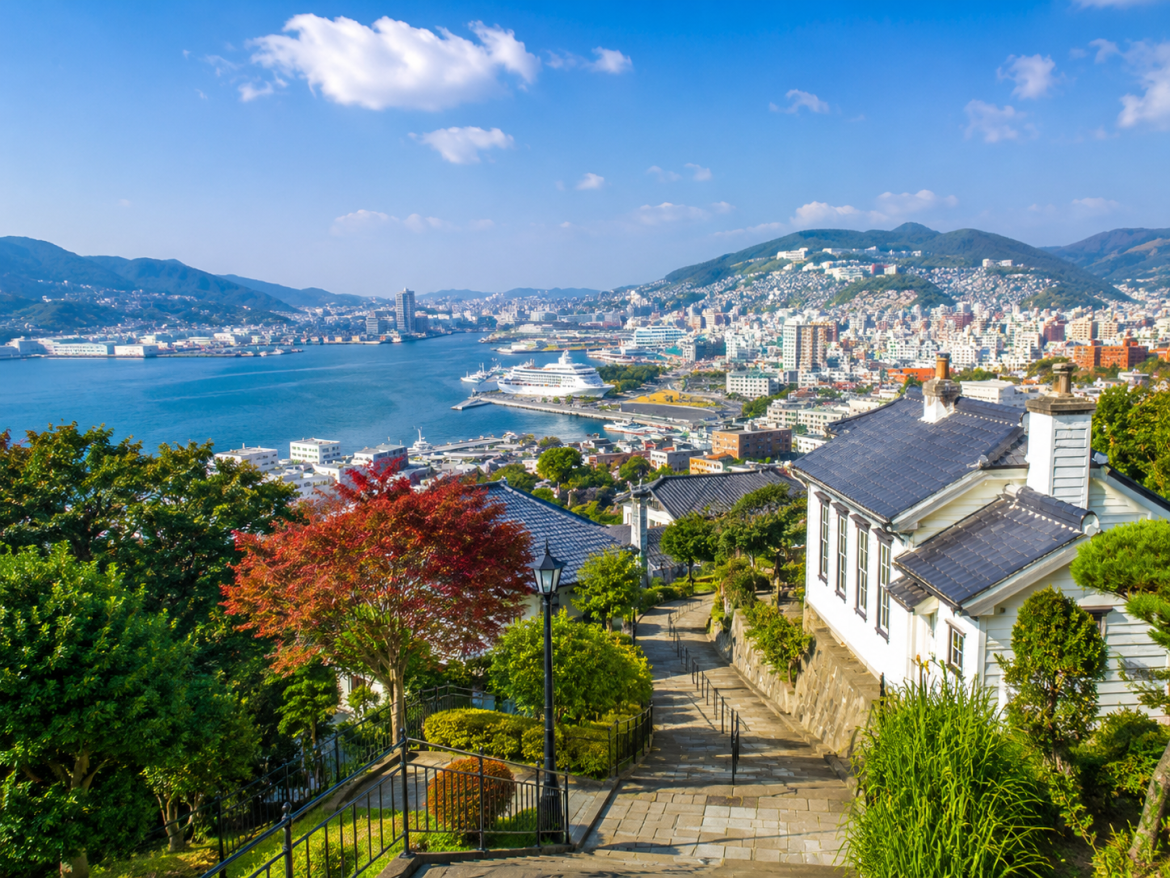
Nagasaki is worth visiting for travelers who want more than temples, shopping streets and large-city attractions. Its appeal comes from a combination of harbor scenery, international trading history, Christian heritage, food influenced by overseas contact and some of Japan’s most consequential modern-history sites.
Two full days are enough for the city’s essential sights. Three days are better if you want to join a Gunkanjima cruise, visit Mt. Inasa after dark and experience the Peace Park area without rushing.
The main planning challenge is Nagasaki’s geography. The tram network makes the city relatively easy to navigate, but it does not eliminate the slopes, stairways and uphill walks around Glover Garden, hillside temples and residential districts. A good itinerary should therefore group attractions by area instead of following a simple popularity ranking.

Nagasaki at a Glance
| Planning question | Practical answer |
|---|---|
| Is Nagasaki worth visiting? | Yes, especially for history, harbor views, distinctive food and a slower city experience |
| Ideal stay | Three days for the city and Gunkanjima; two days without the cruise |
| Minimum useful stay | One full day, although several major areas must be skipped |
| Best for | History-focused travelers, couples, solo travelers, photographers and slow travel |
| Less suitable for | Travelers seeking intense nightlife, theme parks or completely flat sightseeing routes |
| Main transport | Tram, walking and occasional bus or taxi |
| Tram pass value | Best when making at least four or five standard-fare rides in one day |
| Booking priority | Gunkanjima cruise first, followed by any timed night tour |
| Best evening experience | Mt. Inasa or the harbor waterfront |
| Best accommodation base | Shinchi–Dejima for sightseeing or Nagasaki Station for rail convenience |
These transport and sightseeing products are separate bookings, not a general city pass. Check the meeting point, guiding language, walking requirements, included admission and cancellation rules for your selected option.
How Many Days Do You Need in Nagasaki?
One day
A one-day visit works only as an introduction. Focus on one historical area during the morning and one central or southern district in the afternoon.
A reasonable one-day route is:
Peace Park and the Atomic Bomb Museum → Nagasaki Station area → Dejima → Shinchi Chinatown → Spectacles Bridge
Alternatively, travelers more interested in Nagasaki’s international trading history can replace the Peace Park area with Glover Garden, Oura and the waterfront.
Trying to include Peace Park, Glover Garden, Gunkanjima and Mt. Inasa in one day creates a tiring schedule and leaves almost no buffer for queues or transport delays.
Two days
Two days suit most first-time visitors who are not joining a Gunkanjima cruise. One day can cover southern Nagasaki and the port district, while the second covers the Peace Park area, central bridges, temples and shopping streets.
Three days
Three days provide the best balance. The extra day creates room for Gunkanjima, a slower museum visit, bad-weather flexibility and an evening viewpoint without forcing every meal and neighborhood into a rigid timetable.
Travelers arriving late or leaving early should consider three nights rather than assuming that three calendar days equal three full sightseeing days.
How to Get to Nagasaki
From Fukuoka by train
Rail travelers from Hakata use the Relay Kamome service toward Takeo-Onsen and transfer there to the Nishi Kyushu Shinkansen for Nagasaki. The transfer is designed to be straightforward, with connecting services using adjacent sides of the same platform where scheduled. Allow roughly an hour and a half for many connections, but search the actual departure: journey time depends on the trains and direction. Do not assume every service matches the advertised fastest journey.
This is generally the most convenient option for travelers already staying in Fukuoka. The Fukuoka transportation guide can help with planning the wider Kyushu portion of the trip.
A regional rail pass may be worthwhile when Nagasaki is combined with several longer-distance train journeys. It is less likely to save money for a simple Fukuoka–Nagasaki return trip without additional rail travel. Travelers comparing regional passes can also consult the Kyushu JR Pass guide in Traditional Chinese.
Use JR Kyushu’s Nagasaki route information and the actual-date train search. Hakata–Nagasaki is not a single through Shinkansen ride.
From Nagasaki Airport
Airport limousine buses connect Nagasaki Airport with central stops including Nagasaki Station and Shinchi. The published one-way fare is ¥1,400 for an adult and ¥700 for a child, while travel time to central Nagasaki is usually around 45–60 minutes depending on the route and traffic.
Choose your stop according to your accommodation:
- Nagasaki Station for rail connections and hotels around the station
- Shinchi for Chinatown, Dejima and much of the central sightseeing area
- Urakami for the northern city and Peace Park area
The bus is usually simpler than combining local transport with a taxi, particularly when carrying luggage.
The airport bus route information gives around 43 minutes to Nagasaki Station via the Dejima Road route and around 55 minutes via Showamachi and Urakami, before traffic delays. Check which route serves your hotel.
Getting Around Nagasaki
Nagasaki’s tram system is the most useful transport for first-time visitors. It connects Nagasaki Station, Peace Park, Dejima, Chinatown, Spectacles Bridge, Oura and several central shopping districts.
The standard adult fare is ¥150 per ride. Cashless transfer discounts apply only to eligible routes and designated stops, including Shinchi Chinatown, City Hall, Nagasaki Station and Nishihamano-machi. Follow the operator’s transfer map; paying cash does not give the same transfer benefit. Eligible cashless transfers require boarding the next tram within 30 minutes, using the same card or device for each person with sufficient balance. The discount does not cover a third consecutive tram ride through these transfer stops.
Is the Nagasaki tram pass worth buying?
The one-day pass costs ¥600 for adults and ¥300 for children and is available as a paper ticket or mobile ticket. The 24-hour pass is mobile-only and costs ¥700 for adults or ¥350 for children. Both cover trams only, not city buses, the Mt. Inasa Ropeway or other transport. Buy a paper pass before boarding; mobile tickets require a compatible, charged smartphone.
| Standard-fare rides | Individual fares | One-day pass decision |
|---|---|---|
| 1 ride | ¥150 | Individual fare is cheaper |
| 2 rides | ¥300 | Individual fares are cheaper |
| 3 rides | ¥450 | Individual fares are cheaper |
| 4 rides | ¥600 | Cost is equal |
| 5 rides | ¥750 | One-day pass saves money |
| 6 rides | ¥900 | One-day pass offers clear value |
The one-day pass makes sense on an intensive sightseeing day involving Peace Park, Nagasaki Station, Dejima, Oura and the central districts.
Pay as you go when you expect only two or three tram journeys. An IC card is the easiest choice for travelers who already have one and do not want to manage another mobile ticket.
The 24-hour pass is particularly useful when sightseeing begins around midday and continues the following morning. Unlike a calendar-day ticket, it does not lose all its value at midnight.
The table assumes every journey is charged the full adult fare. Eligible cashless transfers or other discounts reduce pay-as-you-go costs, so count actual fares rather than simply counting vehicles boarded.
How to use the tram
- Board through the rear door unless signs or staff direct otherwise.
- Exit through the front door.
- Tap an accepted IC card when boarding and leaving.
- Cash users pay the exact fare in coins when leaving; the farebox gives no change. Use the separate exchange machine for a ¥1,000 note before paying.
- Confirm the destination before boarding because multiple routes share central tracks.
- Do not assume the tram reaches every hillside attraction without an uphill walk.
The current official tram route map shows route 4 suspended. Plan using the operating routes rather than an old map with every line in service.
Where to Stay in Nagasaki
The best district depends on whether you prioritize intercity transport, sightseeing, food or atmosphere.
| Area | Best for | Advantages | Main drawback |
|---|---|---|---|
| Nagasaki Station | First and last nights, rail travelers | Easy arrival, luggage storage and regional connections | Less atmospheric at night than the older central districts |
| Shinchi–Dejima | Most first-time visitors | Central for trams, Chinatown, Dejima and the waterfront | Busy around dining periods |
| Hamanomachi–Shianbashi | Food and evening activity | Restaurants, shopping arcades and easy central access | Can be noisier at night |
| Oura–Minamiyamate | Couples and atmosphere | Close to Glover Garden, Western heritage and harbor views | More slopes and less convenient with heavy luggage |
| Inasa | Night-view stays | Elevated scenery and quieter hotels | Less convenient for daytime city touring |
| Iojima | Resort and onsen stays | Coastal setting and a slower experience | Not suitable as the most efficient base for central sightseeing |
For the broadest hotel comparison, see the Nagasaki accommodation guide in Traditional Chinese. Families can also use the Nagasaki family hotel guide to compare larger rooms and child-friendly facilities.
Best Things to Do in Nagasaki
Glover Garden and the Minamiyamate district
Glover Garden occupies a hillside overlooking Nagasaki Port and preserves Western-style residences associated with the city’s period of international trade. Thomas Glover’s former residence is the best-known building, but the wider appeal comes from the combination of architecture, gardens and elevated harbor views. Published standard hours are generally from 8:00 to 18:00, with seasonal changes, and published adult admission is ¥1,300. Check the current calendar before visiting.
Visit early if photography matters. The garden becomes busier after tour groups arrive, and the hillside route is more comfortable before the hottest part of the day.
Allow 60–90 minutes. Families with strollers and travelers with mobility concerns should use the moving walkways where available, but some slopes and uneven sections remain.
Advance admission can be useful during busy periods, although independent travelers on an ordinary weekday may not need to reserve far ahead. Glover Garden admission is an option for travelers who prefer arranging tickets before arrival. This product requires a live electronic voucher on your smartphone, operated by venue staff; a printout or screenshot alone is not sufficient. Do not redeem it yourself in advance.
From April 2026, elementary through high-school students pay ¥650. Last admission is 20 minutes before closing. Evening extensions and private-event exceptions vary by date; use the official Glover Garden calendar instead of assuming a fixed night schedule.
Oura Cathedral and the surrounding streets
Oura Cathedral represents Nagasaki’s Christian history and works naturally with Glover Garden because the entrances are close together. The surrounding slope is lined with souvenir shops and cafes, but it can become congested during the middle of the day.
Travelers interested in religious and architectural history should enter the cathedral and its museum. Those with limited time can focus on the exterior, the surrounding district and the garden.
Dejima
Dejima was the artificial island through which regulated Dutch trade continued during Japan’s period of restricted international contact. Reconstructed buildings explain how merchants lived, traded and exchanged knowledge.
This is one of Nagasaki’s most important attractions because it connects the city’s European, Chinese and Japanese influences. Allow around 60–90 minutes rather than treating it only as a photo stop.
Dejima is most useful before visiting the waterfront or Chinatown, and it remains a reasonable option in light rain.
Shinchi Chinatown
Nagasaki Shinchi Chinatown is compact compared with the large Chinatowns of Yokohama or Kobe. It is best treated as a dining district rather than a half-day attraction.
The two foods most strongly associated with the area are:
- Nagasaki champon, a noodle dish with seafood, vegetables and pork
- Sara udon, served with either crisp thin noodles or a softer thick-noodle version
Visit outside the peak lunch period when possible. Popular restaurants may develop queues, while the district itself can be explored quickly.
Spectacles Bridge and the Nakashima River
Spectacles Bridge, or Meganebashi, is named after the circular reflection created by its two arches. The bridge and riverside stone paths provide a quieter contrast to the larger historical attractions.
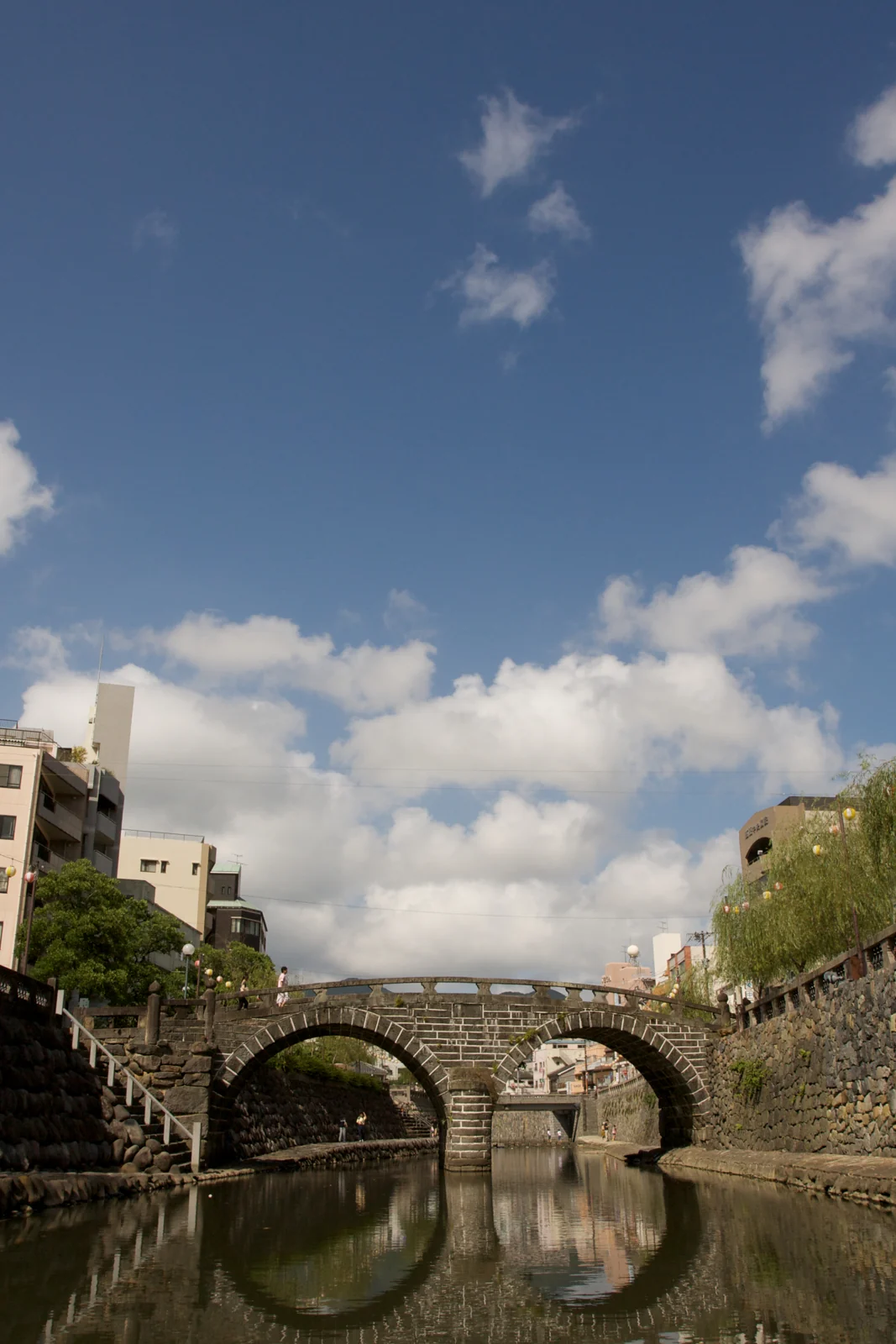
Thirty minutes is sufficient for the bridge itself, but the area combines well with nearby temples, cafes and the Hamanomachi shopping arcades.
The reflection is clearest when the water is relatively still. After heavy rain, riverside access may be limited.
Peace Park, Hypocenter Park and the Atomic Bomb Museum
The Peace Park area should not be approached as a single photo stop. The museum, Hypocenter Park, memorials and National Peace Memorial Hall collectively explain the bombing, its human consequences and Nagasaki’s subsequent peace advocacy. The city museum presents historical materials and personal accounts to preserve the memory of the event and support reflection on nuclear weapons.
Allow at least two to three hours for the wider area. The museum can be emotionally demanding, so avoid placing it between several rushed attractions.
A sensible sequence is:
- Hypocenter Park
- Atomic Bomb Museum
- National Peace Memorial Hall
- Peace Park
- Urakami Cathedral, if time and interest allow
Families should judge the museum visit according to children’s age and sensitivity. Older children may gain considerable historical understanding, but younger children may find some exhibits distressing.
Twenty-Six Martyrs Museum and Monument
The monument near Nishizaka commemorates twenty-six Christians executed in Nagasaki. It provides important context for the city’s Christian history and works well at the beginning or end of a day because it is close to Nagasaki Station.
Allow approximately 30–60 minutes depending on whether you enter the museum.
Mt. Inasa night view
Mt. Inasa offers the classic elevated view over Nagasaki’s harbor, hills and illuminated neighborhoods. The ropeway generally operates from 9:00 to 22:00, subject to weather and maintenance. Published fares are ¥1,900 return and ¥1,040 one way for adults.
Sunset provides the most dramatic transition from daylight to city lights, but it also attracts the largest crowds. Arriving after the main sunset rush can be more comfortable if a fully dark night view is your priority.
The ropeway is not directly beside a tram stop. From central Nagasaki, travelers commonly combine a bus or taxi with a short walk to the ropeway station.
A Mt. Inasa night-view bus tour may suit visitors who prefer not to coordinate evening buses and the ropeway. It is less necessary for travelers comfortable using public transport or sharing a taxi.
Travelers who want more context than a viewpoint visit can consider a Nagasaki Mt. Inasa and Glover Garden night tour, subject to the available booking calendar.
The ropeway and the slope car are different systems with different boarding points. The April 2026 fare update applies to the ropeway prices above; check current Inasayama operating notices before setting out.
Gunkanjima
Hashima, widely known as Gunkanjima or Battleship Island, is an abandoned former coal-mining island offshore from Nagasaki. Its dense concrete ruins make it visually distinctive, but the value of the visit comes from understanding the mining community, industrial development and difficult working history associated with the island.
Visitors cannot travel independently. Arrange the visit through an authorized cruise operator. Booking ahead is strongly recommended; some direct operators accept same-day bookings subject to available seats and their cutoff, while reseller deadlines may differ. The sailing and island visit may take roughly two and a half to three hours, but the full appointment is longer once check-in and museum time are included. The linked Klook product lists about four hours and fifteen minutes. Follow its separate check-in deadline, departure pier and scheduled return, not just the boat’s departure time.
Landing is never guaranteed. Even when conditions appear calm from the city, wind, waves and safety thresholds may prevent passengers from going ashore. Operators may provide a cruise around the island instead, alter the itinerary or cancel the departure.
Important preparations include:
- Wear secure, flat shoes; high heels and loose sandals are unsuitable.
- Bring a raincoat rather than an umbrella.
- Carry drinking water.
- Use the toilet before landing because there is no toilet on the island.
- If seasickness is a concern, ask a pharmacist or clinician about suitable precautions before departure.
- Protect yourself from strong sun because shade is limited.
- Leave flexibility after the scheduled return time.
A Gunkanjima cruise package can simplify booking, but compare the departure pier, language support, cancellation conditions and whether the package includes related museum admission.
The linked product currently checks morning passengers in at the Gunkanjima Digital Museum between 09:00 and 10:00 for a 10:30 departure from Tokiwa Port. The museum check-in and boarding pier are different places. Your booked voucher takes precedence; do not arrive at the pier at departure time and expect to be accepted.
Check the chosen operator’s age, mobility and accompaniment conditions before booking. A sailing that cannot land may become a sightseeing cruise, with refunds handled under that package’s terms rather than automatically in full. The operator’s landing precautions explain the importance of sea conditions, suitable footwear and a raincoat instead of an umbrella.
Nagasaki 3-Day Itinerary
This detailed version assumes you are already in Nagasaki by the first morning. For a three-day/two-night trip arriving around midday, shorten Day 1 to Dejima, Chinatown and one focused Minamiyamate visit; keep Mt. Inasa optional. If departure is early on Day 3, omit Gunkanjima rather than risk a tight cruise-to-train or cruise-to-flight connection. All clock times below are suggested planning blocks, not transport or admission appointments.
Day 1|International Heritage, Chinatown and the Harbor
Day 1 concentrates on southern and central Nagasaki, minimizing unnecessary tram journeys.
8:30–10:30|Glover Garden and Oura
Start at Glover Garden before the main group-tour period. Explore the hillside residences and harbor viewpoints, then visit Oura Cathedral according to your interest in Christian history.
Allow extra time for the uphill approach and photos. The district is more enjoyable when treated as a neighborhood rather than two separate ticketed attractions.
10:30–11:30|Dutch Slope and Higashiyamate
Walk toward the old foreign-settlement streets around Higashiyamate. The area is quieter than Glover Garden and provides additional architectural context without requiring a long stop.
Travelers with limited mobility can skip the full walking route and take the tram toward Shinchi.
12:00–13:00|Lunch in Shinchi Chinatown
Choose champon or sara udon for a first Nagasaki meal. Arriving before the busiest lunch period reduces queue time.
Chinatown itself does not require a long sightseeing block. The value is primarily food and its connection to Nagasaki’s long history of overseas exchange.
13:15–15:00|Dejima
Explore the reconstructed residences, warehouses and exhibitions. Dejima makes the rest of Nagasaki easier to understand because it explains how international contact influenced the city’s trade, science and culture.
15:00–16:30|Waterfront and Dejima Wharf
Walk along the harbor, stop for coffee or continue toward the Nagasaki Prefectural Art Museum area. This is also useful recovery time before the evening viewpoint.
17:00 onward|Mt. Inasa
Travel to Mt. Inasa before sunset when visibility is good. On cloudy or rainy evenings, postpone the viewpoint to Day 2 or Day 3 rather than paying for a view hidden by low cloud.
Return to Shianbashi or Hamanomachi for dinner.
Day 2|Peace History, Central Nagasaki and Temple Streets
Day 2 begins in northern Nagasaki and gradually moves south toward the central dining districts.
8:30–11:30|Atomic Bomb Museum and Peace Park area
Begin at Hypocenter Park, continue through the museum and National Peace Memorial Hall, and finish at Peace Park. Reversing the order is possible, but visiting the museum before the main park helps explain the memorials.
Do not schedule a tight lunchtime reservation immediately afterward. Some visitors need quiet time after the museum.
11:30–12:15|Urakami Cathedral or a short break
Visit Urakami Cathedral if religious history is an important part of your trip. Otherwise, return toward Nagasaki Station for lunch.
12:45–13:30|Twenty-Six Martyrs Monument
Stop near Nishizaka to connect Nagasaki’s earlier Christian history with the sites around Oura.
14:00–15:30|Spectacles Bridge and Teramachi
Take the tram toward the central river district. Photograph Spectacles Bridge, walk along the Nakashima River and continue toward the temple streets if energy allows.
Sofukuji is particularly relevant for travelers interested in Nagasaki’s Chinese cultural connections, though visiting every temple is unnecessary.
15:30–17:30|Hamanomachi shopping arcades
Use the covered arcades for shopping, snacks or a cafe break. This is a useful flexible period in poor weather.
Evening|Shianbashi dinner
Try a local izakaya, seafood meal or shippoku-style dining. Shippoku cuisine reflects Japanese, Chinese and Western influences, but full-course restaurants may require advance reservations and are better for travelers comfortable with a longer formal meal.
Day 3|Gunkanjima Cruise and Flexible City Time
Day 3 is built around Gunkanjima because it is the most weather-dependent activity.
Morning|Gunkanjima cruise
Choose a morning departure when possible. This does not guarantee calmer seas, but it preserves more time for an alternative plan if the cruise is changed or cancelled.
Arrive before the operator’s stated reception time. The check-in deadline may be considerably earlier than the vessel’s departure.
Early afternoon|Lunch near the harbor
After returning, have lunch around the port, Dejima or Nagasaki Station. Avoid making a non-refundable reservation immediately after the scheduled cruise because delays are possible.
Afternoon option A|Gunkanjima Digital Museum and Oura
Choose this option when you want more industrial-history context or when the cruise could not land.
Afternoon option B|Suwa Shrine
Suwa Shrine offers a different side of Nagasaki and is especially attractive for travelers interested in traditional religious architecture. The approach includes substantial stairs, so it is less suitable after an exhausting cruise or for visitors with mobility limitations.
Afternoon option C|Nagasaki Stadium City and station area
This is the easiest low-effort option before an evening train. It works well for shopping, dining or recovering from seasickness.
Evening|Final harbor walk or local dinner
Return to the waterfront for a slower final evening. Travelers who missed Mt. Inasa because of poor visibility can move the viewpoint to this night.
What to Do If the Gunkanjima Cruise Is Cancelled
A cancelled cruise should not ruin the day. Choose one of these alternatives according to the weather:
Rainy-weather plan
Gunkanjima Digital Museum → Dejima → shopping arcades → Nagasaki Prefectural Art Museum
Clear-weather plan
Suwa Shrine → temple streets → Kazagashira Park or another elevated city viewpoint
Full-day replacement
Use the day for Unzen and Shimabara, Huis Ten Bosch or a coastal resort trip only when transport can still be arranged comfortably.
Do not attempt to replace a cancelled morning cruise with a distant day trip if doing so creates a rushed return or requires several unplanned transfers.
Best Day Trips from Nagasaki
| Day trip | Best for | Practicality | Editorial verdict |
|---|---|---|---|
| Unzen Onsen and Shimabara | Volcanic scenery, onsen and history | Full day; car or organized transport is easiest | Best nature-focused extension |
| Huis Ten Bosch | Families, couples and illumination | Requires most of a day | Worthwhile for theme-park interest, but an overnight stay is better if remaining until late |
| Iojima | Coast, relaxation and onsen | Easier than most distant day trips | Best low-stress option |
| Sasebo and Kujukushima | Islands, cruises and coastal scenery | Long day from Nagasaki | Better as an overnight extension |
| Goto Islands | Churches, beaches and island culture | Ferry or flight logistics | Do not treat as a casual first-time day trip |
| Shimabara Peninsula loop | Scenic driving and regional food | Best with a car | Strong choice for confident drivers |
Unzen and Shimabara
Unzen offers volcanic landscapes, walking routes and onsen, while Shimabara adds castle-town history and coastal scenery. Public transport is possible, but a rental car or planned excursion provides more freedom.
This is the strongest day trip for travelers who want to contrast urban Nagasaki with mountain and peninsula scenery.
Huis Ten Bosch
Huis Ten Bosch is a large European-inspired resort and entertainment complex near Sasebo. It is most suitable for families, couples, seasonal illumination and travelers who enjoy landscaped theme parks.
It occupies a full day. Staying overnight is preferable when the evening illumination is a priority, since returning to Nagasaki after a late finish can be tiring. The Huis Ten Bosch family hotel guide and Fukuoka–Huis Ten Bosch transport guide provide additional planning information in Traditional Chinese.
Iojima
Iojima is a better choice for travelers seeking a quiet coastal break, spa facilities or resort time. It is less culturally dense than Unzen or Shimabara, but it requires less planning and works well after two intensive sightseeing days.
Sasebo and Kujukushima
Sasebo and the Kujukushima islands offer scenic cruises and coastal viewpoints. The distance makes the trip long, particularly when combined with multiple local transfers. Consider staying in Sasebo rather than returning late to Nagasaki.
Goto Islands
The Goto Islands deserve more than a rushed day trip. Although transport may make a same-day visit technically possible, ferry schedules and island distances limit what can be experienced. An overnight stay provides a much stronger trip.
What to Eat in Nagasaki
Champon
Champon combines noodles, seafood, vegetables and pork in a rich soup. It is filling and works well for lunch between sightseeing areas.
Sara udon
Sara udon is available with thin crisp noodles or a softer thick-noodle style. Ask which version a restaurant serves if texture matters to you.
Turkish rice
Despite the name, Turkish rice is a Nagasaki yoshoku dish commonly combining pilaf, spaghetti and a breaded cutlet on one plate. It is a useful casual meal rather than a formal local-dining experience.
Castella
Nagasaki castella developed from sponge-cake traditions introduced through overseas contact. Specialist shops around central Nagasaki sell different sweetness levels, textures and seasonal variations.
Shippoku cuisine
Shippoku is a shared-table style reflecting Japanese, Chinese and Western influences. It is best for travelers who want a planned dining experience and are comfortable reserving in advance.
Kakuni manju
This steamed bun filled with braised pork is convenient as a snack around Chinatown and the central shopping streets.
Is Nagasaki Suitable for Families?
Nagasaki works well for school-age children and teenagers interested in ships, industrial heritage, trams and history. The compact tram corridors reduce the need for long taxi rides.
The main difficulties are:
- Steep slopes around Minamiyamate and some shrines
- Emotionally challenging content at the Atomic Bomb Museum
- Limited shade and no toilets on Gunkanjima; use the onboard toilets before landing
- Possible seasickness on the cruise
- Narrow or uneven walking routes in older districts
Families with young children should reduce the number of scheduled attractions and allow time for meals and rest. A private car may help larger family groups reach hillside sites, although it is unnecessary for most central attractions. A customized Nagasaki car charter is most useful for families, seniors or groups combining the city with less accessible locations. This listing is based in Fukuoka: the stated round trip is 10 hours within 300 km. Non-Fukuoka endpoints typically allow 8 hours and may incur repositioning time or fees. Pier-transfer service is excluded. Confirm the actual pickup, endpoint, duration and total quote before treating it as a Nagasaki-based charter.
Best Time to Visit Nagasaki
Spring and autumn generally provide the most comfortable conditions for walking, though popular holidays increase accommodation demand.
Summer can be hot and humid. Bring water and sun protection, especially for Glover Garden and Gunkanjima.
Rain is possible throughout the year. Nagasaki still offers several useful indoor attractions, including Dejima’s reconstructed buildings, museums, shopping arcades and the Gunkanjima Digital Museum. Heavy wind and rough sea conditions are more important than rain alone when assessing cruise operations.
Winter is quieter, but harbor viewpoints can feel cold and windy after sunset. Check ropeway and cruise operating status before departure.
Common Nagasaki Planning Mistakes
- Treating Nagasaki as only a Peace Park destination
- Attempting to cover both northern and southern Nagasaki repeatedly in one day
- Buying a tram pass for only two or three journeys
- Assuming a Gunkanjima landing is guaranteed
- Wearing unsuitable shoes on the cruise
- Underestimating the slopes around Glover Garden and hillside shrines
- Scheduling Mt. Inasa without checking visibility
- Carrying large luggage through sightseeing districts instead of using station or hotel storage
- Planning the Goto Islands as an ordinary day trip
- Rushing the Atomic Bomb Museum to keep an unrealistic timetable
- Staying near a scenic hillside hotel without considering daily transport needs
Tickets, Tours and Transport Options
Gunkanjima cruise
Best for travelers who want a structured industrial-heritage excursion and understand that landing remains weather-dependent.
Compare the Gunkanjima cruise experience
Glover Garden admission
Useful for travelers visiting during a busy period or those who prefer arranging admission in advance.
Check Glover Garden admission options
Mt. Inasa night-view tour
Most worthwhile for travelers uncomfortable navigating evening buses or coordinating the ropeway independently.
Check the Mt. Inasa night-view tour
Mt. Inasa and Glover Garden night tour
Best for travelers who prefer local explanation and a structured evening rather than visiting a single viewpoint.
Check the Nagasaki Mt. Inasa and Glover Garden night tour
This English-guided listing combines walking and tram travel and includes a Nagasaki tram day pass. It is not a private-car or coach transfer, so it still requires walking and public-transport changes. Check whether the selected package includes ropeway fares, attraction admission and any other transport; the tram pass alone does not cover them.
JR Kyushu Rail Pass
Potentially useful when Nagasaki forms part of a longer Kyushu rail itinerary involving Fukuoka, Kumamoto, Beppu or other cities. Calculate the individual journeys before buying.
Compare JR Kyushu Rail Pass options
If you add Huis Ten Bosch, keep it as a separate full-day extension. A Hakata-departure bus package is not transport from Nagasaki City. Choose the park ticket and your actual starting point separately unless the selected package explicitly covers both.
Check regional coverage and eligibility first. The tourist JR Kyushu Rail Pass is for eligible non-Japanese visitors entering for sightseeing with Temporary Visitor status and the required passport evidence; see the official JR Kyushu conditions. It is not a substitute for Nagasaki trams or airport buses.
Nagasaki Travel FAQ for 2026
1. Is Nagasaki worth visiting?
Yes. Nagasaki is particularly worthwhile for travelers interested in international history, harbor scenery, regional food and destinations with a strong sense of place. It is less suitable for travelers whose priority is shopping, nightlife or major theme parks.
2. How many days should you spend in Nagasaki?
Plan two full days for the main city attractions. Allow three days when adding Gunkanjima, Mt. Inasa and a slower visit to the Peace Park area.
3. Can you visit Nagasaki as a day trip from Fukuoka?
It is possible by train, but a day trip allows only a limited introduction. Staying at least one night makes it easier to experience the evening waterfront or Mt. Inasa.
4. Is the Nagasaki tram pass worth it?
The ¥600 one-day pass reaches the same cost as four standard ¥150 rides and begins saving money from the fifth ride. Pay individually when taking only two or three trams.
5. Can you use an IC card on Nagasaki trams?
Accepted contactless IC cards can be used by tapping when boarding and leaving. Eligible very short journeys may be charged at a reduced fare.
6. Do you need to reserve a Gunkanjima cruise?
Visitors must use an authorized cruise operator. Booking ahead is strongly recommended, especially on weekends and busy dates. Some direct operators accept same-day bookings subject to seats and cutoff times; reseller deadlines may differ.
7. Is landing on Gunkanjima guaranteed?
No. Landing depends on wind, waves and safety conditions. A cruise may operate without landing, use an altered route or be cancelled.
8. What is the best area to stay in Nagasaki?
Shinchi–Dejima is the strongest all-round base for sightseeing and dining. Nagasaki Station is better for travelers prioritizing trains, luggage handling and early departures.
9. Is Nagasaki easy to explore without a car?
Yes. The main urban sights are connected by trams, buses and walking routes. A car is more useful for Unzen, Shimabara and other regional day trips than for central Nagasaki.
10. What is the best day trip from Nagasaki?
Unzen and Shimabara provide the strongest contrast to the city, especially for travelers interested in onsen and volcanic scenery. Huis Ten Bosch is better for families and theme-park visitors, while Iojima is the easiest relaxing option.