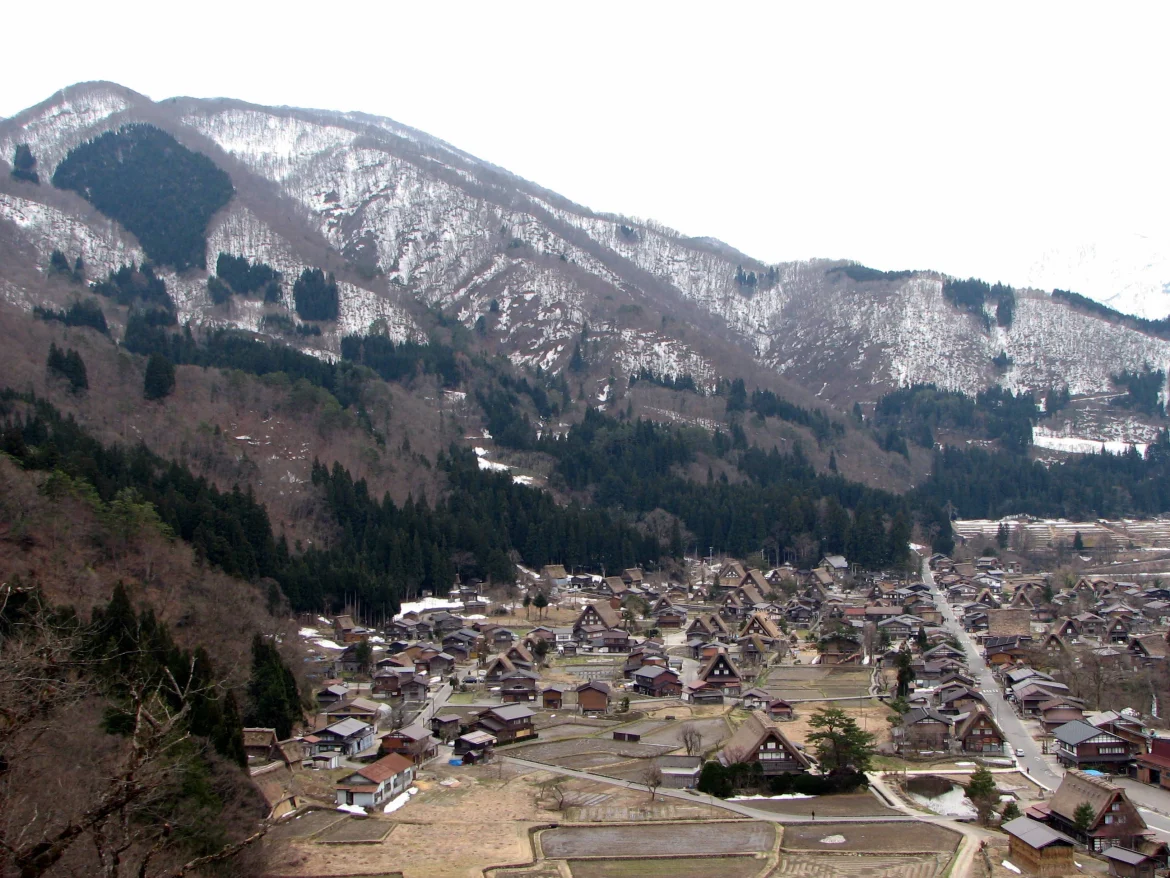

Nagoya to Shirakawa-go: Which Route Should You Take?
The direct highway bus is the easiest way to travel from Nagoya to Shirakawa-go. It avoids a railway transfer, reaches the village in approximately 2 hours 42 minutes and makes a same-day visit entirely realistic.
The part first-time visitors most often misunderstand is the departure point. The bus does not leave from a JR railway platform. It departs from platform 7 on the third floor of Meitetsu Bus Center, within the wider Nagoya Station district.
Advance reservation is required, and fares vary according to the travel date. The safest strategy is to reserve both the outward and return journeys together as soon as booking opens, normally one month before departure.
For most independent travellers, an early morning departure and a return at 15:30 or 15:55 provides the best balance. This gives approximately five hours for the observation deck, village lanes, lunch and at least one traditional house.
A guided tour becomes more attractive when you also want to see Takayama on the same day. Attempting the same combination independently from Nagoya involves too many transport connections and leaves little time at either destination.
Before planning the rest of your stay, the Nagoya travel guide and accommodation overview can help you choose a convenient base near Nagoya Station.

Is Shirakawa-go Worth a Day Trip from Nagoya?
Yes, Shirakawa-go is worth a day trip from Nagoya for travellers interested in traditional architecture, mountain scenery and rural Japan. The village contains more than 100 gassho-style buildings and forms part of the UNESCO World Heritage property registered in 1995.
The trade-off is the journey. A return trip involves approximately five and a half hours on buses before allowing for traffic, boarding and station navigation. Shirakawa-go therefore deserves a full day rather than being added between other Nagoya attractions.
| Planning question | Practical answer |
|---|---|
| Is it worth visiting? | Yes, especially for traditional architecture, photography and mountain scenery |
| Best transport | Reserved direct highway bus |
| One-way journey | Approximately 2 hours 42 minutes |
| Recommended time in Shirakawa-go | At least 3 hours; ideally 4 to 6 hours |
| Overall day length | Approximately 11 to 13 hours from central Nagoya |
| Main challenge | Reservations, long bus journey and possible mountain-road delays |
| Family suitability | Good for school-age children; a long day for toddlers |
| Elderly visitor suitability | Reasonable if using the viewpoint shuttle and avoiding icy conditions |
| Is an overnight stay essential? | No, but it is worthwhile for a slower regional itinerary |
| Who may prefer to skip it? | Travellers with only one spare half-day or low tolerance for long coach journeys |
If you want only a quick rural excursion, the travel time may feel excessive. If Shirakawa-go is one of the main reasons for visiting central Japan, the journey is justified and the direct bus is straightforward once it has been reserved.
Nagoya to Shirakawa-go 2026 Transport at a Glance
| Option | Approximate time | Transfers | Best for | Main disadvantage |
|---|---|---|---|---|
| Direct highway bus | About 2 hours 42 minutes each way | None | Independent day trips | Advance reservation and traffic-delay risk |
| Organised day tour | Usually a full 10–12 hour day | Managed by operator | Combining Takayama and Shirakawa-go | Less flexible sightseeing time |
| Train and bus through Takayama | About 3.5–4.5 hours including a sensible transfer | One main transfer | Travellers staying overnight in Takayama | Slower and more expensive for a direct day trip |
| Private driver | About 2.5–3 hours each way, depending on traffic | None | Families and groups sharing the cost | High total price |
| Rental car | About 2.5–3 hours each way | None | Experienced drivers visiting additional rural areas | Winter roads, congestion and parking |
For a simple out-and-back journey, the direct bus is the clear recommendation. The Takayama route should be treated as part of a wider Chubu itinerary rather than a backup route of equal convenience.
Latest Nagoya to Shirakawa-go Bus Status
The current official timetable continues to show multiple morning services from Nagoya and afternoon or evening returns from Shirakawa-go. Reservations are required, and tickets are normally released one month before the same calendar date.
The adult one-way fare is JPY 3,600–4,700, selected by the travel-date calendar. The Gifu Bus fare calendar gives the applicable fare bands; confirm your date in the booking system. Child fares are fixed at JPY 2,350 one way on this route, rather than half of the discounted adult fare.
The bus operator may cancel services because of severe weather, expressway closures or unsafe road conditions. Cancelled services are normally eligible for a ticket refund, but the operator does not compensate for independently booked hotels, trains or flights missed because of traffic delays.
Current changes to tour-bus parking arrangements in Shirakawa-go primarily concern chartered tour vehicles. They do not replace the scheduled highway-bus reservation required for an ordinary passenger travelling from Nagoya.
Direct Highway Bus: Timetable, Fares and Reservations
Example morning departures from Nagoya
| Nagoya departure | Shirakawa-go arrival | Notes |
|---|---|---|
| 07:50 | 10:32 | Best independent day-trip departure |
| 08:20 | 11:02 | December–March only; not April–November |
| 08:50 | 11:32 | Still provides a useful afternoon visit |
| 09:20 | 12:02 | Better for travellers who dislike early starts |
| 09:50 | 12:30 | Limits lunch and sightseeing time |
These times show the normal planning pattern, but individual services can be seasonal. Always select the exact date in the official booking system before finalising accommodation or onward transport.
The through-bus also leaves Nagoya at 15:00 and reaches Shirakawa-go at 17:45, which is too late for a normal same-day village visit. On through-service timetables, 12:40 and 17:55 are departure times toward Kanazawa; Nagoya passengers arrive at 12:30 and 17:45. Compare the Gifu Bus timetable with Hokutetsu’s arrival/departure columns.
Useful return departures
| Shirakawa-go departure | Nagoya arrival | Planning note |
|---|---|---|
| 14:30 | 17:16 | About 4 hours after the first morning arrival |
| 15:30 | 18:16 | About 5 hours in the village |
| 15:55 | 18:41 | About 5 hours 20 minutes in the village |
| 16:30 | 19:16 | December–March only |
| 17:15 | 20:00 | Current last scheduled return; keep the evening flexible |
The 15:30 or 15:55 return is a balanced year-round planning choice after a 10:32 arrival. The 16:30 service runs only from December to March; it is not an April–November option. The current last scheduled return is 17:15, reaching Nagoya at 20:00. The co-operator’s timetable lists this later service. Check your date before booking, and do not plan around the obsolete 18:25 departure found in older tables.
How reservations work
- Open the official Highwaybus.com reservation system.
- Select Nagoya as the departure point and Shirakawa-go as the destination.
- Choose the exact travel date.
- Compare the available departure times and calendar fares.
- Reserve the return bus before completing the booking.
- Save the confirmation and follow the payment or ticket-display instructions shown for that reservation.
Booking only the outward bus is a serious mistake. Return services can sell out, particularly on weekends, public holidays, autumn foliage dates and snowy winter days.
Complete payment by the deadline on your reservation or it may be cancelled automatically. Save the actual mobile ticket or printable ticket required by the booking channel; a reservation email alone may not be the boarding ticket. Return and outward bookings can have different release dates on an overnight trip.
How much does the bus cost?
The direct route uses five adult one-way calendar-fare bands: JPY 3,600, 3,800, 4,000, 4,200 and 4,700. Budget JPY 7,200–9,400 for an adult return bought as two singles. The date you travel determines the fare; the booking confirmation gives the amount payable.
The published child fare is JPY 2,350 one way, regardless of the adult calendar-fare band. Confirm the passenger category and any seat required for a younger child before payment.
What happens if the bus is delayed or cancelled?
Traffic congestion, snow, accidents and expressway restrictions can extend the journey. Avoid booking a non-refundable train, international flight or airport transfer immediately after the scheduled return to Nagoya.
If the operator cancels the service, follow the refund instructions for the original booking channel. A delay that causes you to miss a separately booked connection does not normally make the operator responsible for that additional cost.
Where to Board at Meitetsu Bus Center
“Nagoya Station” describes a large district containing JR Nagoya Station, Meitetsu Nagoya Station, Kintetsu Nagoya Station, subway entrances, department stores and bus facilities. The direct Shirakawa-go bus uses Meitetsu Bus Center rather than a roadside stop or JR platform.
Correct boarding point
- Building: Meitetsu Bus Center
- Floor: Third floor
- Platform: 7
- Recommended arrival: At least 20 minutes before departure
The center still operates in the former Meitetsu Department Store Men’s Building. Its previously announced March 2026 closure was cancelled. Use the official access and boarding maps for the current walking route, then verify bay 7 on the departure display.
Walking from JR Nagoya Station
- Follow signs toward Meitetsu Nagoya Station or Meitetsu Bus Center.
- Follow the current bus-center entrance signs; do not rely on a shortcut through former department-store shopping floors.
- Enter the Meitetsu Bus Center building.
- Use the escalator or lift to reach the third-floor departure area.
- Check the electronic departure display and proceed to platform 7.
- Have the required ticket, QR display or booking confirmation ready before boarding.
Allow 15 to 20 minutes for this walk if you have never used Nagoya Station. Add more time when carrying luggage, travelling with children or arriving during the morning commuter period.
From Chubu Centrair International Airport
Take a Meitetsu train from Chubu Centrair International Airport to Meitetsu Nagoya. The fastest airport trains can complete the rail section in approximately 28 minutes, although the total time depends on the selected service and waiting time. The Centrair Airport to Nagoya guide explains train types and tickets.
After arriving, follow signs to Meitetsu Bus Center and go to the third floor. Do not book a tight airport-to-bus connection after an international flight. Immigration, baggage collection and train delays could cause you to lose the reserved highway-bus seat.
An advance airport train ticket may simplify arrival for travellers who are comfortable using a mobile QR ticket. Check whether your chosen train also requires a separate first-class seat ticket; an airport base-fare ticket alone is not a reserved μSKY seat. The linked QR product requires the live code, not a screenshot.
From Shirakawa-go Bus Terminal to the Village
For sightseeing choices beyond the transport plan, see the Shirakawa-go village guide.
Shirakawa-go Bus Terminal is at the northern side of the Ogimachi village area. You do not need another bus to begin exploring the main settlement, but the observation deck requires either an uphill walk or the local shuttle.
A practical first-time route
- Use the toilets and visitor information facilities near the bus terminal.
- Walk to the observation-deck shuttle stop or begin the uphill walking route.
- Visit the viewpoint while visibility is good.
- Return to the central village.
- Visit one traditional gassho-style house.
- Have lunch before the busiest restaurant queues peak.
- Walk through the central lanes and continue toward Deai Bridge.
- Return to the bus terminal at least 20 minutes before departure.
Observation-deck shuttle
The shuttle stop is a short walk south of the bus terminal, near Hakusui-en. The current fare is JPY 300 one way and should be paid in cash on the bus.
The published shuttle timetable has uphill departures every 20 minutes from 09:00 to 11:40 and from 13:20 to 15:40. Plan around the midday break; the last downhill service is 16:10. Confirm local operating notices in poor weather.
Snow, ice, poor visibility and unsafe roads may delay or suspend the shuttle. Private cars are not permitted at the public Ogimachi Castle Site Scenic Lookout.
Walking instead of taking the shuttle
The uphill route is manageable for active visitors but is noticeably steeper than the village streets. Allow about 20 minutes each way and more in snow, heat or wet conditions.
The central settlement is largely walkable, but surfaces can be uneven. Traditional houses may have steep internal stairs, low beams and areas where shoes must be removed.
Keep the tourist association’s official village map on your phone to locate the bus terminal, houses, viewpoint path and Deai Bridge.
Day Tour, Independent Bus or Private Car?
| Traveller type | Best option | Why |
|---|---|---|
| First-time independent traveller | Direct highway bus | Fastest public transport with no transfer |
| Traveller wanting Takayama and Shirakawa-go | Organised day tour | Transport and timing are coordinated |
| Family with young children | Tour or private driver | Less station navigation and more predictable logistics |
| Group of four or more | Compare private-car cost | Shared cost may justify door-to-door transport |
| Photographer | Independent bus or overnight stay | More control over time and viewpoint conditions |
| Regional rail-pass user | Route through Takayama | May fit a wider Takayama–Kanazawa itinerary |
Independent direct bus
Choose the direct bus when Shirakawa-go is the main destination and you want four to six hours in the village. It offers more freedom than a combined tour and avoids paying for a guide or an additional destination you may not need.
Organised Takayama and Shirakawa-go tour
A tour is better when you want to see both destinations in one day. The operator manages the long-distance transport, parking and onward transfer, although the trade-off is a tighter schedule and less flexibility if you want to spend longer taking photographs or visiting houses.
Private driver
A private driver suits families, elderly travellers and groups that want hotel pickup, flexible rest stops or additional countryside destinations. It is expensive for one or two passengers but can become more reasonable when divided among a larger group.
Confirm the included driving hours, overtime charges, parking, tolls, child-seat availability and winter operating conditions before booking.
Self-driving
Driving provides flexibility for rural stops, but it is not automatically easier. Traffic can become heavy during foliage weekends, snowy holidays and peak daytime arrival periods.
Winter driving should only be considered by travellers experienced with snow tyres, icy mountain roads and changing weather. Check current village parking notices before departure, and remember that private vehicles cannot drive to the observation deck.
Alternative Route via Takayama
The alternative public-transport route is:
Nagoya Station → Limited Express Hida → Takayama Station → walk to Takayama Nohi Bus Center → highway bus → Shirakawa-go Bus Terminal
The Limited Express Hida takes roughly 2 hours 20 minutes to 2 hours 40 minutes from Nagoya to Takayama. The onward bus takes about 50 minutes, so allow around 3.5–4.5 hours including a sensible connection. Some Takayama–Shirakawa-go departures require reservations and others are non-reserved; choose the exact service rather than assuming one rule applies to all buses.
This is not the recommended route for a simple same-day Shirakawa-go trip. It takes longer, costs more when bought as separate tickets and introduces the risk of missing the connecting bus.
It becomes useful in three situations:
- You are staying overnight in Takayama.
- You want a multi-day Nagoya–Takayama–Shirakawa-go–Kanazawa route.
- You are using a regional pass that covers the train and specified bus sections.
The Takayama travel guide explains how much time the old town, morning markets and surrounding attractions deserve.
Using two buses instead of the Hida train
You can also take the reserved Nagoya–Takayama highway bus, then change at Takayama Nohi Bus Center for Shirakawa-go. The first leg takes about 2 hours 50 minutes from Meitetsu Bus Center and currently costs JPY 3,600, or JPY 3,300 with the published web fare. With the second bus and waiting time, this is an overnight-Takayama option, not a faster way to reach Shirakawa-go.
The Takayama–Shirakawa-go bus costs JPY 2,800 one way through 30 November 2026, rising to JPY 2,900 for travel from 1 December 2026 under the announced fare revision. Buying the two bus legs separately therefore costs more than the direct Nagoya service. Check both seat availability and connection time before committing to either leg.
Travel Passes and Ticket Choices
National JR Pass
The national JR Pass does not cover the direct highway bus from Nagoya to Shirakawa-go. Buying or activating a national pass solely for this journey does not reduce the direct-bus fare.
Takayama–Hokuriku Area Tourist Pass
This five-day regional pass costs JPY 19,800 for adults and JPY 9,900 for children. It covers eligible JR travel through Takayama and specified regional buses connecting Takayama, Shirakawa-go, Kanazawa, Toyama and Takaoka.
It does not cover the direct Nagoya–Shirakawa-go highway bus. It is worthwhile when your itinerary includes several of the following:
- Nagoya to Takayama
- Takayama to Shirakawa-go
- Shirakawa-go to Kanazawa or Toyama
- Kanazawa, Toyama and Osaka or Kyoto through the permitted route
It is usually poor value for a one-day return trip from Nagoya. For a wider itinerary, read the official coverage and reservation rules: the pass lasts five consecutive days, excludes the direct Nagoya bus and the Meitetsu airport train, and allows up to six eligible JR seat reservations. Hida can become all-reserved on announced peak dates, so check the actual travel period rather than relying on a past summer notice.
Older bus-pass recommendations
Older guides recommend the SHORYUDO Bus Pass, but do not build this trip around an old pass listing. Price the individual buses first; only choose a pass if a current sales page explicitly accepts your travel dates and includes the services you need. The Takayama–Hokuriku Area Tourist Pass is a different product with different route coverage.
Families, Elderly Visitors and Accessibility
Families with children
Shirakawa-go is suitable for children who enjoy outdoor walking, traditional houses and snow scenery. The main difficulty is not the village itself but the long return bus journey.
- Reserve seats early so the family can travel together.
- Use the toilet before boarding in Nagoya and before the return journey.
- Bring water and simple snacks.
- A compact stroller is easier than a large travel system.
- Expect uneven surfaces and possible snow or mud.
- Use the observation-deck shuttle instead of pushing a stroller uphill.
- Do not schedule a late-night activity after returning to Nagoya.
A tour may be worthwhile for a family that wants Takayama as well, but check how long the group receives at each stop. Young children may be happier with a direct out-and-back visit that allows a relaxed lunch.
For more city-based family planning, see the Nagoya attractions for families guide.
Elderly visitors
The central village is mostly manageable at a gentle pace, but the viewpoint, winter ice and traditional-house stairs require more care.
- Use the local shuttle for the observation deck.
- Choose a return bus that leaves enough time for rest stops.
- Avoid carrying large luggage through the village.
- Wear shoes with strong grip in winter.
- Skip the viewpoint if the shuttle is suspended and the uphill path is unsafe.
- Consider a private driver when the group needs door-to-door transport.
Gifu Bus states that passengers cannot remain in a wheelchair on its highway coach; the chair must fold into the luggage compartment and the passenger must be able to board safely, with assistance if needed. Contact the operating company before booking. Do not assume every coach, viewpoint shuttle or traditional house offers step-free access.
Sample Nagoya to Shirakawa-go Itineraries
Full-day independent itinerary
| Time | Plan |
|---|---|
| 07:15 | Arrive at Meitetsu Bus Center |
| 07:50 | Depart from third-floor bay 7 |
| 10:32 | Arrive at Shirakawa-go Bus Terminal |
| 10:45–11:45 | Viewpoint and photography, using the shuttle if suitable |
| 12:00–13:00 | Lunch |
| 13:00–14:30 | Traditional house and central village lanes |
| 14:30–15:20 | Deai Bridge or a final village walk |
| 15:35 | Return to the bus terminal |
| 15:55 | Depart for Nagoya |
| 18:41 | Scheduled arrival at Meitetsu Bus Center |
This is the best itinerary for travellers who want Shirakawa-go to be the main focus rather than one short stop on a wider tour.
Takayama and Shirakawa-go guided day
A typical combined tour leaves central Nagoya in the morning, visits Takayama’s old town and then continues to Shirakawa-go before returning in the evening.
The exact order varies by operator and traffic conditions. Expect less time in each destination than you would receive on separate days. This option is best for travellers who value coverage and convenience more than slow photography or entering several historic buildings.
Two-day regional itinerary
Day one: Nagoya → Limited Express Hida → Takayama sightseeing → overnight in Takayama.
Day two: Takayama → reserved bus to Shirakawa-go → four-hour village visit → continue to Kanazawa.
This route avoids backtracking and gives Takayama enough time to justify the train journey. Continue with the Kanazawa travel guide when planning the next part of the trip.
For three or four days, continue from Kanazawa to Toyama or spend another night in Kanazawa instead of commuting back to Nagoya. A non-winter driving variation is Nagoya → Gujo Hachiman → overnight in Takayama, followed by Shirakawa-go the next day. Keep those three destinations across two days so the extra stops do not become brief roadside visits.
Can Shirakawa-go be a half-day trip from Nagoya?
No. The round-trip bus journey alone takes approximately five and a half hours. A half-day schedule would provide too little time in the village and leave no margin for road delays.
A half-day visit is more realistic from Takayama, but even then the outbound and return buses must be reserved carefully.
Food, Luggage and Seasonal Planning
What to eat
Popular local choices include Hida beef dishes, soba noodles, mountain vegetables, tofu and gohei mochi. Restaurants are relatively small, so queues can form between noon and early afternoon.
Eat before 13:00 when possible. Snacks and small food stalls should not be treated as a guaranteed replacement for lunch, particularly during quieter weekdays or outside peak seasons.
Buy water and basic snacks in Nagoya if your group has dietary restrictions. Convenience-store selection inside the village is limited compared with a major city.
Luggage rules
Use a small day bag for the trip and leave suitcases at your Nagoya hotel or in a station locker. The highway coach has underfloor storage, but space is finite and oversized baggage may be refused when the compartment is full.
Long items such as bicycles, skis, snowboards, surfboards and large musical instruments may not be accepted. Contact the operator before travel rather than arriving with equipment that cannot be loaded.
Seasonal differences
| Season | Main advantage | Main planning issue |
|---|---|---|
| Winter | Snow-covered gassho houses | Delays, icy paths, cold waits and possible shuttle suspension |
| Spring | Milder walking weather and fresh scenery | Changing temperatures and holiday crowds |
| Summer | Green rice fields and long daylight | Heat, humidity and limited shade |
| Autumn | Foliage and mountain colour | Heavy weekend traffic and early ticket demand |
Winter creates the most distinctive scenery but also the highest transport risk. Keep the evening after your return flexible and wear waterproof footwear with good grip.
Where to Stay Before or After the Trip
Nagoya Station
Stay near Nagoya Station when taking the earliest direct bus. This reduces the risk of missing the departure and makes the return easier after a long day.
A hotel within walking distance of Meitetsu Bus Center is more useful than one described only as being near a subway station elsewhere in Nagoya.
Sakae is convenient for shopping and evening dining, while Fushimi offers a middle ground between Sakae and Nagoya Station. Both add a morning subway ride. Kanayama is useful for airport access but still requires a trip to Nagoya for the coach. After a late flight, an airport hotel may be the easiest first night; move to Nagoya and take the highway bus the following day rather than forcing a tight connection.
Takayama
Stay in Takayama when Shirakawa-go forms part of a wider mountain itinerary. This allows you to visit the old town properly and take a shorter bus journey to Shirakawa-go the following day.
Shirakawa-go
An overnight stay is not necessary for an ordinary day visit, but it offers a quieter village experience before day-trip crowds arrive and after they leave.
Accommodation within the village is limited and should be reserved well in advance. Traditional stays may have fixed meal times, shared facilities and specific check-in rules.
Kanazawa
Kanazawa is the best onward base when travelling across central Japan instead of returning to Nagoya. A Takayama–Shirakawa-go–Kanazawa route is more efficient than repeatedly returning to the same city.
Common First-Time Mistakes
- Going to a JR bus platform. The direct service uses Meitetsu Bus Center, third floor, platform 7.
- Arriving at Nagoya Station only a few minutes early. The station district is large and confusing for first-time visitors.
- Assuming the bus has one permanent fare. The booking system uses date-based prices.
- Booking only the outward journey. Afternoon returns can sell out before the travel date.
- Choosing a late outbound and early return. This leaves too little time for the viewpoint, lunch and village walk.
- Trying to combine Takayama independently in one day. The additional train and bus connections make the schedule rushed.
- Assuming a JR Pass covers the direct bus. It does not.
- Bringing a full-size suitcase. Large luggage is inconvenient and coach storage is not unlimited.
- Expecting the bus to stop at the observation deck. The viewpoint requires a shuttle or uphill walk.
- Relying on an old JPY 200 shuttle fare. The current one-way fare is JPY 300.
- Booking a tight evening connection. Mountain-road traffic can delay the return to Nagoya.
- Underestimating winter surfaces. Snow, ice and slush can make short walks slow and tiring.
- Expecting taxis after a disruption. Rural taxi supply is limited and should not be the main backup plan.
- Treating Shirakawa-go as a half-day Nagoya excursion. The transport time requires a full day.
Nagoya to Shirakawa-go Frequently Asked Questions
Is there a direct train, or should I take the bus?
Shirakawa-go has no railway station. For an independent day trip, take the reserved direct bus from Meitetsu Bus Center, third floor, bay 7. The journey is roughly 2 hours 40 minutes to 2 hours 45 minutes before traffic delays.
What should I budget for the direct bus?
Adults pay JPY 3,600–4,700 one way according to the travel-date calendar. Children pay JPY 2,350 one way. The booking screen gives the final fare for your date.
When should I reserve, and must I book both directions?
Reservations open on the same calendar date one month before travel. Reserve both directions and complete payment by the stated deadline, particularly for weekends and winter visits.
Which return should I choose for a day trip?
After the 07:50–10:32 outward bus, the 15:30 or 15:55 return leaves around five hours in the village. The 16:30 departure is December–March only. The current last scheduled return is 17:15, arriving in Nagoya at 20:00.
Can I combine Takayama and Shirakawa-go in one day?
A guided tour is the simplest way to combine both from Nagoya. Independent connections are possible but rushed; staying in Takayama gives each destination more time.
Does either JR pass cover the direct bus?
Neither the national JR Pass nor the Takayama–Hokuriku Area Tourist Pass covers the direct Nagoya–Shirakawa-go bus. The regional pass covers the eligible rail route through Takayama and specified onward buses.
What if the direct buses are sold out?
Check another travel date or a suitable day tour first. Routing through Takayama is an option only after confirming both the onward and return buses, with enough transfer time. Do not buy the first leg and assume seats will appear later.
Can I take a suitcase, skis or a wheelchair?
Coach luggage space is limited, so leave large suitcases at your hotel when possible. Long sports equipment and wheelchair arrangements depend on the operating company; confirm acceptance before booking. Wheelchair users should not assume they can remain seated in the chair during the journey.
How do I reach the viewpoint?
Walk uphill or use the shuttle beside Hakusui-en, a short walk south of the terminal. The adult fare is JPY 300 one way in cash. There is a midday service break, and winter conditions may affect both the shuttle and footpath.
Can I connect with a flight on the same evening?
A scheduled arrival is not a guaranteed connection. Snow and expressway congestion can delay the return, so avoid making the last bus your link to a time-critical flight. After a late airport arrival, staying overnight in Nagoya is also the safer choice.
Guide Summary
The direct highway bus is the best way to travel from Nagoya to Shirakawa-go for an independent day trip. It requires no transfer and normally takes approximately 2 hours 42 minutes.
Reserve both directions as soon as booking opens. Use an early morning departure and aim for a return at 15:30 or 15:55 to secure at least five hours in the village.
Go to Meitetsu Bus Center rather than a JR platform. The correct boarding point is platform 7 on the third floor, and first-time visitors should arrive at least 20 minutes early.
After reaching Shirakawa-go, visit the observation deck first when visibility is good. The shuttle currently costs JPY 300 one way and may stop operating in unsafe winter conditions.
Choose a guided tour when Takayama is also a priority. Choose the direct bus when you want more time in Shirakawa-go, and consider a private driver for a family or group needing flexible door-to-door transport.
The national JR Pass does not cover the direct bus. The Takayama–Hokuriku Area Tourist Pass is only attractive for a wider route through Takayama, Shirakawa-go and Kanazawa.
An overnight stay is not essential, but it improves a multi-day regional itinerary. For a straightforward visit, staying near Nagoya Station before the trip remains the most convenient arrangement.