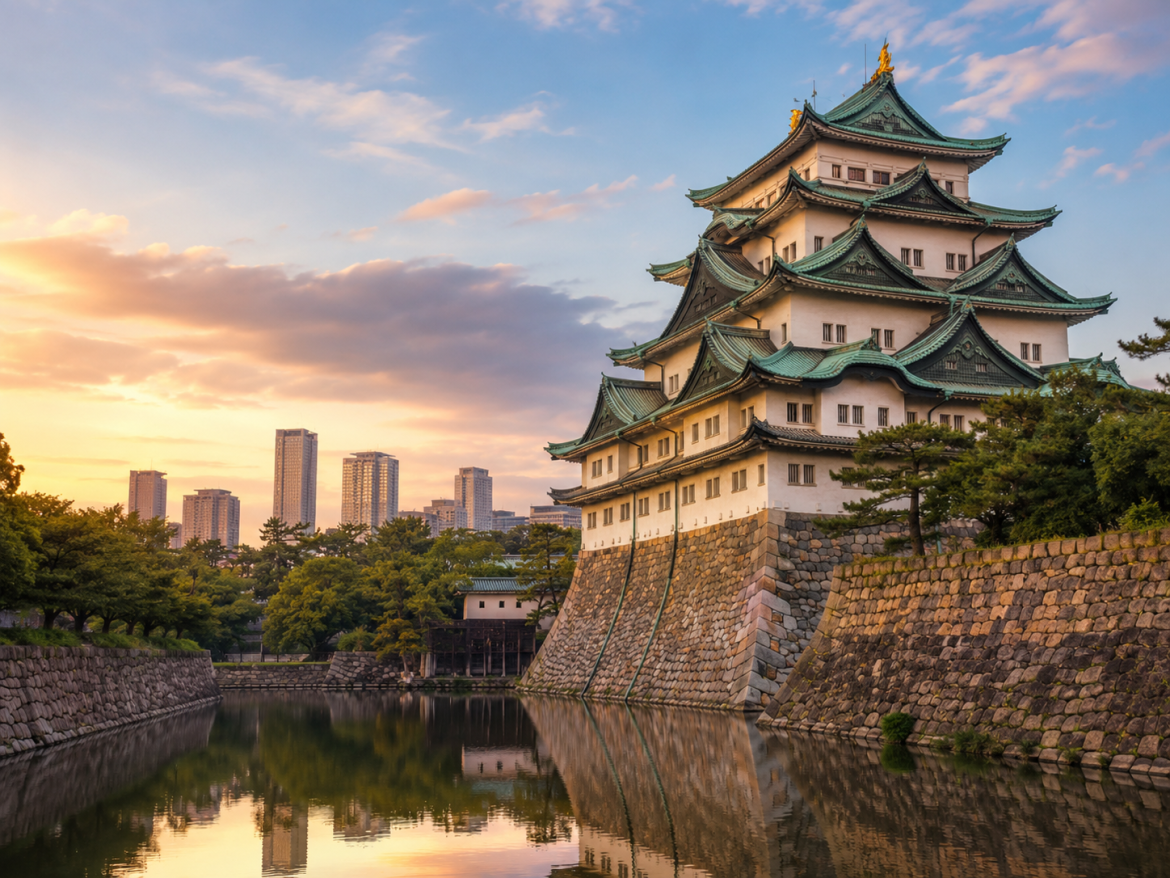
Nagoya rewards travelers who stop treating it as a station between Tokyo and Kyoto. The city combines samurai history, Toyota’s industrial heritage, distinctive local food and some of Japan’s strongest family attractions, while also providing easy access to Ghibli Park, Inuyama, Takayama and Shirakawa-go.
For most first-time visitors, three full sightseeing days is a sensible starting point, excluding arrival and departure time. Spend two days exploring the city, then use the third for Ghibli Park, LEGOLAND Japan or another major excursion. Travelers who only want Nagoya Castle and a local meal can see the essentials in one day, but that approach misses the main reason Nagoya works so well: it is an efficient base for exploring Central Japan.
The city does have a planning challenge. Nagoya Castle, Atsuta Jingu, Sakae, Osu, the port area and Ghibli Park are spread in different directions. A good itinerary groups them by area instead of trying to visit every famous attraction in popularity order.

Nagoya at a Glance
| Planning question | Practical answer |
|---|---|
| Is Nagoya worth visiting? | Yes, particularly for food, Ghibli Park, family attractions and Central Japan day trips |
| Ideal first stay | 3 full sightseeing days; add arrival and departure time |
| Best for | Families, food travelers, railway fans, Ghibli fans and repeat Japan visitors |
| Less suitable for | Travelers wanting dense traditional streets or nonstop nightlife |
| Best area to stay | Nagoya Station for transport; Sakae for dining and evenings |
| Main city transport | Subway, city bus and Me~guru sightseeing bus |
| Best full-day attraction | Ghibli Park for fans; LEGOLAND for families with younger children |
| Easiest day trip | Inuyama |
| Best scenic day trip | Takayama and Shirakawa-go |
| Main planning mistake | Treating distant attractions as if they were in central Nagoya |
These airport and attraction products are separate bookings, not a universal pass. Airport base fare does not automatically include a μSKY reserved seat; choose park admission by its included areas, date and entry time.
Is Nagoya Worth Visiting?
Nagoya is worth visiting when your trip includes at least one interest beyond conventional temple sightseeing.
The city is particularly strong for:
- Studio Ghibli fans
- Families with young or school-age children
- Travelers interested in cars, engineering or railways
- Visitors who enjoy regional Japanese food
- Travelers building an itinerary around Aichi, Gifu or Mie
- People who want a less congested urban stop between Tokyo and Kansai
Nagoya is less compelling for travelers whose only goal is atmospheric old streets, traditional wooden neighborhoods and famous temples. Kyoto, Kanazawa or Takayama offers a stronger concentration of that experience.
Its advantage is practicality. Trains connect the city directly with Tokyo, Kyoto and Osaka, while local railways and buses open up a broad range of day trips. Nagoya also tends to feel easier to navigate than Japan’s two largest metropolitan areas once you understand its main districts.
How Many Days Do You Need in Nagoya?
Count usable sightseeing days before choosing a route. A three-day, two-night flight itinerary may contain only one full day if you arrive late and leave early. The plans below use full sightseeing days unless arrival and departure are explicitly included.
Half a day or one full day
With half a day, choose Nagoya Castle and Sakae, or Atsuta Jingu and Osu. With a full day, visit the castle in the morning, Osu in the afternoon and Sakae around dusk. Shikemichi and Endoji can replace Osu for a quieter historic walk, rather than becoming two more mandatory stops. This works during a Tokyo–Kyoto journey but leaves no time for Ghibli Park, LEGOLAND or the port attractions.
Two full days
Use one day for the castle and Sakae, then one for Atsuta and Osu. Alternatively, keep one city day and spend the other at Ghibli Park, LEGOLAND, the aquarium or Inuyama. That is a deliberate trade-off: the excursion replaces a city day.
Three full days
Two city days plus one full-day theme is the best first-visit balance. Choose Ghibli Park, Inuyama, the aquarium, LEGOLAND, or Toyota’s museum with Noritake Garden for Day 3. Do not promise all of them within three days. The optional Toyota-first variant below is a fuller alternative for industrial-history enthusiasts.
Four to five full days, or a longer regional trip
Add a second major family attraction or an excursion to Inuyama, Ise Jingu, Magome and Tsumago or Nagashima Resort. Takayama and Shirakawa-go involve long journeys; an overnight stay gives them more breathing room. With six or more calendar days, a split stay in Nagoya and Takayama or Gero Onsen is usually more comfortable than repeated long-distance day trips.
Understanding Nagoya’s Main Areas
| Area | Main attractions | Best use |
|---|---|---|
| Nagoya Station | Toyota Commemorative Museum, Noritake Garden, shopping towers | Arrival day, shopping and regional transport |
| Nagoya Castle | Castle grounds, Hommaru Palace, Kinshachi Yokocho | History-focused morning |
| Shikemichi and Endoji | Storehouses, cafes and retro shopping streets | Slow walk between the castle and station |
| Sakae and Fushimi | Hisaya-odori Park, MIRAI TOWER, Oasis 21, museums | Afternoon, shopping and evening |
| Osu and Kanayama | Osu Kannon, shopping arcades and casual food | Street food, vintage shops and subculture |
| Atsuta | Atsuta Jingu and Shirotori Garden | Quiet morning and hitsumabushi lunch |
| Nagoya Port | Public aquarium and waterfront attractions | Rainy-day or family half-day |
| Kinjofuto | LEGOLAND, SEA LIFE and SCMaglev and Railway Park | Full family day |
| Nagakute | Ghibli Park | Full-day excursion |
The most common planning error is combining Nagakute, Kinjofuto and central Nagoya on the same day. Each lies in a different direction and deserves a separate block of time.
Use the official city sightseeing route information and Ghibli Park’s own information for real maps and access guidance. Nagoya Port and Kinjofuto are separate destinations even though both are waterfront districts.
How to Get to Nagoya
From Chubu Centrair International Airport
Meitetsu trains provide the most straightforward airport connection. The fastest μSKY services reach the Nagoya area in about half an hour and use reserved first-class seating, while other limited express services include ordinary cars.
Travelers who want a digital ticket can book a Meitetsu airport train ticket. Check whether the selected option includes only the base fare or also covers the reserved-seat supplement.
For Sakae, compare changing at Kanayama to the Meijo Line. For Fushimi, continuing to Meitetsu Nagoya and changing to the Higashiyama Line is usually more direct; Kanayama has no direct subway service to Fushimi. Check the hotel entrance as well as the station name.
Check the official Meitetsu airport guide: μSKY requires both the regular fare and a μticket for its reserved first-class cars. Other limited expresses may include ordinary cars with different ticket requirements.
From Tokyo
The Tokaido Shinkansen is the fastest and most convenient route. Direct trains run from Tokyo and Shinagawa to Nagoya.
Nagoya fits especially well into an itinerary such as:
Tokyo → Nagoya → Kyoto → Osaka
Travelers staying near Shinagawa or arriving from Haneda Airport may find Shinagawa Station easier than Tokyo Station.
From Kyoto or Osaka
The Shinkansen makes Nagoya an easy addition to a Kansai trip. It is practical to travel to Nagoya in the morning, leave luggage at the hotel and begin sightseeing before lunch.
Highway buses cost less but use significantly more time. They make more sense for budget-focused travelers than for visitors with only two or three days.
Getting Around Nagoya
Nagoya’s subway covers most central districts, while city buses and private railways are useful for specific attractions.
IC cards such as Manaca, TOICA, Suica and ICOCA can be used for most ordinary city journeys.
Main sightseeing tickets
| Ticket | Adult price | Best for |
|---|---|---|
| Nagoya Subway 24-Hour Ticket | ¥760 | Itineraries focused on subway-accessible districts |
| City Bus and Subway 1-Day Ticket | ¥870 | Days combining subway and city buses |
| Me~guru One-Day Pass | ¥500 | Toyota Museum, Nagoya Castle and other route attractions |
The subway 24-hour ticket is the most flexible choice for a full city day. The Me~guru pass is useful when your itinerary follows its sightseeing loop, but it is less helpful for evening trips or areas outside the route.
Do not buy an unlimited pass automatically. An IC card may cost less on days with only two or three journeys.
The Weekend Eco Ticket costs ¥620 for Saturdays, Sundays, public holidays and the 8th of each month. Compare total eligible fares before buying. A city subway pass does not cover Meitetsu airport trains, JR, Kintetsu, Linimo or the Aonami Line. The subway 24-hour ticket starts at first use; one-day bus/subway tickets follow the service day.
Me~guru does not normally run on Mondays, moving the closure to the next weekday when Monday is a holiday, or December 29–January 3. Toyota’s museum also closes on Mondays or the following day for a Monday holiday and during its year-end break. The bus/subway one-day ticket and eligible Weekend Eco Ticket can be used on Me~guru; the subway-only ticket cannot.
The Higashiyama Line links Nagoya, Fushimi, Sakae and Fujigaoka; the Meijo Line serves the castle area, Sakae, Kanayama and the Atsuta area, while the Meiko Line reaches Nagoyako for the aquarium. Use Meitetsu for Centrair and Inuyama, Kintetsu or JR toward Ise, the Aonami Line for Kinjofuto and Linimo for Ghibli Park. No ordinary city pass covers all these systems. A Kintetsu or JR regional pass is worth comparing only after deciding your eligible intercity trips.
Nagoya 3-Day Itinerary
The default plan is two city days followed by one full-day theme: Day 1 Nagoya Castle, Kinshachi Yokocho and Sakae; Day 2 Atsuta Jingu, optional Shirotori Garden and Osu; Day 3 Ghibli Park or one of the alternatives below. These are three complete sightseeing days, not a promise that every three-day flight itinerary can fit them.
The Toyota-first Day 1 below is an optional busier variant. For a relaxed day, move Toyota’s museum to Day 3 with Noritake Garden and visit the castle in the morning instead. Shikemichi and Endoji replace another afternoon block; do not add them automatically after both the museum and castle.
Optional Day 1: Toyota Heritage, Nagoya Castle and Sakae
Morning: Toyota Commemorative Museum of Industry and Technology
Begin with one of Nagoya’s most distinctive attractions. The museum is located in a former industrial complex connected with the origins of the Toyota Group.
The textile machinery section may sound specialized, but it provides the foundation for understanding how Toyota developed from loom manufacturing into automotive engineering. Live machine demonstrations make the museum more engaging than a collection of static vehicles.
Allow around two to three hours if you enjoy engineering, industrial history or hands-on demonstrations. Travelers with limited interest can shorten the visit and focus on the automobile section.
Lunch: Kishimen or a casual station meal
Return toward Nagoya Station or continue along the sightseeing bus route.
Kishimen is a good first Nagoya meal because it is quick, inexpensive and easy to fit into a busy sightseeing day. The broad, flat noodles are usually served in a soy-based broth with simple toppings.
Afternoon: Nagoya Castle and Hommaru Palace
Nagoya Castle remains the city’s main historical landmark, but visitors should understand what the ticket includes.
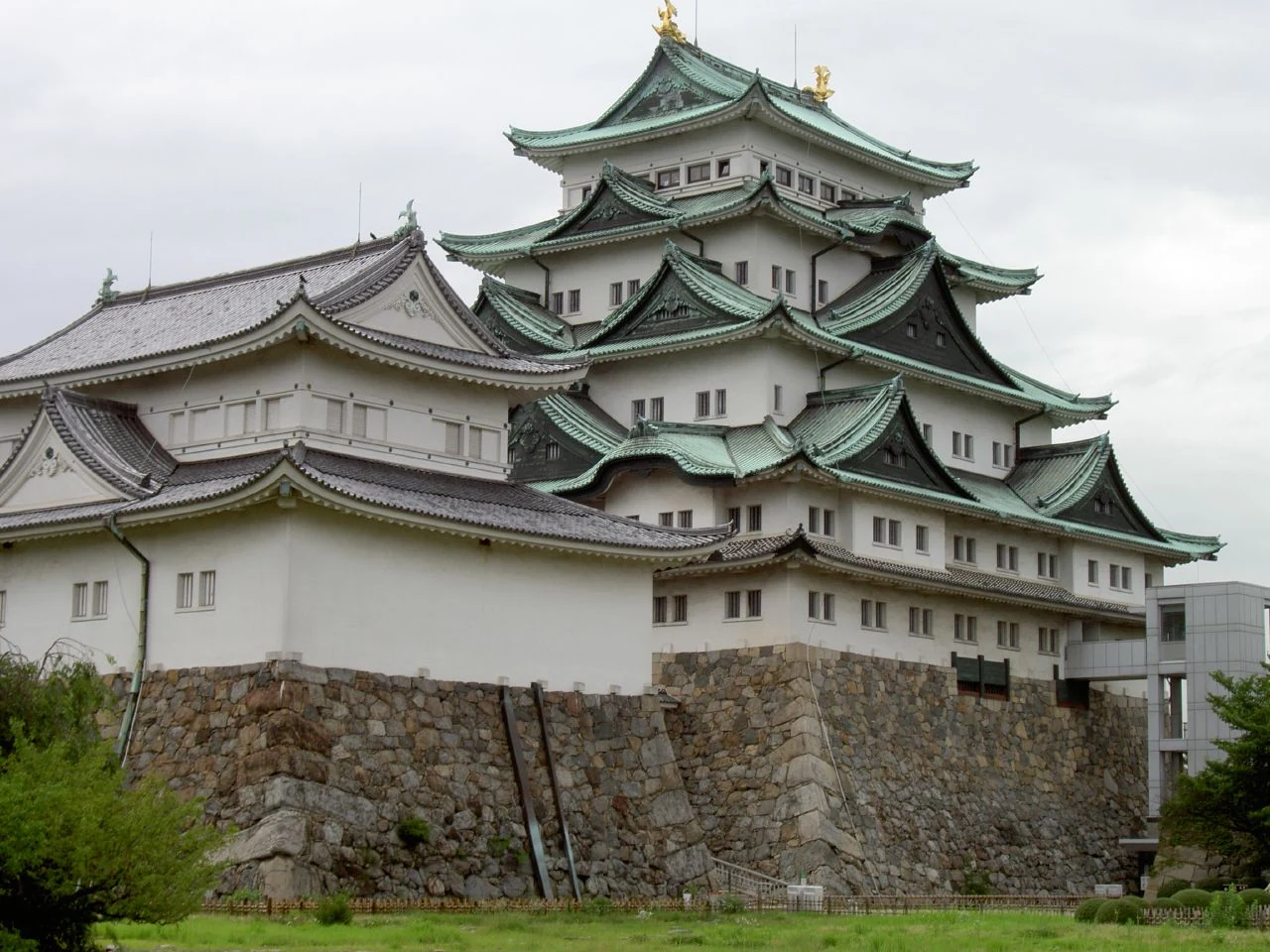
The reconstructed tower keep cannot currently be entered. The main reasons to visit are:
- The castle grounds
- Views of the golden shachihoko roof ornaments
- The reconstructed Hommaru Palace
- Seasonal gardens and events
- Kinshachi Yokocho dining area
The Hommaru Palace is the strongest part of the visit. Its painted screens, decorative interiors and recreated reception rooms communicate the wealth of the Owari Tokugawa family more effectively than the castle exterior alone.
Allow approximately 90 minutes to two hours.
Finish the museum and lunch early enough to reach the palace entrance before its last admission. If that is no longer realistic, visit the castle on another day. Skip Shikemichi on this fuller museum-and-castle route and continue to Sakae for dinner.
Alternative afternoon: Shikemichi and Endoji
Shikemichi offers a smaller-scale historic streetscape with white-walled storehouses and converted cafes. It is not large enough to justify a separate half-day, but it works well between Nagoya Castle and Nagoya Station.
Continue to Endoji Shopping Street for a slower, more local atmosphere than the major station malls.
Evening: Sakae, Oasis 21 and Hisaya-odori Park
Finish the day in Sakae.
Oasis 21 is most interesting around dusk, when its illuminated glass roof contrasts with the city lights. Hisaya-odori Park provides restaurants and open public space below the MIRAI TOWER.
This is a good evening for tebasaki chicken wings. Order several small dishes rather than treating the wings as a full dinner.
Day 2: Atsuta Jingu, Osu and Nagoya Food
Morning: Atsuta Jingu
Visit Atsuta Jingu early, before the paths become busier.
The shrine is one of Nagoya’s most important cultural sites, but the appeal is not a single photogenic building. The wooded grounds, broad paths and calm atmosphere make it a useful contrast to the commercial city center.
Allow approximately 60–90 minutes depending on whether you visit the treasure-related exhibits or simply walk through the main shrine area.
Optional extension: Shirotori Garden
Shirotori Garden is a landscaped Japanese garden within easy reach of Atsuta.
It is a better addition for couples, photographers and travelers who enjoy quiet walks than for visitors trying to maximize the number of major sights. Seasonal foliage makes it particularly worthwhile in late autumn.
Lunch: Hitsumabushi
Atsuta is the classic area for trying hitsumabushi, grilled eel served over rice and eaten in several stages.
The usual approach is:
- Taste the eel and rice on their own.
- Add condiments such as green onion, wasabi and seaweed.
- Pour broth over the final portion.
Hitsumabushi is one of Nagoya’s more expensive signature meals, so it works best as the food highlight of the trip rather than an impulsive snack.
Popular restaurants may have long waits. Eat early or avoid scheduling a timed attraction immediately afterward.
Afternoon: Osu Kannon and Osu Shopping Street
Osu combines a temple, covered shopping arcades, vintage clothing, electronics, casual snacks and pop-culture shops.
The district is more enjoyable when treated as a wandering area rather than a checklist. Start at Osu Kannon, then move through the arcades toward Kamimaezu.
Travelers who prefer guided tastings can compare a Nagoya Osu street-food tour.
Evening: Fushimi or Sakae
Use the evening for one of Nagoya’s heavier comfort foods:
- Miso katsu
- Miso nikomi udon
- Tebasaki
- Nagoya Cochin chicken
- Dote-ni
Miso katsu is the easiest choice for first-time visitors. The sauce is richer and more concentrated than standard tonkatsu sauce, so it pairs well with rice and shredded cabbage.
Day 3: Ghibli Park
Ghibli Park should be treated as a complete day rather than a side trip before or after central Nagoya sightseeing.
The park lies inside Expo 2005 Aichi Commemorative Park in Nagakute. The grounds are large, the themed areas are spread out, and your route must work around the assigned admission time for Ghibli’s Grand Warehouse.
Book before finalizing the itinerary
Advance reservations are required. Tickets are generally released two months before the visit date, and Ghibli Park does not function like a conventional theme park with unrestricted same-day admission.
The main options are:
- Premium O-Sanpo Day Pass
- Standard O-Sanpo Day Pass
The Premium pass covers all five areas and more interior buildings. The Standard pass focuses on Ghibli’s Grand Warehouse, Mononoke Village and Valley of Witches, with additional same-day arrangements required for certain interiors.
Compare the latest inclusions carefully when booking a Ghibli Park ticket.
Use the official overseas ticket rules for the pass you purchase. Premium wristbands must be collected by noon even with an afternoon Warehouse slot. Arrive within one hour after the assigned Warehouse time; early entry is not allowed. Bring the named applicant’s passport and enter together where required. Tickets cannot be changed or refunded. Domestic ticket products may have different rules.
Suggested route
The best order depends on your assigned Grand Warehouse time.
A practical approach is:
- Enter one of the untimed outdoor areas soon after arrival.
- Visit Valley of Witches before the late-afternoon queues.
- Enter Ghibli’s Grand Warehouse at the reserved time.
- Continue to Mononoke Village.
- Add Hill of Youth or Dondoko Forest when included in your pass.
Do not assume that the shortest-looking route on the map will be fast. Walking between areas, queueing and browsing shops can use a substantial part of the day.
Independent visit or bus tour?
Independent travel offers more control and is suitable for travelers comfortable with Nagoya’s subway and Linimo.
A Ghibli Park bus tour from Nagoya may be worthwhile when:
- Admission is included in the selected package
- You do not want to manage transfers
- You prefer an English-speaking guide
- You are traveling with children or older family members
The drawback is reduced flexibility and a fixed schedule.
Alternative Day 3 for Families: LEGOLAND or the Port Area
Families who are not prioritizing Ghibli Park can use Day 3 for Kinjofuto or Nagoya Port.
Option A: LEGOLAND Japan and SEA LIFE
LEGOLAND Japan is designed primarily for families with young and primary-school-age children. Adults without children are less likely to find it worth a full day unless they are dedicated LEGO fans.
Buying a LEGOLAND Japan ticket in advance is generally easier than waiting until arrival. Combination tickets may include SEA LIFE Nagoya.
Do not try to combine a full LEGOLAND day with the SCMaglev and Railway Park. Choose one main attraction and treat the second as an optional shorter stop.
Option B: SCMaglev and Railway Park
Railway fans may prefer the SCMaglev and Railway Park, which covers the development of Japan’s railway technology and high-speed trains.
This is one of Nagoya’s strongest indoor attractions for older children, teenagers and adults interested in transport.
Option C: Port of Nagoya Public Aquarium
The Port of Nagoya Public Aquarium is the better choice for mixed-age families, rainy days and travelers who are not interested in theme parks.
The large tanks, marine mammals and scheduled programs can occupy much of a half-day. Booking a Port of Nagoya Public Aquarium ticket can simplify entry during busy periods.
The Garden Pier closure affects the entire Port Building (including the observation room and Nagoya Maritime Museum), Antarctic research ship Fuji and Port House from August 1 through November 30, 2026. These are distinct from the aquarium; do not automatically add them to an aquarium day during that period.
Nagoya in 2 Days, 4 Days or 5 Days
Two full sightseeing days
Use the relaxed castle-and-Sakae route on Day 1 and Atsuta–Osu on Day 2. A possible rhythm is leaving the hotel at 09:00, castle around 10:00, Kinshachi lunch around 12:30, Sakae from 14:00 and dusk at Oasis 21. On Day 2, start at Atsuta around 09:00, have an early lunch, explore Osu from roughly 13:00 and return toward the station by 16:00 if leaving. These are planning suggestions, not operating times. A one-night stay needs an early arrival and late departure to resemble two full days; work backward from your actual flight or train.
Four days and three nights, including travel
Day 1: arrive, store luggage and explore Nagoya Station; choose Toyota’s museum or Noritake Garden only if you arrive early enough. Day 2: castle, Osu and Sakae. Day 3: Ghibli Park or Inuyama. Day 4: breakfast and departure, with Atsuta only for a late flight and ample buffer. This contains two full sightseeing days, not two city days plus two excursions.
Five days and four nights, including travel
Day 1: arrival and the station or Noritake Garden, adding Toyota only if time allows. Day 2: castle, Osu and Sakae. Day 3: Ghibli Park or LEGOLAND. Day 4: Inuyama, a long Takayama–Shirakawa-go excursion, or a gentler Atsuta-and-Toyota city day. Day 5: breakfast, souvenirs and departure. Choosing two excursions leaves only one full central-city day. For slow mountain-town walks, Hida beef and an onsen stay, turn the Takayama section into an overnight trip instead.
Best Things to Do in Nagoya
1. Nagoya Castle and Hommaru Palace
Best for: First-time visitors and history travelers
Main drawback: The tower keep cannot currently be entered.
Visit for the palace interiors and historical setting rather than expecting a climb to a panoramic viewpoint.
Nagoya Castle adult admission is ¥1,000 from October 1, 2026; junior-high-school-age children and younger enter free. Normal opening is 09:00–16:30, with entry to both the grounds and Hommaru Palace ending at 16:00. Walking from the gate to the palace takes additional time. The castle closes December 29–January 1. Check special free-admission days before buying a ticket.
2. Toyota Commemorative Museum
Best for: Engineering, automobile and industrial-history enthusiasts
Main drawback: The subject may be too technical for travelers with little interest in manufacturing.
It is more dynamic than its name suggests because of the working machinery and demonstrations.
3. Atsuta Jingu
Best for: Culture, quiet walks and first-time visitors
Main drawback: Visitors seeking one dramatic photo may find the experience understated.
Arrive early and appreciate the grounds rather than rushing directly to the main worship area.
4. Osu Shopping Street
Best for: Street food, vintage shopping and casual exploration
Main drawback: The quality and character vary between sections.
Allow time to wander rather than arriving with one restaurant or shop as the only objective.
5. Sakae and Oasis 21
Best for: Evening walks, shopping and city photography
Main drawback: Daytime can feel more commercial than atmospheric.
Visit around sunset and continue through Hisaya-odori Park.
6. Ghibli Park
Best for: Dedicated Studio Ghibli fans
Main drawback: Advance booking, extensive walking and complicated ticket inclusions.
Reserve an entire day and plan the route around your assigned entry time.
7. LEGOLAND Japan
Best for: Families with younger children
Main drawback: Less compelling for adult-only groups.
A full day makes sense for families; casual adult visitors may prefer the railway museum or aquarium.
8. Port of Nagoya Public Aquarium
Best for: Families and rainy days
Main drawback: It is away from the central sightseeing districts.
Check the day’s program after entering so you do not accidentally miss the main presentations.
9. Tokugawa Art Museum and Tokugawaen
Best for: Japanese art, samurai history and gardens
Main drawback: Less appealing to travelers who prefer interactive attractions.
The museum and garden work best as a combined half-day rather than separate visits.
10. Shikemichi and Endoji
Best for: Cafes, slow travel and a break from modern shopping districts
Main drawback: The preserved area is relatively small.
Combine it with Nagoya Castle, the Toyota Museum or Nagoya Station.
What to Eat in Nagoya
Nagoya’s food is one of the strongest reasons to stay rather than pass through.
Hitsumabushi
Grilled eel over rice served in stages.
Best for: One memorable splurge meal
Where it fits: Lunch near Atsuta Jingu or dinner around Nagoya Station
Planning tip: Popular restaurants may require a long wait.
Miso Katsu
Breaded pork cutlet served with a dark soybean-miso sauce.
Best for: A filling lunch or dinner
Where it fits: Sakae, Osu or Nagoya Station
Planning tip: Order a regular portion first; the sauce is rich.
Tebasaki
Seasoned fried chicken wings with a peppery coating.
Best for: Evening drinks and shared dishes
Where it fits: Sakae or around Nagoya Station
Planning tip: Order them with other izakaya dishes rather than expecting a complete meal.
Kishimen
Broad, flat noodles in broth.
Best for: Quick and inexpensive meal
Where it fits: Nagoya Station or between attractions
Planning tip: This is one of the easiest dishes to try on an arrival or departure day.
Miso Nikomi Udon
Firm noodles simmered in a clay pot with a strong miso broth.
Best for: Cooler weather and travelers who enjoy intense fermented flavors
Planning tip: The noodles may feel firmer than standard udon by design.
Ogura Toast
Toast with sweet red-bean paste, often served with butter.
Best for: Breakfast or a retro coffee-shop stop
Planning tip: Try it as part of Nagoya’s morning-service cafe culture.
Ankake Spaghetti
Thick spaghetti with a peppery, starchy sauce.
Best for: Casual local lunch
Planning tip: It is more similar to Japanese comfort food than Italian pasta.
Taiwan Ramen, Nagoya Cochin and Dote-ni
Taiwan ramen is a local option for travelers who like spicy food. Nagoya Cochin chicken and miso-stewed dote-ni suit a slower dinner with shared dishes. You do not need to cross the city for every famous restaurant: Nagoya Station, Sakae and Kinshachi Yokocho let you try several specialties without sacrificing sightseeing time.
Best Day Trips from Nagoya
| Destination | Best for | Difficulty | Recommended time |
|---|---|---|---|
| Inuyama | Castle town and easy independent travel | Easy | Full day |
| Ghibli Park | Studio Ghibli fans | Moderate | Full day |
| Takayama and Shirakawa-go | Historic towns and mountain scenery | Long | Full day or overnight |
| Ise Jingu | Shrine culture and regional food | Moderate | Full day |
| Magome and Tsumago | Historic post towns and walking | Moderate | Long day |
| Nagashima Resort | Theme park, outlet and family travel | Easy–moderate | Full day |
| Korankei | Autumn foliage | Seasonal | Full day |
Inuyama
Inuyama is the easiest historic day trip from Nagoya.
The castle town, shrines and riverside area are compact enough for independent travel. The traditional castle tower contains steep wooden stairs, so travelers with limited mobility can focus on the town rather than climbing to the top.
This is the best day trip for travelers who want historic streets without spending several hours on a highway bus.
Takayama and Shirakawa-go
Takayama and Shirakawa-go provide a much stronger mountain and traditional-village experience than Nagoya itself.
A one-day trip is possible, but the schedule is fast. Most tours divide the day between Takayama’s old town and Shirakawa-go’s thatched-roof village, leaving limited time for slow dining or museum visits.
A Takayama and Shirakawa-go day tour from Nagoya suits travelers who:
- Have only one free day
- Do not want to manage bus reservations
- Prefer a direct sightseeing schedule
- Are comfortable with limited time at each destination
Choose an overnight stay when the mountain region is a major part of the trip.
Ise Jingu
Ise is a rewarding day trip for shrine history and traditional food.
The journey is longer than Inuyama, but the route is relatively straightforward using Kintetsu or JR services. Most visitors combine the shrine areas with Okage Yokocho.
It is better for culturally focused travelers than for families seeking interactive attractions.
Magome and Tsumago
These preserved post towns suit travelers interested in historic streets and countryside walking.
The main challenge is transport coordination. The route requires more planning than Inuyama, and walking between the towns is weather-dependent.
Consider an organized excursion or overnight stay when public transport connections do not match your schedule.
Nagashima Resort
Nagashima works well for families, shoppers and couples interested in seasonal illumination.
The area includes an amusement park, outlet shopping and hot-spring facilities. Decide which element matters most rather than trying to cover everything in one day.
Kamikochi and longer mountain trips
Kamikochi offers river scenery and mountain walks, but it is a seasonal destination with limited access. It is a long journey from Nagoya, so check the operating season and return transport before choosing a day excursion. If you also want Takayama or Shirakawa-go, allow at least two days rather than combining every mountain stop into one. Keep the mountain portion separate from your central Nagoya sightseeing days.
Korankei in autumn
Korankei is a foliage-focused full-day choice rather than an all-year substitute for the city. Allow extra road-travel time in the peak leaf-viewing period and check current conditions; foliage in the mountains and central Nagoya does not peak together.
Where to Stay in Nagoya
Nagoya Station
Best for:
- First-time visitors
- Shinkansen travel
- Airport access
- Regional day trips
- Large luggage
- Early departures
The station area is the most practical base. It has major shopping centers, restaurants and direct access to JR, Meitetsu, Kintetsu and subway services.
The disadvantage is scale. The connected stations and underground passages can be confusing, and a hotel described as “near Nagoya Station” may still require a substantial walk.
Sakae
Best for:
- Dining
- Shopping
- Evening atmosphere
- Couples
- Travelers prioritizing the city center
Sakae feels livelier after dark than the station area. It provides easy access to Oasis 21, Hisaya-odori Park and department stores.
It is less convenient for repeated Shinkansen or regional bus departures.
Fushimi
Best for:
- A quieter central base
- Access to both Nagoya Station and Sakae
- Business-style hotels
- Travelers who prefer a less hectic neighborhood
Fushimi sits between the two main commercial centers and offers a useful compromise.
Kanayama
Best for:
- Airport access
- Atsuta Jingu
- Lower accommodation costs
- Travelers using JR and Meitetsu
Kanayama is practical rather than scenic. It is a good choice when airport convenience matters more than being within walking distance of the main sightseeing districts.
Osu and Kamimaezu
Stay here if browsing small shops, vintage clothing and casual food is the main attraction. You can walk into the arcades, but large luggage and repeated regional departures are less convenient than at Nagoya Station. For a single night, prioritize a straightforward station exit over a small room-rate saving. Kanayama may offer useful value, but it is not automatically cheaper on every date.
Photography, Shopping and a Gentler Pace
Where and when to take photographs
At Nagoya Castle, follow permitted paths to frame the keep with stone walls and trees rather than stopping only at the gate; morning is a useful starting point, with light varying by season. At Oasis 21, dusk lets you combine the illuminated roof, blue-hour sky and MIRAI TOWER. Reduce phone exposure if lights are blown out. Hisaya-odori Park offers more space to fit the tower into the frame than standing directly underneath it. Osu works for signs, arcades and the temple entrance: arrive early for quieter streets, later for more open shops. Follow photography restrictions at Ghibli Park and avoid blocking paths.
Choose a shopping district
Nagoya Station is practical for department stores, electronics, cosmetics and souvenirs before departure, but allow time to find the right platform afterward. Sakae is the stronger choice for department stores, fashion and evening dining. Osu is better for independent shops, vintage clothing and inexpensive snacks than luxury shopping.
Rain, older travelers and half-day visits
The aquarium, Toyota museum, science museum, underground malls and station shopping centers provide indoor alternatives. Osu has covered arcades but gaps between them still expose you to rain. Neither Ghibli Park nor LEGOLAND is fully indoors. For older travelers, prioritize a hotel by an accessible station exit, no more than two main areas per day, and seating breaks. Nagoya Station can involve long walks even though much of the city center is fairly flat; Inuyama Castle has steep stairs, so the town can be the main visit. With half a day, choose castle–Sakae or Atsuta–Osu. Leave luggage at the hotel or suitable station storage rather than taking it around temples, shops or the park.
Couples, first-time visitors and driving
For a first Central Japan trip, Nagoya Station is a useful base for rail and bus departures toward Gifu, Mie and Kansai. Couples may prefer Sakae’s evening atmosphere, adding Inuyama, Ghibli Park or a seasonal Nabana no Sato visit on another day. A rental car adds parking costs and little value for the core city routes; it becomes more useful for rural onsen stops and dispersed destinations with infrequent public transport.
Best Time to Visit Nagoya
Spring
Spring brings mild sightseeing weather and cherry blossoms around Nagoya Castle, Tsuruma Park and other city locations.
For a blossom-focused trip, compare the timing and viewing areas before fixing your daily route.
Summer
Summer is hot and humid. Plan major outdoor sights early and use museums, aquariums or shopping complexes during the hottest part of the day.
Theme parks can feel particularly tiring in high heat, so families should schedule breaks rather than trying to use every operating hour.
Autumn
Autumn is one of the best periods for city walks and regional day trips. Tokugawaen, Korankei and nearby mountain areas provide foliage options at different times.
Winter
Winter is generally manageable for city sightseeing, although trips toward Shirakawa-go, Takayama and the mountains require more weather preparation.
Nagoya’s miso-based dishes are especially satisfying during colder weather.
Autumn events in 2026
The Aichi-Nagoya Asian Games ran from September 19 to October 4, 2026 and have finished. The Asian Para Games are scheduled for October 18–24. For travel during that later period, compare accommodation early, check venue locations and current transport notices, and allow extra time around affected stations. Do not use the finished Asian Games dates as a future event forecast.
Common Nagoya Planning Mistakes
Trying to visit Ghibli Park for half a day
The park requires advance reservations and substantial walking. Treat it as a full-day plan.
Expecting to enter Nagoya Castle’s tower keep
The keep is not currently open to visitors. Base your decision on the Hommaru Palace, grounds and historical value.
Combining LEGOLAND, the railway museum and central Nagoya
Kinjofuto deserves its own day. Choose one major attraction and add another only when the group still has time and energy.
Scheduling hitsumabushi before a timed booking
Popular eel restaurants may involve long queues. Do not place a nonrefundable timed attraction immediately after lunch.
Buying a transport pass without checking the route
A subway pass is not valid on every private railway or attraction route. Ghibli Park, LEGOLAND and airport travel use systems outside the core city subway network.
Treating Shirakawa-go as a nearby suburban trip
It is a long day from Nagoya. A tour makes the logistics easier, but the visit remains fast-paced.
Staying near the wrong Nagoya Station exit
JR Nagoya, Meitetsu Nagoya, Kintetsu Nagoya and the subway are interconnected but have different gates and walking routes. Check the hotel’s nearest exit rather than only its distance from “Nagoya Station.”
Tickets and Tours to Compare
Match the ticket to your date, included areas and cancellation terms. Compare Meitetsu airport train ticket, Nagoya Castle admission, Port of Nagoya Public Aquarium ticket, Ghibli Park tickets, LEGOLAND Japan ticket, Takayama and Shirakawa-go day tour. Airport base fares and reserved-seat supplements are separate decisions; an online ticket does not automatically include a μSKY seat. A park ticket is not a transport pass, and a day tour has fixed meeting points and limited time at each stop.
The current airport e-ticket product uses a live QR code, refreshed every five minutes, rather than a screenshot. It is not available to Japanese passport holders; check eligibility, validity and the selected travel direction before purchase. When comparing the Standard pass, do not assume it includes Premium access. For any private charter, check the total vehicle price, passenger limit and driver or guide language; it is not a public shuttle.
Nagoya Travel 2026: Frequently Asked Questions
1. Is Nagoya worth visiting?
Yes, especially for regional food, Ghibli Park, industrial and railway heritage, family attractions and Central Japan trips. If a short first visit is focused mainly on temples and traditional streets, decide how much time you need in Kyoto before adding Nagoya.
2. How many days should I spend in Nagoya?
Start with two full city days and one full-day theme. Three calendar days and two nights may not provide three usable days. For four-day or five-day flight itineraries, subtract arrival and departure time; adding two excursions means cutting city sightseeing or staying longer.
3. Which city transport ticket should I buy?
Compare the subway 24-hour ticket for repeated subway trips and the bus/subway one-day ticket when using both. The Weekend Eco Ticket applies on weekends, public holidays and the 8th of each month. Add up eligible journeys first; an IC card may be simpler for only a few rides.
4. How do I travel from Centrair to the city?
Meitetsu trains run to Nagoya and Kanayama. For Sakae, compare a Meijo Line connection at Kanayama; for Fushimi, changing to the Higashiyama Line at Nagoya is usually simpler. μSKY uses reserved seating throughout and requires the supplement as well as the base fare.
5. Should I stay near Nagoya Station or Sakae?
Choose Nagoya Station for regional trips, Shinkansen travel, luggage and early departures. Choose Sakae for restaurants, shopping and evening walks. Fushimi is a central compromise and Kanayama is useful for airport access. Check the actual hotel exit and walking route.
6. Is Nagoya good for families?
Yes. The aquarium, LEGOLAND, SEA LIFE, SCMaglev and Railway Park and science museum suit different ages. Separate Nagoya Port, Kinjofuto, central Nagoya and Nagakute into different days, with one main attraction and proper meal breaks.
7. What can I do in Nagoya when it rains?
Choose the aquarium, Toyota museum, science museum, underground malls or station shopping centers. Osu is partly covered, not completely sheltered. Ghibli Park and LEGOLAND include outdoor areas and are not weatherproof alternatives.
8. Can I buy Ghibli Park admission on arrival?
Park admission requires advance reservations. Limited same-day add-on tickets for certain Valley of Witches buildings are for visitors who already hold valid admission for that date; they do not replace an advance park ticket.
9. Do I need a rental car?
Usually not for the city. Subway, bus and local rail cover the main routes. A car is more useful for dispersed rural or onsen stops; allow for parking, road conditions and winter driving requirements.
10. Which day trip should I choose first?
Choose Inuyama for an easier independent castle-town trip, Ghibli Park for fans, LEGOLAND for younger families and Ise for shrine culture. Takayama and Shirakawa-go require a longer travel day; stay overnight for a slower visit.
11. Is Ghibli Park in central Nagoya?
No. It is in Nagakute, within Expo 2005 Aichi Commemorative Park. A common route is the Higashiyama Line to Fujigaoka followed by Linimo. Allow for transfers, walking and movement between park areas, and keep the full day clear.
12. Is LEGOLAND worthwhile without children?
LEGO enthusiasts may enjoy it, but it is primarily aimed at families with younger children. Adult-only travelers can choose Toyota’s museum, the railway museum, aquarium or a regional excursion according to their interests.
13. What food is Nagoya famous for?
Try hitsumabushi, miso katsu, tebasaki, kishimen, miso nikomi udon, ogura toast, ankake spaghetti and Taiwan ramen, with Nagoya Cochin chicken or dote-ni at dinner. Fit meals to the district you are visiting rather than crossing the city for every dish.
14. Can I visit Shirakawa-go from Nagoya in one day?
Yes, using suitable reserved highway-bus services or a tour, but it is a long day. Adding Takayama shortens time at both stops. Check outward, return and connecting seats before independent travel; an overnight stay is better for leisurely town walks and meals.
15. Do I need a JR Pass for Nagoya?
Not for ordinary city sightseeing. A JR Pass is not a subway or all-private-railway pass. Compare national or regional passes only when a longer intercity itinerary contains enough eligible travel to justify the cost.
16. Where can I find more Nagoya planning guides?
Use the city, transport, food and day-trip sections above to choose a route that fits your interests and available days.