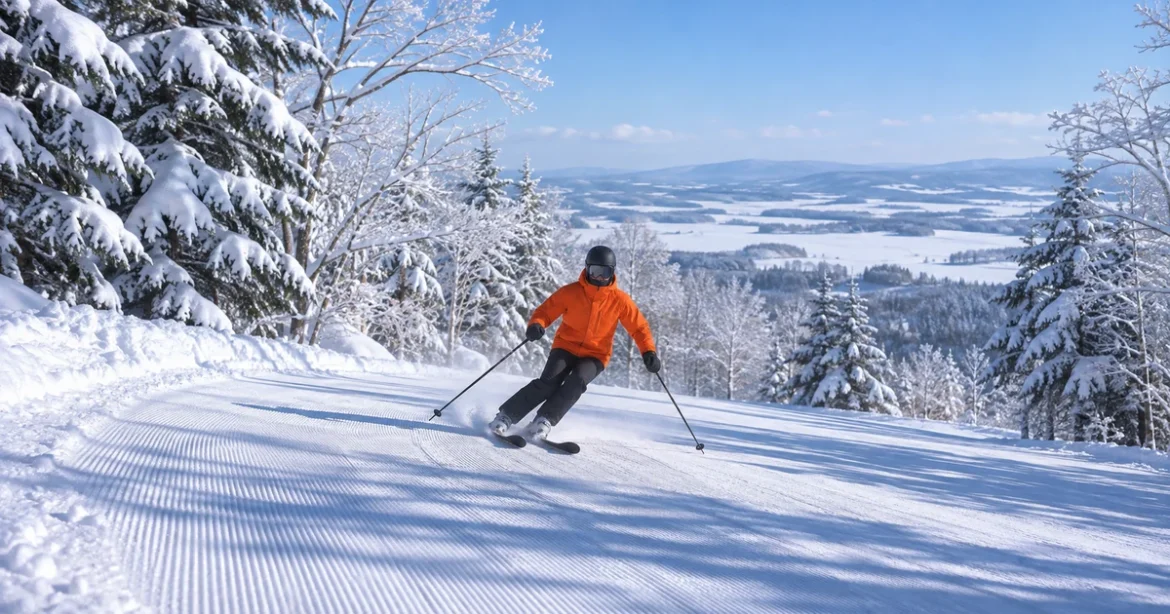
Nayoro Piyashiri suits a trip built around northern Hokkaido, with time to practise, ski on consecutive days or combine the slopes with an onsen stay. The resort is in Nisshin, Nayoro. Driving estimates are about 15 minutes from central Nayoro and two hours from Asahikawa, so an Asahikawa round trip takes a substantial bite out of a ski day. Choose your overnight base before choosing the cheapest lift ticket.
The planned opening for 2026–27 is December 11, 2026. The actual opening, night sessions and available terrain depend on snow and weather. Gentle practice slopes, ungroomed steeps and tree areas with registration requirements all exist here. A reputation for powder does not make those choices interchangeable.

Who should choose Nayoro Piyashiri?
Confident beginners and intermediates can build a sensible two-night trip around one full day on snow. Experienced riders can choose steeper or ungroomed terrain when it is open and appropriate for their ability. Families benefit from free lift access for junior-high students and younger children, but equipment, lessons, transport and accommodation remain separate costs.
First-timers have gentler terrain to work with, provided they first settle the lesson language, meeting time and equipment sizes. Piyashiri is a less natural fit for an impulsive half-day addition to a Sapporo city break. Use our Sapporo–Asahikawa transport guide for that part of the journey, then plan the onward travel to Nayoro and the resort separately. Reaching Asahikawa is not reaching the ski area.
For fewer daily transfers, compare Sunpillar rooms for your dates and check meals, guest-ticket eligibility and how to obtain the ticket. A room reservation does not book a lesson or night transfer. Settle the route back to your accommodation before adding an evening session.
2026–27 dates, daytime hours and night skiing
The season and pricing page lists daytime hours of 09:00–16:30. Night skiing is planned for Thursdays and Fridays from December 17, 2026 to February 26, 2027, from 16:30 to 20:30, excluding December 31 and January 1. Day and night tickets have different validity periods.
Decide whether night skiing works by checking the journey home first. A slopeside stay makes meals and breaks easier to arrange; a town stay requires a workable transfer or taxi. Do not assume a regular bus runs after the 20:30 finish, or keep tired children skiing simply to use the whole ticket.
How to read the piste map
Open the course map and lift-status page, or enlarge the original full piste map. No season is printed on the map. Map credit: Nayoro Piyashiri Ski Resort / Nayoro Fukko Kosha. Read the separate operating-status list before treating any mapped run as open.
Beginners: General Slope 2 and the Juhyo course
The operator recommends General Slope 2, labelled 一般ゲレンデ第2, as a gentle beginner option. Ask the instructor which part is suitable that day. Juhyo, labelled 樹氷コース, is also classed as beginner terrain, with a listed length of 700 metres and an average gradient of eight degrees. A green classification is not a reason for a first-time skier to head there alone: establish stopping, turning and yielding skills first.
Jumps and park features marked on the map are not beginner shortcuts. Mixed-ability families should agree on lunch and meeting points rather than insist on skiing every run together. Non-skiers should not walk across active pistes to meet the group.
Experienced riders: separate steeps from tree terrain
The ungroomed Challenge course has a listed maximum gradient of 30 degrees; Kabe, or “the wall”, reaches 35 degrees and is classed as expert terrain. Deep snow, ice and poor visibility can change the challenge considerably. Comfort on a groomed intermediate run is not sufficient evidence of readiness.
Tree Areas I, II and III require an application before riding. The map treats the Free Area’s registration rules separately. Check the day’s open entrances, registration process and equipment requirements with staff; enter only through designated gates and respect ropes and closures. Unmarked woodland is not an invitation to create your own route, and old photographs do not establish what is open today.
Lift tickets: one day, three hours or online?
For 2026–27, standard adult tickets are listed at ¥4,300 for a day, ¥3,700 for three hours, ¥2,000 for one hour and ¥1,300 for a night session. The adult online day ticket is ¥3,800. Adult rates apply from high-school age; a separate senior category starts at 60. These are ordinary visitor prices, not Nayoro resident discounts that require eligibility.
The online day ticket is only ¥100 more than the counter’s three-hour ticket. If you want time for fitting, practice and lunch, compare their actual conditions rather than assuming the shorter ticket is better value. Conversely, a late arrival or brief introductory session is no reason to keep skiing longer than you want.
A ¥500 refundable deposit is charged per IC card. Junior-high students and younger children ride free but still need a card and deposit; junior-high students must show their student ID. Lessons and rentals remain chargeable. The online-ticket instructions distinguish collecting a new card from loading an existing one, so select the correct process before paying.
Equipment hire and a realistic day budget
The 2026–27 page lists an adult ski or snowboard set at ¥4,500 for a day or ¥4,000 for three hours. Adult clothing is ¥3,500 for a day or ¥3,000 for three hours, and a helmet is ¥1,000 for a day. An online adult day ticket plus those three day rentals totals ¥12,800, with another ¥500 temporarily needed for the card deposit. Lessons, transport, food and accommodation are additional.
Do not rush boot fitting. Check that the heel is held securely without painful pressure and let staff handle the bindings. Ask ahead about children’s sizes or unusual requirements. Bring or separately arrange gloves, goggles, base layers and suitable socks; “set” does not automatically mean every item you will wear.
Lessons and families: settle the teaching language first
The resort links to Nayoro Ski School and provides a separate snowboard-school information link. When enquiring, give the participants’ ages, discipline, ability, preferred language and rental needs, and confirm the meeting place. An English ticket-booking screen is not proof that an English- or Chinese-speaking instructor is available.
The publicly visible school schedule still contains 2025–26 material. It should not be used to promise 2026–27 lesson dates or prices. Confirm the new season’s bookings directly before fitting transport around a class; deadlines in an older snowboard PDF are not current booking rules. For children, allow time for changing, toilet breaks and warming up before check-in rather than squeezing in one extra lift ride.
Getting there and making the return work
Driving estimates are around 15 minutes from central Nayoro and two hours from Asahikawa. Treat them as planning estimates: snowfall and road conditions can lengthen either journey. If you lack winter-driving experience, compare bus access, a prearranged taxi and a better-located hotel before hiring a car on the strength of a short-looking map distance.
For public transport, investigate Meishi Bus’s Nisshin Piyashiri route. The resort describes the ride from Nayoro town as approximately 25–40 minutes. Its linked PDF is marked revised April 1, 2025, so it is not verified as the 2026–27 winter timetable. Use the resort’s access information to recheck stops and both directions for your date, and check onward rail connections separately.
Work backwards from the departure you need: equipment return, changing, IC-card return and walking to the stop all come before the bus. Add a separate allowance for an onsen visit rather than fitting it into an already tight connection. Night skiing needs its own confirmed journey home.
Stay slopeside or in Nayoro town?
Nayoro Onsen Sunpillar is connected to the slopes and suits consecutive ski days, families and an onsen-focused stay. The operator lists guest-only adult day tickets at ¥2,800 in the standard period and ¥1,900 in March. These require guest eligibility; a room booked through any platform does not automatically include a lift pass. Check the room package and how to obtain the guest ticket.
A town hotel can work well when skiing is only part of your Nayoro stay, but daily transfers belong in the comparison. Assess meals, transport costs, usable ski time and cancellation conditions together. The linked Sunpillar listing lets you compare room options; enter your dates and check whether meals or lift access are included.
A sensible two-night ski plan
Use the first day to reach Nayoro, check in and settle the next day’s lesson and equipment arrangements. Do not force a full ski day into a long travel day. On day two, warm up on suitable easy terrain, progress according to ability and reassess the weather, children’s energy and return plans at lunch. Leave day three mainly for onward travel, adding a short session only if connections allow it.
For a single-day visit, arrange lessons and both transfers before leaving. Fitting equipment, finding an instructor, lunch, an onsen and a long return journey do not all fit comfortably into one afternoon. Keep a copy of the map and booking details on your phone, protect the battery from the cold and carry appropriate layers. Adapt to the open terrain rather than expect conditions to match the itinerary.
Nayoro Piyashiri: ten common questions
1. When does the 2026–27 season start?
December 11, 2026 is the planned opening. Snow and weather determine actual operations, and the announcement does not guarantee that every run opens that day.
2. Can I visit from Asahikawa for the day?
It is possible to plan, but the driving estimate is two hours each way. A Nayoro or slopeside stay is easier for lessons, children or a full day of skiing.
3. Is it suitable for a complete beginner?
Gentle terrain is available. Confirm instruction and language first rather than making the summit or Juhyo course your first destination.
4. Do children really ride free?
Junior-high students and younger children have free lift access but still need an IC card and ¥500 refundable deposit. Junior-high students need student ID; rentals and teaching cost extra.
5. What is the online adult day-ticket price?
The 2026–27 listing is ¥3,800, compared with ¥4,300 at the counter. Confirm the date, ticket type and IC-card process before buying.
6. Does a day ticket include night skiing?
The daytime pass covers 09:00–16:30. Night sessions have a separate ticket and specified operating dates.
7. Can I enter the tree areas freely?
No. Areas I, II and III require an application, and daily openings, designated entrances and boundaries still apply.
8. Are English or Chinese lessons available?
Do not infer this from the website language. Ask the school about instructor language, availability and age restrictions before booking.
9. Can I take a regular bus after night skiing?
Check the actual date’s timetable; do not assume it matches the night-session finish. Arrange a taxi or slopeside stay if no suitable bus runs.
10. Is the linked map a 2026–27 edition?
No season is printed on the current linked base map. Use it for orientation, with the daily status and on-site instructions controlling where you can ski.