
Rikugien is an easy autumn-leaf stop within Tokyo, but an evening visit needs two decisions before you set off: buy the separate night-viewing ticket and walk to the Main Gate. The 2026 session starts at 18:00 and last admission is already at 19:30. Eating nearby first and bringing a warm layer makes more sense than treating the garden as a final stop after a long dinner.


Rikugien autumn illumination 2026: dates, hours and tickets
The 2026 special evening opening runs from 25 November to 6 December, 18:00–20:30, with last admission at 19:30. Daytime visitors leave when the garden closes at 17:00; the night session reopens an hour later.
| Item | 2026 arrangements |
|---|---|
| Dates | 25 November–6 December 2026 |
| Evening hours | 18:00–20:30; last admission 19:30 |
| Advance ticket | ¥1,000, online only |
| Same-day ticket | ¥1,200, online or at the Main Gate; the gate counter accepts cash only |
| Eligible disability concession | ¥500; check the accepted documentation and eligibility |
| Elementary-school children and younger | Free |
| Entrance | Main Gate (正門) |
A special night-viewing ticket is required and the daily allocation is limited. Online ticket holders can use the priority entrance line. Same-day counter sales run from 18:00 to 19:30 at the Main Gate. The on-sale date and detailed booking instructions are still to follow; do not reuse last year’s on-sale date or booking page.
Use the official 2026 event notice and Rikugien garden website for the current arrangements. For the wider itinerary, see the Tokyo autumn foliage guide and Tokyo travel guide. Keeping daytime stops in a sensible area saves an unnecessary cross-city trip before the evening session.
Compare a subway pass only if it fits the rest of your itinerary. This is transport, not a Rikugien evening admission ticket, and it does not cover JR.
Can you stay for the lights with a daytime ticket?
No. Normal opening is 09:00–17:00, with last admission at 16:30. Ordinary admission is ¥300 for adults and ¥150 for visitors aged 65 and over. These are daytime prices, not the cost of the special autumn evening opening.
To see the garden both ways, visit in the afternoon, leave at 17:00, take a meal or rest near Komagome, then return through the Main Gate from 18:00 with the separate evening ticket. Allow time for both exit and re-entry rather than planning a continuous visit.
Getting there: Komagome or Sengoku?
The autumn 2026 announcement specifies the Main Gate. Choose your train for your hotel and the day’s other stops, rather than simply choosing the geographically closest gate.
| Station | Approximate walk to the Main Gate | Useful for |
|---|---|---|
| JR Yamanote Line, Komagome South Exit | About 7 minutes | Ikebukuro, Ueno and other Yamanote Line bases |
| Tokyo Metro Namboku Line, Komagome | About 7 minutes | Hotels and stops on the Namboku Line |
| Toei Mita Line, Sengoku | About 10 minutes | Sugamo and other Mita Line stops |
Some directions show a roughly two-minute walk from Komagome to Someimon Gate, but that is not the entrance specified for this event. The autumn notice does not establish a fixed exit gate either. Follow the signs and staff on the night rather than borrowing a route from a spring event or an older autumn visit. Rikugien has no car park, so rail is the straightforward option.
What is included in the 2026 evening?
The appeal is the garden’s composition after dark: trees, rocks, islands and the large pond rather than a parade of oversized light sculptures. The announced programme includes garden lighting, projections on the storehouse, new bamboo-grove projection mapping, photo spots, tea and light refreshments.
For a first visit, give the pond reflections and views around the tea-house area time to unfold. Familiar daytime landmarks include Daisensui pond, Nakanoshima island, Togetsukyo Bridge and Suiko-no-e; access to any particular area depends on the night’s open route. Do not assume every path on the daytime map will be available.
The 2026 notice includes refreshments at Fukiage Chaya and Shinsentei, with stalls and food trucks in designated areas. Think of these as a pause during the walk, not a guarantee of a full dinner with a seat when you want one.
When should you arrive?
There is no guaranteed quiet time. For a first visit, aiming to enter around 18:00 gives the most useful buffer for queuing, walking and photographs before the 20:30 close. If the pond reflections are your priority, do not arrive at the last possible moment.
Treat 19:30 as a hard admission deadline, not a recommended arrival time. Once sales open, a ¥1,000 advance ticket may make sense if your date is settled; online entry priority does not mean there can never be a queue.
Autumn colours: a Tokyo forecast is not a garden guarantee
In its second 2026 forecast, published on 1 October, Japan Meteorological Corporation listed Tokyo’s maple-colour date as 28 November and ginkgo as 26 November. These refer to a city-level sample-tree observation standard: the first day when most leaves have changed colour. They are not a promise that every tree in Rikugien will be at its best on one day.
Different species, shaded locations and waterside spots can progress differently. The event period overlaps late November and early December, but the presence of lighting does not prove peak foliage. Shortly before your visit, check the garden’s news and official X account for actual conditions.
2026 bank repairs and pond views
The garden’s bank-repair notice schedules work from May through November 2026. During the work, Daisensui pond and Enkeiryu water levels are lowered and some paths beside the works are closed, so reflections and walking routes can differ from historical photographs. This is not a cancellation of the confirmed night event. Check completion and the actual open route near your visit rather than assuming the same construction conditions throughout the evening season.
Rain, photography and tripods
Read the 2026 event conditions when buying. A previous year’s cancellation, refund or tripod rule may not apply, and weather can affect outdoor features or routes. Wet leaves and stone surfaces also call for shoes with grip and a slower pace.
The Tokyo Metropolitan Park Association photography guidance allows ordinary personal landscape and family snapshots without an application, but shoots that occupy an area, including model or wedding photography, need prior permission. Such shoots may not be accepted during busy event periods. For tripods and monopods at this autumn session, follow the specific 2026 instructions and staff directions rather than assuming permission.
If heavy rain changes your plans, choose an indoor stop near your hotel rather than crossing the city for another outdoor garden.
Visiting with children, older relatives or a wheelchair
Plan around a comfortable, safely accessible section rather than completing every illuminated point. The garden provides accessibility information and a barrier-free map, but night-time closures and crowd management still matter. Ask staff which route is suitable on the day.
Komagome on the Namboku Line and Sengoku on the Mita Line have accessibility facilities. The published seven- or ten-minute walk is a general walking estimate, not a wheelchair travel-time guarantee. Choose the station and exit that work for your group.
Dinner and where to stay
If you want to enter near 18:00, have an early meal around Komagome or Sugamo, or plan a proper dinner after leaving. Tea houses and light food inside are helpful extras, but queue lengths and seating can change.
There is no need to move hotels just for Rikugien. Komagome’s Yamanote Line connection makes it practical from established bases such as Ikebukuro or Ueno. Choose your base for the whole trip, rather than one evening.
A relaxed Sugamo and Rikugien half-day
Sugamo and Komagome are adjacent stops on the Yamanote Line; Sengoku is one stop from Sugamo on the Toei Mita Line. Spend the afternoon around Sugamo, eat before the event, and start making your way to the Main Gate around 17:30. This is an itinerary suggestion, not a timed service or a guarantee of admission without waiting.
Enter with the special ticket from 18:00, enjoy the available garden route, then return to the station via the exit indicated that night. Adding another nearby daytime stop is possible, but two distant large gardens can make the evening rushed. Compare options in the Tokyo autumn guide or the Tokyo day-trip comparison.
Use the official garden map before choosing a route
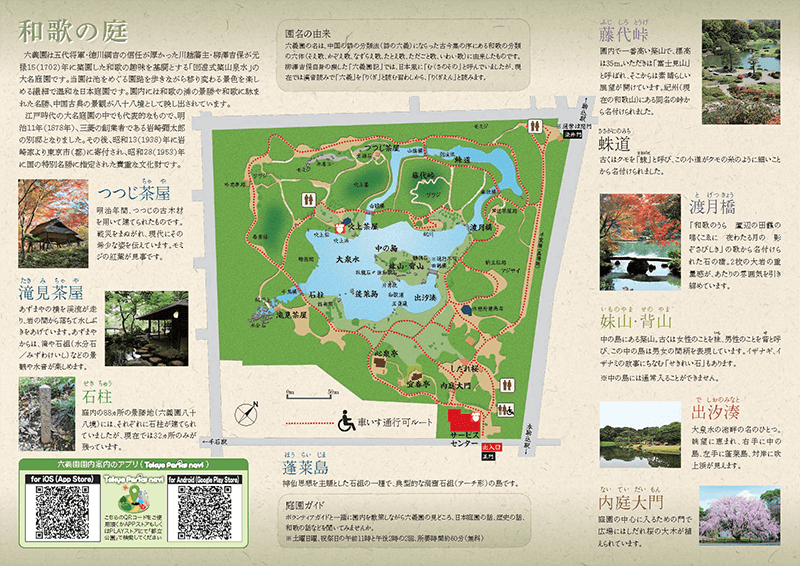
The map section on the Rikugien website offers English, Korean, Traditional Chinese and barrier-free maps. Find the Main Gate, Daisensui pond and tea-house locations before leaving the hotel. These are general garden maps, not proof that all paths are open for the evening event.
Start with the open main paths and look at the water, trees and lighting before heading farther away. If someone in the group dislikes darkness, needs regular rests or uses a wheelchair, a smaller comfortable route is more rewarding than rushing to tick off every feature. Leave time to reach the designated exit.
Is Tokyo Subway Ticket worthwhile for this visit?
Do not buy a multi-day transport pass just because you are going to Rikugien. First compare your actual journeys and fares. Tokyo Subway Ticket covers Tokyo Metro and Toei Subway, so Namboku Line Komagome and Mita Line Sengoku are relevant options. It does not cover JR, including the Yamanote Line to Komagome.
If your wider itinerary already uses the subway frequently, compare the 24-, 48- and 72-hour options and the collection or digital-ticket conditions. Check activation conditions before booking; this subway pass does not include Rikugien admission.
Rikugien autumn evening FAQ
1. When is the 2026 illumination?
25 November–6 December 2026, 18:00–20:30. Last admission is at 19:30.
2. Do I need a separate evening ticket?
Yes. Advance online tickets are ¥1,000; same-day tickets are ¥1,200. Gate sales are cash only and daily ticket numbers are limited.
3. Can I remain inside after a daytime visit?
No. The garden closes at 17:00 and reopens at 18:00 for visitors with the special evening ticket.
4. Which entrance should I use?
The Main Gate (正門), as specified in the autumn 2026 notice. Follow on-site signs for the exit.
5. How far is the Main Gate from Komagome?
The official estimate is about seven minutes from JR Komagome South Exit or Tokyo Metro Namboku Line Komagome.
6. What if I am staying on the Mita Line?
Use Sengoku, about a ten-minute walk from the Main Gate. An extra transfer solely to shorten the walk may not help.
7. Is 19:30 a sensible arrival time?
It is the last admission deadline. Aim closer to 18:00 if you want time for the garden and photographs, with a buffer for queues.
8. Does the forecast give Rikugien’s exact peak?
No. JMC’s 1 October second forecast lists Tokyo maple colour on 28 November and ginkgo on 26 November using city sample-tree standards, not individual garden conditions.
9. Are advance tickets already on sale?
Sale details are still to follow. Check that notice for updates instead of using a previous year’s page.
10. Is parking available?
There is no garden car park. JR, Tokyo Metro and Toei Subway provide useful approaches.
11. Does Tokyo Subway Ticket cover the Yamanote Line?
No. It covers Tokyo Metro and Toei Subway, not JR. A JR trip to Komagome requires a separate fare.
12. Can families or wheelchair users visit?
Use the official accessibility map and ask about the evening’s open route. Plan a manageable visit rather than every illuminated stop.
13. What about rain and tripods?
Check the 2026 cancellation, refund and equipment conditions and follow staff instructions. Wet garden paths can be slippery; do not assume last year’s rules apply.
Making the final decision
Choose an evening between 25 November and 6 December when you can reach the Main Gate around 18:00. Then follow this season’s ticket information and check actual foliage and weather close to the date. The daytime ticket is not a cheaper way into the night session, and a city forecast is only a planning aid.