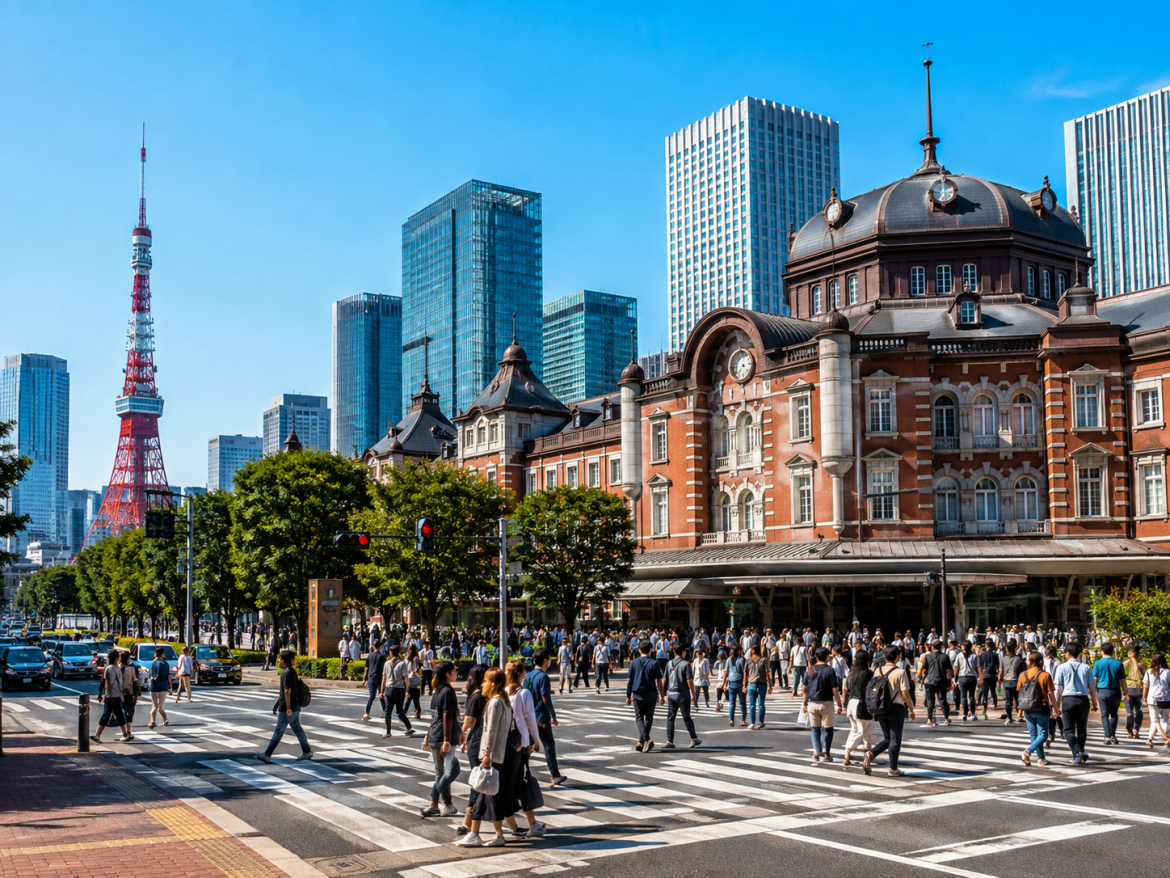
Tokyo’s problem is not a shortage of attractions. It is that too many famous places solve the same need. Three observation decks compete for the same sunset, two teamLab museums compete for the same half-day, and several shopping districts promise different versions of modern Tokyo.
A successful first trip does not come from collecting the longest attraction list. It comes from choosing one historic district, one shrine or garden, one major viewpoint, one museum or immersive experience, and one neighborhood that matches your interests.
Geography matters just as much as the attraction list. Asakusa and Tokyo Skytree belong together. Meiji Jingu, Harajuku and Shibuya form another natural route. Tsukiji, Ginza, the Imperial Palace and Tokyo Station can share a day. Odaiba should not be inserted between Shinjuku and Asakusa simply because all three appear on a map of central Tokyo.
This article is designed as an attraction-selection companion to the broader Tokyo Travel Guide. Use that guide for airport access, accommodation strategy and overall trip logistics. Use this one to decide what deserves a place in the itinerary.
Several Tokyo attractions also require more planning than their location suggests. Ghibli Museum has no walk-up admission, teamLab tickets are tied to dates and times, and popular SHIBUYA SKY sunset sessions can sell out. Other headline experiences—including Sensoji, Meiji Jingu and the Tokyo Metropolitan Government Building observatory—remain free.
For a first visit, three full days reveal Tokyo’s core contrasts. Five days allow a slower pace, more specialized interests and one weather-resistant choice day. One day can show several icons, but it should not be mistaken for a complete Tokyo experience.

Is Tokyo Worth Visiting?
| Decision | Practical Answer |
|---|---|
| Is Tokyo worth visiting? | Yes for urban neighborhoods, food, museums, pop culture, traditional districts, architecture and highly efficient public transportation. |
| Minimum useful stay | One full day shows several icons but leaves little room for museums, shopping or neighborhood exploration. |
| Recommended first stay | Three to five full days. |
| Best for | First-time Japan visitors, food travelers, families, shoppers, museum visitors and travelers with varied interests. |
| Main difficulty | Choosing among overlapping attractions and underestimating walking inside stations and commercial buildings. |
| Best transportation strategy | Group one or two neighboring districts per day and use an IC card for mixed JR and subway travel. |
| Family suitability | Excellent, provided each day contains rest stops and no more than two large districts. |
| Senior suitability | Good with elevator-based routes, taxis for short final connections and fewer large-station transfers. |
| Best free experiences | Sensoji, Meiji Jingu, Imperial Palace East Gardens, Shibuya Crossing and the Tokyo Metropolitan Government Building observatory. |
| Most common mistake | Crossing the city repeatedly to visit attractions that could have been grouped into separate east, west and central days. |
These are three separate products, not a Tokyo attractions bundle. Start with the experience and neighborhood you want, then reserve dates and entry slots. You do not need every observation deck or both teamLab museums; check child, accessibility, weather and cancellation conditions for the option you choose.
First-Time Tokyo: Choose These Five Priorities
Instead of beginning with twenty attraction names, choose one experience from each category.
| Priority | Best First Choice | Alternative |
|---|---|---|
| Historic Tokyo | Asakusa and Sensoji | Ryogoku and the Edo-Tokyo Museum |
| Shrine or garden | Meiji Jingu | Imperial Palace East Gardens |
| Modern city energy | Shibuya | Shinjuku |
| Skyline view | SHIBUYA SKY or Tokyo Skytree | Free Tokyo Metropolitan Government Building observatory |
| Museum or immersive experience | Tokyo National Museum or one teamLab | Edo-Tokyo Museum, Ghibli Museum or Warner Bros. Studio Tour |
Add food, shopping and smaller stops inside those districts rather than crossing Tokyo for a single restaurant or shop.
Current Tokyo Changes That Affect Trip Planning
| Attraction or Area | Current Situation | What Visitors Should Do |
|---|---|---|
| Edo-Tokyo Museum | Reopened on March 31 2026 after its extended renovation closure. | Older itineraries saying the museum is closed are now outdated. Allow two to three hours in Ryogoku. |
| teamLab Borderless | Operating in Azabudai Hills, not Odaiba. | Use Kamiyacho or Roppongi-Itchome access. Do not travel to the former Palette Town location. |
| teamLab Planets | Operating in Toyosu as a separate water-and-garden experience. | Choose Planets or Borderless based on location and experience rather than trying to visit both on a short trip. |
| Tokyo Aqua Symphony | New free fountain shows are operating in Odaiba. | Check the current show schedule and combine it with an Odaiba evening rather than traveling there only for one short performance. |
| Museum of the Imperial Collections | Scheduled to reopen in autumn 2026. | The Imperial Palace East Gardens remain open on normal operating days, but museum access depends on the visit date. |
| Shibuya Station | Long-term redevelopment continues to change passages and gate approaches. | Follow current station signs rather than old videos or screenshots. |
| Tokyo Sea Life Park | The current aquarium remains open while a future replacement facility is planned. | Families can continue to include it, but should check same-day schedules and maintenance notices. |
Which Tokyo Attractions Need Advance Booking?
| Attraction | Booking Urgency | Practical Advice |
|---|---|---|
| Ghibli Museum | Essential | Every visitor needs an advance reservation. There are no walk-up tickets. |
| SHIBUYA SKY at sunset | High | Book when the preferred date and time enter the sales window. |
| teamLab Borderless | High | Reserve a date and time, particularly on weekends and holidays. |
| teamLab Planets | High | Reserve a date and time. Morning sessions are useful for a Toyosu and Odaiba day. |
| Tokyo Disney Resort | High | Buy a dated ticket before travel and give the resort a full day. |
| Warner Bros. Studio Tour Tokyo | High | Admission is timed and the experience occupies much of a day. |
| Tokyo Skytree | Medium | Advance booking is useful for weekends, holidays and a preferred sunset period. |
| Tokyo National Museum | Low for general admission | General admission is usually straightforward. Special exhibitions may require separate timed tickets. |
| Edo-Tokyo Museum | Low for regular visits | Walk-up admission is normally practical, subject to exhibition and event conditions. |
| Sensoji and Meiji Jingu | None | No general admission reservation is required. |
SHIBUYA SKY
SHIBUYA SKY is most valuable when you want Shibuya, Tokyo’s western skyline and the transition from daylight to city lights. Sunset sessions are harder to obtain than morning and midday admission.
Its outdoor rooftop can close because of wind, rain, lightning or other safety conditions. The indoor galleries may remain accessible, so a rooftop closure does not necessarily mean the entire attraction closes.
Free Versus Paid Things to Do in Tokyo
| Experience | Cost Type | Best For | Decision |
|---|---|---|---|
| Sensoji grounds | Free | Historic atmosphere and early-morning photography | Essential for most first-time visitors. |
| Meiji Jingu | Free | Forest, shrine culture and a break from dense streets | Combine with Harajuku and Omotesando. |
| Imperial Palace East Gardens | Free | Gardens, castle remains and central Tokyo | Check closure days before visiting. |
| Tokyo Metropolitan Government observatory | Free | Budget skyline view and Shinjuku | Choose it instead of a paid deck when the view is not the day’s main event. |
| Shibuya Crossing | Free | Modern Tokyo atmosphere | Visit at street level even when not booking SHIBUYA SKY. |
| Odaiba waterfront and Aqua Symphony | Free | Open space, bay views and evening lights | Combine with Toyosu or another Odaiba attraction. |
| Tokyo National Museum | Paid, relatively low cost | Japanese art and cultural history | One of Tokyo’s strongest value-for-money museums. |
| teamLab | Paid timed ticket | Immersive digital art | Choose one on a first trip. |
| SHIBUYA SKY | Paid timed ticket | Open-air skyline experience | Worth booking when a premium city view is a priority. |
| Tokyo Skytree | Paid ticket | Highest major viewpoint and eastern Tokyo | Best when combined with Asakusa and Sumida. |
| Ghibli Museum | Paid reservation | Studio Ghibli fans | Worth the effort for fans; not an essential general Tokyo sight. |
Tokyo Areas at a Glance
| Area | Main Experiences | Best For | Suggested Time |
|---|---|---|---|
| Asakusa and Sumida | Sensoji, traditional streets, Kappabashi and Skytree | First-time visitors and families | Half to full day |
| Ueno and Yanaka | Museums, park, market and older residential streets | Culture, families and slower travel | Half to full day |
| Ryogoku and Akihabara | Edo history, sumo culture, anime, games and electronics | History and pop-culture travelers | Half to full day |
| Tokyo Station and Imperial Palace | Gardens, architecture, shopping and transport hub | First-time visitors and seniors | Half day |
| Tsukiji and Ginza | Seafood, food halls, shopping and architecture | Food and design travelers | Half day |
| Meiji Jingu, Harajuku and Omotesando | Shrine, youth culture, fashion and architecture | First-time visitors and shoppers | Half to full day |
| Shibuya | Crossing, shopping, Parco, food and skyline views | Modern Tokyo and nightlife | Half day into evening |
| Shinjuku | City views, shopping, parks, food and nightlife | Evening atmosphere and convenient transport | Half day into evening |
| Azabudai and Roppongi | teamLab Borderless, art museums, architecture and night views | Art, design and couples | Half to full day |
| Toyosu and Odaiba | teamLab Planets, waterfront, family attractions and fountain shows | Families and rainy days | Half to full day |
Asakusa and Sumida: Best for First-Time Historic Tokyo
Sensoji Temple
Sensoji is Tokyo’s best first introduction to a historic temple district. Kaminarimon Gate, Nakamise, the main hall and surrounding lanes can be experienced in one compact area.
The temple grounds are free. The main hall generally opens at 6:00 a.m., or 6:30 a.m. from October through March, and closes at 5:00 p.m. Nakamise shops follow their own later schedules.
Arrive before 8:00 a.m. when photographs and a calm temple atmosphere matter. Arrive after 10:00 a.m. when shopping, snacks and busier streets are part of the desired experience.
Do Not Spend the Whole Visit on Nakamise
Nakamise is the most visible shopping street, but quieter streets around the temple often provide better meals and less repetitive souvenir shopping. Continue toward Kappabashi when kitchenware, knives or ceramics are an interest.
Tokyo Skytree
Tokyo Skytree is the strongest paid viewpoint for travelers already spending the day in eastern Tokyo. Its height provides a different experience from SHIBUYA SKY, with broad views across the metropolitan area and the Sumida River.
Adult tickets currently start from approximately JPY 3,000, depending on the observation level and package. Advance booking is useful during holidays and preferred sunset periods.
Best Asakusa and Sumida Route
- Sensoji near opening time
- Breakfast or coffee around Asakusa
- Nakamise after shops begin opening
- Walk or take transportation toward Sumida
- Tokyo Skytree or the surrounding commercial complex
- Optional river cruise or Ryogoku extension
Do not add Shibuya, Odaiba and Shinjuku to the same day. Eastern Tokyo already contains enough for a full itinerary.
Ueno and Yanaka: Best for Museums and Slower Neighborhoods
Tokyo National Museum
The Tokyo National Museum is the most useful single museum for understanding Japanese art, archaeology, Buddhist sculpture, samurai objects, ceramics and decorative arts.
General admission currently costs JPY 1,000 for adults and JPY 500 for university students. Visitors under 18 and those aged 70 or above normally receive free general admission with suitable proof of age. Special exhibitions have separate conditions.
Allow at least two hours. Museum-focused travelers can spend half a day without seeing every gallery.
Ueno Park
Ueno Park is not one attraction. It is a cluster of museums, a zoo, ponds, shrines and public space. Choose one major museum rather than walking into several simply because they are nearby.
Ameyoko
Ameyoko adds market energy, casual food, clothing and discount shops below the railway tracks. It is most atmospheric from late morning through early evening.
Yanaka
Yanaka offers low-rise streets, temples, cemeteries, small shops and a residential atmosphere that contrasts with central Tokyo’s towers.
Combine Yanaka with Ueno when the group enjoys walking and neighborhood observation. Families with young children may find the park and museums easier than a long residential walk.
Ryogoku and Akihabara: History and Pop Culture
Edo-Tokyo Museum
The reopened Edo-Tokyo Museum is once again one of the city’s strongest history attractions. Its large-scale displays explain the development of Edo and modern Tokyo through architecture, urban life, transportation and reconstruction.
Current standard hours are generally 9:30 a.m.–5:30 p.m. Allow two to three hours and check exhibition closures before traveling.
The museum works naturally with Ryogoku’s sumo-related streets, the Japanese Sword Museum or a walk along the Sumida River.
Akihabara
Akihabara is most rewarding when visitors have a specific interest: retro games, current consoles, model kits, trading cards, electronics or anime merchandise.
It is less effective as a generic sightseeing stop. Large stores can feel repetitive, and prices are not automatically lower than online or suburban branches.
Allow two to four hours for active shopping. Families should check whether individual upper floors contain adult merchandise before entering with children.
Tokyo Station and the Imperial Palace: Best for Central Tokyo
Imperial Palace East Gardens
The East Gardens offer free access to former Edo Castle grounds, stone walls, landscaped areas and seasonal plants. They provide more to see than the often-photographed bridge outside the palace.
The gardens normally close on Mondays and Fridays, as well as selected holidays and official-event dates. Opening hours vary seasonally, with last admission before the published closing time.
Visit in the morning before combining the area with Tokyo Station, Marunouchi or Ginza.
Tokyo Station and Marunouchi
Tokyo Station is both a transport hub and a sightseeing district. The restored red-brick Marunouchi façade, station hotel, underground shopping streets and nearby modern towers create a useful architectural contrast.
The station’s internal scale is substantial. A restaurant described as “inside Tokyo Station” may still require a 15-minute walk from the arrival platform.
Nihombashi
Nihombashi suits travelers interested in historic commercial Tokyo, long-established shops, department stores and refined food halls. It is calmer than Shibuya and easier to combine with Tokyo Station.
Tsukiji and Ginza: Best for Food, Shopping and Architecture
Tsukiji Outer Market
Tsukiji remains a food district even though the wholesale market moved to Toyosu. Visit in the morning for seafood, tamagoyaki, dried goods, knives and specialist food shops.
Do not arrive in the late afternoon expecting every stall to remain open. The area becomes crowded around the most social-media-visible vendors, while equally useful shops may have shorter lines one street away.
Ginza
Ginza combines luxury shopping, department-store food halls, galleries, stationery, architecture and Kabuki culture. It does not require luxury spending to be worthwhile.
Use Ginza for one or two specific interests rather than entering every department store. A practical route might include a food hall, Itoya stationery, one architectural stop and dinner around Yurakucho.
Food Halls
Department-store basement food halls are useful for mixed groups because they offer sushi, prepared dishes, desserts, bread and regional specialties in one place.
Many counters provide takeaway food rather than seating. Buy items for the hotel, a train journey or a designated dining area rather than eating while blocking the sales floor.
Meiji Jingu, Harajuku and Omotesando: Forest to Fashion
Meiji Jingu
Meiji Jingu provides a forested approach and a major Shinto shrine beside some of Tokyo’s busiest shopping districts. General shrine access is free, and opening hours broadly follow sunrise and sunset.
The walk from the station entrance to the main shrine area takes approximately ten minutes, not including stops. The surface is broad but partly gravel, which can slow wheelchairs and small stroller wheels.
Harajuku
Harajuku is divided between the dense youth-oriented shops of Takeshita Street and the broader fashion, cafés and side streets around Meiji-dori and Cat Street.
Takeshita Street is easiest before the afternoon crowd. Travelers uninterested in youth fashion can walk through briefly and spend more time on Cat Street or Omotesando.
Omotesando
Omotesando is strongest for architecture, flagship stores, cafés and adult fashion. It pairs naturally with Meiji Jingu and Harajuku but should not be treated as a separate cross-city excursion.
Best Walking Order
- Meiji Jingu near opening time
- Harajuku or Takeshita Street
- Omotesando
- Cat Street
- Miyashita Park
- Shibuya in late afternoon and evening
Shibuya: Best for Modern Tokyo
Shibuya combines the Scramble Crossing, Hachiko, shopping, character stores, food, fashion and one of Tokyo’s strongest premium viewpoints.
The Crossing itself is a short experience. A useful Shibuya visit adds one shopping interest, one elevated view and time in the streets around Center-Gai, Parco or Miyashita Park.
Use the Hachiko side for the Crossing, Center-Gai and SHIBUYA109. Follow Scramble Square signs for SHIBUYA SKY. Shibuya Station remains under long-term redevelopment, so current signs are more reliable than old exit diagrams.
Shibuya is best from late afternoon through evening. Families and seniors may prefer the morning or early afternoon before the most intense pedestrian crowds.
Shinjuku: Best for Views, Food and Evening Atmosphere
Tokyo Metropolitan Government Building
The government-building observatories provide a free view from approximately 202 meters above the city. They are the best alternative for travelers who do not want to pay for another observation deck.
Current regular hours are 9:30 a.m.–10:00 p.m., with last entry 30 minutes before closing. The two observatories have different recurring closure days, so check which one is operating.
Shinjuku Gyoen
Shinjuku Gyoen offers spacious lawns, formal gardens and seasonal scenery close to one of Tokyo’s busiest stations. It is especially useful for families and travelers needing a slower outdoor morning.
The garden has admission charges, closure days and seasonal opening schedules. It should be visited earlier in the day rather than added after an evening arrival.
Evening Shinjuku
Shinjuku becomes more atmospheric after sunset, with department stores, restaurants, signs and entertainment districts. Detailed evening routes are covered in the Tokyo-at-night guide.
Azabudai Hills and Roppongi: Best for Art and Design
teamLab Borderless
teamLab Borderless is an open-ended digital-art environment where works move between interconnected rooms. The experience rewards exploration rather than a fixed one-way route.
It is now located in Azabudai Hills. The former Odaiba location is permanently closed.
Adult admission currently begins around JPY 3,600 and can rise on higher-demand dates. Tickets specify a date and entry period. Allow approximately two to three hours.
Choose Borderless when the group prefers a dry indoor experience, open exploration and a location near central Tokyo, Roppongi and Tokyo Tower.
Roppongi Museums
Roppongi contains several major art institutions and changing exhibitions. Check current exhibitions before assigning the area a full day; the building may be famous even when the temporary program does not match your interests.
Tokyo Tower
Tokyo Tower provides a classic city landmark and a closer relationship with the surrounding streets than the much taller Skytree.
It works best when already visiting Azabudai, Zojoji or Roppongi. Do not cross the city only to compare its deck with another observation tower on the same day.
Toyosu and Odaiba: Best for Families and Waterfront Attractions
teamLab Planets
teamLab Planets in Toyosu uses water, mirrored spaces, large-scale installations and garden environments. Visitors remove their shoes and may enter water up to around knee level, depending on height and the installation.
Choose clothing that can be rolled above the knee and avoid skirts or loose garments that become difficult around mirrored floors. Loan items and changing facilities are subject to current venue rules.
Choose Planets when the group wants a more physical, directed experience and plans to continue to Toyosu Market or Odaiba.
teamLab Planets or Borderless?
| Decision | Planets | Borderless |
|---|---|---|
| Location | Toyosu | Azabudai Hills |
| Experience | Directed route with water and garden installations | Open exploration through interconnected digital rooms |
| Best for | Families with eligible children, physical immersion and Odaiba combinations | Art-focused visitors, rainy days and central Tokyo routes |
| Clothing concern | Greater, because of water and mirrored floors | Lower, though comfortable shoes remain useful |
| Suggested time | Approximately 90 minutes to two hours | Approximately two to three hours |
| First-trip advice | Choose one unless digital art is a major interest. | |
Odaiba
Odaiba offers broad promenades, shopping complexes, bay views and family attractions. It is more spacious than most central Tokyo districts and can provide relief from dense station streets.
The new Tokyo Aqua Symphony fountain operates as a free waterfront show with multiple daily performances. Exact show times can change during maintenance or special programming.
Odaiba Marine Park is a waterfront recreation area, not a normal unrestricted swimming beach. Follow current signs and do not assume swimming is permitted.
Dedicated Reservation Days
Ghibli Museum
Ghibli Museum in Mitaka is for travelers with a genuine interest in Studio Ghibli animation and filmmaking. It is not a walk-up attraction and should be treated as the fixed point around which the day is built.
Current official tickets cost JPY 1,000 for adults, JPY 700 for ages 13–18, JPY 400 for ages 7–12 and JPY 100 for ages 4–6. Children aged three and under enter free.
Combine it with Kichijoji and Inokashira Park rather than returning immediately to central Tokyo for several unrelated reservations.
Warner Bros. Studio Tour Tokyo
The studio tour is a large indoor attraction focused on the filmmaking world of Harry Potter. It requires timed admission and commonly occupies four hours or more.
Give it at least half a day. It is not a quick stop before Shibuya, Asakusa and an evening observation deck.
Tokyo Disney Resort
Tokyo Disneyland and Tokyo DisneySea are full-day destinations outside central Tokyo. They should replace a Tokyo sightseeing day rather than being added to the end of one.
On a three-day first visit, include Disney only when it is one of the trip’s top priorities. On a five-day visit, it can take one full day while the remaining four cover Tokyo’s central districts.
Choose Tokyo Attractions by Traveler Type
| Traveler Type | Best Priorities | What to Limit |
|---|---|---|
| First-time visitor | Asakusa, Meiji Jingu, Shibuya, one viewpoint and one museum | Multiple towers and multiple immersive museums |
| History and culture | Tokyo National Museum, Sensoji, Edo-Tokyo Museum, Imperial East Gardens and Yanaka | Shopping-center hopping |
| Anime and gaming | Akihabara, Ikebukuro, Shibuya Parco and Ghibli Museum | Generic electronics stores without a target interest |
| Food traveler | Tsukiji, Ginza food halls, Asakusa, Yurakucho and neighborhood izakaya | Cross-city trips for every social-media-famous restaurant |
| Family with young children | Ueno, Skytree, Odaiba, Planets, parks and one character-shopping area | Late-night entertainment streets and more than two large districts per day |
| Senior traveler | Asakusa early, Tokyo Station, Ginza, Edo-Tokyo Museum, Skytree and the free observatory | Repeated large-station transfers and long standing queues |
| Art and design traveler | Azabudai, Roppongi, Omotesando, teamLab Borderless and current museum exhibitions | Attractions selected only because they are famous |
| Budget traveler | Sensoji, Meiji Jingu, Imperial Gardens, Shibuya Crossing, Yanaka and the government observatory | Several paid decks offering similar views |
| Nightlife traveler | Shibuya, Shinjuku and selected music or bar districts | Early-morning sightseeing after a late club night |
Tokyo Food: Choose the Neighborhood, Not Just the Dish
Asakusa
Choose Asakusa for tempura, soba, traditional sweets and long-established restaurants. Eat before noon or after the main lunch rush when the itinerary includes Sensoji.
Tsukiji
Choose Tsukiji for a seafood-focused morning. Arrive early enough for market hours, but do not assume the longest queue identifies the best meal.
Ginza and Tokyo Station
Choose these areas for department-store food halls, polished restaurants, sweets, bento and mixed groups with different preferences.
Yurakucho and Shimbashi
Choose the railway-arch and office districts for an after-work atmosphere, yakitori, izakaya and casual dinner.
Shibuya and Shinjuku
Choose these districts for broad restaurant choice, late hours, ramen, yakiniku, karaoke packages and nightlife. Confirm table charges and minimum orders at small bars and izakaya.
Tsukishima
Choose Tsukishima for monjayaki, a Tokyo-style savory dish cooked on a hot plate. It pairs naturally with Toyosu rather than western Tokyo.
Kappabashi
Kappabashi is primarily a kitchenware district, not a food market. Visit for knives, ceramics, cookware and food models, then eat in Asakusa or Ueno.
Tokyo by Day or Night
| Area | Better by Day | Better at Night |
|---|---|---|
| Asakusa | Temple interiors, shops and nearby museums | Illuminated gates and quieter streets after shops close |
| Ueno | Museums, zoo and park | Ameyoko food and casual restaurants |
| Imperial Palace | Gardens and outdoor walking | Marunouchi architecture, not palace access |
| Harajuku | Shopping, Meiji Jingu and cafés | Less essential after stores close |
| Shibuya | Shopping and easier family movement | Screens, Crossing atmosphere, dining and views |
| Shinjuku | Shinjuku Gyoen and shopping | Views, restaurants and entertainment districts |
| Ginza | Shopping, galleries and food halls | Architecture, restaurants and polished streets |
| Odaiba | Family attractions and waterfront space | Bay lights and Aqua Symphony |
A strong day often begins with a temple, shrine, garden or market and ends in Shibuya, Shinjuku, Ginza or Odaiba. Avoid using prime morning hours inside a shopping center that opens late.
Rainy-Day Things to Do in Tokyo
Tokyo’s rainy-day strength is the number of indoor attractions connected directly or almost directly to railway and subway stations.
Best Indoor Areas
- Ueno museums
- Edo-Tokyo Museum in Ryogoku
- teamLab Borderless and Azabudai Hills
- teamLab Planets and Toyosu
- Tokyo Station underground shopping
- Ginza department stores and galleries
- Warner Bros. Studio Tour Tokyo
- Odaiba shopping and family attractions
- Shibuya Scramble Square, Hikarie and Parco
Rainy-Day East Tokyo Route
- Tokyo National Museum
- Lunch inside Ueno Station or nearby
- Edo-Tokyo Museum
- Tokyo Skytree commercial complex or aquarium
Rainy-Day Central Tokyo Route
- Tokyo Station underground streets
- Department-store food hall
- Ginza galleries and shopping
- teamLab Borderless
- Dinner in Roppongi or Marunouchi
Rain Is Not the Same as Severe Weather
Ordinary rain rarely stops Tokyo transportation, but typhoons, strong wind or extreme snowfall can disrupt rail services and close outdoor decks. Check operator information rather than assuming the city will operate normally.
Tokyo with Children
Tokyo works well for children when transportation and waiting time are treated as part of the planning rather than ignored.
Best Family Areas
- Ueno for museums, the zoo and park space
- Asakusa and Skytree for a compact first-time day
- Toyosu and Odaiba for indoor attractions and wider walkways
- Shibuya Parco for character and gaming stores
- Tokyo Station for food, trains and weather-resistant shopping
- Disney Resort for a dedicated full day
Stroller Practicality
Most modern stations and commercial complexes have elevators, but the step-free route may be indirect. Large stations such as Shinjuku, Shibuya and Tokyo can require substantial internal walking.
- Use a compact stroller rather than a large wagon.
- Carry a baby carrier for rush-hour trains and older buildings.
- Avoid commuter peaks between approximately 7:30–9:30 a.m. and 5:00–7:00 p.m.
- Do not schedule timed admission immediately after a complicated transfer.
- Use one major shopping complex rather than several vertical malls.
- Plan lunch before the child is already hungry.
teamLab with Children
Borderless is easier for families who prefer dry indoor exploration. Planets involves bare feet, water and mirrored surfaces. Check age, clothing and supervision needs before choosing.
Tokyo for Seniors and Travelers with Limited Mobility
Tokyo’s major attractions are often accessible, but the distance between the train platform, station elevator and final entrance can be more tiring than the attraction itself.
More Practical Areas
- Asakusa early in the morning
- Tokyo Station and Marunouchi
- Ginza
- Edo-Tokyo Museum
- Tokyo Skytree
- Azabudai Hills
- Odaiba waterfront
Areas Requiring More Energy
- Large Shinjuku and Shibuya station transfers
- Long Harajuku–Omotesando–Shibuya walks
- Gravel approaches at major shrines
- Standing restaurant queues
- Several museum floors without rest breaks
Reduced-Walking Strategy
Use taxis for short final connections between nearby attractions, not for repeated cross-city travel. For example, a taxi from Tokyo Station to Tsukiji can save energy without replacing the entire rail network.
Choose a hotel near a simple station and organize each day around one side of Tokyo. An eastern day, western day and central day are easier than daily returns across the city.
Tokyo Transportation: How to Avoid Wasting Time
Group Areas Before Choosing the Train
Transportation follows the itinerary, not the other way around. A geographically efficient day uses one or two neighboring districts:
- Asakusa, Sumida and Ryogoku
- Ueno, Yanaka and Akihabara
- Tokyo Station, Imperial Palace, Nihombashi and Ginza
- Meiji Jingu, Harajuku, Omotesando and Shibuya
- Azabudai, Roppongi and Tokyo Tower
- Toyosu and Odaiba
IC Card or Subway Pass?
Use an IC card when mixing JR trains, Tokyo Metro, Toei Subway and private railways. This is the simplest choice for most first-time visitors.
A Tokyo Subway Ticket can save money when the day relies heavily on Tokyo Metro and Toei Subway. Current visitor prices are:
| Ticket | Adult | Child |
|---|---|---|
| 24 hours | JPY 1,000 | JPY 500 |
| 48 hours | JPY 1,500 | JPY 750 |
| 72 hours | JPY 2,000 | JPY 1,000 |
The validity period begins when the ticket is first used rather than automatically ending at midnight. The ticket does not cover JR trains, the Yurikamome or most private railways.
When a Subway Pass Is Not Worth It
Do not buy one for a day centered on the JR Yamanote Line or a route that includes private railways and only two subway trips. Convenience is not the same as savings.
Large-Station Reality
Allow 15 to 25 minutes for complicated transfers at Shinjuku, Shibuya and Tokyo Station, particularly with children, luggage or elevators. Two stations may appear adjacent on a map while their platforms sit far apart underground.
How Many Days Should You Spend in Tokyo?
| Stay Length | What Is Realistic | What to Avoid |
|---|---|---|
| 1 day | Three iconic areas and one evening district | Museums with long visits, Disney and multiple paid decks |
| 2 days | One eastern and one western day | Adding a distant day trip |
| 3 days | Historic east, modern west and central or waterfront Tokyo | Trying to see every major museum |
| 4 days | Core Tokyo plus one interest-based day | Changing hotels within Tokyo |
| 5 days | Comfortable core route plus a dedicated reservation attraction | Using two days for distant excursions on a first visit |
| 7 days | Deeper neighborhoods and one or two day trips | Repeating similar observation decks and shopping districts |
One-Day Tokyo Itinerary
One day cannot represent the whole city. This route prioritizes contrast rather than quantity.
- 7:30 a.m.: Sensoji and Asakusa before the largest crowds
- 9:30 a.m.: Breakfast and a short walk around the district
- 11:00 a.m.: Travel to Meiji Jingu
- 12:00 p.m.: Shrine visit
- 1:30 p.m.: Harajuku or Omotesando lunch
- 3:00 p.m.: Walk through Cat Street toward Shibuya
- 4:30 p.m.: Shibuya Crossing and shopping
- 6:00 p.m.: SHIBUYA SKY or a free alternative viewpoint
- 7:30 p.m.: Dinner in Shibuya
This route deliberately leaves out Tokyo Station, Ginza, Ueno, Akihabara, Odaiba and Shinjuku. Adding them would turn the day into a train-transfer exercise.
One-Day Alternative for Culture Travelers
- Sensoji
- Tokyo National Museum
- Imperial Palace East Gardens, when open
- Tokyo Station and Marunouchi
- Ginza dinner
Three-Day First-Time Tokyo Itinerary
Day 1: Historic Eastern Tokyo
- Sensoji near opening time
- Asakusa streets and Nakamise
- Tokyo Skytree or river cruise
- Edo-Tokyo Museum in Ryogoku
- Dinner around Asakusa, Ueno or Akihabara
Choose Skytree or the museum when the group prefers a slower day. Doing both is possible but leaves less time for Asakusa itself.
Day 2: Meiji Jingu, Harajuku and Shibuya
- Meiji Jingu in the morning
- Harajuku and Omotesando
- Cat Street
- Shibuya Parco or Miyashita Park
- Shibuya Crossing
- SHIBUYA SKY or dinner and evening streets
Day 3: Central Tokyo and One Paid Experience
- Tsukiji in the morning
- Ginza
- Imperial Palace East Gardens or Tokyo Station
- teamLab Borderless in Azabudai
- Roppongi or Marunouchi dinner
Families can replace Borderless with Planets and continue to Odaiba instead.
Five-Day First-Time Tokyo Itinerary
Day 1: Asakusa, Sumida and Ryogoku
- Sensoji
- Asakusa food and streets
- Tokyo Skytree
- Edo-Tokyo Museum or a river walk
Day 2: Ueno and Akihabara
- Tokyo National Museum or another Ueno museum
- Ueno Park
- Ameyoko lunch
- Akihabara shopping or gaming
Day 3: Meiji Jingu, Harajuku and Shibuya
- Meiji Jingu
- Harajuku and Omotesando
- Cat Street
- Shibuya
- Reserved sunset viewpoint or evening food
Day 4: Tsukiji, Ginza and Central Tokyo
- Tsukiji Outer Market
- Ginza shopping or architecture
- Imperial Palace East Gardens, when open
- Tokyo Station and Marunouchi
- Shinjuku evening and free observatory
Day 5: Choose One Interest Day
| Traveler | Recommended Day 5 |
|---|---|
| Family | teamLab Planets, Toyosu and Odaiba |
| Art and design traveler | teamLab Borderless, Azabudai and Roppongi museums |
| Studio Ghibli fan | Ghibli Museum, Kichijoji and Inokashira Park |
| Harry Potter fan | Warner Bros. Studio Tour and a relaxed evening |
| Theme-park traveler | Tokyo Disneyland or Tokyo DisneySea |
| Budget traveler | Yanaka, Meiji Jingu, Shibuya Crossing and the government observatory |
| Rainy-day traveler | Ueno museums, Tokyo Station and Ginza |
When Should You Add a Tokyo Day Trip?
On a three-day first visit, remain in Tokyo unless one external destination is a personal priority. The city already contains more than three days of distinct attractions.
With five or more full days, a day trip becomes easier to justify.
Yokohama
Yokohama is the easiest urban contrast, with a waterfront, Chinatown, museums and evening scenery. It can be reached quickly enough to avoid an overnight stay.
Use the Yokohama attractions guide to build a dedicated one-day route.
Kawaguchiko
Kawaguchiko is appropriate when Mount Fuji views are a major trip goal. Visibility remains weather-dependent, and the day should not be combined with central Tokyo sightseeing.
Compare trains and buses in the Tokyo to Kawaguchiko transportation guide.
Mount Fuji 5th Station
The 5th Station is a seasonal mountain-access destination, not the same experience as viewing Fuji from a lake. Access can change with weather and road conditions.
See the Tokyo to Mount Fuji 5th Station transportation guide before assigning it a day.
Gotemba
Gotemba suits travelers prioritizing outlet shopping or a western Fuji-area route. It should replace a shopping day in Tokyo rather than being added after a full city itinerary.
Transportation choices are compared in the Tokyo to Gotemba guide.
First-Time Tokyo Mistakes to Avoid
- Choosing attractions before looking at the map. Group districts first and select attractions inside them.
- Visiting several paid observation decks. One premium deck and one free view are enough for most first trips.
- Booking both teamLab museums on a short stay. Choose the location and format that fit the itinerary.
- Assuming Ghibli Museum has walk-up tickets. Every visitor needs an advance reservation.
- Using an old teamLab Borderless address. Borderless is in Azabudai Hills, not Odaiba.
- Following an itinerary that still lists the Edo-Tokyo Museum as closed. It reopened in March 2026.
- Adding Disney to the end of a sightseeing day. Give the resort a complete day.
- Scheduling a timed ticket immediately after arriving at Shinjuku or Shibuya. Large-station navigation can consume substantial time.
- Buying a subway pass without counting covered rides. JR and private railways are excluded.
- Crossing Tokyo for one restaurant. Choose a food option within the day’s district.
- Starting at shopping centers before they open. Use mornings for temples, shrines, markets, parks and gardens.
- Carrying large luggage through sightseeing districts. Use hotel storage, lockers or delivery services.
- Trying to visit Asakusa, Shibuya, Odaiba and Shinjuku in one day. The itinerary will consist mostly of transportation and station walking.
- Ignoring attraction closure days. Gardens and museums often close on specific weekdays.
- Planning every day at maximum capacity. Keep one flexible period for rain, fatigue or a newly discovered neighborhood.
Frequently Asked Questions About Things to Do in Tokyo
How many days do you need in Tokyo?
Three full days cover the essential contrasts. Five days provide a better first visit with museums, specialized interests and a slower pace.
Is one day enough for Tokyo?
One day is enough for several icons, not for the complete city. Choose Asakusa plus one western Tokyo route and skip major museums or distant attractions.
What are the five essential Tokyo experiences?
Choose Asakusa, Meiji Jingu, Shibuya, one skyline viewpoint and one major museum or immersive attraction.
Which Tokyo attractions should I book first?
Book Ghibli Museum first, followed by preferred SHIBUYA SKY times, teamLab, Disney and Warner Bros. Studio Tour.
What are the best free things to do in Tokyo?
Sensoji, Meiji Jingu, the Imperial Palace East Gardens, Shibuya Crossing and the Tokyo Metropolitan Government Building observatory are leading free choices.
Should I visit Tokyo Skytree or SHIBUYA SKY?
Choose Skytree for eastern Tokyo, height and an Asakusa combination. Choose SHIBUYA SKY for an outdoor rooftop and western Tokyo evening route.
Is the Tokyo Metropolitan Government observatory worth visiting?
Yes when you want a free skyline view or are already in Shinjuku. Paid decks provide more polished experiences but are not essential for every traveler.
Should I visit teamLab Planets or Borderless?
Choose Planets for water-based physical immersion and a Toyosu–Odaiba day. Choose Borderless for open exploration and an Azabudai–Roppongi route.
Can I visit both teamLab museums?
Yes, but most first-time visitors should use the second half-day for a different side of Tokyo unless digital art is a primary interest.
Can I buy Ghibli Museum tickets at the entrance?
No. All admission is by advance reservation, and walk-up tickets are not sold.
Is Sensoji free?
Yes. The temple grounds and main worship areas require no general admission ticket.
Is Meiji Jingu free?
Yes. General shrine access is free, although separate gardens or exhibitions may charge admission.
When are the Imperial Palace East Gardens closed?
They normally close on Mondays and Fridays, New Year dates and selected official-event days. Always confirm the visit date.
Can I visit Asakusa and Shibuya in one day?
Yes. Visit Asakusa early and move west after lunch. Do not add several large museums, Odaiba and Shinjuku to the same route.
Can I visit Shibuya and Shinjuku on the same day?
Yes. They are close enough by rail, but each deserves several hours. Use Shibuya in late afternoon and Shinjuku after dinner, or choose one for a slower evening.
What is the best Tokyo area for families?
Ueno, Asakusa–Skytree and Toyosu–Odaiba are among the easiest because they combine family attractions with parks, food and indoor options.
Is Tokyo stroller-friendly?
Modern Tokyo is generally stroller-accessible, but elevators can create indirect routes. Use a compact stroller and avoid rush-hour trains.
Is Tokyo suitable for seniors?
Yes. Limit the itinerary to one or two districts per day, use short taxi connections and allow more time inside large stations.
What should I do in Tokyo when it rains?
Use Ueno museums, Edo-Tokyo Museum, teamLab, Tokyo Station, Ginza, Warner Bros. Studio Tour or Odaiba’s indoor attractions.
Is a Tokyo subway pass worth buying?
It is worthwhile on subway-heavy routes using Tokyo Metro and Toei lines. Use an IC card instead when the day relies on JR or private railways.
Does the Tokyo Subway Ticket include JR trains?
No. It covers Tokyo Metro and Toei Subway services, not JR trains or most private railways.
Is an IC card enough for Tokyo transportation?
Yes for most visitors. It simplifies mixed travel across JR, subways, private railways and buses without requiring separate tickets.
Which Tokyo area is best at night?
Shibuya and Shinjuku provide the broadest first-time evening experience. Odaiba suits waterfront views, while Ginza offers a quieter and more polished atmosphere.
Where should first-time visitors eat in Tokyo?
Choose food within the sightseeing area: seafood in Tsukiji, traditional dishes in Asakusa, food halls in Ginza or Tokyo Station, and broad dinner choices in Shibuya or Shinjuku.
Can I carry luggage while sightseeing?
Technically yes, but it is not recommended. Large luggage is difficult in crowded trains, narrow shops and complex stations.
Should Tokyo Disney be included in a five-day trip?
Include Disney when it is a major priority. It will use one complete day, leaving four days for central Tokyo.
Should I take a day trip during a three-day Tokyo stay?
Usually no. Three days are better used in Tokyo unless Mount Fuji, Yokohama or another external destination is more important than one of the city days.
What has changed recently in Tokyo sightseeing?
The Edo-Tokyo Museum has reopened, teamLab Borderless is now in Azabudai Hills, Tokyo Aqua Symphony has opened in Odaiba, and some palace-area museum access is changing during 2026.
Tokyo Attractions Summary
Tokyo is most enjoyable when attractions are selected by function rather than fame. A first visit needs one historic area, one shrine or garden, one modern neighborhood, one viewpoint and one substantial museum or immersive experience.
Asakusa and Sumida form the strongest eastern first-time route. Meiji Jingu, Harajuku and Shibuya form the strongest western route. Tsukiji, Ginza, the Imperial Palace and Tokyo Station create an efficient central day.
Reserve Ghibli Museum, preferred SHIBUYA SKY times, teamLab, Disney and Warner Bros. Studio Tour in advance. Sensoji, Meiji Jingu, Shibuya Crossing and the government-building observatory require no admission fee.
Choose only one major paid skyline deck unless observation towers are a special interest. The same principle applies to teamLab: Planets fits Toyosu and Odaiba, while Borderless fits Azabudai and Roppongi.
Three full days provide a useful first introduction. Five days allow Ueno museums, Akihabara, a dedicated reservation attraction and a weather buffer without forcing several distant districts into each day.
Families should favor Ueno, Skytree and the Toyosu–Odaiba waterfront. Seniors should reduce large-station transfers and use station-connected buildings, museums and short taxi links.
Use an IC card for mixed transportation and buy a subway pass only when the planned rides are predominantly on Tokyo Metro and Toei Subway. The largest time saving comes from geographic planning, not from choosing the fastest individual train.
After five or more Tokyo days, consider Yokohama, Kawaguchiko or another day trip. Before that point, Tokyo itself provides enough historic, modern, cultural and neighborhood experiences to fill the itinerary without repetition.