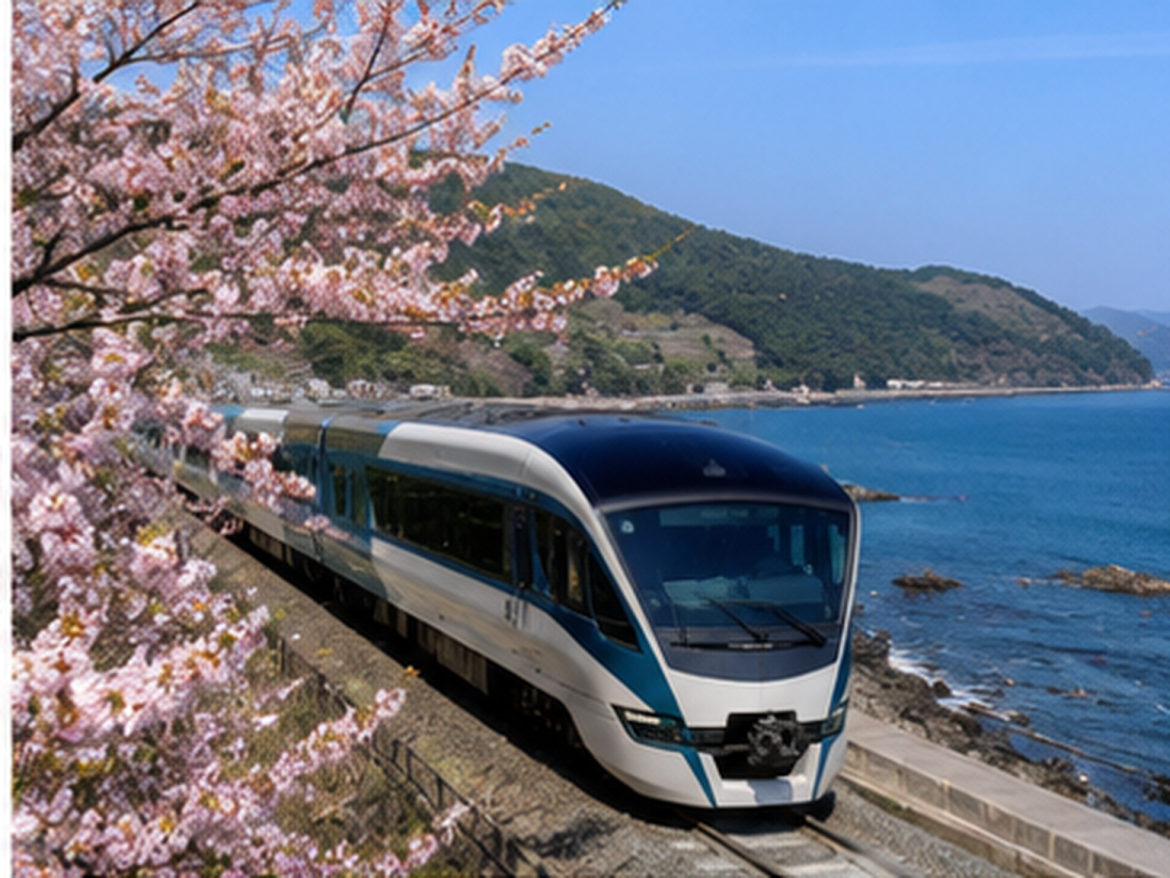

Tokyo to Kawazu: Direct Trains, Blossom-Season Returns and Local Buses
Kawazu is one of the most popular destinations on the Izu Peninsula, especially during the early-blooming Kawazu Sakura season. It can be visited as a long day trip from Tokyo, although staying overnight gives you more time for the Seven Waterfalls, hot springs and the surrounding coast.
The easiest way to get from Tokyo to Kawazu is the direct Limited Express Odoriko. It normally reaches Kawazu Station in approximately 2 hours 30 minutes to 2 hours 40 minutes without requiring passengers to change trains. The fastest possible journey can be slightly shorter when taking the Tokaido Shinkansen to Atami and making a well-timed connection to the Izu Kyuko Line.
The lowest-cost realistic route uses regular trains through Atami and Ito and costs about ¥4,000 one way, but it takes considerably longer. For maximum comfort, travelers can consider the Saphir Odoriko or an Izu and Atami private car charter from Tokyo.
Travelers visiting during cherry blossom season can also use the Kawazu Sakura festival guide to plan their visit. Those considering an overnight stay may find the Izu onsen hotel guide useful.
Quick Transportation Comparison Table
| Transportation Option | Best For | Route Overview | Pros | Cons | Editor’s Tip |
| Direct Limited Express Odoriko | Easiest no-transfer journey | Tokyo Station to Kawazu Station in approximately 2 hours 30 minutes to 2 hours 40 minutes; about ¥6,380 one way | Direct, comfortable, all-reserved seating, simple with luggage | Limited departure times; busy during Kawazu Sakura season | Reserve both outward and return trains as early as possible during peak periods |
| Tokaido Shinkansen and local train | Fastest overall connection | Tokyo to Atami by Shinkansen, then JR Ito Line and Izu Kyuko Line to Kawazu; approximately 2 hours 10 minutes to 2 hours 40 minutes; around ¥5,670 | Frequent Tokyo–Atami trains, flexible departure times, potentially fastest | Requires at least one transfer; JR TOKYO Wide Pass does not cover the Tokaido Shinkansen | Allow at least 10–15 minutes at Atami unless you know the station layout |
| Regular JR and Izu Kyuko trains | Cheapest rail route | Tokyo to Atami on the Tokaido Main Line, then local or through train to Kawazu; approximately 3 hours 15 minutes to 3 hours 45 minutes; about ¥4,000 | Lowest realistic fare, no limited-express surcharge | Slow, less comfortable, transfers can be tiring | Best for budget travelers who are not making a tightly scheduled day trip |
| Saphir Odoriko | Most comfortable train journey | Direct premium train from Tokyo to Kawazu on selected services; generally around 2 hours 30 minutes to 2 hours 40 minutes; usually around ¥10,260 in normal-season Green Car | Spacious Green Car seating, scenic journey, excellent for couples and seniors | Expensive, limited operating days and departure times, reservation required | Check that your chosen Saphir service stops at Kawazu before booking |
| JR TOKYO Wide Pass with Odoriko | Multiple long-distance trips within three days | Use ordinary-car Odoriko reserved seats to Kawazu; pass costs ¥16,000 for three consecutive days | Covers the JR East and Izu Kyuko portions of the standard Odoriko route | Usually costs more than a simple Tokyo–Kawazu return ticket | Buy it only when combining Kawazu with another expensive eligible trip |
| Izu Kawazu Sakura and strawberry-picking day tour | Seasonal sightseeing without train planning | Full-day bus itinerary from Tokyo or Shinjuku, usually around 10–12 hours in total | Transport and sightseeing arranged together | Fixed schedule, limited flexibility, return affected by road traffic | Treat this as a guided excursion rather than a point-to-point bus service |
| Izu and Atami private car charter from Tokyo | Families, seniors and large luggage | Hotel-to-destination journey, normally around 2 hours 45 minutes to 3 hours 30 minutes without severe traffic | Door-to-door, luggage-friendly, flexible stops | Expensive, traffic and overtime charges may apply | Confirm tolls, parking, waiting time and luggage capacity before booking |
| Self-driving | Waterfalls, countryside and overnight trips | Drive via Atami and Route 135 or via Numazu, Shuzenji and Route 414; normally around 2 hours 45 minutes to 3 hours 30 minutes | Maximum flexibility, practical for remote attractions | Congestion, tolls, parking and mountain-road conditions | Avoid arriving in central Kawazu at midday on peak blossom weekends |
Is There a Direct Train, JR Train, or Bus?
There is a direct train from Tokyo to Kawazu. The Limited Express Odoriko operates from Tokyo Station and selected other stations to Kawazu Station and Izukyu-Shimoda.
The Odoriko is direct from a passenger’s perspective, but the entire journey is not operated exclusively on JR tracks. The train uses JR East lines from Tokyo to Ito and then continues over the privately operated Izu Kyuko Line from Ito to Kawazu.
Some Saphir Odoriko services also stop at Kawazu. These trains provide Green Car, Premium Green and private-compartment accommodation rather than regular ordinary seating. Operating days and station stops vary, so passengers should check the timetable for the exact train.
There is no useful year-round direct scheduled highway bus from central Tokyo to Kawazu for independent travelers under current route listings. Seasonal sightseeing tours may travel from Tokyo to Kawazu during the blossom period, but they are guided day tours with fixed itineraries rather than ordinary intercity buses.
For travelers not taking a direct train, Atami is the main transfer station. Passengers normally change from the Tokaido Shinkansen or Tokaido Main Line to a train using the JR Ito Line and Izu Kyuko Line. Ito is the boundary between JR East and Izu Kyuko, although many trains continue through Ito without requiring passengers to change.
Kawazu town has both Kawazu Station and Imaihama-Kaigan Station. Use Kawazu Station for the Kawazu River, cherry blossom promenade, town center and buses to the Seven Waterfalls. Imaihama-Kaigan Station is more convenient for Imaihama Beach and nearby coastal accommodation, but limited express trains generally do not stop there.
The JR TOKYO Wide Pass covers ordinary-car reserved seating on eligible Odoriko services and includes the Izu Kyuko Line. However, it does not cover the Tokaido Shinkansen between Tokyo and Atami.
The nationwide JR Pass covers the JR-operated portion of the route, but travelers must pay separately for the private Izu Kyuko section between Ito and Kawazu. Other JR East regional passes should not be assumed to cover Izu Kyuko unless that private line is specifically listed in the pass conditions.
Best Departure Area and Where to Stay Before Taking This Route
Tokyo Station and Marunouchi
Best for:
Travelers who want the simplest access to direct Odoriko trains.
Advantages:
Tokyo Station is the most dependable departure point for the route. It also offers easy access to the Tokaido Shinkansen if the direct limited express is unavailable or sold out.
The Marunouchi and Yaesu areas are convenient for early departures and provide numerous restaurants, convenience stores and luggage services.
Editor’s tip:
Tokyo Station is large. Confirm whether your train departs from the conventional railway platforms or the Tokaido Shinkansen area and arrive at least 20 minutes early.
Shinagawa
Best for:
Travelers arriving from Haneda Airport or staying in southern Tokyo.
Advantages:
Selected Odoriko services stop at Shinagawa, and the station is also served by the Tokaido Shinkansen and Tokaido Main Line. It is generally easier to navigate than Tokyo Station.
Editor’s tip:
Check the exact timetable before choosing accommodation based on a direct Odoriko departure. Not every service or operating pattern is identical.
Shinjuku
Best for:
Travelers staying in western Tokyo or joining a seasonal guided tour.
Advantages:
Some Odoriko services depart from or stop at Shinjuku. The area is also a common meeting point for seasonal Kawazu sightseeing tours.
Editor’s tip:
Do not assume that there is a direct Shinjuku–Kawazu train at your preferred time. Tokyo Station usually offers a broader choice of rail connections.
Ueno
Best for:
Travelers who prefer Ueno accommodation but want easy access to Tokyo Station.
Advantages:
Ueno is only a short JR ride from Tokyo Station. It is also convenient for travelers arriving from Narita Airport via the Keisei Skyliner.
Editor’s tip:
Plan to transfer to Tokyo Station rather than searching only for a direct train from Ueno. Leave additional time if traveling with large suitcases.
Tokyo to Kawazu Transportation Method 1: Direct Limited Express Odoriko
Route overview
The direct Limited Express Odoriko is the easiest way to travel from Tokyo to Kawazu.
Most travelers board at Tokyo Station, although selected trains may also serve stations such as Shinagawa or Shinjuku. The train continues through Atami and Ito before entering the Izu Kyuko Line and stopping at Kawazu Station.
The journey normally takes approximately 2 hours 30 minutes to 2 hours 40 minutes. A regular one-way adult fare from Tokyo is about ¥6,380 for an ordinary reserved seat, although the final amount can vary with ticket product and seat class; the ordinary Odoriko supplement does not vary by season.
The train is operated over JR East tracks as far as Ito and over Izu Kyuko tracks from Ito to Kawazu.
Seat reservations are strongly recommended, especially during the Kawazu Sakura period, weekends and public holidays. Ordinary Odoriko is all-reserved; book a specific seat, especially in blossom season. A seat-unassigned ticket does not guarantee a seat.
Who it is best for
The Odoriko is best for first-time visitors, day trippers, families, seniors and travelers carrying luggage.
Pros
- Direct journey with no physical transfer
- More comfortable than regular commuter trains
- Space for ordinary travel luggage
- Straightforward arrival at central Kawazu
- Covered by the JR TOKYO Wide Pass in ordinary seating
Cons
- Fewer departures than the Tokyo–Atami Shinkansen
- Popular trains can sell out
- More expensive than regular local trains
- The final section is operated by Izu Kyuko rather than JR alone
Editor’s tip
For a day trip, reserve the return journey at the same time as the outward train. Waiting until you arrive in Kawazu can leave you with an inconvenient departure or no reserved seat during peak blossom season.
The current Izukyu base fare is ¥4,000 from Tokyo to Kawazu; add the ¥2,380 advance ordinary Odoriko supplement for ¥6,380 one way. The ordinary supplement has no seasonal variation. The base fare alone is not enough to board Odoriko.
Do Ticketless Tickets Still Save Money?
The regular Odoriko Tokuwari discount ended for rides after September 30, 2026, and the ordinary ticketless ¥100 reduction also ended for purchases after that date. Do not use the old ¥5,540 total as a standing offer. Named promotions have separate dates, train quotas and deadlines: autumn/winter 2026 Special 28 offers require booking by 23:50 at least 28 days before travel and apply only on their listed dates, not automatically to the next blossom season.
Tokyo to Kawazu Transportation Method 2: Tokaido Shinkansen via Atami
Route overview
This route uses the Tokaido Shinkansen from Tokyo Station to Atami Station. At Atami, transfer to a train operating through the JR Ito Line and Izu Kyuko Line toward Kawazu or Izukyu-Shimoda.
Depending on the connection, passengers may remain on the same train through Ito or may need another transfer at Ito.
A well-timed journey can take approximately 2 hours 10 minutes to 2 hours 40 minutes. The one-way fare is generally around ¥5,670, depending on the Shinkansen seat type and the connecting train.
The Tokaido Shinkansen section is operated by JR Central. The Atami–Ito section is operated by JR East, and Ito–Kawazu is operated by Izu Kyuko.
The Shinkansen has both reserved and non-reserved seating, depending on the train. The regular connecting train generally does not require a reservation.
Who it is best for
This route is best for travelers who want frequent departure choices, miss the direct Odoriko or find a particularly fast connection at Atami.
Pros
- Potentially the fastest overall route
- Frequent Shinkansen service between Tokyo and Atami
- Flexible backup when direct trains are sold out
- Easy to combine with an Atami stopover
Cons
- At least one transfer
- Moving between platforms at Atami can be inconvenient with luggage
- Local trains may be crowded
- The JR TOKYO Wide Pass does not cover the Tokaido Shinkansen
Editor’s tip
Do not choose an unrealistically short connection at Atami. The station is manageable, but changing between the Shinkansen and conventional railway platforms takes time, particularly with children or large suitcases.
The ¥5,670 comparison combines a separate ¥3,740 Tokyo–Atami non-reserved Shinkansen ticket and a ¥1,930 Atami–Kawazu local-train ticket. An onward limited express costs extra. Through-ticket and promotional prices may differ. Use Kodama or a Hikari stopping at Atami; Nozomi does not stop there. The fastest advertised train is of little help if the Izu connection involves a long wait.
Tokyo to Kawazu Transportation Method 3: Regular JR and Izu Kyuko Trains
Route overview
The cheapest rail route begins with a regular Tokaido Main Line train from Tokyo Station to Atami. From Atami, continue on the JR Ito Line and Izu Kyuko Line to Kawazu.
Some trains continue beyond Ito, while other schedules require another transfer. Depending on the connection, the journey normally takes approximately 3 hours 15 minutes to 3 hours 45 minutes.
The ordinary one-way fare is about ¥4,000. No limited-express ticket is required.
Seat reservations are not available on most regular trains used for this route.
Who it is best for
This route is best for budget travelers, flexible overnight visitors and passengers who do not mind a long conventional-train journey.
Pros
- Lowest realistic train fare
- No limited-express surcharge
- Flexible ticket purchase
- Possibility of stopping at Atami or Ito
Cons
- Significantly slower than the Odoriko
- Multiple transfers may be required
- No guaranteed seat
- Less comfortable for families, seniors and travelers with large luggage
- Difficult to recommend for a tightly planned day trip
Editor’s tip
The saving compared with the Odoriko is modest relative to the extra travel time. For a day trip, the direct limited express usually offers better overall value even though its ticket costs more.
Tokyo to Kawazu Transportation Method 4: Saphir Odoriko
Route overview
The Saphir Odoriko is the premium version of the Tokyo–Izu limited express. Selected services travel from Tokyo to Kawazu before continuing to Izukyu-Shimoda.
Travel time is generally around 2 hours 30 minutes to 2 hours 40 minutes, depending on the service.
Unlike the regular Odoriko, the Saphir does not have ordinary-class seating. Accommodation consists of Green Car seats, Premium Green seats and private compartments. A journey to Kawazu generally costs around ¥10,260 in normal-season Green Car one way, depending on the seat category and seasonal fare.
All seats require advance reservation.
Who it is best for
The Saphir Odoriko is best for couples, seniors, special occasions and travelers who value comfort more than price.
Pros
- Spacious premium seating
- Direct journey
- Attractive coastal scenery
- Private compartments available for small groups
Cons
- Significantly more expensive
- Limited operating schedule
- Some trains may not fit a day-trip timetable
- The JR TOKYO Wide Pass does not make Saphir seating fully free
- Private compartments can sell out quickly
Editor’s tip
Check the operating day, departure station and Kawazu stop before planning the rest of your itinerary. Do not assume that every Saphir Odoriko service runs daily or stops at the same stations.
A normal-season Green Car total is ¥10,260; Premium Green is ¥12,660. The official Saphir guide explains seasonal changes and compartment pricing. A Tokyo Wide Pass does not cover the required Saphir limited-express and Green charges. This is a separate premium train, not simply an ordinary Odoriko reservation with nicer seats.
Tokyo to Kawazu Transportation Method 5: Seasonal Guided Day Tour
Route overview
Seasonal bus tours operate from Tokyo during the Kawazu Sakura period. These are full sightseeing packages rather than public highway buses.
An Izu Kawazu Sakura and strawberry-picking day tour may combine the Kawazu River blossoms with strawberry picking and another Izu destination.
A second option is a Kawazu-zakura, Joren Falls and Shuzenji day tour, depending on the seasonal operating schedule.
Tours commonly depart from Tokyo Station or Shinjuku and take approximately 10–12 hours from meeting time to return. Prices vary by itinerary, departure date and included activities.
Advance booking is required.
Who it is best for
A guided tour is best for first-time visitors who want transport and sightseeing arranged together and do not need a flexible schedule.
Pros
- No train transfers or ticket planning
- Multiple seasonal attractions in one day
- Guide or tour coordinator included
- Useful when reserved trains are unavailable
Cons
- Fixed meeting and departure times
- Limited time at each attraction
- Road congestion can delay the return
- Not suitable for travelers who want to stay overnight
- Tour commentary language varies by product
Editor’s tip
Read the meeting-point and itinerary details carefully. A guided tour may spend less time beside the Kawazu River than an independent train trip because it includes several locations.
Check the festival organizer’s current event and bloom information before booking a seasonal tour. Peak bloom, festival dates and illumination dates are not interchangeable. Tour listings retained here are options to compare when their calendar opens, not a promise that a specific future departure, blossom condition or temporary train will operate.
Tokyo to Kawazu Transportation Method 6: Private Transfer or Car Charter
Route overview
A private charter provides direct hotel pickup in Tokyo and customized travel to Kawazu. The drive normally takes approximately 2 hours 45 minutes to 3 hours 30 minutes without severe congestion.
The actual journey may be considerably longer during blossom-season weekends, holiday periods or traffic congestion around Atami and Route 135.
The Izu and Atami private car charter from Tokyo can be adapted to an Izu itinerary, subject to the operator’s service area and booking conditions.
Prices depend on vehicle size, charter duration, pickup location, tolls, parking and overtime. Advance reservation is required.
Who it is best for
A private charter is best for families with young children, seniors, groups splitting the cost and travelers carrying several large suitcases.
Pros
- Door-to-door journey
- No station transfers
- Flexible stops
- Suitable for luggage
- Easier access to waterfalls and rural attractions
Cons
- Highest total cost
- Journey time is affected by traffic
- Toll, parking and overtime charges may not all be included
- Vehicle luggage capacity varies
Editor’s tip
Send the operator a proposed route before booking. Confirm whether the quoted time allows both central Kawazu and the Seven Waterfalls without incurring substantial overtime.
Tokyo to Kawazu Transportation Method 7: Self-Driving
Route overview
There are two main driving approaches from Tokyo.
The coastal route uses the Tomei Expressway toward Atsugi, continues through the Odawara area and follows the coast through Atami on Route 135. This route is scenic but vulnerable to congestion.
The inland route continues toward Numazu before using roads through Shuzenji, the Amagi area and Route 414. It is often more practical when visiting the Kawazu Seven Waterfalls before central Kawazu.
Under ordinary traffic conditions, either route normally takes approximately 2 hours 45 minutes to 3 hours 30 minutes. Drivers must also budget for the rental car, fuel, expressway tolls and parking.
No transport reservation is required beyond arranging the rental car, but travelers must carry driving documents legally accepted in Japan.
Who it is best for
Self-driving is best for overnight trips, waterfall visits, countryside accommodation and travelers planning several Izu Peninsula stops.
Pros
- Complete itinerary flexibility
- Practical access to rural attractions
- Easy luggage transport
- Useful for combining Kawazu with other Izu destinations
Cons
- Severe congestion during peak blossom periods
- Limited central parking
- Mountain roads may be tiring or affected by poor weather
- Tolls, fuel and parking add to the cost
- Not ideal for an inexperienced driver making a same-day return to Tokyo
Editor’s tip
For a blossom-season trip, arrive early in the morning or stay overnight. Driving into central Kawazu around midday on a busy weekend can erase most of the flexibility that makes renting a car worthwhile.
Ticket and Pass Comparison
| Ticket / Pass / Activity | Best For | Main Use | Editor’s Tip |
| Regular Odoriko ticket | Most independent travelers | Base fare plus limited-express reserved-seat ticket from Tokyo to Kawazu | Reserve both directions for a day trip |
| Tokaido Shinkansen and local tickets | Fast connections and flexible departure times | Shinkansen to Atami, followed by JR Ito and Izu Kyuko trains | The JR TOKYO Wide Pass does not cover the Tokaido Shinkansen |
| Regular local train ticket | Lowest-cost rail journey | Conventional trains from Tokyo through Atami and Ito | Choose this only when saving money matters more than travel time |
| Saphir Odoriko ticket | Premium rail travel | Green, Premium Green or private-compartment journey | Every passenger needs the appropriate reserved ticket before boarding |
| JR TOKYO Wide Pass | Multiple eligible regional trips | Three consecutive days of covered travel, including ordinary-car Odoriko service and Izu Kyuko | Not usually worthwhile for only one Kawazu return trip |
| Nationwide JR Pass | Travelers already using a nationwide pass | Covers the JR portion of the journey | Pay the Izu Kyuko fare and applicable charge separately from Ito |
| Izukyu Discovery Pass | Multiple Izu Kyuko journeys | Unlimited eligible travel between Ito and Izukyu-Shimoda for two or three days | Compare the current pass price with ¥3,160 for an Ito–Kawazu local-train return, plus any included activities you would use |
| Izu Kawazu Sakura and strawberry-picking day tour | Seasonal first-time visitors | Fixed sightseeing itinerary and round-trip transport | Compare the actual time allocated to Kawazu before booking |
| Izu and Atami private car charter from Tokyo | Families, seniors and groups | Door-to-door transport and customized stops | Check toll, parking, overtime and luggage conditions |
Is the JR TOKYO Wide Pass Worth It?
The JR TOKYO Wide Pass is the most relevant regional rail pass for a Tokyo to Kawazu journey.
The pass costs ¥16,000 for an adult and is valid for three consecutive days. It is available to holders of a non-Japanese passport, and travelers must carry their original passport when using or collecting it.
For this route, the pass covers eligible JR East trains and the Izu Kyuko Line. Ordinary-car reserved seats on the standard Odoriko can be booked within the pass conditions.
The pass does not cover the Tokaido Shinkansen between Tokyo and Atami. It also does not provide free access to the Saphir Odoriko’s Green, Premium Green or private-compartment accommodation. Additional limited-express and Green Car charges may apply when using premium seating.
A regular Tokyo–Kawazu Odoriko ticket costs approximately ¥6,380 one way, or around ¥12,760 for a return journey. Therefore, the pass normally costs more than a simple return trip.
| Travel Plan | Regular Ticket Cost | Pass Cost | Worth It? |
| One-way Tokyo to Kawazu by standard Odoriko | About ¥6,380 | ¥16,000 | No |
| Tokyo–Kawazu return by standard Odoriko | About ¥12,760 | ¥16,000 | Usually no |
| Kawazu return plus another expensive eligible trip within three consecutive days | Varies; may exceed ¥16,000 | ¥16,000 | Often, if the total eligible fares exceed the pass price |
| Tokyo–Atami by Tokaido Shinkansen and onward to Kawazu | Around ¥5,670 one way | ¥16,000 plus uncovered Shinkansen costs | Usually no |
| Kawazu trip using Saphir Odoriko | Premium fare around ¥10,260 in normal-season Green Car one way | ¥16,000 plus applicable premium supplements | Usually no as a pass-value strategy |
The pass becomes more attractive when Kawazu is combined with another long-distance eligible journey during the same three-day period. It should not be purchased automatically simply because the Odoriko is a JR-branded train.
Editor’s recommendation:
Buy the JR TOKYO Wide Pass only after adding the regular fares for every eligible journey in your three-day plan. For a standalone Tokyo–Kawazu return trip, regular Odoriko tickets are usually the better-value choice.
At the current ¥12,760 standard Odoriko return fare, another ¥3,240 of covered journeys is needed to reach the adult pass price. The official child price is ¥8,000 for ages 6–11. Under the eligibility rules, eligible foreign residents can also buy the Tokyo Wide Pass; it does not require Temporary Visitor status. Local buses and attraction admission are separate.
Discovery Pass Is a Local Izu Product
The Izukyu Discovery Pass offers two or three consecutive days between Ito and Izukyu-Shimoda for foreign visitors, with online purchase and physical redemption. It covers local/rapid trains and vacant ordinary Odoriko seats within that area, not a reserved Tokyo–Kawazu journey. It excludes Tokyo–Ito access and Tokai buses; Saphir is not part of the ordinary-seat provision. The pass also includes one Shimoda Ropeway round trip. Check the current selling price and exchange hours, and compare only the rides and activities you actually plan to use.
Suggested Itineraries
Itinerary 1: Classic Kawazu Day Trip
Best for:
First-time visitors focused on the Kawazu River and seasonal blossoms.
Suggested route:
Take an early direct Odoriko from Tokyo Station to Kawazu Station.
Main stops:
- Kawazu River promenade
- Festival stalls or town-center lunch
- Original Kawazu Sakura tree
- Mine Onsen area
- Return to Kawazu Station
Approximate sequence:
Arrive in the late morning, spend two to three hours around the river and town center, have lunch, continue toward Mine Onsen and return to the station for a late-afternoon train.
Editor’s tip:
Reserve a direct return train. Do not depend on finding a convenient seat after arriving during peak blossom season.
Itinerary 2: Fast Rail Trip with Seven Waterfalls
Best for:
Travelers who want to reduce the morning journey time and include a natural attraction.
Suggested route:
Take the Tokaido Shinkansen from Tokyo to Atami, connect to Kawazu and continue by Tokai Bus toward the Kawazu Seven Waterfalls.
Main stops:
- Kawazu Seven Waterfalls
- Kawazu River promenade
- Central Kawazu
- Direct Odoriko back to Tokyo
Approximate sequence:
Travel to the waterfalls first only if the actual morning train and bus align. Allow the bus ride and walking time in both directions; then keep the river visit short enough for your reserved return train. If the connections leave too little time, choose the river or waterfalls, or stay overnight.
Editor’s tip:
Check the return bus from the waterfalls before beginning the walking trail. Local buses are much less frequent than Tokyo rail services.
Itinerary 3: Family-Friendly Kawazu Trip
Best for:
Families with children, seniors and visitors who prefer minimal walking.
Suggested route:
Use a direct reserved-seat Odoriko in both directions.
Main stops:
- Kawazu River promenade
- Town-center lunch
- Short taxi ride to Mine Onsen or another nearby attraction
- Early return to Kawazu Station
Approximate sequence:
Keep the visit centered around the station and river. Use a taxi for one additional attraction rather than adding a long waterfall hike and several bus connections.
Editor’s tip:
An overnight stay is often more comfortable than a same-day return when traveling with young children or elderly relatives.
Itinerary 4: Scenic Premium-Rail Overnight
Best for:
Couples, seniors and travelers celebrating a special occasion.
Suggested route:
Take a Saphir Odoriko service that stops at Kawazu, stay at an Izu onsen property and return on a standard Odoriko the following day.
Main stops:
- Scenic train journey
- Kawazu River or coast
- Onsen accommodation
- Optional morning visit to Imaihama
Approximate sequence:
Arrive in the afternoon, explore central Kawazu, check into the accommodation and visit the coast the following morning before returning to Tokyo.
Editor’s tip:
Book the Saphir and accommodation before arranging smaller itinerary details. Premium trains and popular onsen rooms have limited capacity.
Itinerary 5: Self-Driving and Deep-Travel Route
Best for:
Travelers visiting waterfalls, rural areas and multiple Izu destinations.
Suggested route:
Drive from Tokyo through Numazu and Shuzenji to the Kawazu Seven Waterfalls, then continue to central Kawazu and stay overnight.
Main stops:
- Shuzenji or Amagi area
- Kawazu Seven Waterfalls
- Kawazu River
- Onsen accommodation
- Coastal attraction the following morning
Approximate sequence:
Leave Tokyo early, reach the inland Izu area before midday, visit the waterfalls, continue to Kawazu in the afternoon and stay overnight before returning along the coast.
Editor’s tip:
During peak blossom weekends, do not build an itinerary that depends on reaching every stop at an exact time. Road congestion can change the schedule substantially.
How to Get from Kawazu Station to Major Attractions
| Destination | How to Get There from the Main Station | Best For | Editor’s Tip |
| Kawazu River cherry blossom promenade | Walk approximately 2–5 minutes from Kawazu Station | Seasonal blossoms and first-time visitors | The riverside route extends beyond the area immediately beside the station |
| Original Kawazu Sakura tree | Walk approximately 20 minutes from Kawazu Station | Visitors interested in the origin of the famous blossom variety | Combine it with a walk along the river rather than treating it as a separate trip |
| Mine Onsen Daifunto Park | Walk approximately 25–30 minutes, take a taxi or use a suitable local bus | Hot-spring scenery and relaxed walks | Check geyser demonstration information before making a special journey |
| Kawazu Seven Waterfalls | Take a Tokai Bus toward the Nanadaru or Amagi area; approximately 30–35 minutes, depending on the stop | Nature, walking trails and overnight visitors | Check the final return bus before leaving Kawazu Station |
| Kawazuhama Beach | Walk approximately 10–15 minutes | Coastal views and short visits | This is easier to combine with central Kawazu than more distant beaches |
| Imaihama Beach and Imaihama Onsen | Take a local Izu Kyuko train one stop to Imaihama-Kaigan Station | Beach hotels and coastal stays | The Odoriko generally does not stop at Imaihama-Kaigan |
| Kawazu Bagatelle Park | Use a local bus when operating or take a taxi | Gardens and seasonal flowers | Bus frequency can be limited, so confirm the return journey |
| iZoo | Use a local bus or taxi from Kawazu Station | Families and reptile enthusiasts | A taxi is simpler when local bus timing does not match your itinerary |
| Izukyu-Shimoda | Take an Izu Kyuko train for roughly 15–20 minutes, depending on the service | Optional side trip or overnight extension | Treat Shimoda as an additional destination rather than replacing time planned for Kawazu |
Bus Boarding and a Realistic Return Connection
The official station boarding map lists stand 3 for Kawazu Nanadaru Onsen, Amagi and Shuzenji. Choose the actual stop for your walking route and check the operator’s dated timetable/fare search. Not every service continues all the way to Shuzenji. Tokai changed timetables on October 1, 2026; older PDFs are not a reliable last-bus guarantee.
Save the bus back to Kawazu and the complete connection to Tokyo, including the transfer at Atami if needed. The last direct Odoriko is not the same as the last possible journey, but a late local train toward Ito does not guarantee an onward connection to Tokyo. If staying for an evening event, confirm its actual date and your transport back to the hotel. The official railway map helps distinguish Kawazu, Imaihama-Kaigan, Izu-Inatori and Shimoda.
Luggage and Overnight Bases
Station lockers are limited and can fill during blossom season. Leave large bags in Tokyo for a day trip, arrange luggage delivery, or confirm storage with your next hotel. Kawazu’s station/river area suits early or late riverside walks; Imaihama suits a beach-hotel stay. Izu-Inatori or Izu-Atagawa can be alternatives when Kawazu rooms are full, while Shimoda fits a southern-Izu extension. Check the hotel’s final shuttle before booking the return train.
Common Mistakes to Avoid
- Do not confuse Kawazu Station with Imaihama-Kaigan Station. Kawazu Station is the main arrival point for the river, festival area and buses to the Seven Waterfalls.
- Do not assume every Odoriko or Saphir Odoriko departs from the same Tokyo station or stops at Kawazu. Check the exact train before booking accommodation or connections.
- Do not wait until the morning of travel to reserve a direct train during the Kawazu Sakura period. Popular departures can become fully booked.
- Do not assume the direct Odoriko journey is entirely on JR tracks. The Ito–Kawazu section is operated by Izu Kyuko.
- Do not assume the JR TOKYO Wide Pass covers the Tokaido Shinkansen. A separate Shinkansen ticket is required if you use that route.
- Do not buy the JR TOKYO Wide Pass for a simple Kawazu return trip without comparing the total regular ticket cost.
- Do not select a very short transfer at Atami when traveling with children, seniors or large luggage.
- Do not begin the Seven Waterfalls trail without checking the return bus timetable. Local services are limited compared with trains from Tokyo.
- Do not drive into Kawazu at midday during a peak blossom weekend and expect normal journey times or easy parking.
- Do not overpack a day trip. Central Kawazu and the Seven Waterfalls can fill most of the usable sightseeing time after a five-hour return train journey.
Tokyo to Kawazu: Frequently Asked Questions
1. What is the best way to get from Tokyo to Kawazu?
The direct Limited Express Odoriko is the best option for most travelers. It takes approximately 2 hours 30 minutes to 2 hours 40 minutes and reaches Kawazu Station without a transfer.
The Shinkansen route through Atami can be slightly faster with a good connection, but it requires changing trains.
2. Is there a direct train from Tokyo to Kawazu?
Yes. The Limited Express Odoriko runs directly from Tokyo Station and selected other Tokyo-area stations to Kawazu Station.
Some Saphir Odoriko services also stop at Kawazu, although their operating days and stopping patterns vary.
3. Is there a direct bus from Tokyo to Kawazu?
There is no useful year-round scheduled direct highway bus for independent travelers under current route listings.
Seasonal guided tours may operate during the Kawazu Sakura period, including an Izu Kawazu Sakura and strawberry-picking day tour. These are fixed sightseeing tours rather than ordinary intercity buses.
4. How long does it take to travel from Tokyo to Kawazu?
The direct Odoriko generally takes approximately 2 hours 30 minutes to 2 hours 40 minutes.
A Shinkansen and local-train combination can take around 2 hours 10 minutes to 2 hours 40 minutes. Regular trains usually take about 3 hours 15 minutes to 3 hours 45 minutes.
Driving normally takes approximately 2 hours 45 minutes to 3 hours 30 minutes without severe congestion.
5. How much does Tokyo to Kawazu transportation cost?
A regular reserved-seat Odoriko journey costs approximately ¥6,380 one way.
The Shinkansen and local-train route generally costs around ¥5,670, while the all-local route costs about ¥4,000.
The Saphir Odoriko normally costs around ¥10,260 in normal-season Green Car, depending on seat type and seasonal pricing.
6. Can Kawazu be visited as a day trip from Tokyo?
Yes, but it is a long day trip. The return train journey alone takes approximately five hours.
A day trip works best when using a direct early Odoriko and reserving a late-afternoon return. Staying overnight is more worthwhile when visiting the Seven Waterfalls, enjoying an onsen or continuing to other parts of the Izu Peninsula.
7. Should I take the train or a seasonal guided tour?
Take the train when you want flexibility, more time in Kawazu or the option to stay overnight.
Choose a guided tour when you prefer a fixed itinerary with transport and several attractions arranged together. Remember that road traffic can delay a bus tour’s return to Tokyo.
8. Is the JR TOKYO Wide Pass worth using for Kawazu?
It is usually not worthwhile for only a Tokyo–Kawazu return trip. Regular Odoriko tickets cost approximately ¥12,760 return, while the pass costs ¥16,000.
The pass becomes more useful when you add another expensive eligible journey within its three consecutive days of validity.
9. Which station should I use, and how do I reach the main attractions?
Use Kawazu Station for the town center, Kawazu River, blossom promenade and buses toward the Seven Waterfalls.
The river is only a few minutes away on foot. The Seven Waterfalls require a local Tokai Bus, while Imaihama Beach is better reached through Imaihama-Kaigan Station.
10. What is best for families, seniors and travelers with luggage?
The direct reserved-seat Odoriko is the best balance of cost, comfort and simplicity.
For groups with several large suitcases or travelers who need door-to-door transport, an Izu and Atami private car charter from Tokyo may be more convenient. Self-driving is useful for rural attractions but is less appealing during peak blossom-season congestion.
For most Tokyo–Kawazu trips, a reserved Odoriko is the simplest choice. Use the Atami Shinkansen connection when its real timings work better, book the return early, and give the waterfalls or a wider Izu stay their own time rather than squeezing everything into a blossom day trip.