
Iwappara Ski Resort 2026: choose the right base before buying your pass
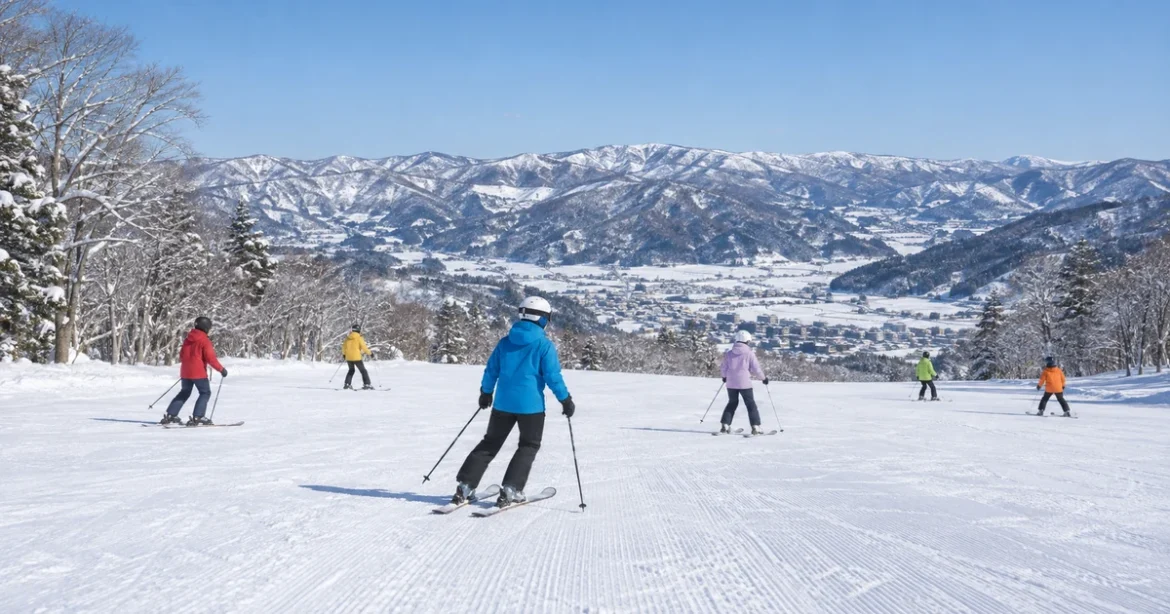
Iwappara works particularly well for skiers and snowboarders who want room to practise on broad, gentle slopes. The most useful first decision is your arrival point: beginners and families should normally organise rentals, lessons and the return journey around the mid-mountain Resort Center 2. Resort Center 1 is lower down, but getting back there on snow involves intermediate terrain. The first stop is not automatically the easiest stop.
The announced 2026–27 season runs from 19 December 2026 to 28 March 2027, with night skiing planned through 27 March. Weather and snow can change openings. Plan a workable day around the correct entrance, an appropriate lesson, suitable terrain and a return connection with breathing room.
For English or Mandarin private instruction, select Iwappara, the date and ski or snowboard discipline. Confirm the meeting point, ages, lift-ticket needs and instructor authorisation; a multi-resort listing does not make every location available every day.
Who should choose Iwappara?
First-timers who are willing to start with a lesson
The resort lists 20 courses, with the broad Main, Grand and Wide slopes forming the core beginner appeal. Main is up to about 200 metres wide. Extra space can make it easier to choose a line and see other slope users, but it does not remove collision risk or make every part of the mountain suitable for a first day. Learn to stop, turn and control speed before following friends farther uphill.
Families and groups with different abilities
A practical group plan lets experienced members explore open terrain while beginners repeat familiar mid-mountain runs. Agree on an indoor meeting point rather than expecting everyone to keep up. Families should also decide whether a child is skiing, taking a lesson or simply playing in the snow: equipment, tuition, lift access and the snow-play area are separate decisions.
For a Tokyo day trip, compare the final transfer as carefully as the train journey. Our Tokyo-to-GALA transport guide explains the station-connected alternative. Iwappara requires a local transfer and the right base stop, which matters more than a small difference in advertised train time.
Use the map to plan your return, not just your first run
Use the Iwappara course and facilities page and full-size reference piste map for orientation. The map does not display a complete season label, so it is not a guarantee of 2026–27 lift or trail openings. Check the daily operating status before travelling.
Find Resort Center 2 first, then identify the green Main, Grand and Wide routes and your bus stop. Do not treat Cruise, Arch or the final Front descent as an automatic novice itinerary. The rental page specifically warns that the last run to Resort Center 1 is intermediate. Keeping your bag and rented equipment at Center 2 avoids discovering that you have committed yourself to a harder descent at the end of a tiring day.
A long linked route mentioned in resort descriptions is not a promise that a complete beginner can safely ski from the summit to the bottom. Narrow sections, junctions, changing snow and the final descent all matter. Ask an instructor before progressing uphill, follow the current map and signs, and leave Giant and Technical to people with the required skills.
2026–27 tickets: ordinary day access or the night-skiing version?
The price page calls these admission tickets. Adult rates apply from junior-high-school age, Junior rates cover ages three through elementary school, and Master rates are for ages 60 and over with age identification. Prices below are in Japanese yen.
- One day, 08:00–17:00: adult ¥5,500, Junior ¥3,500, Master ¥4,300
- One day Plus, through the end of night skiing: adult ¥5,800, Junior ¥3,800, Master ¥4,600
- Afternoon and night, from 13:00: adult ¥4,500, Junior ¥2,800, Master ¥3,500
- Night only, from 17:00: adult ¥1,500, Junior or Master ¥1,000
If you must leave during the afternoon for a train, the normal day ticket may be sufficient. The adult Plus upgrade is only ¥300, but buying it makes sense only when your energy and evening transport allow you to use it. Night skiing has its own operating lifts and courses; a late closing time does not mean the whole mountain stays open.
The published general night schedule finishes at 19:00 on weekdays, Sundays and the final day of consecutive holidays, and at 20:00 on Saturdays, with designated dates treated separately. Check your actual date. A ticket involving Joetsu Kokusai also needs careful reading: the resorts are geographically separate, and the reciprocal-use rule is by day. A shared pass does not create a ski-through connection.
Getting there from Tokyo and Echigo-Yuzawa
The usual rail approach is the Joetsu Shinkansen to Echigo-Yuzawa, followed by the resort shuttle or a taxi. Follow the operator’s directions from the station’s east exit. The Iwappara route serves both Center 1 and Center 2, so confirm your stop before boarding. Include the walk from the platform, waiting time and equipment loading in your arrival plan.
The access page separates regular shuttles, reservation-based circulating buses and the Iwappara–Joetsu Kokusai service. They do not all use the same booking rules. Check the applicable season, weekday or holiday column, direction and stop. Some access-page material spans different seasonal updates, so an individual departure should not be treated as a permanent winter timetable.
Work backwards from your return train
Choose a sensible return train first. Find a bus that reaches the station with a useful margin, then work backwards through collecting bags, changing and returning rentals. The last lift ride and the last convenient bus are different deadlines. Finishing a run just before the bus leaves can quickly turn an enjoyable afternoon into an expensive taxi scramble.
If you want to stay for night skiing, arrange the evening transfer or accommodation before paying for the longer ticket. Do not assume buses run until the slopes close. Likewise, do not use a theoretical bus arrival only a few minutes before your reserved train as the foundation of a family itinerary.
Drivers should choose the parking area for their intended base. The operator publishes different weekday and holiday arrangements, including reserved paid spaces. “All parking is free” is not a safe general description. Winter tyres, restrictions, snow clearing and visibility still affect the final approach; rail plus a local transfer is the more straightforward choice for someone unfamiliar with snowy roads.
Rental equipment and lesson language
Rentals cover skis and snowboards. A standard adult one-day equipment set costs ¥5,000, or ¥8,500 with jacket and trousers. The child equivalents are ¥3,500 and ¥5,500, and the listed child sets include a helmet. Ski equipment includes skis, boots and poles; snowboard equipment includes board and boots. Compare each package’s contents rather than relying on the words “full set”.
Gloves, goggles and hats are not rented. Bring them or allow for purchasing them. Complete the recommended online rental application before arrival, but still leave time for fitting and adjustment. Know each traveller’s height and foot size. Keeping rental pickup, lesson check-in and bag storage near one another is much more efficient than moving between both resort centres in ski boots.
The resort-run school explicitly teaches in Japanese. Do not assume it can provide English, Chinese, Thai or Korean on arrival. Check the language, age limits, ability level, meeting point and lift-ticket requirement before booking. Its first-ever beginner group lessons do not use lifts; lessons that do use them require an appropriate ticket separately.
For English or Chinese tuition, compare this private lesson listing with an Iwappara option. Select the actual resort, skiing or snowboarding, date and language, and confirm the instructor’s permission to teach that season. A multi-resort product name is not proof that every location is available every day. The displayed starting price is also not necessarily the total for your group.
Snow play and a realistic day plan
Kids Paradise provides a snow-play area separated from the ski courses. The published A admission ticket is ¥1,000; B is ¥1,500 and includes one lift ride. Choose according to the day’s access and activity plan. Sledging belongs in designated areas, not on ordinary ski runs. For younger children, a dry pair of gloves, toilet access and regular indoor breaks can matter more than an additional activity.
A sensible first day is arrival at Center 2, rental fitting, a morning lesson, lunch, familiar-slope practice and an early equipment return. This is an order of activities rather than a guaranteed timetable. With an overnight stay, use the arrival afternoon to get organised and keep the following day for learning. Check the accommodation’s actual entrance and transfer arrangements; having “Iwappara” in the name does not tell you the walking route in ski boots.
When one adult accompanies a snow-playing child while others take lessons, agree on who is responsible and where to reunite. A lesson does not imply childcare after it ends. Trying to combine Iwappara, Joetsu Kokusai and an onsen on a first ski day adds packing, transfers and new check-ins just when everyone is getting tired.
Iwappara frequently asked questions
1. When is the 2026–27 season?
It is planned for 19 December 2026–28 March 2027, with night skiing through 27 March. Weather and snow determine actual operations.
2. Is snowboarding allowed?
Yes. Ski and snowboard rentals and lessons are listed. Choose the correct discipline when booking; a private group should not assume it can mix both.
3. Which stop should a beginner use?
Normally Resort Center 2 at mid-mountain, subject to your lesson meeting point. The terrain near Center 1 and the final descent to it are intermediate.
4. Is the long summit-to-base route suitable for a first lesson?
Do not judge suitability by distance or a marketing description. Have an instructor assess the open route, its narrow sections and the final descent against your control skills.
5. Does a normal day ticket include night skiing?
No. The ordinary day ticket ends at 17:00. One day Plus extends to that day’s night-skiing finish, while afternoon/night and night-only tickets have different start times.
6. Do young children need tickets?
The resort says admission tickets are required from age three. Junior pricing continues through elementary school. Kids Paradise is a separate listed ticket category.
7. Are gloves and goggles included in rentals?
No. Bring or buy them. Check helmets separately: the operator lists them in child equipment sets, while adult helmets have their own rental rate.
8. Can I book an English lesson with the resort school?
Its published instruction language is Japanese. Arrange an appropriate authorised language provider before travelling rather than relying on an on-the-day substitution.
9. Are all shuttles walk-up services?
No. Regular shuttles and reserved circulating buses are different services; the Joetsu Kokusai connection also has reservation requirements.
10. Day trip or overnight stay?
A lesson and some practice can fit a well-planned day trip. An overnight stay usually provides more breathing room for young children, consecutive lessons or night skiing.