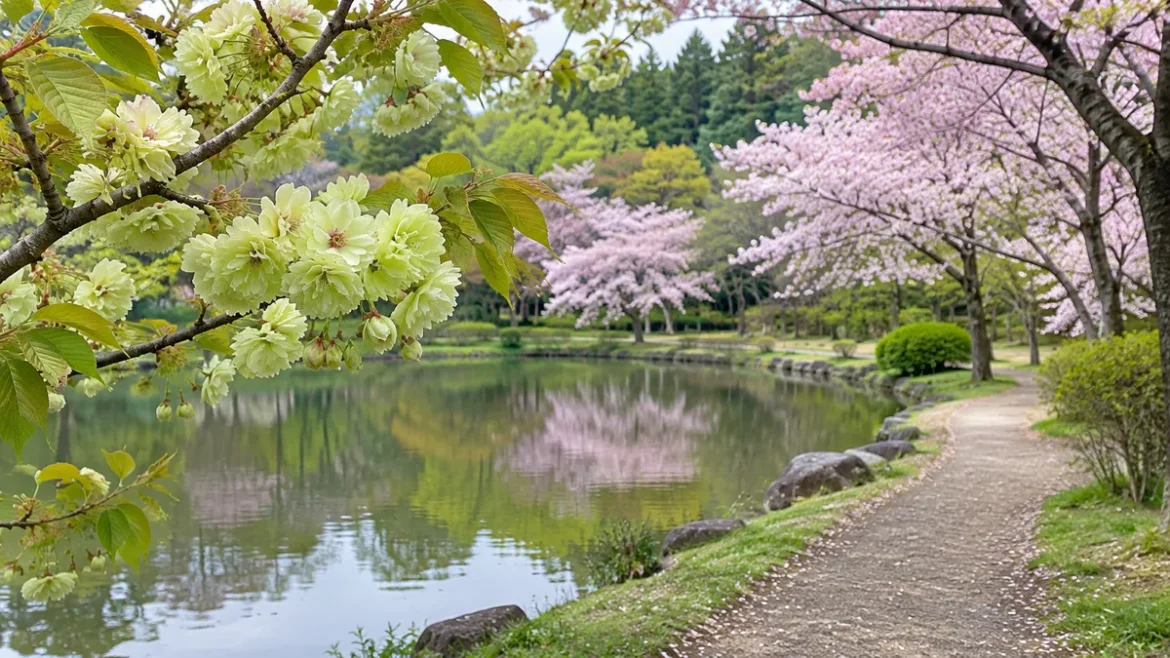
Kitayamaike Park suits travelers interested in both pondside cherry blossoms and an unusual flower color. In Niigata City’s Konan Ward, the park surrounds a pond formed among the Kameda sand dunes. Alongside familiar Somei-yoshino cherries, it has Gyoiko, a variety known for greenish flowers.
Navigate to 北山池公園 at Kitayama 183-1. Kameda Park in the same ward is a different destination. The shared neighborhood does not make their entrances, parking or facilities interchangeable.

Key points for your visit
- Kitayamaike Park is a pondside cherry-viewing stop in Niigata City’s Konan Ward; Kameda Park is a separate destination.
- Read bloom reports by variety. A Gyoiko status label does not describe every Somei-yoshino or double-flowered cherry, or establish a fixed 2027 forecast.
- The approach from Kameda Station takes about 30 minutes on foot. Add the park visit and return walk when judging the trip’s total walking demand.
- The drive from Takeo Interchange takes roughly 15 minutes and parking is free, but blossom-season spaces and access still need checking.
- Share the pondside paths with anglers and walkers: keep clear of fishing lines, equipment and the water’s edge, and supervise children.
- Check current-season lighting, accessible areas and return transport before planning an evening visit around any old lantern dates.
Decide which blossoms you want to see
April is the broad starting point for planning a visit to the pondside cherries. Check the year’s progress for Somei-yoshino and double-flowered varieties. If Gyoiko is the main reason for coming, look for reports specifically about it rather than relying on a general cherry-season date.
Gyoiko usually flowers later than common Somei-yoshino, but warm seasons can move the display earlier. Its greenish petals are a subtle feature, not a promise of an enormous bright-green canopy. Look for the difference between flowers and leaves from the path without pulling branches down for a closer photograph.
Look for the double-cherry area near the children’s plaza on the eastern side. For a 2027 visit, use the prefectural park page, remembering that its bloom-status display specifically tracks Gyoiko. A “not yet open” or “finished” label there does not describe every cherry tree in the park.
Allow for the walk from Kameda Station
The walk from Kameda Station on the JR Shinetsu Main Line takes approximately 30 minutes. That is the approach, not the total outing. Add time for the park walk, photographs and the return to the station.
From Niigata Station, check the train connection and save the walking route in advance. If your group needs a taxi or another alternative, confirm availability and cost rather than assuming a vehicle will be waiting when you arrive.
A fixed train or ferry departure later in the day should shape the plan. The station walk cannot simply be compressed because the park looks small on a map.
Parking is convenient but limited
The drive from Takeo Interchange on the Niigata Bypass takes roughly 15 minutes, and parking is free. Check current availability and access arrangements during blossom season. Do not use surrounding residential roads as overflow parking or block an entrance while waiting.
Allow about an hour for a straightforward flower walk as an itinerary suggestion. Add more if comparing varieties or taking a longer break, and calculate transport separately when deciding how easy the overall trip will be.
Let the pond shape the view
Kitayamaike originated in a hollow between the Kameda dunes. The waterside setting offers an alternative to looking straight up into the branches: from a safe path, you can include the opposite shore and water in a broader scene.
Reflections may appear when conditions are calm, but wind and movement on the pond alter them. A short visit can still be worthwhile without a perfect mirror image. Try changing your angle rather than waiting indefinitely for still water.
The city has improved walking paths, but that does not establish that every shore or approach is step-free. Visitors using wheelchairs or strollers should confirm the suitable entrance and route for their needs.
Share the water’s edge thoughtfully
The park is also used for fishing and everyday walks. Keep clear of fishing lines and equipment, and do not step into another user’s space for a photograph. Children need clear boundaries around the water and attentive supervision.
Leave branches in place, keep paths clear and take rubbish away. Small choices help flower viewing fit into the park’s normal use rather than displacing it.
Check evening arrangements afresh
Some online introductions retain old lantern dates. Anyone considering an evening visit should confirm whether lighting is actually planned for the current season, which areas are accessible and how to return afterward. An unconfirmed night event should not be essential to the trip.
The most useful preparation for Kitayamaike Park is identifying the variety you hope to see. Somei-yoshino, double cherries and Gyoiko follow different rhythms. Match the flower report to the tree, allow enough time for the Kameda approach and enjoy the smaller details of this pondside spring landscape.
Frequently asked questions
When should I plan to see Gyoiko in 2027?
Use April as a broad starting point, then check reports for Gyoiko itself. It usually follows common Somei-yoshino, but warm seasons can bring it forward. The park page’s Gyoiko status is not a report for every cherry tree.
Does the 30-minute walk cover the whole visit?
No. It is the approach from Kameda Station, before the park walk, photographs and return journey. Work backward from any fixed train or ferry departure. If you need a taxi or another alternative, check availability and cost in advance.
Can I count on a free parking space?
Parking is free, and the drive from Takeo Interchange is roughly 15 minutes, but spaces are limited. Check the day’s access arrangements, avoid parking on surrounding residential roads and do not block an entrance while waiting.
Do the improved paths make the whole park step-free?
Path improvements do not establish that every shore or entrance is step-free. Wheelchair and stroller users should confirm an entrance and suitable sections for their own needs.
Can I use old lantern dates to plan a 2027 night visit?
Old introductions may describe an earlier season. Confirm current lighting plans, open areas and return transport before visiting in the evening; an unconfirmed night event should not be essential to the trip.
What should families watch for beside the pond?
Set clear boundaries for children and supervise them around the water. Keep clear of fishing lines and equipment, respect anglers’ space, leave branches in place and keep the paths open while taking photographs.