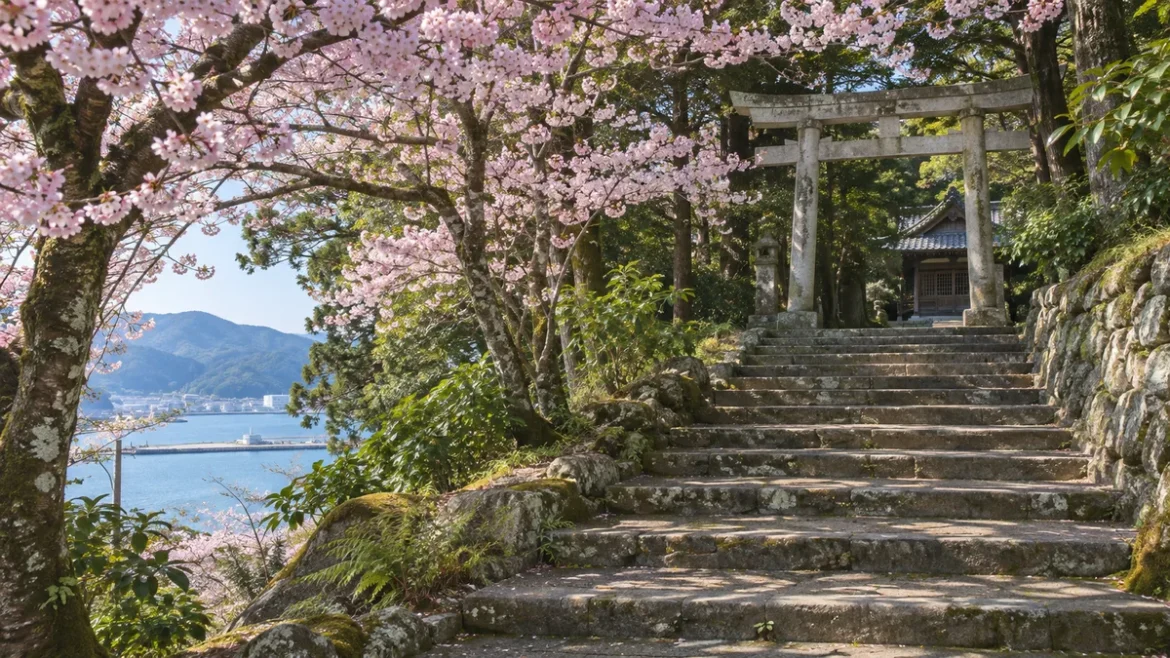
Kanegasakigu Shrine in Tsuruga combines cherry blossoms with a shrine visit and a distinctive spring tradition. The hillside setting gives it a different character from a flat city park. It also means steps and gradients should be part of the plan from the beginning.
The Japanese name is 金崎宮, at Kanegasaki-cho 1-4, Tsuruga, Fukui. Focus the visit on the shrine precincts, and allow separately for the terrain, opening conditions and time of a longer walk through the associated Kanegasaki Castle ruins.

At a glance
- Kanegasakigu is a hillside shrine in Tsuruga with stairs and gradients. Ask ahead about suitable arrangements if using a wheelchair or stroller.
- Blossom viewing, the Hanakaesai rite and Hanakae Matsuri activities may follow different schedules; old dates are not a fixed 2027 programme.
- The flower exchange uses an artificial cherry branch received at the shrine, not a branch picked from a living tree. Check offering costs and reception hours separately.
- The sightseeing bus’s Kanegasakigu stop and the Matsubara Line’s Kanegasakigu-guchi stop are different. Match the stop to your route and return service.
- The drive from Tsuruga Interchange is about ten minutes. Parking is free but spaces are not guaranteed; allow separately for transport and festival queues.
Separate flowers, ritual and festival plans
Distinguish the Hanakaesai religious rite from the wider Hanakae Matsuri spring event organised around it. Viewing the blossoms, attending the rite and joining festival activities may involve different schedules.
Use late March and April as a broad period to watch spring reports, rather than treating an old festival calendar as a fixed annual promise. Before a 2027 trip, check the shrine website for the particular event, date and hours you want.
Flowers may still be opening or already shedding petals during an announced event. Combining worship and a short walk with the blossom viewing makes the visit less dependent on one perfect full-bloom moment.
The exchanged blossom is a shrine offering
The flower-exchange custom uses a small artificial cherry branch received at the shrine. Participants say “Hanakae masho,” inviting an exchange of flowers and good wishes. It is not permission to pick blossoms or break living branches.
Ask staff about the current arrangements and offering amount if you wish to participate. The custom expresses hopes for good connections; it does not guarantee romance or fulfilment of a wish. Respect another person’s choice about joining, and feel free simply to enjoy the shrine and flowers.
Offerings, amulets and shrine seals can have their own costs and reception hours. Those arrangements should not be confused with an admission ticket for the whole destination or an assurance that every service is available throughout the day.
Take the local bus from Tsuruga Station
Take the Gurutto Tsuruga sightseeing bus from JR Tsuruga Station to the Kanegasakigu stop, followed by about five minutes on foot. Another option is the community Matsubara Line to Kanegasakigu-guchi. These are different stop names, so match the stop to the service you actually choose.
Check the city’s route and timetable information before travelling. Roadworks can alter part of a sightseeing route without suspending the entire service. Read the affected stops and current dates rather than assuming every stop has changed.
If using a gap between long-distance trains, include station movement, waiting, the shrine approach and the return journey. A short bus ride does not make the entire outing equally short.
Plan for the stairs
The approach includes stairs and slopes, with limitations for wheelchairs and strollers. Anyone needing a step-free visit should ask the shrine about suitable arrangements in advance. Do not assume an alternative route will be available on arrival.
Wear footwear with appropriate grip and slow down after rain. Avoid stopping for photographs where others need a landing or handrail. Older travellers can choose the extent of the visit according to their energy rather than feeling obliged to complete a longer hillside circuit.
Allow roughly an hour to an hour and a half for a shrine visit, flowers and a pause, in addition to transport. Festival queues require further flexibility. Adjust this planning allowance to the pace of your group.
Driving and the rest of Fukui
Allow approximately ten minutes by car from Tsuruga Interchange. Parking is free, but blossom-season or festival demand can still fill the available spaces. Follow local directions and do not treat free parking as a guaranteed reservation.
Tsuruga is not an adjoining neighbourhood of Fukui City. If continuing elsewhere in the prefecture, calculate that journey separately instead of compressing distant attractions into the same short stop.
Before leaving the shrine, confirm the return stop, departure and the time your group needs to walk there. The most rewarding plan leaves room to appreciate the flowers and the setting. Joining the flower exchange can add a cultural experience when available, but the whole visit need not depend on it.
Frequently asked questions
How should I plan the flower exchange and cherry blossoms in 2027?
Use late March and April as a broad period for following spring reports, then check the season’s rite and festival dates and hours. Flowering and event schedules are different, and an old calendar is not a fixed 2027 programme.
Should I bring a freshly picked cherry branch?
No. The custom uses a small artificial cherry branch received at the shrine, not a branch cut from a living tree. Ask staff about participation, the current offering amount and reception arrangements.
Which bus stop should I use from Tsuruga Station?
The Gurutto Tsuruga sightseeing bus uses the Kanegasakigu stop, followed by about five minutes on foot. The community Matsubara Line uses Kanegasakigu-guchi. Check your chosen route’s actual stops and return timetable.
Is the approach suitable for wheelchairs and strollers?
Stairs and slopes limit access. Ask the shrine about suitable arrangements before a visit that needs a step-free route, and do not assume an alternative will be available on arrival.
How much time should I allow?
Around an hour to an hour and a half is a planning allowance for the shrine, flowers and a pause. Add transport, waiting and any festival queues, adjusting the visit to your group’s walking pace.
Is free parking available for drivers?
Parking is free, and the shrine is about ten minutes by car from Tsuruga Interchange. Spaces may fill during the blossom season or festival, so follow local directions rather than treating free parking as a reservation.