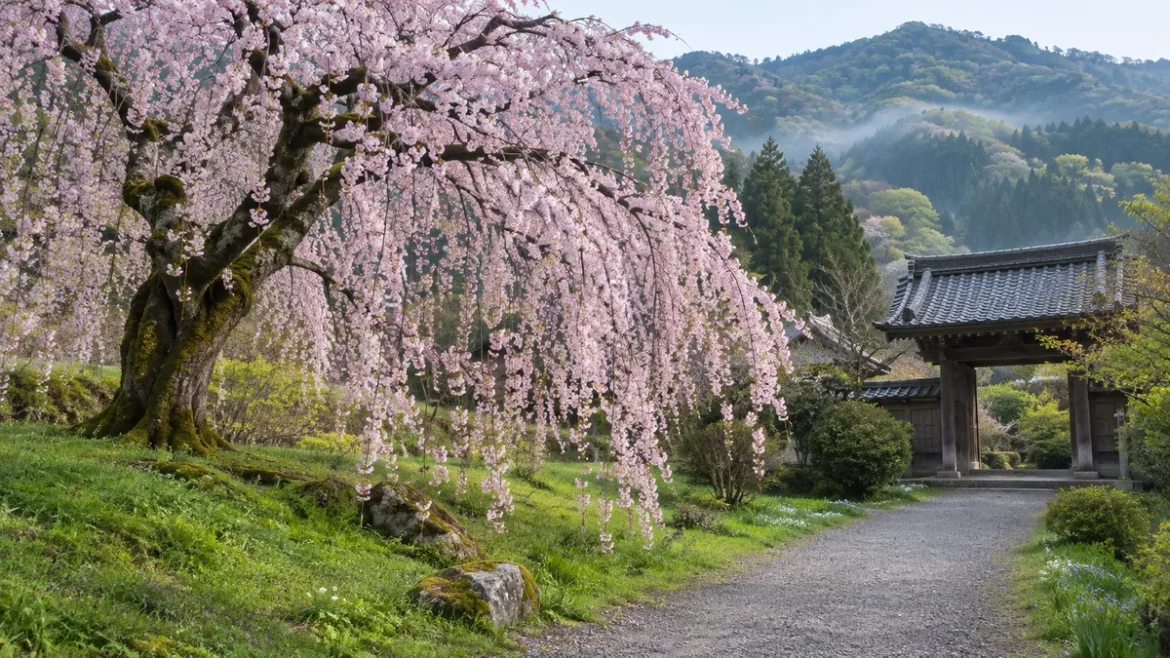
Angoji Temple in Nanto suits travelers who want a weeping cherry, a quiet temple visit and the option of a woodland walk. It is less convenient as an impulsive station-side photo stop, particularly if you depend on local buses.
The temple name is read あんごじ, Angoji. It is at Yasui 4941 in Nanto, Toyama. Keep the temple name and address together when navigating rather than assuming that the district and temple are pronounced alike.

At a glance
- Angoji is at Yasui 4941 in Nanto. Its double-flowered red weeping cherry is separate from the Somei-yoshino at nearby Yasui Green Plaza.
- General visiting hours are 8am–4:30pm, with free admission. Interior visits, ceremonies and evening access need separate confirmation.
- Fukuno is a possible interchange, but the October-revision loop timetable was weekday-only. Recheck the actual travel date for 2027.
- Existing anticlockwise Yasui-loop arrangements required bookings for every stop and departure. Reconfirm デ markings, deadlines and contacts before travelling.
- Allow around 30–45 minutes for the temple and cherry, then add woodland paths or viewpoints separately while leaving space for worshippers.
The temple cherry and nearby plaza are different stops
Angoji’s double-flowered red weeping cherry and the Somei-yoshino at nearby Yasui Green Plaza are different blossom stops; use Nanto’s sakura guide to distinguish their locations. They can complement one visit, but are not the same tree or interchangeable place names.
Begin with the temple’s blossom feature, then decide whether to extend the outing. View the drooping branches from permitted visitor areas without moving under protected branches or crowding the roots. Leave a route for people coming to pray rather than photograph flowers.
For a 2027 visit, check recent flowering photographs and their dates. Historical images do not predict the next peak, and the temple’s weeping cherry need not peak alongside the neighboring Somei-yoshino.
Check bus days before committing to a date
Fukuno Station on the JR Johana Line is a possible interchange. Check Nanto’s municipal-bus information for Angoji-mae, comparing the Yasui loop and Fukumitsu–Fukuno loop by direction, stops and travel date before a 2027 trip.
The October-revision timetable had no Saturday, Sunday or public-holiday services on these loops. That version is not a guaranteed 2027 timetable. Check whether a suitable service runs on your date, choosing the return journey together with the outward one.
Under the existing booking arrangements, all stops on all anticlockwise Yasui-loop services were demand-responsive, and services or sections marked デ ran only when booked. The booking deadline was 5pm on the previous business day; the Yasui-loop inquiry number was 0763-77-4307. Reconfirm the applicable services, deadline and contact details before travelling in 2027 rather than treating them as ordinary turn-up-and-board departures.
If there is no suitable bus, compare a taxi or driving and arrange the return. Allow roughly 15 minutes by car from Tonami Interchange; parking is provided. See the Angoji access details, follow local directions and leave space for temple activities.
Plan a daytime visit
General visiting hours are 8am–4:30pm, with free admission. This does not establish unrestricted access to every building, religious object or ceremony. Check separately if a particular interior visit is important to you.
Check the current season’s dates, hours and permitted areas before planning an evening blossom visit. Do not assume year-round nightly opening; use daytime visiting hours until suitable evening arrangements have been confirmed.
Allow about 30–45 minutes for the temple and cherry as an itinerary suggestion. Add woodland paths or the neighboring plaza separately rather than compressing everything into a short gap between buses.
A temple visit is not the whole surrounding park
The wider Angoji Park and its woodland paths can extend the trip, with views across the Tonami Plain from Bitchugaoka. Those viewpoints are not all at the temple gate.
Consider slopes, shoes and your group’s energy before continuing uphill. Wet steps or shaded paths deserve care after rain. If the weeping cherry is your main purpose, there is no need to add a longer walk simply because it is nearby.
Treat distant views as a weather-dependent bonus, with the temple setting as the main reason to come. Respect signs, ceremonies and other visitors, and do not enter graves or restricted areas for photographs. Angoji rewards a clear transport plan and an unhurried visit, rather than an attempt to collect one more blossom pin at the expense of a workable return journey.
Frequently asked questions
Are Angoji Temple and Yasui Green Plaza the same place?
No. The temple’s double-flowered red weeping cherry and the plaza’s Somei-yoshino are different trees at different stops, and their flowering may not peak together. The surrounding park and viewpoints also need their own approach and time.
Can I take a weekend bus in 2027, and must I book?
Check both directions for your date rather than reusing the weekday-only October-revision timetable. Existing anticlockwise Yasui-loop services required bookings at every stop; デ-marked sections ran only when booked. The previous deadline was 5pm on the preceding business day, with inquiries at 0763-77-4307. Reconfirm the applicable services, deadline and contact for 2027.
Is admission free, and can I visit at night?
General daytime visits are free, normally 8am–4:30pm, without unrestricted access to every interior or ceremony. Confirm the season’s dates, hours and permitted areas separately for an evening blossom visit; otherwise plan within daytime hours.
When will the weeping cherry peak in 2027?
Check recent photographs of the temple tree and their dates before travelling. Historical spring pictures are not a forecast, and the weeping cherry may not peak at the same time as the neighboring Somei-yoshino.
How much time should I allow for the temple and woodland?
Around 30–45 minutes is a planning allowance for the temple and cherry. Add the neighboring plaza, woodland and viewpoints separately, considering slopes, wet steps and your group’s energy rather than forcing everything between two buses.