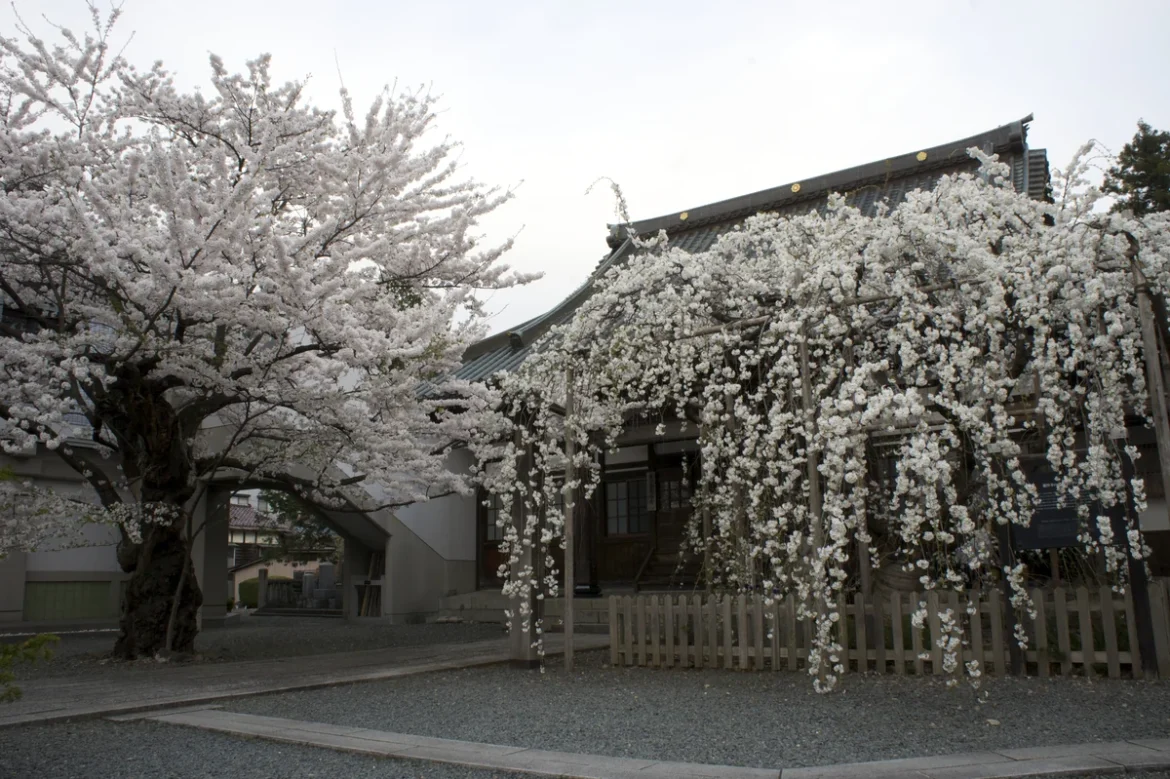
Ryukokuji’s Morioka Shidare cherry makes a rewarding short stop during a spring visit to Morioka in 2027. Come for a distinctive white-flowering weeping tree in temple grounds, rather than a long cherry tunnel or a park picnic. If open lawns and a whole afternoon outdoors matter more, choose a larger park as your main destination.
The simplest approach is to fit the tree into a city walk after checking its bloom report. Combine the Kitayama temple district with one or two central sights instead of racing between every cherry location.

Identify the right tree
Look for 龍谷寺のモリオカシダレ, the individually named Morioka Shidare at Ryukokuji. It is a nationally designated natural monument. Its white flowers and drooping branches are the attraction; the name does not refer to every weeping cherry in Morioka. Include both the temple and city when searching a map.
Start from an open path where you can appreciate the whole crown. A close photograph is not a reason to enter a protected root area or lean against the trunk. This is a living tree, so its shape and flowering can differ from older photographs. A temple-district walk still works when the blossoms are fading, but keep expectations proportionate.
When to visit
The usual flowering season is mid-to-late April. Weather can shift that window. Check the dated entry for Ryukokuji on the Morioka tourism blossom page, distinguishing first flowers, full bloom and falling petals.
For a fixed-date holiday, treat the tree as a flexible part of your city day. If the flowers have passed their peak, spend less time here and more on the surrounding streets. Do not book an entire trip around a previous season’s full-bloom date. Wear shoes with a secure grip after rain and leave space between an umbrella and the hanging branches.
Getting there without confusing the bus routes
Kitayama, written 北山, is the useful bus stop. Allow about two minutes on foot from the stop. From Morioka Station, look for the Matsuzono–Morioka Station service that runs via Kitayama.
The important complication is frequency and starting point. Direct departures from the station are limited during parts of the day, while other buses serving Kitayama begin at Morioka Bus Center. A bus with a suitable destination is not necessarily available from the railway station. Check the operator’s weekday or weekend/holiday timetable, the departure point and the direction before setting out.
A taxi is another option for a short urban transfer, particularly with luggage or reduced walking stamina. For the return, choose your next destination first. You may prefer to continue toward the center rather than retrace the entire journey, but allow proper walking and connection time. Keep a comfortable margin before a reserved train.
Visiting a working temple
Follow the temple’s posted access arrangements and give worshippers priority. Plan a daytime visit rather than assuming a night-blossom event. Admission rules for neighboring temples or their exhibition halls do not automatically apply here.
For planning, allow twenty to thirty minutes for the tree itself, plus transport and any neighborhood walking. Keep the entrance clear, take turns at photographic viewpoints and avoid picnic mats around the roots. If you need step-free access or a special visiting arrangement, ask the temple or tourism office beforehand rather than relying on an ordinary sightseeing description.
A relaxed half-day plan
Begin in Kitayama, view the cherry, then continue with a short temple-district walk. Return toward the center for lunch and select one main afternoon stop, such as the Rock-Splitting Cherry or Morioka Castle Site Park. Nearby religious buildings have separate visiting rules, so read their notices before entering.
Arrange lunch in town instead of depending on food stalls at the temple. For accommodation, choose a base according to the rest of your trip: the station area is practical for repeated rail journeys, while a central-city base may suit evenings out. There is little reason to move hotels solely for this short visit.
Photographing the tree
A wider composition shows the falling branches against the temple setting. Move closer with a zoom rather than by stepping into protected ground. Avoid making worshippers or private ceremonies the focus of your photograph. Never pull a branch into place, even when the flowers appear within easy reach.
Questions before you go
Is this the Rock-Splitting Cherry?
No. They are different named trees at different locations. Check each blossom report separately even if you visit both on the same day.
Is it suitable for children?
Yes as a brief, quiet visit to see an unusual tree. Add a park elsewhere if children need space for active play.
Should I travel to Morioka just for this tree?
It may appeal strongly to enthusiasts of old trees and temples. For most travelers it works better as part of an existing Morioka itinerary, with other city activities available if flowering changes.
Cherry blossoms at Ryukokuji on April 29, 2012. The supported, fenced tree on the right is the Morioka Shidare. “Ryukokuji Temple – Full Cherry Blossom Season in Morioka”, © yisris, via Flickr (https://www.flickr.com/photos/yisris/7124327481/), licensed under CC BY 2.0 (https://creativecommons.org/licenses/by/2.0/). Image resized proportionally and converted to WebP.