
For a dedicated autumn-leaf outing in Hakodate, choose Kōsetsu-en, the historic garden inside Miharashi Park. Its maple avenue, wooden pavilion and stream-side paths offer a different afternoon from the harbour and churches. The simplest plan is a daylight visit followed by MOMI-G Festa illumination, then dinner in Yunokawa.
The trade-off is travel time: this is not a short walk from Hakodate Station or the bay. Give it a proper half-day if you are using buses. With only a few hours in the city, decide whether foliage matters more than Goryokaku, Motomachi or the night view.


When to see autumn leaves, and the confirmed 2026 event
Late October to early November is the usual planning window. It is a seasonal pattern, not a guaranteed peak for your travel date. Past peak-viewing dates include 31 October 2023, 2 November 2024 and 31 October 2025. Those are historical observations, not a 2026 forecast.
MOMI-G Festa 2026 is announced for 16 October–8 November, with illumination from 16:00 to 21:00. Entry is free; some workshops have separate charges. The event begins before the usual late-season foliage window, so opening night need not mean fully red maples.
Use historical photographs to understand the garden scenery. For a travel-date decision, check the park’s newly dated seasonal reports rather than an old “finished” or “peak” label.
The garden and outdoor illumination are free. This ticket is for Goryokaku Tower, a different attraction.
Admission, facilities and the park plan

Open the full Miharashi Park map
Enter through the main gate at the bottom of the map. Find the Green Center and maple avenue to the right, then the central pavilion and stream. Return by the main paths towards the bus stop near the entrance. This is a general park plan, not an illumination route: follow the open paths on the night, and do not assume indoor facilities stay open until the lights finish.
Swipe to compare →
| Item | Practical detail |
|---|---|
| Japanese name | 見晴公園・旧岩船氏庭園「香雪園」 |
| Address | 56 Miharashi-cho, Hakodate |
| Garden entry | Free; no ordinary sightseeing reservation |
| Pavilion and Green Center | General facility-use hours 09:00–17:00; follow on-site access arrangements |
| Accessible toilet in Green Center | Hours 08:45–17:30; do not assume it stays open for the entire light-up |
| Suggested time on site | 60–90 minutes for highlights; about two hours at a relaxed pace; 2.5–3 hours for daylight plus illumination |
Adjust these visit lengths to your pace and the conditions on the day. Use the park manager’s site and park plan to identify entrances, facilities and paths. Ordinary admission is different from hiring the pavilion or booking an organised activity.
How to reach Kōsetsu-en
From Hakodate Station
Take Hakodate Bus route 82 towards Takizawa-cho Senkaijo, about 40 minutes to Kōsetsu-en (香雪園), then about a one-minute walk. Road conditions and waiting time are additional considerations. Check the travel-date service with Hakodate Bus or the station bus centre, including the stop for your return journey.
Before entering the garden, save the return departures and decide which one you intend to use. Illumination ending at 21:00 does not promise a convenient bus at that time. A taxi is a possible fallback, but arrange it rather than assuming one will be waiting outside.
From Yunokawa, the airport or Goryokaku
For the tram, the relevant terminus is Yunokawa, not a tram stop called Yukura-jinja-mae. Yukura Shrine is nearby, and the park manager quotes roughly 30 minutes on foot from the shrine. That is a separate walk, not a stroll inside the garden; with children, reduced mobility or darkness, compare a taxi instead.
There is no direct bus from Hakodate Airport; a taxi takes roughly ten minutes on the road. Treat that as a road-journey estimate, not a flight-to-garden connection guarantee. Leave luggage at your hotel where possible. From Goryokaku, compare the actual bus connections with a taxi rather than building the day around an assumed direct sightseeing service.
Driving and rail passes
Free parking is available, but the organiser asks visitors to favour public transport during the event because parking can fill. Driving can be useful for an eastern-Hakodate itinerary; it does not remove congestion or the need to check road conditions.
A JR pass does not pay for Hakodate Bus route 82. Assess rail passes using your longer intercity journeys. The JR East–South Hokkaido Rail Pass includes the Hakodate, Sapporo and Otaru areas within its coverage; a single Sapporo–Hakodate journey being poor value is different from being outside the area. Check the full map and eligibility before buying.
What to see in the garden
The maple avenue
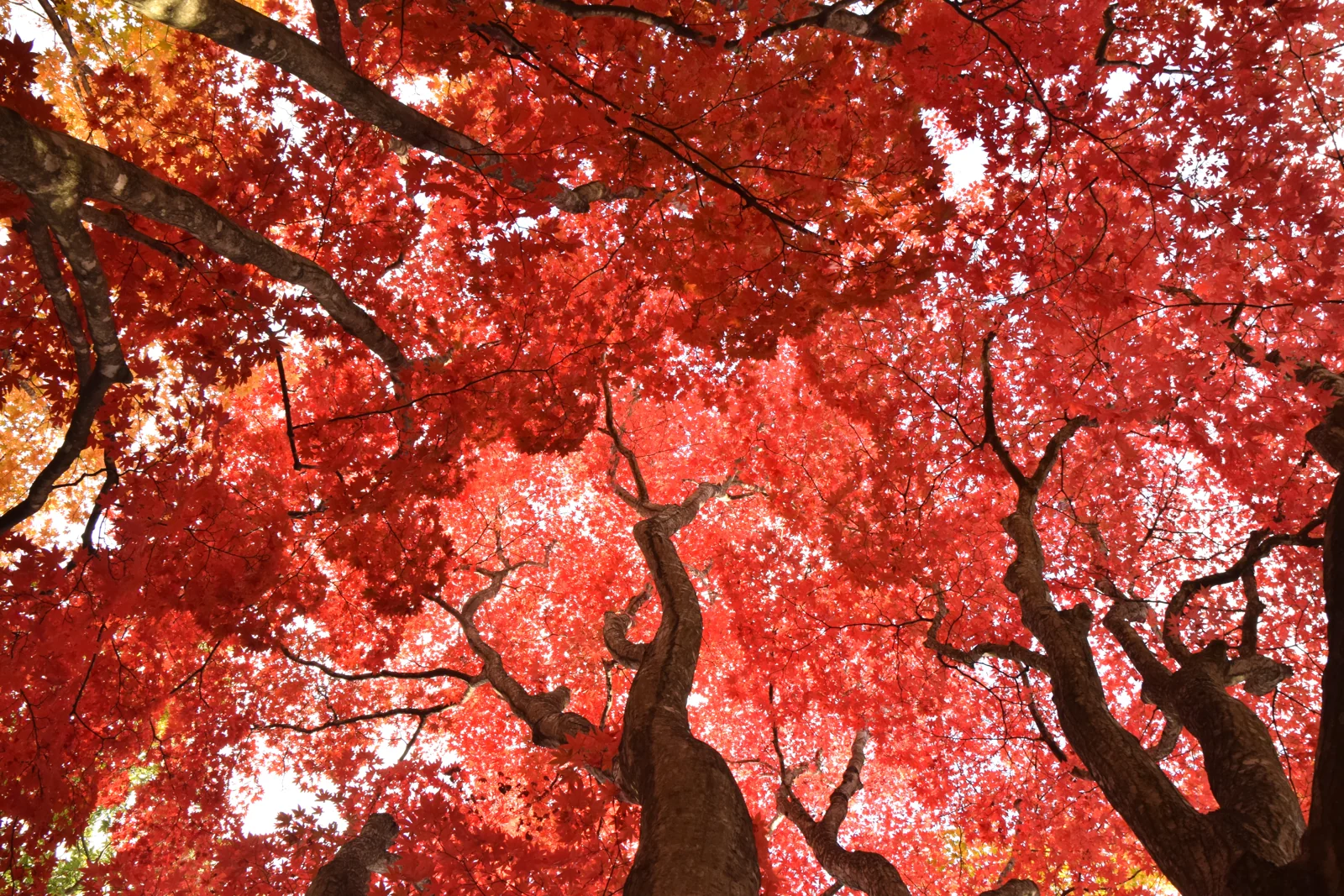
The roughly 100-metre avenue is the main reason to come. In daylight, look for layers of green, yellow, orange and red rather than expecting every tree to turn together. At night, the lighting changes the colour balance and atmosphere. Leave room for people to walk through while you photograph it.
The pavilion and stream-side paths
Use the wooden pavilion as a foreground or background to give photographs a sense of place. Do not assume interior access simply because the surrounding park is open. Smaller paths and stream views reward a slower walk, but wet leaves, stones and low light can make footing difficult. A short main-path visit is a reasonable choice.
Fallen leaves and quieter details
A carpet of leaves is a different stage from a full canopy. If some branches are bare, look for reflections, textures and wider garden scenes instead of treating the visit as a failure. Stay on open paths and never shake branches or enter planting beds for a photograph.
Three realistic ways to plan the visit
Swipe to compare →
| Plan | Suggested sequence | Leave room for |
|---|---|---|
| Short visit | Maple avenue → pavilion exterior → return by the main path | About 60–90 minutes on site, plus all transport |
| Relaxed daylight visit | Avenue → garden paths → pavilion area → facility break while open | About two hours, with less walking if paths are wet |
| Daylight and lights | Arrive around 15:00 → daylight photographs → illumination from 16:00 → preplanned return | About 2.5–3 hours; adjust to the actual return service |
These are suggested visit patterns, not a timed bus itinerary. If a restaurant or ryokan has a fixed dinner time, plan backwards from it. Do not expect to photograph every corner, wait for an empty avenue and still make a tight onward booking.
Pairing the garden with other Hakodate sights
Yunokawa is the most straightforward area to pair with this side of the city. A morning at Goryokaku followed by the garden and an evening in Yunokawa can work well when transfers are planned. Trappistine Convent or the Tropical Botanical Garden can be alternatives earlier in the day; check their own hours and remember that an outdoor attraction is not a complete heavy-rain backup.
The major 2026 complication is Mount Hakodate: the ropeway closes for maintenance from 20 October to 8 November 2026. Buses or taxis may serve the summit while the road is open, but their schedules and capacity need checking. Private/rental cars are restricted from 16:00 to 21:00 during 1 October–8 November, and the winter road closure is scheduled from 11:00 on 9 November 2026. Cars already on the mountain must descend before the restriction begins; waiting in the summit car park is not permitted. A rental car is therefore not a simple evening substitute for the ropeway.
For an unhurried trip, give MOMI-G and the mountain night view different evenings. Do not buy a night-view tour without checking its actual transport, meeting point and operating date.
Families, wet weather and where to stay
Families can keep the visit focused on the main foliage area rather than crossing the entire park. Bring warm layers and shoes with grip; do not rely on the Green Center as an all-evening warming room. For a stroller or wheelchair, check the park layout and current path condition instead of assuming every garden path is step-free.
Light rain can produce attractive reflections, but a garden is still an outdoor visit. Strong wind, heavy rain, warnings or closed paths are reasons to shorten or change the plan. Goryokaku Tower and city museums offer more shelter, subject to their own opening times.
Stay near Hakodate Station if rail arrivals and departures are your main concern; Yunokawa suits an onsen-focused evening after the garden. Goryokaku is another base for city dining. Plan meals away from the park entrance rather than counting on a large restaurant choice there, and confirm dinner arrangements before staying for the lights.
Quick questions before you go
Do I need to buy a Kōsetsu-en ticket?
No. Ordinary garden admission and the outdoor light-up are free. A tower ticket, rail pass or organised activity is a separate purchase.
Is the first festival weekend the best time?
Not necessarily. Event dates and leaf colour answer different questions. Use newly dated foliage observations as your trip approaches.
Can I do this on an airport transfer day?
Only if luggage, traffic and flight check-in leave a comfortable margin. Keep it optional; the taxi journey estimate does not account for baggage collection or delays.
Should I stay until 21:00?
Only if you have a suitable return plan. There is no need to stay until the final light-up minute to enjoy the garden.
Is Kōsetsu-en the same place as Miharashi Park?
Kōsetsu-en is the historic garden within Miharashi Park. Use the park or garden name when checking the map, and head for the garden’s maple avenue and pavilion area.
How long should I allow for the garden?
Allow roughly 1–2 hours for a relaxed daytime visit. To see daylight and illumination, leave more time around dusk and plan your return transport before entering.
Does the tram take me to the entrance?
No. The garden is inland from the Yunokawa tram area. Use the appropriate bus connection or a taxi, rather than assuming the tram stop is beside the park.
Does a Hokkaido Rail Pass cover the local bus?
No. The JR pass does not replace the Hakodate bus fare to Kōsetsu-en. Keep rail travel, local buses and taxis as separate parts of your budget.
Can I combine the festival with the Mount Hakodate ropeway?
The ropeway is scheduled to close from 20 October to 8 November 2026. Check the mountain-bus or taxi options separately and preferably give the garden and mountain different evenings.
Are old photographs evidence of today’s colours?
No. Use them to understand the scenery, and check newly dated park reports for current conditions. Festival dates and historical peak dates do not establish the colours on your visit.
Tickets and experiences
Free parks do not require an attraction pass. Check your date, exact inclusions and cancellation terms before buying a separate experience.
Further trip planning
Build the rest of your route with our Hakodate city guide, Sapporo–Hakodate transport guide and Hokkaido autumn guide.