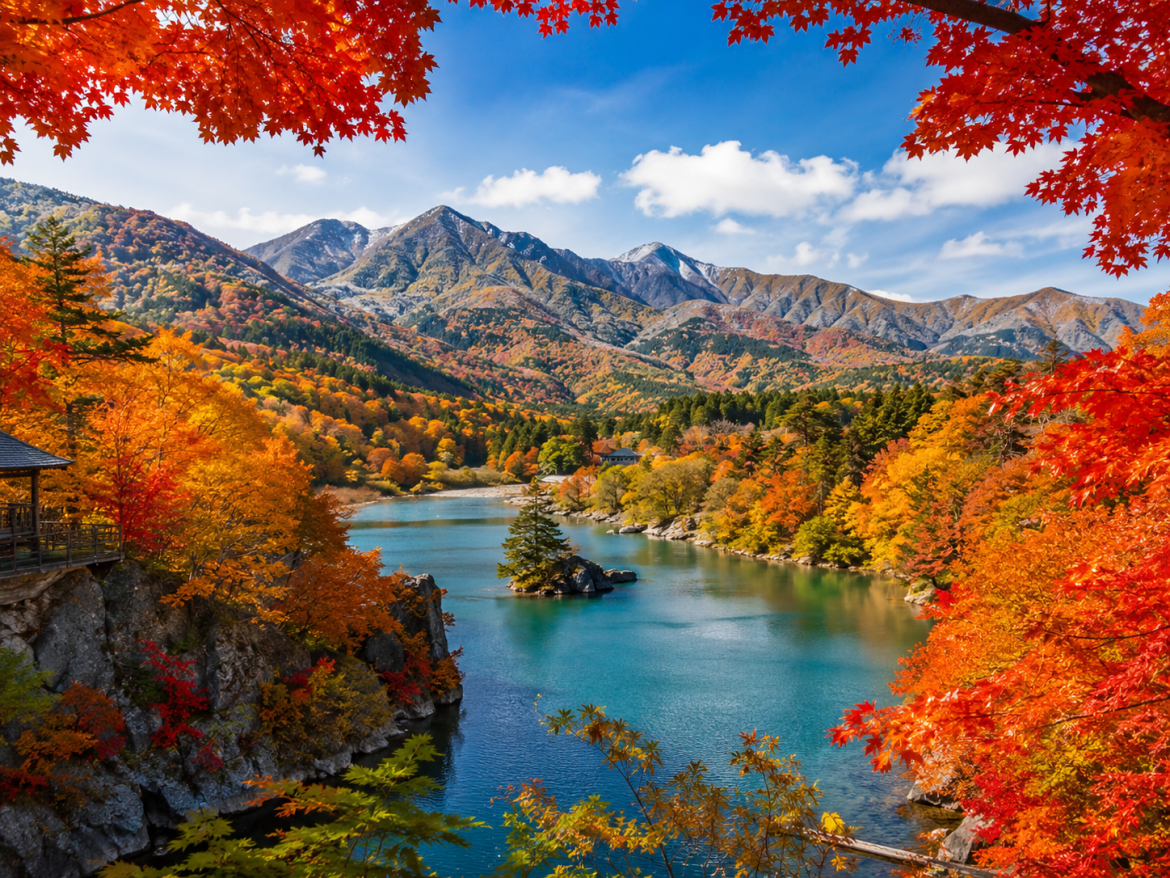
Hokkaido is one of the best parts of Japan for a long autumn foliage season, but the key is choosing the right region for your travel dates rather than trying to collect as many spots as possible. High-elevation areas in the Daisetsuzan mountains usually change first, followed by valleys and hot-spring towns, then lower-elevation cities and southern Hokkaido.
For most travellers, Hokkaido autumn leaves work best as several separate regional trips: Daisetsuzan and Asahikawa for mountain scenery, Sapporo and Jozankei for easier public transport, or southern and eastern Hokkaido as extensions when your dates and route fit. Trying to combine Sapporo, Daisetsuzan and Hakodate in a short trip usually creates more travel time than foliage time.


Hokkaido Autumn Leaves: Quick Planning Guide
Swipe to compare →
| Decision | Practical answer |
|---|---|
| Best for early autumn | Daisetsuzan high elevations, including Asahidake and Ginsendai |
| Best easy base | Sapporo for city foliage, Jozankei and nearby autumn excursions |
| Best mountain base | Asahikawa, Asahidake Onsen or Sounkyo rather than commuting from Sapporo every day |
| Best for a short trip | Choose one region rather than crossing Hokkaido |
| Car necessary? | No for the main Sapporo/Jozankei and some Daisetsuzan routes, but a car is useful for dispersed countryside areas |
| Main autumn risks | Cold, wind, limited daylight, fog, early snow or ice at elevation, and seasonal transport changes |
This tour visits Kurodake and Asahiyama Zoo; it is not an Asahidake ropeway ticket or a Blue Pond itinerary. Check the meeting point, guide language and supplier terms.
Best Time for Hokkaido Autumn Leaves 2026
There is no single “best week” for all of Hokkaido. Elevation and latitude create a long progression from the mountains to lower cities. The timing below is best used as a historical planning reference, not a guarantee of peak colour in 2026. Weather, wind, rain and early snow can shift conditions significantly.
Swipe to compare →
| Typical planning window | Areas to consider | What to expect |
|---|---|---|
| September | Daisetsuzan high elevations, Asahidake, Ginsendai | Alpine vegetation, mountain slopes and some of Hokkaido’s earliest autumn colour |
| Late September to early October | Sounkyo, Kurodake and other Daisetsuzan elevations | Colour gradually moving down from higher mountain areas |
| October | Jozankei and many mid-elevation valleys | River valleys, hot-spring towns, dams and forest scenery |
| Late October into November | Sapporo and some lower-elevation urban areas | Maples, ginkgo and easier city walks |
| Later autumn | Southern Hokkaido, including the Hakodate and Onuma area | A useful extension for travellers arriving after the mountain season |
These windows describe the usual progression, not verified 2026 peak dates for every location. Mountain foliage can be finished while the valleys below are still changing, and a city forecast should never be treated as a forecast for an entire national park.
2026 Sapporo foliage forecast: what it actually tells you
Japan Meteorological Corporation issued its second 2026 forecast on 1 October: 4 November for Sapporo’s representative maple and 3 November for representative ginkgo. These are city dates based on specimen-tree observation standards, not peak dates for every park, elevation or tree species. The next release is planned for early November.
For a wider nationwide context, see our Japan autumn leaves forecast guide.
Best Hokkaido Autumn Leaves Areas
1. Asahidake and the Sugatami area
Asahidake Ropeway’s 2026 calendar lists first ascent 08:00 and last descent 17:00 for 1–20 October, shortening to 09:00–16:00 from 21 October to 15 November. Maintenance closure is scheduled for 16 November–10 December. Check the same-day operation notice because wind or other conditions may stop service.
Asahidake is the highest mountain in Hokkaido and one of the key places for travellers targeting the earliest stage of the island’s autumn season. The practical sightseeing area for many visitors is not the summit but the ropeway-accessible Sugatami Pond area, where walking routes provide views of alpine vegetation, ponds and volcanic scenery.
This distinction matters. A ropeway trip and walk around Sugatami is different from a summit climb, with different fitness, equipment and weather considerations. Travellers planning a more substantial hike should use dedicated mountain information rather than treating the ropeway sightseeing area as equivalent to climbing Asahidake.
For the June 1–October 31 high season, an adult return ticket is ¥3,500. From November 1–May 31 the adult return fare is ¥2,800. The adult category applies from junior-high-school age; the elementary-school return fare is ¥1,750 in both periods. Reservations are not available.
Weather is the bigger planning issue than ticket availability. Wind, lightning and other conditions can suspend operation, so check the operator on the morning of your visit instead of building a rigid itinerary around the ropeway. Avoid dragging large suitcases into the mountain area; leave them at your accommodation or another suitable luggage facility and travel with a day pack.
For more mountain-specific planning, see our Mount Asahidake guide.
2. Ginsendai
Ginsendai is known for broad slopes where autumn colours spread across the mountainside rather than concentrating around a landscaped park. Ginsendai sits at about 1,490 metres, with mid-September a useful historical foliage reference.
Access requires more care than a normal roadside viewpoint. High-elevation roads and autumn access arrangements can change by season. Before driving, check the local organiser’s current announcements and access maps for your travel date, including any private-car restrictions or shuttle requirements.
3. Sounkyo and Kurodake
Sounkyo is a practical choice for travellers who want mountain scenery without making a summit hike the centre of the trip. The hot-spring resort sits below Kurodake, making it possible to combine a mountain excursion with a night in an onsen area.
Foliage does not change everywhere here at the same time. Higher Kurodake elevations may be well ahead of the gorge and resort level, so a report that the upper mountain is past peak does not automatically mean the entire Sounkyo area is finished.
Public-transport travellers should note that JR trains do not run directly to the resort. The standard rail approach is to travel to Kamikawa Station and continue by bus or taxi. The local organiser notes that the bus timetable changed in July 2026, so verify the current timetable instead of relying on an old itinerary or assumed final departure.
The linked day tour combines Kurodake Ropeway, Asahiyama Zoo and Asahikawa Ramen Village on a roughly 9-hour-30-minute trip from Sapporo. Guide-language options are listed as Chinese, English and Japanese; confirm the language for your selected departure. Ramen costs are not included, there is no onboard toilet, and oversized luggage may be refused. The listed itinerary does not include Blue Pond.
Autumn colour is never guaranteed on a tour date. If the ropeway is cancelled after the tour has begun, refund treatment may also depend on the selected supplier’s conditions, so read the product terms for your chosen departure.
4. Jozankei

Open the Jozankei Kappa bus route map
Find the departure point at Jozankei Tourist Information, then distinguish the Asahi overpass, Jozankei Dam and Hakkenzan directions. This is a local guided-bus route diagram, not an island-wide Hokkaido map or a route to walk in full. Use the signed pedestrian detour for Futami Suspension Bridge; a line on this map does not permit entry to construction areas or closed riverside paths.
Futami Park and the Toyohira River area are under construction in 2026–2027. Construction areas are off-limits. Autumn access to Futami Suspension Bridge uses a designated pedestrian detour planned from 1 October; the detour closes in winter. Follow the current signs rather than an old route through the park, and do not assume every riverside path is open. Futami detour and construction arrangements
Jozankei is one of the easiest autumn bases for visitors staying in Sapporo. Instead of alpine hiking, the appeal is the combination of forested valley scenery, the hot-spring town and easier walking around the river area.
Mid-October is a useful historical planning reference for Jozankei. Treat that as seasonal guidance rather than a verified 2026 peak forecast.
For 2026, the Jozankei autumn transport programme includes several separate services. They are not one interchangeable shuttle system, and the booking rules differ.
Swipe to compare →
| 2026 service | Operating information | What travellers need to know |
|---|---|---|
| Kappa guided bus | October 1–21; departures at 09:15, 11:15, 13:15 and 15:15; about 70 minutes; ¥700 per seat | Adult and child fare is the same. Registration is same-day, first-come at the Tourist Information desk. |
| Hoheikyo Dam Liner | October 3–25; return ¥1,000 | The liner goes to the electric-bus parking terminal, not directly to the dam and not to Hoheikyo Onsen. |
| Hoheikyo electric bus | Separate return fare: adult ¥1,200, child ¥600 | If both the Dam Liner and electric bus are needed, the adult transport total is ¥2,200. |
| Autumn gondola | October 1–20; 09:30–15:30; last ascent 15:00 | Weather-dependent. Check the organiser for current operation and pricing. |
Do not assume every seasonal bus can be reserved online. The Kappa bus, for example, uses same-day registration. Also avoid building a plan from an assumed combined gondola-and-bus fare; use the current organiser information for the exact products you intend to take.
5. Hoheikyo Dam
Hoheikyo Dam is a strong extension from Jozankei for travellers who want reservoir, valley and mountain scenery. The important transport detail is that the seasonal Dam Liner and the electric bus are different legs. The liner reaches the electric-bus terminal, where passengers transfer before continuing toward the dam area.
This makes Hoheikyo more complicated than simply “taking one bus from Jozankei”, especially on busy autumn days. Check the current map and service details before departure rather than assuming the previous year’s arrangement still applies.
6. Sapporo maples and ginkgo
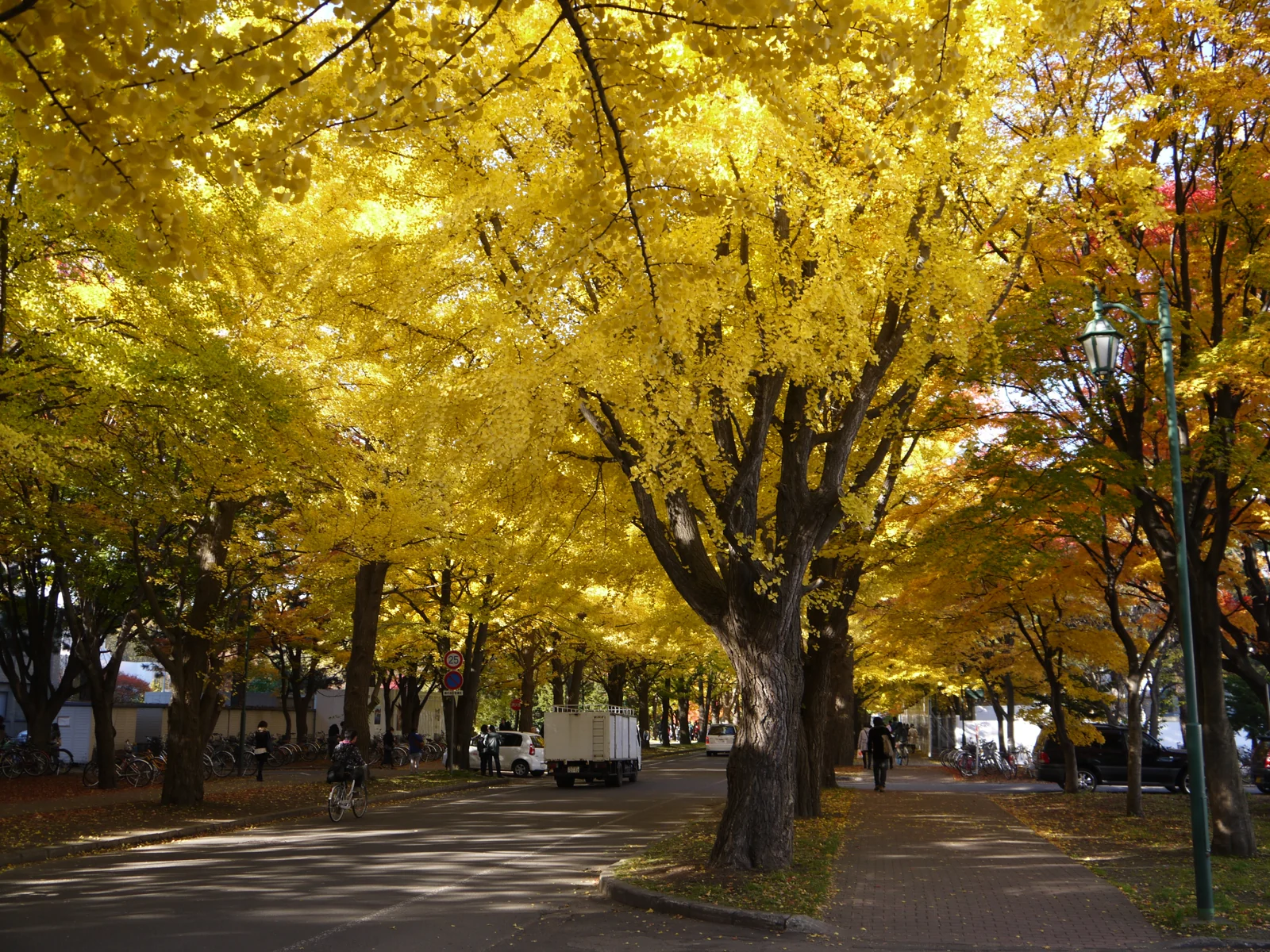
Sapporo is the easiest option for travellers whose dates fall later than the main high-mountain season. Urban foliage does not deliver the scale of Daisetsuzan, but it is much easier to fit around restaurants, shopping and bad-weather alternatives.
The 2026 city forecast currently points to early November for the representative Sapporo maple and ginkgo trees, but individual parks and streets can differ. Use the city forecast as orientation, not as a promise that every tree will peak on November 3 or 4.
For a short stay, it is better to choose a compact city walk than to force an all-day mountain journey after the higher-elevation foliage has already moved on.
7. Southern and eastern Hokkaido extensions
Onuma and Hakodate are useful southern extensions for travellers visiting later in the season, while eastern Hokkaido can work for longer itineraries focused on lakes, forests and national parks. They should not be treated as quick additions to a Sapporo or Daisetsuzan day.
Hokkaido’s size is the deciding factor: a route that looks compact on a map can involve substantial railway, bus or driving time. Build a regional trip first, then add another part of the island only when you have enough nights to justify the transfer.
How to Get Around Hokkaido for Autumn Leaves
Your transport strategy should begin with your overnight base. Public transport works well for Sapporo and several major resort routes, while a car becomes more useful when viewpoints, lakes and rural stops are dispersed.
Swipe to compare →
| Base / route | Best transport approach | Main drawback |
|---|---|---|
| Sapporo city | JR, subway, streetcar and walking | Less dramatic than mountain foliage |
| Sapporo → Jozankei | Bus, then local/seasonal transport where needed | Autumn traffic and seasonal service details require checking |
| Sapporo → Asahikawa | JR limited express | Mountain destinations still require onward transport |
| Asahikawa → Asahidake | Local bus or car | Less frequent than city transport; mountain weather can disrupt plans |
| Sapporo → Sounkyo | JR to Kamikawa, then bus/taxi | No direct JR service into the resort |
| Rural Biei / eastern Hokkaido | Car can be useful | Cold, ice, snow, wildlife and limited daylight require conservative planning |
Is driving worth it?
A car gives more flexibility in areas where viewpoints and rural attractions are widely separated, but autumn driving in Hokkaido deserves more caution than a normal city road trip. High-elevation conditions can differ sharply from Sapporo, and freezing temperatures or early snow are possible as the season progresses.
Before entering mountain areas, check current road access, local restrictions, weather and daylight. For Ginsendai in particular, use the current local organiser’s notice rather than assuming a previous year’s access or shuttle rules remain unchanged.
Do not plan long mountain drives after dark simply because the distance looks manageable. Limited daylight, fog, wildlife and changing road surfaces can make late returns much less comfortable.
Which JR Hokkaido pass makes sense?
JR passes can be useful when your trip contains several substantial rail journeys, but they do not automatically solve the last mile to foliage areas. Buses, ropeways, autumn shuttles, subways and other local transport may require separate payment.
Swipe to compare →
| Pass | Relevant coverage | Important limitation |
|---|---|---|
| Hokkaido Rail Pass | 5, 7 or 10 consecutive days of eligible JR Hokkaido travel | Does not cover the Hokkaido Shinkansen, South Hokkaido Railway, subway or streetcar; mountain buses and ropeways are not automatically included |
| Sapporo-Furano Area Pass | 4 consecutive days; useful within the covered Sapporo, Asahikawa, Biei and Furano area | Tomamu is not included, and local transport to mountain attractions remains separate |
| Sapporo-Noboribetsu Area Pass | 4 consecutive days covering New Chitose Airport, Sapporo, Otaru and Noboribetsu within its area | Toya Station is not included |
Seats on JR Hokkaido limited express trains are reserved, so arrange the required reservation before boarding rather than relying on generic advice about taking a non-reserved car.
Before buying a pass, list the rail journeys you will actually make and compare them with the selected pass area. Official JR Hokkaido coverage should take precedence over simplified descriptions on third-party product pages.
How Many Days Do You Need?
Half day: Sapporo foliage
A half day is enough for one or two Sapporo foliage areas without committing to a long regional transfer. This is the best fallback when mountain weather is poor or your visit falls later than the Daisetsuzan season.
Keep the route flexible rather than assigning exact times months in advance. Pick one primary park or ginkgo area, add a second nearby city stop if conditions are good, and leave room for lunch or indoor activities if the weather deteriorates.
One day: Jozankei and Hoheikyo
Jozankei works well as a full-day autumn trip from Sapporo. A practical structure is to choose either the valley and hot-spring town as the main focus or combine it with Hoheikyo when the seasonal transport is operating.
Avoid treating every 2026 autumn service as a single pre-bookable package. Check which services require same-day registration, where transfers occur, and whether weather-dependent operations such as the gondola are running.
If a day trip feels too rushed, staying overnight in Jozankei gives you more flexibility and removes the pressure of returning to Sapporo immediately after the busiest part of the day.
Two days or more: Daisetsuzan
For Asahidake, Ginsendai or Sounkyo, an overnight stay is much more practical than trying to make several mountain areas into one long day from Sapporo.
A simple approach is to travel from Sapporo to Asahikawa, leave large luggage there or continue to your mountain accommodation, then use the following day for one main mountain area. If weather disrupts the ropeway or visibility, an overnight itinerary provides far more room to adjust.
Do not try to combine Asahidake, Ginsendai, Kurodake and Biei in a single day simply because they are all in central Hokkaido. Their access roads and transport corridors differ, and rushing between them defeats the purpose of a foliage trip.
Photography and Weather Planning
Mountain autumn colour is highly weather-dependent. Cloud, fog and wind can change the experience far more than the difference between arriving at 09:00 or 10:00. Instead of relying on a fixed “best photography hour”, check visibility, live operating information and local weather before leaving your accommodation.
For Asahidake and Kurodake, wind and low cloud can obscure the mountain even when the lower city is clear. In Sapporo and Jozankei, light rain may still allow an enjoyable foliage walk, while strong wind or heavy rain is a reason to shorten exposed outdoor plans.
Do not use Asahiyama Zoo as an assumed indoor rainy-day refuge. It is an outdoor-heavy attraction in its own right and should be planned because you want to visit the zoo, not because the weather is bad.
Who Is Each Area Best For?
Swipe to compare →
| Traveller | Best fit | Why |
|---|---|---|
| First-time Hokkaido visitor | Sapporo + Jozankei | Simpler transport, food and accommodation logistics |
| Landscape photographer | Asahidake, Ginsendai or Sounkyo | Large-scale mountain scenery |
| Family with young children | Sapporo, Jozankei or easier low-elevation stops | Less dependence on exposed mountain walking |
| Older travellers | Sapporo or an onsen base such as Jozankei | Easier access to rest stops and accommodation |
| Road-trip traveller | Biei, lake districts and other dispersed rural areas | More flexibility between widely spaced stops |
| Late-season visitor | Sapporo or southern Hokkaido | More useful after high-elevation foliage has moved on |
How to Combine Hokkaido Autumn Regions
Mountains: Asahikawa, Asahidake and Sounkyo
Use Asahikawa as a practical transport base when you want city facilities and access to multiple central-Hokkaido directions. If Asahidake itself is the priority, staying at Asahidake Onsen reduces the amount of travel required before your mountain day. If Kurodake is the focus, Sounkyo is the more logical overnight base.
Sapporo and Jozankei
This is the easiest combination for travellers without a car. Stay in Sapporo for city foliage, then allocate a separate full day to Jozankei and, when appropriate, Hoheikyo. Do not force Jozankei, mountain Daisetsuzan and a southern-Hokkaido destination into the same short itinerary.
Southern Hokkaido
Hakodate and Onuma work better as their own regional segment. They are useful if your trip falls later in autumn or if southern Hokkaido already fits the rest of your itinerary, but they are not sensible as a quick add-on to an Asahidake day.
Eastern Hokkaido
Eastern Hokkaido deserves several days of its own because distances are large and transport is less forgiving. Lakes, national parks and remote viewpoints are best planned around one or two bases rather than as a rushed extension from Sapporo.
Where to Stay for Hokkaido Autumn Leaves
Swipe to compare →
| Base | Best for | Trade-off |
|---|---|---|
| Sapporo | City foliage, Jozankei, rail connections and organised day trips | Too far for repeated Daisetsuzan day trips |
| Asahikawa | Rail access plus onward travel toward Asahidake, Biei and central Hokkaido | Still requires last-mile transport to mountain areas |
| Asahidake Onsen | Making Asahidake the main purpose of the trip | Fewer urban services and less flexibility for unrelated sightseeing |
| Sounkyo | Kurodake, gorge scenery and onsen | Public transport requires more planning than Sapporo |
| Jozankei | Onsen, valley foliage and a slower trip from Sapporo | Not a base for Daisetsuzan |
| Hakodate / Onuma area | Southern Hokkaido and later autumn trips | Too distant to combine casually with central Hokkaido |
Hokkaido Autumn Mistakes to Avoid
Do not treat Hokkaido like one city
Sapporo, Asahidake, eastern Hokkaido and Hakodate are far apart. A short itinerary that jumps between several directions will spend a disproportionate amount of time in transit.
Do not treat a forecast date as a guaranteed peak
Forecasts are planning tools. The 2026 Sapporo specimen-tree dates are useful for Sapporo, but they do not describe every city park and certainly do not forecast mountain areas such as Asahidake or Ginsendai.
Do not force Asahidake and Sounkyo into one rushed day
Both are associated with Daisetsuzan, but they are approached from different directions. Unless you have a carefully planned private-vehicle route and a specific reason to rush, give each area enough time to stand on its own.
Do not underestimate mountain cold and wind
Conditions at elevation can be much colder and windier than central Sapporo. Bring layers, wind protection and suitable footwear, and make clothing decisions based on the mountain forecast rather than the city forecast.
Do not take large luggage into mountain sightseeing areas
Large suitcases are awkward around ropeways, buses and walking routes. Store luggage at your accommodation or another appropriate facility and travel into the mountains with only what you need for the day.
Do not ignore the return journey
Mountain transport and seasonal services can end much earlier than urban trains. Check the current return options before setting out and keep a sensible buffer instead of making the last possible connection your only plan.
Do not buy a JR pass before mapping your route
The Hokkaido Rail Pass and regional passes cover different areas, while buses, ropeways, subways, streetcars and seasonal autumn transport may remain separate. Calculate your actual JR travel first, then compare the appropriate pass.
Hokkaido Autumn Leaves 2026 FAQ
When is the best time for Hokkaido autumn leaves?
It depends on the region. As a historical planning pattern, high-elevation Daisetsuzan areas are associated with September foliage, Jozankei with October, and Sapporo with later October into November. These are not guaranteed 2026 peak dates.
What is the 2026 Sapporo foliage forecast?
The 1 October JMC forecast gives 4 November for Sapporo’s representative maple and 3 November for ginkgo, not a shared peak day for every park or mountain.
Do I need tickets to see Hokkaido autumn leaves?
Many parks, streets and natural viewpoints are free, but ropeways, local transport, seasonal buses, organised tours and some other attractions charge separately.
Do I need to reserve the Asahidake Ropeway?
No. Reservations are not available. Operation can be suspended because of wind, lightning or other weather conditions, so check the official operator before travelling.
What is the easiest autumn foliage trip from Sapporo?
Sapporo city itself is the easiest option, while Jozankei is a practical full-day or overnight extension. Hoheikyo can also be added when its seasonal transport is running, but check the 2026 transfer and ticket arrangements before departure.
How many days should I spend on a Hokkaido foliage trip?
A half or full day works for Sapporo, a full day or overnight trip works well for Jozankei, and Daisetsuzan is more comfortable with at least one night in Asahikawa, Asahidake Onsen or Sounkyo. Combining multiple Hokkaido regions requires additional days because of the distances involved.
Are Hokkaido autumn leaves suitable for families?
Yes, especially in Sapporo and Jozankei. Mountain routes need more careful judgement because of cold, wind, uneven surfaces and changing weather. A ropeway does not mean every walking route beyond the station is stroller-friendly.
What should I do if it rains?
Light rain does not necessarily ruin a city or onsen-town foliage day, but mountain plans are more dependent on visibility and wind. In heavy rain, strong wind or poor visibility, shorten exposed outdoor plans rather than forcing a ropeway or long hike.
Should I drive or use public transport?
Public transport is practical for Sapporo, Jozankei, Asahikawa and several major resort approaches. Driving is more useful for dispersed rural areas, but autumn mountain trips require checks for current access, weather, road conditions, daylight and possible snow or ice.
Can I use a JR pass for Hokkaido autumn leaves?
Yes for eligible JR rail journeys within the relevant pass area, but not as an all-inclusive foliage transport pass. Local buses, ropeways, autumn shuttles, subway and streetcar travel may require separate fares. Compare your actual rail itinerary with the official coverage before buying.
Recheck weather, foliage, transport and access before travelling.