
The most practical way to travel from Nagasaki Airport to Nagasaki Station is the direct airport limousine bus. It costs ¥1,400 for an adult, requires no transfer and reaches the station area in approximately 43 minutes on the faster Dejima Road route.
What first-time visitors often misunderstand is that Nagasaki Airport does not have a railway station. Reaching a train requires a bus or taxi transfer to Shin-Omura, Omura or Isahaya first, so the seemingly faster Shinkansen option is not normally faster door to door.
For most travellers, the correct first choice is airport platform 5, marked for Nagasaki Shinchi, Nagasaki Station and Cocowalk Morimachi via Dejima Road. Platform 4 also reaches Nagasaki Station, but travels through Showa-machi, Peace Park and Urakami and normally takes longer.
There is no need to reserve the ordinary airport bus through a third-party platform. Buy a ticket at the airport, pay with a compatible transport IC card or use an accepted onboard payment method. A private vehicle becomes worthwhile mainly for a larger group, travellers with mobility difficulties or passengers arriving after the final bus.
After reaching the city, use the Nagasaki travel guide to plan tram routes, Peace Park, Dejima, Glover Garden, Chinatown and the Mount Inasa night view.
Quick Answer: What Is the Best Way to Nagasaki Station?
| Question | Practical answer |
|---|---|
| Best option for most travellers | Airport limousine bus from platform 5 via Dejima Road |
| Adult fare | ¥1,400 one way |
| Child fare | ¥700 for elementary-school-age children |
| Normal journey time | Approximately 43 minutes via Dejima Road |
| Reservation required? | No. Boarding is first-come, first-served. |
| Main arrival point | Nagasaki Station Traffic Plaza on the Dejima route |
| Best option for Peace Park | Platform 4 bus via Showa-machi and Urakami |
| Best option after the last bus | Taxi or a prearranged private vehicle |
| Direct train available? | No |
| Recommended buffer | Allow extra time during commuting hours, holidays and poor weather |
Editor’s Verdict
The direct airport bus is the clear choice for a solo traveller, couple or family staying around JR Nagasaki Station. It is much cheaper than a taxi, does not require a transfer and accepts luggage in the underfloor compartment.
Choose the platform 5 Dejima Road bus when your destination is JR Nagasaki Station, Shinchi Chinatown, Dejima, Ohato, Goto-machi, Nagasaki Stadium City or Cocowalk Morimachi.
Choose the platform 4 Showa-machi route when your accommodation is closer to Peace Park, the Atomic Bomb Museum, Urakami Station or the northern side of central Nagasaki. It reaches Nagasaki Station eventually, but using it solely for the station normally adds around 10 to 15 minutes.
A taxi is not substantially faster under normal road conditions. Its advantage is door-to-door service rather than speed. The official standard estimate is around ¥12,400 before expressway and toll charges, so it makes the most sense when several passengers can divide the fare or someone cannot comfortably board a highway-style bus.
Current Nagasaki Airport Bus Status for 2026
The airport operators publish monthly timetables rather than one permanently fixed annual schedule. Flight additions, reductions, major events and seasonal demand can cause departures to change.
In the current August 2026 timetable, the first listed Dejima Road departure from Nagasaki Airport is at 08:55. The final listed departures for the city leave at 21:40. Do not assume those times will remain identical in another month.
A route change also applies from April 2026: airport-origin Dejima Road buses no longer stop at Edomachi. After Chuo-bashi, the bus continues towards Ohato, Goto-machi and Nagasaki Station.
Check the official Nagasaki Airport bus page shortly before travelling, particularly when arriving on the last evening flights.
Nagasaki Airport to Nagasaki Station Route Comparison
| Option | Typical time | Typical cost | Transfers | Best for | Main drawback |
|---|---|---|---|---|---|
| Platform 5 limousine bus | About 43 minutes | ¥1,400 adult | None | Most travellers staying near Nagasaki Station or the city centre | Can be delayed by road traffic |
| Platform 4 bus via Urakami | About 55 minutes | ¥1,400 adult | None | Peace Park, Atomic Bomb Museum and Urakami accommodation | Slower for Nagasaki Station |
| Taxi | About 40 minutes | About ¥12,400 plus tolls | None | Groups, late arrivals, heavy luggage and door-to-door travel | High cost |
| Bus to Shin-Omura plus Shinkansen | Connection dependent | Airport bus plus rail ticket | At least one | Rail enthusiasts or travellers already holding an eligible rail pass | Waiting and transferring often remove the time advantage |
| Rental car | Traffic dependent | Rental, fuel, tolls and parking | None | Travellers continuing into rural Nagasaki Prefecture | Unnecessary for a station-centred city stay |
How to Take the Direct Airport Bus
Step 1: Leave the Arrivals Lobby
After collecting luggage, continue to the first-floor arrivals exit. The airport bus platforms are immediately outside the terminal, so there is no long indoor connection or shuttle ride.
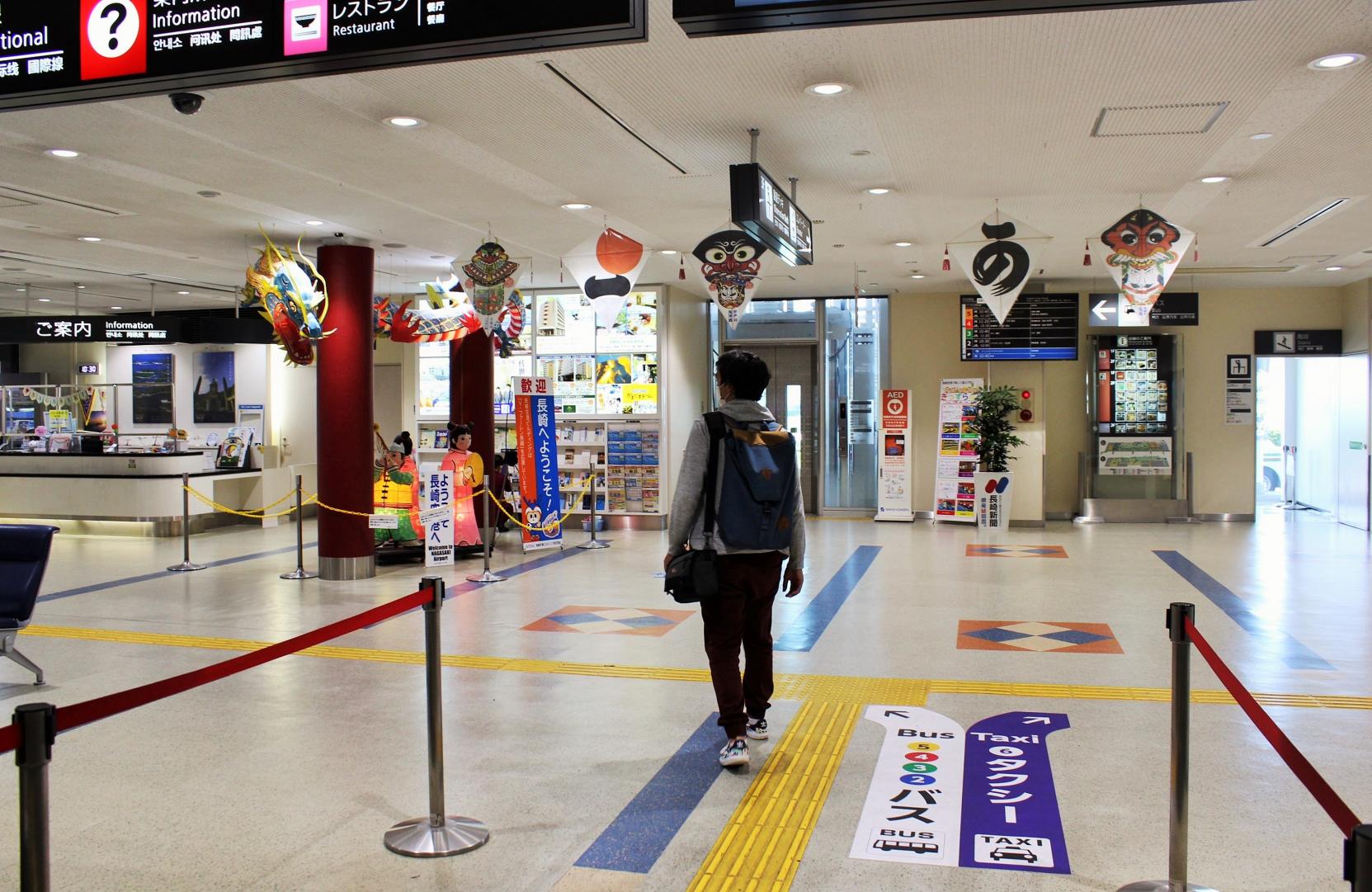
Step 2: Use Platform 5 for the Fastest Station Route
Platform 5 is the normal recommendation for Nagasaki Station. Look for wording referring to Nagasaki Shinchi, Nagasaki Station, Dejima Road or Cocowalk Morimachi.
The operator sometimes describes this as a non-stop or express section. That does not mean the bus runs from the airport to the station without any city stops. Once it reaches central Nagasaki, it serves Shinchi Chinatown, Chuo-bashi, Ohato, Goto-machi and Nagasaki Station.
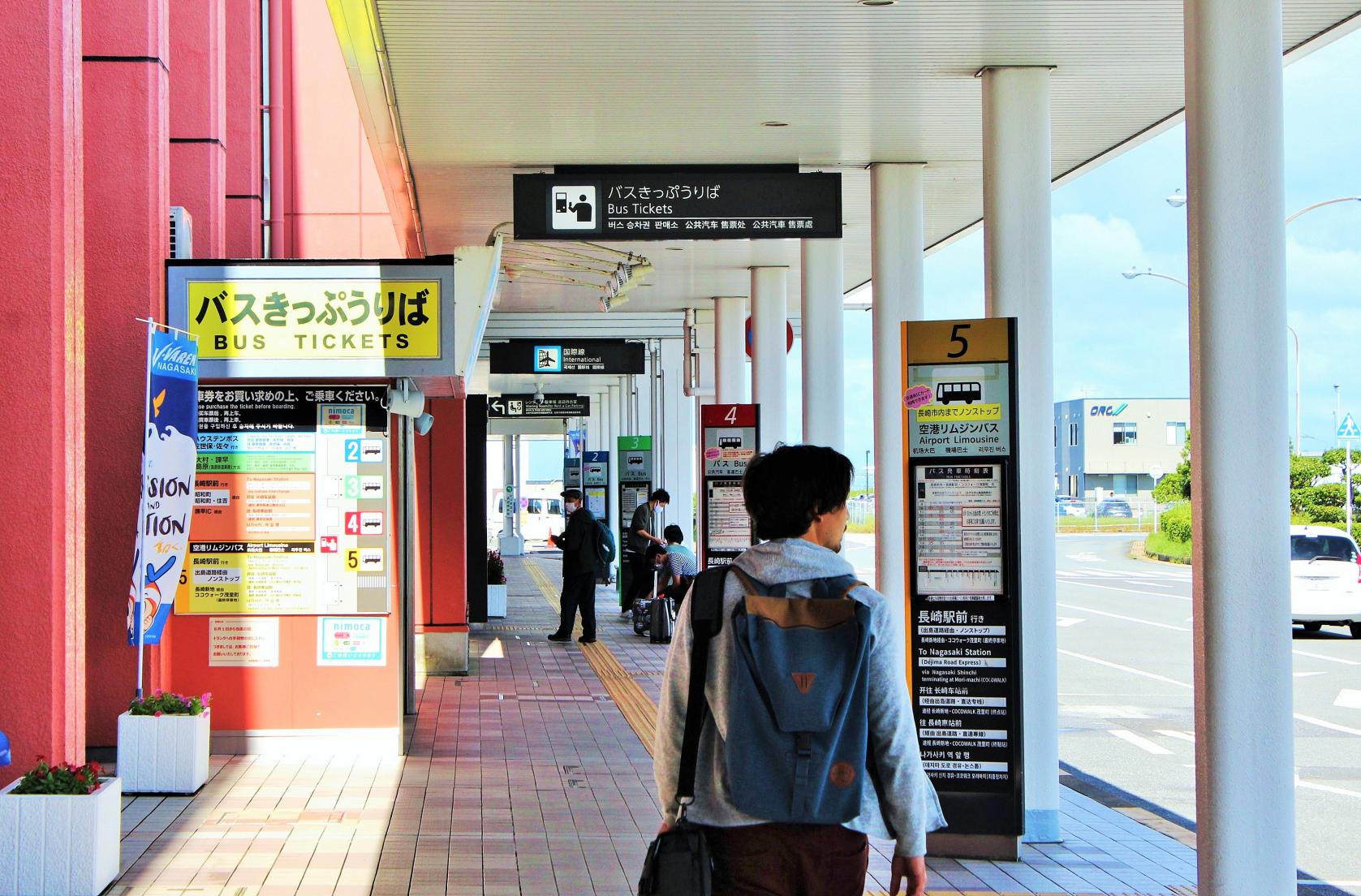
Step 3: Use Platform 4 Only When Its Stops Suit Your Destination
Platform 4 buses travel through Showa-machi and the Urakami side of the city. Important stops include Peace Park, the Atomic Bomb Museum and Urakami Station before the bus reaches Nagasaki Station.
This route is useful when your hotel or first attraction is in northern central Nagasaki. It is not the preferred route when your only objective is reaching JR Nagasaki Station as quickly as possible.
Step 4: Queue for the Correct Departure
Seats are not reserved. Passengers board in queue order, and the operating company may alternate between Nagasaki Prefectural Bus and Nagasaki Bus.
At busy holiday periods, move to the platform soon after collecting luggage rather than spending a long time shopping. If a bus fills, you may need to wait for a later service.
Step 5: Store Large Luggage Under the Bus
Airport limousine buses normally have an underfloor luggage compartment. Keep passports, medication, electronics, cash and other valuable items with you.
Confirm the destination before placing your suitcase in the hold, and check the luggage label or suitcase carefully when leaving. The operator makes passengers responsible for their own belongings.
Which Nagasaki Station Bus Stop Will You Use?
“Nagasaki Station” can refer to more than one airport-bus stop in the same general station district. This is one of the most useful details to understand before arrival.
Nagasaki Station Traffic Plaza
The Dejima Road service from the airport normally stops at Nagasaki Station Traffic Plaza. This is the most straightforward arrival point for JR trains, the station shopping complex and accommodation immediately around the station.
Nagasaki Prefectural Bus Terminal
The Showa-machi and Urakami route terminates at Nagasaki Station’s prefectural bus terminal. It remains within the station district but is a different bus facility from the Traffic Plaza.
The Return Stop Can Be Different
When travelling back to Nagasaki Airport, official instructions direct passengers to board inside the Nagasaki Station bus terminal. Do not automatically return to the exact curb where an airport-origin bus dropped you off.
Check the airport-bound platform before departure day, particularly when staying on the opposite side of the station complex.
Should You Get Off Before Nagasaki Station?
| Destination | Useful airport-bus stop | Practical advice |
|---|---|---|
| Shinchi Chinatown | Shinchi Chinatown | Get off here rather than riding to Nagasaki Station and returning by tram. |
| Dejima | Shinchi Chinatown or Ohato | The best stop depends on the side of Dejima where your accommodation is located. |
| Nagasaki Port | Ohato | Useful for the port, waterfront and some ferry connections. |
| JR Nagasaki Station | Nagasaki Station | Use platform 5 at the airport for the faster route. |
| Nagasaki Stadium City | Zenza-machi Nagasaki Stadium City | Stay on the bus beyond Nagasaki Station. |
| Peace Park | Peace Park | Use the platform 4 Showa-machi route. |
| Atomic Bomb Museum | Atomic Bomb Museum | Use the platform 4 route and avoid doubling back from the station. |
| Urakami Station | Urakami Station | Use platform 4. |
Bus Fares, Tickets and Payment
| Passenger or payment type | Current arrangement |
|---|---|
| Adult | ¥1,400 one way to central Nagasaki |
| Elementary-school-age child | ¥700 one way |
| Transport IC card | Compatible national cards such as Suica, PASMO, ICOCA, SUGOCA and nimoca are accepted |
| Cash | Accepted, but exact payment is strongly preferable |
| Contactless bank card | Listed for Nagasaki Bus-operated airport services; availability may depend on the operating vehicle |
| Advance reservation | Not required or available for ordinary seats |
| Airport ticket machine | Available before boarding |
Buying a standard ticket directly at the airport is sufficient; there is no practical reason to use a third-party platform for a single one-way airport-bus journey.
An IC card is the simplest option because it avoids checking which notes the onboard change machine can accept. Large ¥10,000, ¥5,000 and ¥2,000 notes cannot normally be changed on the bus.
Contactless credit-card payment is advertised by Nagasaki Bus for its airport liner, but the route is jointly operated. Travellers who want the least uncertainty should use an IC card or purchase a ticket before boarding.
Does the SUNQ Pass Cover the Airport Bus?
Yes. The Nagasaki Airport–Nagasaki route appears in the official SUNQ Pass coverage information. However, buying a multi-day pass for only this ¥1,400 journey does not make financial sense.
Consider the Kyushu SUNQ Pass when the same itinerary includes several eligible highway buses, local buses or ferries across northern Kyushu.
Before purchasing, add the ordinary fares for every planned journey and verify that each vehicle carries the SUNQ Pass logo. Some intercity services also require a separate seat reservation even though the fare is covered.
Travelling with Large Luggage
The limousine bus is generally practical with one ordinary suitcase because large bags can be placed in the luggage hold. You will not need to carry the suitcase through a train station or lift it onto a local commuter train.
Potential problems arise when:
- You are travelling with several oversized cases.
- The bus is heavily occupied during a holiday period.
- You are carrying a boxed bicycle or specialist sporting equipment.
- Your accommodation is far uphill from the final stop.
- You cannot lift or manoeuvre your luggage at the luggage compartment.
For valuable or fragile items, use a carry-on bag inside the passenger cabin. A taxi may be more practical when four passengers have enough baggage to fill most of a standard vehicle’s boot, although a larger vehicle may need to be arranged.
Families, Strollers and Older Travellers
Families with Children
The direct bus is normally easier than changing to rail. Families avoid station transfers, escalators and carrying luggage between platforms.
Children of elementary-school age pay ¥700. Younger-child fare rules can depend on whether the child occupies a separate seat and how many young children travel with each adult, so ask the operator when the group does not fit the ordinary adult-and-one-child pattern.
Fold a stroller before boarding when requested and place it in the luggage compartment. Keep a compact bag of food, nappies, medicine and entertainment in the cabin rather than underneath the bus.
Older Travellers
The bus is suitable for older travellers who can climb the vehicle steps and remain in a normal forward-facing seat. Platform 5 minimises both total travel time and unnecessary city stops.
A taxi becomes more attractive when the hotel is uphill, walking ability is limited or the group would otherwise need a tram connection after reaching Nagasaki Station.
Wheelchair Users
The airport limousine vehicles are highway-style coaches and are not equipped with boarding lifts. A folded wheelchair can normally be stored in the luggage compartment, but passengers must transfer to a regular bus seat.
An electric-wheelchair battery may need to be removed and carried separately. A companion is required when the passenger cannot board independently. When maintaining a safe seated position is not possible, the operator may be unable to accept the passenger.
Contact the operator or Nagasaki’s universal-tourism service before travelling. A prearranged accessible vehicle is safer than relying on an unconfirmed same-day airport taxi.
Taxi from Nagasaki Airport to Nagasaki Station
Taxis leave from platform 6 outside the terminal. The airport’s standard estimate is approximately 40 minutes and ¥12,400 to Nagasaki Station, with expressway and toll charges added.
| Group size | Approximate base fare per person if divided equally | Verdict |
|---|---|---|
| 1 person | About ¥12,400 plus tolls | Difficult to justify unless no bus is available |
| 2 people | About ¥6,200 each plus shared tolls | Comfortable but much more expensive than the bus |
| 3 people | About ¥4,135 each plus shared tolls | Reasonable for a late arrival or difficult hotel location |
| 4 people | About ¥3,100 each plus shared tolls | More competitive, provided the luggage fits |
The final meter fare can differ because of road conditions, exact drop-off location, time-based surcharges and tolls. Treat the airport figure as a planning estimate rather than a guaranteed fixed price.
A taxi is best for:
- Passengers arriving after the final bus
- Three or four people sharing the cost
- Families with exhausted young children
- Travellers with a hotel far from a bus stop
- Passengers carrying several heavy suitcases
- People who have arranged an accessible vehicle
Private Airport Transfer
A prearranged private transfer offers the same core advantage as a taxi: direct travel from the airport to a hotel without queuing for the limousine bus.
It may be preferable when a larger vehicle, child-seat request, flight monitoring or named-driver meeting service is essential. Confirm the luggage allowance, waiting-time policy, delayed-flight procedure and exact meeting location before payment.
For an ordinary journey to a hotel near Nagasaki Station, the limousine bus remains substantially cheaper. No stable product-specific Klook airport-transfer page was verified for inclusion, so official bus or taxi arrangements are more transparent for this route.
Can You Take a Train from Nagasaki Airport?
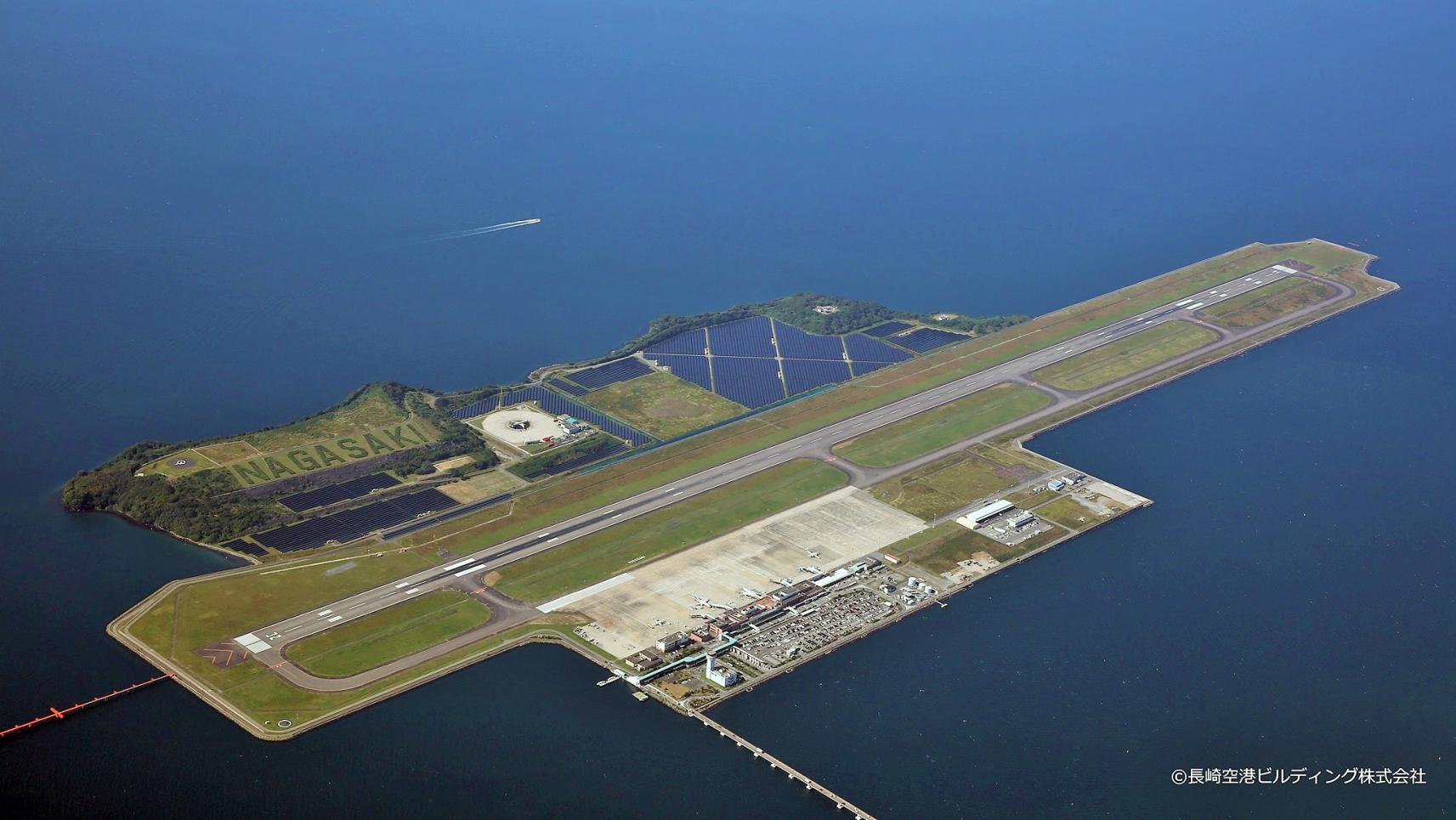
There is no railway station at Nagasaki Airport. Every rail itinerary begins with a bus or taxi to another station.
Option 1: Bus to Shin-Omura Station and Shinkansen
Buses for Shin-Omura Station leave from airport platform 2. The airport-to-station journey is approximately 13 minutes under normal conditions, and the published adult bus fare is ¥310.
At Shin-Omura, transfer to the Nishi-Kyushu Shinkansen for Nagasaki. The rail section is fast, but the complete journey also includes:
- Waiting for the airport bus
- Unloading luggage
- Entering Shin-Omura Station
- Buying or collecting a rail ticket
- Waiting for the next Shinkansen
- Carrying luggage through the station
This option works when a suitable bus and train connect closely or when you deliberately want to ride the Shinkansen. It is not the default fastest route.
Option 2: Taxi to Shin-Omura Station
The airport’s standard taxi estimate to Shin-Omura is approximately ¥2,470. A taxi reduces the first waiting period, but the passenger still needs to transfer to rail and pay the Shinkansen fare.
Option 3: Bus to Omura or Isahaya and Local Train
Local-train combinations are technically possible but slower and more complicated. They can be useful during exceptional road disruption or when the traveller has a specific stop along the rail corridor, but they are not recommended for a normal first visit.
Does the JR Kyushu Rail Pass Cover the Airport Transfer?
The JR Kyushu Rail Pass covers eligible JR trains, including the Nishi-Kyushu Shinkansen within the relevant pass area. It does not turn the airport limousine bus into a JR service and does not cover the normal platform 5 bus fare.
A pass is worth considering only when Nagasaki is part of a multi-city rail itinerary. Compare individual fares using the Kyushu Rail Pass guide before buying.
Eligible visitors can also compare the current JR Kyushu Rail Pass options. Do not buy one merely to travel from the airport to Nagasaki Station.
Should You Rent a Car?
Rental-car counters are available at Nagasaki Airport, but driving is unnecessary when the first hotel is beside Nagasaki Station and the itinerary focuses on central-city attractions.
Nagasaki’s steep terrain, tram network, one-way streets and central parking costs can make a car less useful than expected inside the city.
Renting becomes more practical when you will continue directly to places such as:
- Unzen
- Shimabara Peninsula
- Rural Omura Bay
- Saikai
- Remote coastal viewpoints
- Accommodation without practical public transport
Include fuel, expressway tolls, hotel parking and the time needed to collect and return the vehicle. For a city-only stay, take the bus and rent later only when leaving Nagasaki.
What to Do When Your Flight Arrives Late
The current monthly schedule lists final airport buses at 21:40, but this is not a guaranteed permanent departure time. A delayed flight can leave too little time to collect baggage and reach the platform.
Use this sequence:
- Check the live flight status before departure.
- Open the current airport-bus timetable.
- Identify both platform 5 and platform 4 departures.
- Go directly to the platform after collecting luggage.
- If the final bus has departed, join the taxi queue at platform 6.
- Contact the hotel when arrival will be after its normal check-in time.
Do not rely on the bus waiting for a delayed flight unless airport staff explicitly confirm that arrangement. Travellers on the final flight should keep sufficient funds or a payment card available for a taxi.
Arriving at Nagasaki Station
Nagasaki Station is more than a railway platform. The station district includes JR services, city trams, local buses, taxis, shops, restaurants, the Kamome Market and the tourist information centre.
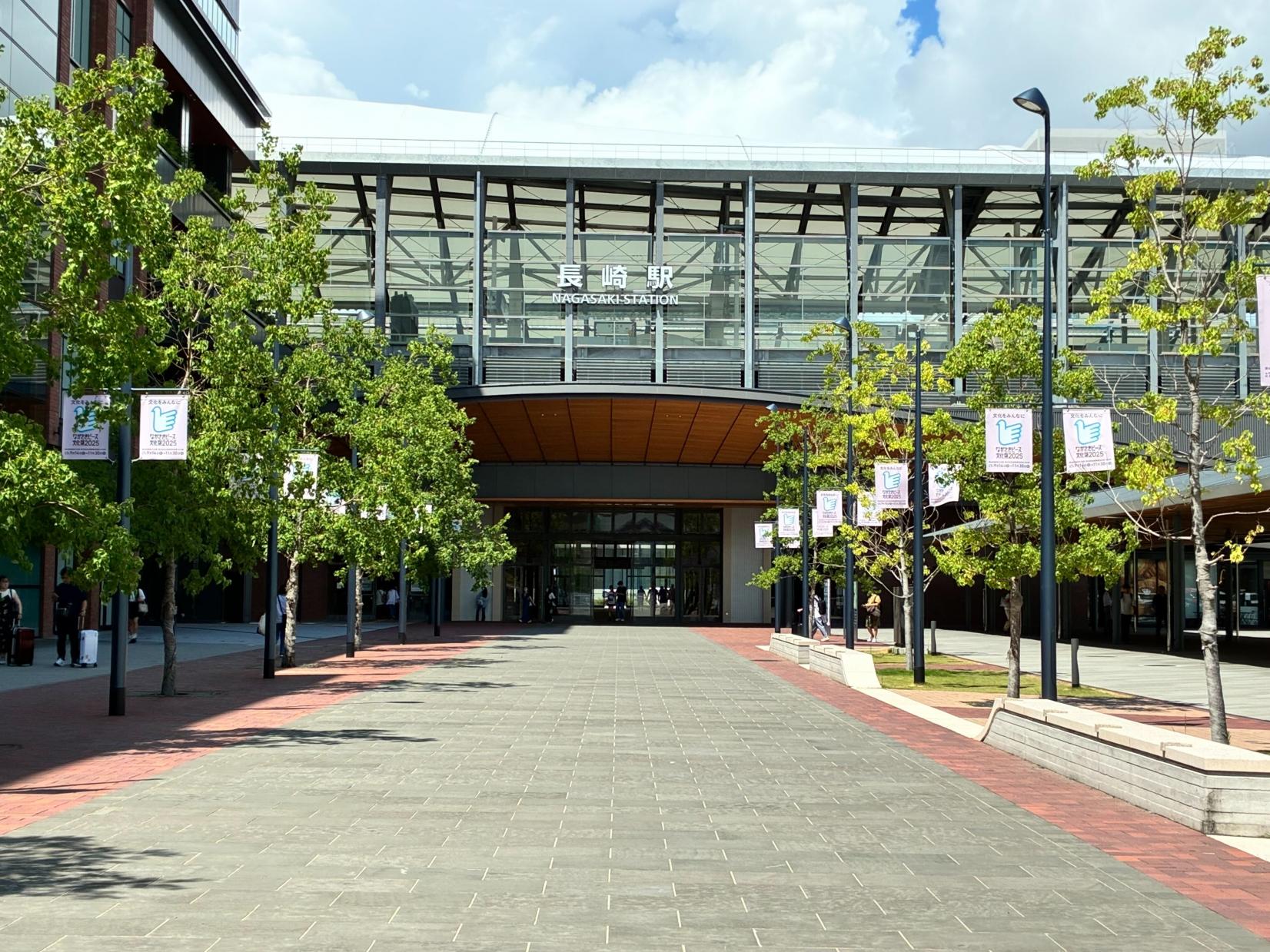
For JR Trains
Enter the station complex and follow signs for the conventional lines or Nishi-Kyushu Shinkansen. Coin lockers are available, but large lockers can fill during holidays.
For City Trams
Use the tram network for Peace Park, the Atomic Bomb Museum, Dejima, Chinatown, Oura Cathedral and other central districts. Check the tram direction before boarding because several lines share parts of the city-centre track.
For Hotels
Confirm which side of the station your hotel is on. A property described as “Nagasaki Station area” may still require crossing a major road, using an elevated walkway or walking several minutes with luggage.
For Food
Kamome Market and the station shopping complex are useful for a first meal, local souvenirs and supplies. This is especially practical after an evening arrival when smaller restaurants near attractions may already be closing.
Arrival-Day Itineraries
Late-Afternoon Arrival
Airport → Nagasaki Station → hotel check-in → station-area dinner → short waterfront or city-centre walk
Do not schedule a distant attraction with a fixed closing time. Flight delays, baggage collection and road traffic can remove an hour from the plan.
Early-Afternoon Arrival
Airport → Shinchi Chinatown stop → hotel luggage drop → Chinatown → Dejima → waterfront → Nagasaki Station or hotel
Getting off at Shinchi Chinatown can save a return tram journey when your accommodation accepts luggage before check-in.
Evening Tour Option
Travellers arriving early enough for a confirmed 16:30 meeting can consider the Nagasaki Mount Inasa and Glover Garden evening tour. Its meeting point is listed at the tourist information centre inside Nagasaki Station.
This is unsuitable for a flight scheduled close to the meeting time. Allow a generous buffer for baggage collection and road delays.
Full Sightseeing Day from Nagasaki Station
A regular sightseeing bus can be useful for travellers who prefer not to plan multiple tram and walking connections independently. Current packages combine major areas such as Peace Park, the Atomic Bomb Museum, Dejima, Oura Cathedral and Glover Garden.
The Nagasaki Station sightseeing bus is most suitable for a full day after an overnight stay, not immediately after an unpredictable flight arrival.
Where Should You Stay?
Stay Near Nagasaki Station When:
- You are arriving late.
- You will depart early by JR train.
- You have large luggage.
- You are taking an organised tour from the station.
- Nagasaki is one stop in a wider Kyushu rail itinerary.
Stay Near Chinatown or Hamanmachi When:
- You prioritise restaurants and evening street activity.
- You want to walk to Dejima and central shopping streets.
- You are comfortable using the tram to reach JR Nagasaki Station.
Stay Near Peace Park or Urakami When:
- Your main purpose is visiting the peace-related sites.
- You prefer a quieter district.
- You plan to use the platform 4 airport bus.
An overnight stay is strongly recommended for a meaningful Nagasaki visit. Arriving from the airport, visiting the main historical districts and leaving for another city on the same day produces a rushed itinerary.
Travellers deciding between a Nagasaki stay and a Fukuoka base can compare the Fukuoka to Nagasaki transport guide and the broader best day trips from Fukuoka.
First-Time Mistakes to Avoid
- Looking for an airport railway station. Nagasaki Airport has no direct rail connection.
- Automatically boarding at platform 4. Platform 5 is normally faster for JR Nagasaki Station.
- Assuming “non-stop” means no central stops. The Dejima service stops at several city-centre locations.
- Using an old fare from a blog or review. The current adult fare is ¥1,400.
- Believing a taxi costs only a few thousand yen. The official airport estimate is around ¥12,400 plus tolls.
- Trying to reserve an ordinary airport-bus seat. Boarding is first-come, first-served.
- Waiting to change a large banknote onboard. Several high-value notes cannot be changed.
- Buying a JR pass for the airport bus. JR passes do not cover the direct airport limousine bus.
- Buying a SUNQ Pass for one ride. It is useful only when several other covered journeys justify the cost.
- Going to Edomachi on an outdated route map. Airport-origin Dejima buses no longer stop there from April 2026.
- Returning to the airport from the arrival curb. Airport-bound buses board from the station bus terminal.
- Underestimating road delays. The published time is not guaranteed during congestion.
- Leaving valuables in the luggage hold. Keep essential and fragile items in the cabin.
- Assuming coaches have wheelchair lifts. Passengers must normally transfer to a standard seat.
- Planning a fixed-time attraction immediately after landing. Flight and road delays make the schedule unreliable.
Frequently Asked Questions
Is there a direct bus from Nagasaki Airport to Nagasaki Station?
Yes. Airport limousine buses travel directly to the Nagasaki Station area without a transfer.
How much is the airport bus?
The current one-way fare is ¥1,400 for adults and ¥700 for elementary-school-age children.
How long does the bus take?
The platform 5 Dejima Road service normally takes approximately 43 minutes. The platform 4 route through Showa-machi and Urakami normally takes approximately 55 minutes.
Which airport platform should I use?
Use platform 5 for the fastest journey to Nagasaki Station, Chinatown and the central waterfront. Use platform 4 for Peace Park, the Atomic Bomb Museum and Urakami.
Does the bus require a reservation?
No. Passengers board in queue order.
Can the airport bus sell out?
There are no reserved seats, so a full departure is possible during busy periods. Move to the platform soon after collecting luggage.
Can I use Suica or another IC card?
Yes. Nationally compatible transport IC cards, including Suica, PASMO, ICOCA, SUGOCA and nimoca, are accepted.
Can I pay by credit card?
Nagasaki Bus lists contactless bank-card payment on its airport liner. Because different operators share the route, an IC card or advance ticket is the least uncertain method.
Can I pay with cash?
Yes, but exact fare is preferable. Do not rely on changing ¥10,000, ¥5,000 or ¥2,000 notes onboard.
Where does the bus stop at Nagasaki Station?
The airport-origin Dejima Road service normally uses Nagasaki Station Traffic Plaza. The route through Urakami serves the prefectural bus terminal.
Where do I board when returning to the airport?
Official instructions direct airport-bound passengers to the Nagasaki Station bus terminal. Verify the platform before travel.
Is there a direct train from Nagasaki Airport?
No. You must first take a bus or taxi to Shin-Omura, Omura or Isahaya.
Is the Shin-Omura Shinkansen route faster?
Not consistently. The train itself is fast, but waiting and transferring often make the direct airport bus simpler and equally quick overall.
Does the JR Kyushu Rail Pass cover the airport bus?
No. It may cover the eligible rail section from Shin-Omura, but it does not cover the ordinary direct limousine bus.
Does the SUNQ Pass cover the airport bus?
Yes, the route is included in the official coverage. The pass is worthwhile only when you will use several other covered buses or ferries.
Can I bring a large suitcase?
Yes. Ordinary suitcases can normally be stored in the underfloor luggage compartment.
Can I take a stroller?
Usually yes, but it may need to be folded and stored beneath the bus.
Is the bus wheelchair accessible?
The highway-style coaches do not have wheelchair boarding lifts. The wheelchair can normally be stored, but the passenger must transfer to a standard seat.
How much is a taxi to Nagasaki Station?
The airport’s standard estimate is approximately ¥12,400, with expressway and toll charges added.
What should I do if my flight arrives after the last bus?
Use the taxi stand at airport platform 6 or arrange a private vehicle. Notify the hotel when arriving after its normal check-in time.
Should I get off at Chinatown instead of Nagasaki Station?
Yes, when your hotel or first destination is near Shinchi Chinatown or Dejima. It avoids travelling to the station and returning by tram.
Should I rent a car?
Not for a city-centre stay. Rent a car when continuing to rural Nagasaki Prefecture, Unzen, Shimabara or places poorly served by public transport.
Final Verdict
For most travellers, take the airport limousine bus from platform 5 to Nagasaki Station via Dejima Road. It provides the best balance of cost, simplicity and travel time.
Expect to pay ¥1,400 per adult and spend approximately 43 minutes on the bus under normal road conditions. No reservation is required, and large luggage can normally be stored below the passenger cabin.
Platform 4 is not the wrong bus, but it is better suited to Peace Park, the Atomic Bomb Museum and Urakami. Travellers going directly to JR Nagasaki Station should normally wait for platform 5.
A taxi is useful after the last bus, for passengers with restricted mobility or when three or four people can share the fare. Its primary advantage is door-to-door travel; it is not dramatically faster than the bus.
Do not transfer to Shin-Omura and the Shinkansen merely because trains appear faster. Unless the connection is unusually favourable or you already hold a suitable rail pass, the extra transfer adds work without a dependable time saving.
Finally, check the official monthly timetable before flying. The bus schedule follows changing flight operations, and the exact first and final departure times should never be assumed from an old travel article.