
Nishiki Market is worth visiting for a compact introduction to Kyoto food: yuba, pickles, dashi-rich omelettes, sweets and the ingredients behind the city’s cooking. Give it about 90 minutes to two hours, then continue through downtown Kyoto toward the river and Gion. It works best as a food-and-shopping stop within a wider day, rather than a destination that needs your entire afternoon.
The two rules that matter most are simple: shops keep their own hours, and you should not eat while walking. Choose a few foods, finish each purchase where the seller permits, and leave room for an actual meal if small tastings will not satisfy you.
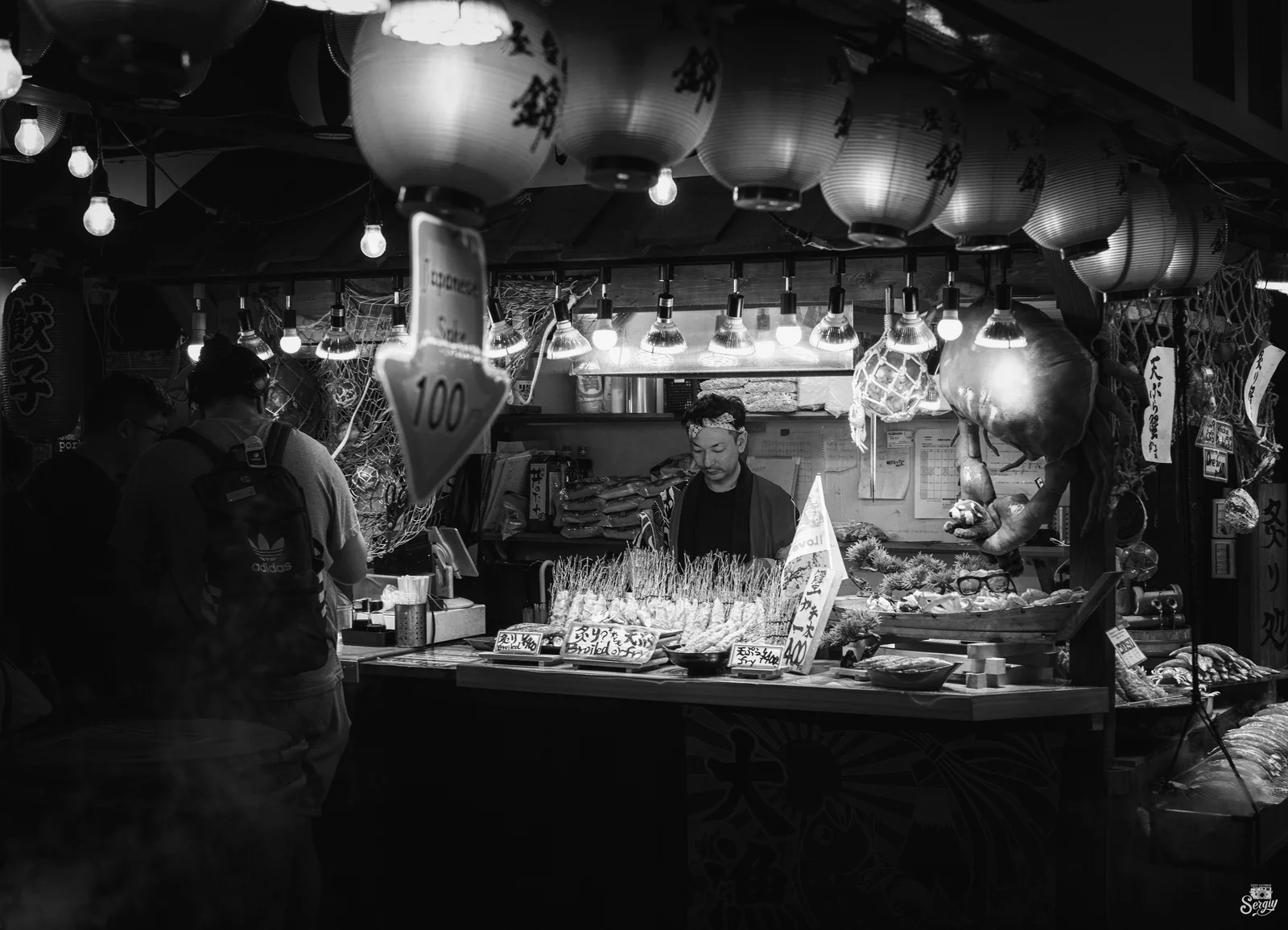

Nishiki Market at a glance
| Planning question | Practical answer |
|---|---|
| Where is it? | Downtown Kyoto, along Nishikikoji between Takakura and Teramachi |
| Do you need a ticket? | No market admission ticket; food, shopping and optional tours cost extra |
| When should you visit? | Late morning is a useful starting point; check any must-visit shop first |
| How long should you allow? | About 90 minutes to two hours for browsing and several stops, longer for a seated meal |
| Is Wednesday a closing day? | Many shops close, but the whole street does not share one closing day |
| Can you eat while walking? | No. Eat at the shop’s permitted space or take your purchase away |
Nishiki Market is free to enter. This optional paid food tour is not an admission ticket; book it only if you want explanations and help ordering.
Opening hours: plan around shops, not a single market timetable
There is no official opening time that applies to every business. Wednesday closures are common; check the shop-hours and facilities information when choosing your stops. Most shops usually trade during the year-end shopping period, while many close from January 1 to 3. Confirm holiday dates with individual shops rather than assuming the late-December pattern continues into New Year. A shop directory is more useful than a search result promising that the whole market opens at 9am.
For a first visit, aim for roughly 10:30–11:00 and keep lunch flexible. This is an itinerary recommendation, not a guarantee that every shutter will be up or every counter quiet. Arriving at dawn makes little sense for a tasting trip; leaving the visit until late afternoon risks missing the places you came to see.
Examples that show why individual hours matter
| Shop | Hours and closing days | What to check |
|---|---|---|
| Konnamonja | 10:00–18:00; irregular holidays | Useful for soy-milk sweets and tofu products |
| Miki Keiran | Weekdays 9:00–16:30; weekends and holidays 9:00–17:00 | An earlier finish than some neighbouring shops |
| Yubakichi | 9:00–18:00; Sundays and the fourth Wednesday closed | Sunday matters if yuba shopping is a priority |
These hours apply to individual shops, not the whole market. Check the shop again shortly before travelling, especially during holidays. If you can only visit on Wednesday, select two or three confirmed-open stops instead of cancelling the whole downtown day.
What to eat: choose Kyoto specialities before filling up
Yuba and tofu
Yuba is the delicate skin that forms on heated soy milk. At Yubakichi, fresh and dried versions sit alongside other soy-based products. This is a useful stop for understanding an ingredient that appears throughout Kyoto cuisine, whether you buy something to taste or something for cooking.
Konnamonja offers a more immediately snack-friendly introduction through soy-milk doughnuts and soft-serve, as well as tofu and fresh yuba. Ask what can be eaten immediately and where to stand before ordering. A bag shared between two people leaves more room for the next stop.
Dashimaki omelette
Miki Keiran specialises in Kyoto-style rolled omelettes. Its dashi uses kombu and bonito, so the flavour is more than simply egg. Buy an appropriate portion for your plan: a takeaway omelette for later is a different purchase from a bite you expect to eat on the spot.
Kyoto pickles
Uchida is a good reference point for Kyoto pickles, including cucumber and daikon preparations. Pickles make more sense as part of a meal or a considered food souvenir than another item to rush through in the aisle. Ask about refrigeration and the use-by date before buying for a long travel day.
Kitao: Tanba black soybeans and kinako sweets
Kitao, founded in 1862, specialises in Tanba beans. Look for black-soybean sweets, tea and kinako, the roasted soybean flour used with Japanese sweets. Its shop is listed as 9:00–18:00, with the upstairs café 11:00–18:00; Tuesdays, Wednesdays and some irregular dates are closed. In autumn, black-soybean edamame adds a seasonal reason to stop.
KAI: takotamago and savoury snacks
KAI sells furikake rice toppings and savoury snacks. Its distinctive takotamago is a small octopus with a quail egg inside the head. Choose it if the combination appeals, then eat only where staff permit. Listed hours are 10:00–18:00, with irregular holidays.
Kyotanba: roasted chestnuts
Kyotanba is the stop for roasted chestnuts, including its Yakipon product. Tanba chestnuts appear in autumn, so check the origin and seasonal selection rather than assuming every bag is the same. The listing gives 9:30–20:00 with seasonal variation; do not use this one shop’s later finish as the closing time for the whole market.
One sweet and one item you are curious about
Finish with a small sweet rather than treating every attractive display as a compulsory stop. If you have already eaten tofu, omelette and pickles, use your remaining appetite for something unfamiliar. The aim is variety, not completing a fixed list of ten shops.
Vegetarian travellers should ask about stock and seasonings, even when the main ingredient is tofu or vegetables. A dish’s appearance is not enough to establish its ingredients. For allergies or strict dietary requirements, use a clear written explanation and choose a seller who can answer your questions.
Shopping beyond snacks
Nishiki is also useful for people who cook. Aritsugu sells knives and cooking utensils; Tanabeya specialises in dried ingredients and seasonings. Set aside proper browsing time if either is your main reason for coming.
Before buying a knife, discuss the intended use and maintenance rather than choosing by appearance alone. For food souvenirs, look for packaging that explains storage and ingredients. Check your destination’s import requirements before taking food home. Fragile tableware and heavy kitchen equipment are easier to manage when you can return to your accommodation afterwards.
Eating etiquette, photographs and practical comfort
Eat at the shop where you bought your food or take it away; see the market visitor guidance for practical etiquette. Do not continue down the arcade with an open skewer or drink. A nearby shop’s seats are not automatically available for another seller’s customers.
- Ask where you may eat before paying for a ready-to-eat item
- Keep shop entrances, side streets and delivery routes clear
- Ask before photographing staff or close-up displays, and respect any signs
- Follow the seller’s instructions for packaging and rubbish
- Put away your umbrella under the arcade and keep wet items out of the walking line
Bring some yen and check payment methods before ordering. Store large luggage at your accommodation or a suitable station facility first; even a short arcade becomes awkward with a suitcase and shopping bags. The covered street helps in rain, but the routes to your next destination are not all sheltered.
Families, wheelchairs and rest stops
Keep a family visit short enough that children can enjoy two or three stops without constant queueing. With a wheelchair or stroller, avoid planning around a crowded lunchtime passage. The public street is not fully accessible for every mobility aid; individual shop thresholds and crowd conditions still matter.
The market office restroom is available from 10:00 to 17:00 and closes January 1–4. Check the facilities information rather than assuming every restaurant offers public toilets. Plan a seated café break outside the busiest stretch if anyone needs a dependable rest.
How to get to Nishiki Market
The station-to-market access information lists approximate walks of three minutes from subway Shijo or Hankyu Karasuma and four minutes from Hankyu Kyoto-Kawaramachi. These are station-area estimates, not a promise from every platform or exit; underground passages add time.
From Kyoto Station
Take the Karasuma subway to Shijo, then continue on foot toward the market’s western side. Follow Shijo-dori east toward Daimaru and turn north along Takakura-dori to Nishikikoji. This is an easy way to avoid making a downtown food stop depend on road traffic. Follow the current station map if you need an elevator.
From Osaka
Hankyu is convenient when your Kyoto destination is downtown rather than Kyoto Station. Karasuma suits a west-to-east market walk; Kyoto-Kawaramachi suits plans around the river. Compare the alternatives in our Osaka to Kyoto transport guide.
From Gion
Keihan Gion-Shijo is useful if you are arriving on the Keihan Line. Walk west across the river toward the downtown shopping streets, then approach Nishiki from Teramachi. Starting in Gion also makes an east-to-west market walk sensible, finishing toward Karasuma rather than retracing the arcade. Allow time for crossings and shopping stops rather than treating the map’s straight-line distance as your actual journey.
A relaxed Nishiki Market and Gion half-day
Use the official Nishiki Market shop map to locate your priority stops before entering the arcade.
- Late morning: arrive from Karasuma or Shijo and enter from the western side
- Browse first, then choose two or three food stops; use each shop’s permitted eating space
- Continue east to Teramachi and nearby Nishiki Tenmangu for a short visit
- Take a seated lunch or café break if needed, then walk toward the Kamo River
- Cross into Gion for an afternoon walk, following local photography and private-lane signs
Allow roughly four hours for this combination, with more time for a full meal or serious shopping. This is a suggested pace, not an attraction timetable. If you want to include Kiyomizu-dera, give the temple and its hillier approach their own substantial block of time rather than bolting them onto the end of a rushed market visit.
Travellers choosing a hotel can use our Kyoto neighbourhood and hotel guide: a downtown base is especially convenient for this food-and-shopping route.
Full-day alternative: Kiyomizu-dera first
For an early-start day, visit Kiyomizu-dera first, walk down Sannenzaka and Ninenzaka, then continue through Yasaka Shrine and Gion before crossing downtown. Aim for Nishiki around 10:30–11:00 only if you start early and keep the temple district selective; allow a later market lunch if you linger. Kiyomizu-dera opens at 6:00, but the approach-street shops keep their own hours. Spend the afternoon shopping downtown and choose the Kamo River or Pontocho for the evening.
Keep Arashiyama for a separate half-day or longer. Adding western Kyoto to Nishiki, Gion and the eastern temple district makes this route unnecessarily rushed. Our Kyoto travel guide explains how to divide the city into workable sightseeing areas, including Arashiyama and the Yasaka/Gion area.
Rainy-day alternative: stay downtown
After Nishiki, explore the Teramachi and Shinkyogoku shopping arcades, then continue toward Shijo-Kawaramachi for department stores, cafés or a food hall. This is an easier wet-weather choice than extending the walk into Higashiyama. Keep an umbrella for street crossings and uncovered stretches; the whole route is not continuously indoors.
Seasonal food and timing
In spring, allow more flexibility during Kyoto’s cherry-blossom travel season. Summer calls for shorter outdoor walks and a cool break; hamo, or pike conger, is a seasonal Kyoto speciality to look for where available. Autumn brings Tanba chestnuts and black-soybean edamame at specialist shops. Availability depends on the harvest and seller, so treat these as things to look for rather than promised daily menu items.
The market is roughly 390 metres long, but frequent stops take much longer than walking its length. For a short browse and souvenirs, 60–90 minutes may be enough; keep 90–120 minutes for food stops. Late afternoon can bring sell-outs or closing shutters. Plan evening food around Kawaramachi, Gion or Pontocho instead of expecting the market to serve as a night-food street.
Do you need a Nishiki Market food tour?
Independent browsing is straightforward if you are happy comparing displays and asking questions. A guide is more useful when you want explanations of ingredients, help ordering or a structured introduction to Kyoto food.
The Nishiki Market and depachika tour combines the arcade with a department-store food hall. Compare the selected package’s language, tastings, meeting point and dietary provisions before booking; buying a tour is optional and is not an admission requirement.
Nishiki Market FAQ
Is Nishiki Market free?
You can browse the shopping street without an admission ticket. Pay for the food, goods or optional guided experience you choose.
Is it worth visiting if I have already been to Kuromon Market?
Yes, if Kyoto ingredients and kitchen shopping interest you. If you only want another round of general street snacks and your itinerary is crowded, choose one market and use the saved time elsewhere.
Can Nishiki replace lunch?
It can, but several small snacks may not feel like a balanced meal. Either plan one substantial stop or keep room for a restaurant afterwards.
Should I visit at night?
Choose daytime for the market shops. Treat evening downtown dining as a separate plan and verify the restaurant you want rather than expecting daytime stalls to remain open.
What is the simplest first-visit plan?
Choose three priorities, arrive in late morning, walk west to east, and finish near Teramachi. Stay flexible when a shop is closed or a queue would take too much of your day.
What time does Nishiki Market open and close?
Each shop sets its own hours. Choose the shops you most want to visit and check them individually; the arcade does not operate like a single attraction with one opening time.
Is Nishiki Market open on Wednesdays?
Some shops trade on Wednesdays, but many close. A Wednesday visit can still work if you check your priority stops beforehand and accept a smaller choice.
Which station should I use?
Choose the approach that fits your journey: Shijo or Karasuma is convenient for the western side, while Kyoto-kawaramachi suits the eastern side and a continuation toward Gion. Check the actual exit before leaving the station.
Can I eat while walking through Nishiki Market?
No. Finish your food in the space permitted by the seller or take it away. Buying a snack does not give you permission to eat in another shop’s doorway.
Do I need to book a guided food tour?
No booking is required to browse independently. A tour is useful if you want help with ingredients and ordering; check its language, tastings and dietary provisions before choosing one.