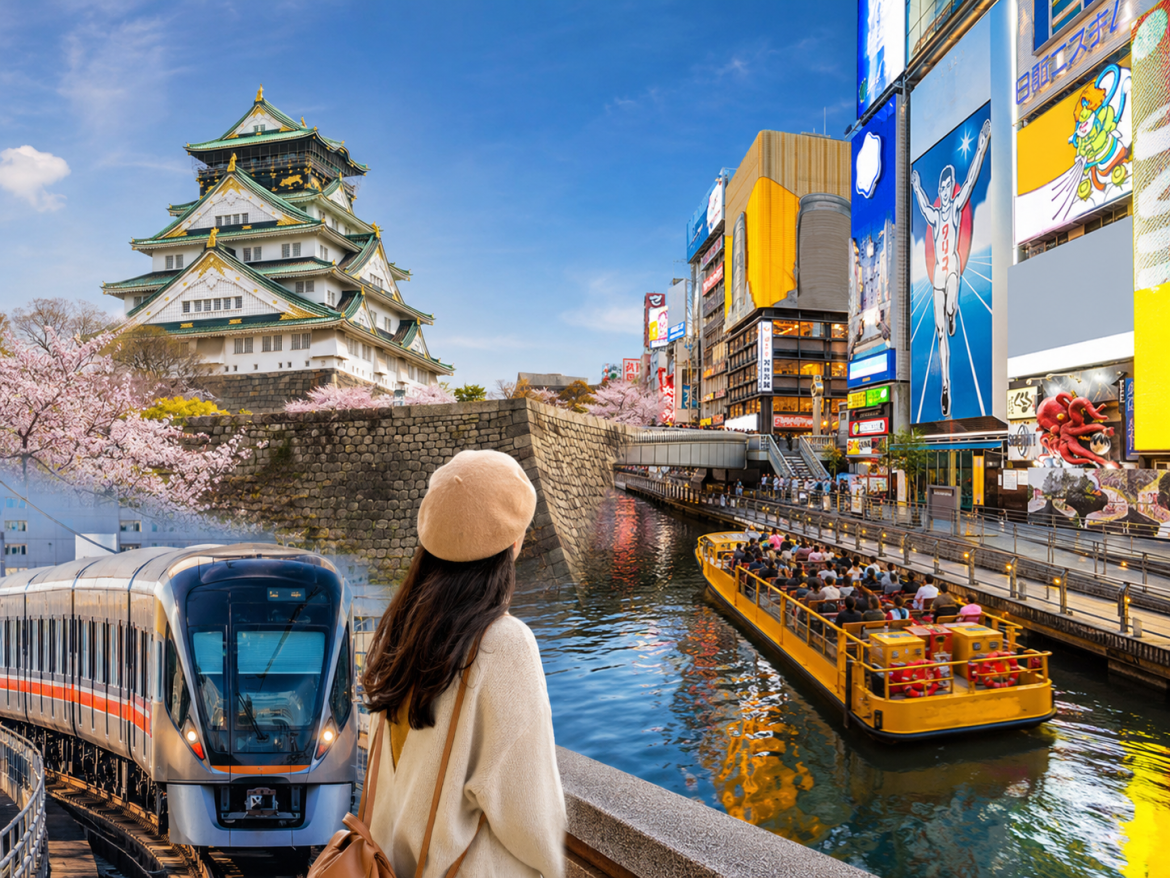

Is the Osaka Amazing Pass worth it?
The Osaka Amazing Pass combines admission to participating attractions with travel on specified Osaka rail and bus services. It is most useful on a planned sightseeing day. A day spent shopping in Shinsaibashi, eating in Dotonbori or visiting only one paid attraction may be better paid for with an IC card and individual tickets.
Start with the places you actually want to visit, confirm their admission conditions, then compare their ordinary prices plus eligible transport with the pass. There is no dependable “three attractions always pays” rule. Closures, time restrictions and children’s lower individual prices can change the result.
Choose a base using the Osaka accommodation guide, and use the Osaka trip guide to decide how much of the trip belongs in the city. The pass does not need to cover every day.
Osaka Amazing Pass offers: check the current 137 card first
For an Osaka Amazing Pass promotion, start with the relevant Klook 137 campaign card, checking its date, pass variant and claim method before opening the product. One-day, two-day and 28-hour Kansai Airport passes are different options. A campaign naming Osaka Amazing Pass does not establish that every option participates. Offers change by campaign round. Treat a pass option as a BOGO deal only when the current card names that option and the saving appears at checkout.
The Taiwan campaign’s published recurring Monday rules list a 22:00 release for Taiwan users ordering while signed into the Klook app; website checkout is excluded. For the coupon-based BOGO, select two tickets for the same qualifying option. Each member can use it once, with at most one ticket’s value discounted per order, even when buying more. These are general Monday rules, not confirmation of an Osaka pass variant in the October 12 drop.
Allocation follows completed checkout, so obtaining a code does not reserve inventory. Use it before its displayed expiry and do not combine it with other coupon offers. A used coupon is not restored after cancellation. Promotional rules also restrict cancellation or changes after confirmation; check both the current promotion and the selected product’s detailed policy before paying.
How to check and claim a 137 offer
- Find the current card explicitly naming Osaka Amazing Pass and confirm its campaign date and release time.
- Expand the conditions for the participating one-day, two-day or 28-hour option, age category, quantity, account market and currency.
- If the campaign requires the app, sign in there and follow that card’s coupon or promotional-option instructions. An ordinary website quote is not the result of claiming the offer.
- Choose the required quantity and apply the designated coupon or option. Do not assume other sitewide codes stack.
- Before paying, inspect the ticket count, final amount, ticket-use period and cancellation conditions. A basket without the expected saving is not confirmation of a successful claim.
The claim window, coupon expiry and pass-use period are separate. Keep the terms for that specific round. A crossed-out product price, cross-sold package or older campaign screenshot does not replace the current card.
Prices, versions and validity
| Version | Price | When it fits | Important distinction |
|---|---|---|---|
| Standard one-day | ¥3,500 | One concentrated Osaka sightseeing day | A service day, not 24 hours from activation |
| Standard two-day | ¥5,000 | Two consecutive sightseeing days | Each participating attraction can be used only once across the pass period |
| Itami Airport version, one/two days | ¥3,800 / ¥5,400 | A plan using its specified airport/northern rail extensions | Not a Kansai Airport ticket |
| Kansai Airport version, 28 hours | ¥5,300 | Arrival from KIX followed by enough covered city sightseeing | Includes one-way Nankai travel from KIX toward Namba, not the reverse airport journey |
The current edition details specify that the standard and Itami day products run on a 3:00 a.m.–2:59 a.m. service-day basis. Start them after 3:00 a.m. on the intended day. The two-day version requires consecutive days; it is not two freely chosen days or 48 hours from first use.
The 2026–2027 edition must be activated within three months of purchase and by March 31, 2027. Standard one-day use ends by March 31; the second day of a qualifying two-day ticket can extend to April 1. KIX’s 28-hour version is a separate rolling-hour product, sold from October 1, 2026, with its own final validity on April 1, 2027.
There is no discounted child Amazing Pass. Before buying one for a child, add up the child’s actual attraction and transport prices. A pass that is good value for an adult can be poor value for a younger companion.
How to buy and use the digital pass
Use the official purchase and use guide, or check the exact version and redemption instructions on the Osaka Amazing Pass reseller listing. A reseller voucher is not automatically the live admission QR code. Complete the required ticket setup before reaching the gate.
The service needs a charged internet-connected smartphone and the required browser camera setting. Activate just before the planned use; screenshots and printed screens are not accepted substitutes. At a QR-compatible rail gate, follow the ticket’s entry/exit procedure. At stations without a compatible gate, follow the official staff or camera-inspection instructions. For buses, authenticate when alighting; attractions have their own reader or staff check.
The official service permits up to four passes per purchase and explains distribution or group use. Follow those instructions rather than treating one passenger’s pass as transferable between people during the day.
Under the official refund conditions, an unused valid ticket may be refundable through the seller, but an activated/used ticket is not. A closed attraction, bad weather or a service disruption does not automatically create a refund entitlement. Read the seller’s conditions before paying, and postpone activation if the day’s key plans are uncertain.
What transport is included?
The standard version covers Osaka Metro, New Tram and eligible Osaka City Bus services, plus the mapped city-area sections of Hankyu, Hanshin, Keihan, Kintetsu and Nankai. Both standard durations use the current mapped coverage; do not copy the different one-day/two-day rules of older editions.
Open the official standard-pass route map and check the actual endpoint of each trip. The map includes Yumeshima on the Chuo Line, but it does not include all suburban branches merely because they belong to a participating company. Osaka City Bus exclusions include the IKEA Tsuruhama and Universal Studios Japan shuttle services.
- JR lines and the Shinkansen are excluded
- Travel beyond the marked private-rail sections needs separate payment
- Reserved-seat limited-express services require the applicable supplement
- The ordinary city pass does not include the full Kansai Airport journey
- Itami and KIX editions have different airport coverage; inspect the map for the purchased version
The Itami version adds specified Osaka Monorail, Kita-Osaka Kyuko and Hankyu sections. The KIX version includes one Nankai journey from Kansai Airport toward Namba, with no stopover between Kansai Airport and Sakai; it does not cover the reverse journey to the airport, airport limousine buses or the reserved-seat charge on Rapi:t.
For a separate airport comparison, see Kansai Airport to Osaka. For travel beyond the city, the Osaka–Kyoto transport guide helps distinguish JR, Hankyu and Keihan rather than assuming the Amazing Pass covers the entire route.
Attractions: the conditions that change your plan
Read the current participating-attraction list before choosing a date. Entry is subject to opening hours, pass-specific restrictions and availability. Special exhibitions, experiences or premium options may cost extra. The two-day and 28-hour products do not allow a repeat visit to the same attraction merely because another day has started.
Osaka Castle Museum
The castle is a good morning anchor if you want to enter the main tower as well as walk around the park. The listed pass admission includes the main tower and Toyotomi Stone Wall Museum on the same day. Allow roughly 1½–2½ hours as a planning estimate, more if you want a long park walk or encounter queues. If you only want exterior photographs, do not count a paid museum ticket as a saving you would otherwise have made.
Umeda Sky Building Kuchu Teien Observatory
Plan included admission before 15:00. From 15:00, the current pass benefit is a 10% admission discount rather than included entry. This makes an automatic “free sunset/night-view stop” misleading. If nighttime is your priority, budget the paid admission and compare the pass again. The walk from the main Umeda station area also needs time.
Tsutenkaku and Shinsekai
Tsutenkaku works naturally with Shinsekai and the Tennoji area. The current pass instructions require an on-site time-slot booking for the observation deck; arrive with flexibility rather than assuming immediate admission. The Tower Slider and other experiences have their own age, height, clothing or weather rules, so do not treat general observation-deck entry as unrestricted access to every activity.
Cruises around the castle and central Osaka
Boat trips can be a pleasant change from walking, but each operator has a different ticket procedure. Aqua-Liner requires exchange for the designated boarding pass and excludes the listed March 25–April 10 cherry-blossom period. Osaka-jo Gozabune also requires a timed ticket exchange. River conditions, maintenance and weather can interrupt service. Never count several cruises as guaranteed savings before checking their actual departure times and available seats.
Tempozan Giant Ferris Wheel and the bay area
The wheel can be paired with Tempozan Marketplace for a more concentrated family outing. Kaiyukan aquarium admission is separate from the Amazing Pass; being next door to an included attraction does not make it included. Allow around 30–60 minutes for the wheel as an itinerary estimate, with extra margin for queues. A bay-area day is better kept separate from an ambitious castle–Umeda–Shinsekai loop.
Tombori River Cruise in Dotonbori
Exchange for a same-day timed boarding ticket at the reception desk. Evening departures can fill, and telephone reservations are not accepted. If a cruise is important, check availability earlier in the day, then plan dinner around the confirmed time. A pass is not a priority boarding reservation.
Osaka Museum of Housing and Living
This indoor attraction is temporarily closed from September 1, 2026 to January 5, 2027, according to the current official pass listing. It cannot serve as a rainy-day backup during that period. For a later trip, check reopening and the then-current pass terms before restoring it to the itinerary; do not assume the kimono experience is included.
Five realistic itinerary approaches
First visit: views, castle and a southern evening
Start at Umeda Sky Building in the morning, have lunch nearby, then visit Osaka Castle. Finish with either Tsutenkaku and Shinsekai or a confirmed Dotonbori cruise and dinner. Adding both southern stops is possible only if your actual times and energy allow; leave one optional. Moving Umeda to the morning avoids losing the included-entry window.
Families and older travelers: one main area, then one extra
Choose the Tempozan wheel and bay area, or the castle and one nearby boat trip. Add a second neighborhood only if everyone is comfortable. Two or three major stops are plenty with children; compare child tickets before buying adult-priced passes for the whole family. If adding LEGOLAND Discovery Center, its pass-eligible dates and advance timed reservation require a separate check.
Staying in Umeda
Use the observatory before 15:00, then select one confirmed-open museum or castle-area outing. Return to Umeda for department stores and dinner. The Housing and Living Museum is unavailable during its September 2026–January 2027 closure; do not use an old northern-route plan unchanged.
Staying in Namba or Shinsaibashi
Check a Dotonbori cruise slot early, spend the middle of the day at Tsutenkaku and Shinsekai, then return for the confirmed sailing and dinner. Kuromon Market or Nipponbashi can fill gaps without adding long transfers. A shopping-only Namba day needs no attraction pass.
Rainy weather
Check the operating calendar for indoor choices such as the Osaka Museum of History’s regular exhibition or an eligible art-museum exhibition, then decide whether the remaining plan still justifies the pass. Shopping arcades and Umeda’s underground malls are useful shelter but add no admission saving. Do not rely on cruises, clear observatory views or the closed Housing and Living Museum. If rain removes the attractions you wanted, changing the pass day can be more sensible than adding unwanted stops.
The following guided tours are separate optional bookings, not automatically included in the Amazing Pass. Check their meeting point, departure date and route before combining them with a pass day.
How to calculate whether it pays
Add the ordinary entry fees you would actually pay for eligible visits, then add the ordinary fares for transport covered by the selected version. Compare that total with ¥3,500 for one day or ¥5,000 for two. Count Umeda as included only when your planned entry meets the time condition, remove closed attractions, and never count a repeat attraction twice for a two-day pass.
For example, a morning Umeda visit listed at ¥2,000 plus castle admission listed at ¥1,200 totals ¥3,200 before transport. The one-day pass needs more than ¥300 in genuinely included transport or other eligible admissions to be cheaper than that pair. If you would only photograph the castle exterior, remove its ¥1,200 from the comparison. This is a calculation method, not a promise that any particular queue, train or attraction will be available.
Geography matters as much as arithmetic. Castle/Temmabashi, Umeda, Namba/Dotonbori, Shinsekai/Tennoji and Tempozan are separate clusters. Two or three clusters usually make a more enjoyable day than crossing between all five to increase the headline total.
Amazing Pass versus other Osaka and Kansai tickets
| Alternative | Choose it for | Check before buying |
|---|---|---|
| IC card | Flexible shopping, food and a few rides | Admission is paid separately; no unlimited travel |
| Osaka Metro day ticket | A transport-heavy city day without many paid attractions | Exact product, line exclusions and day/hour validity |
| Osaka e-Pass | Its participating attractions when transport is arranged separately | Different attraction list and time conditions; a transport bundle must be explicitly included |
| Kansai Railway Pass Lite | Enough eligible private-rail journeys between Kansai destinations | Current edition excludes JR, Kyoto City Subway, Randen, Keihan Otsu lines and all buses |
| JR Kansai Area / Kansai Wide products | Eligible JR journeys and the exact airport/intercity services in the selected product | Current QR versus earlier paper products, reserved-seat rules, route boundaries and eligibility |
The current Kansai Railway Pass Lite is ¥5,200 for two or ¥6,500 for three consecutive days. Its autumn/winter edition is sold October 1, 2026–March 31, 2027; activate within three months and by March 31. Do not apply the old KANSAI THRU PASS bus coverage. Compare the current option on the existing Kansai pass listing, even if an older product name remains in the URL.
For Kyoto, Nara or Kobe, choose the actual route first. A JR Kansai ticket option or JR Kansai Wide option serves a different purpose from Osaka attraction admission. The former paper Kansai Area Pass ended sales on September 30, 2026; the distinct current WEST QR product has its own use and seat rules. Check which option the seller supplies.
If you need only an airport train, compare a separate Haruka ticket. For a full theme-park day, buy the appropriate Universal Studios Japan ticket: the Amazing Pass does not include USJ admission or JR travel. A different day can cover the city attractions.
Booking links for separate parts of the trip
After checking the version and visit dates, compare the Osaka Amazing Pass options. Broader Osaka attraction and tour listings and Kyoto day-trip listings are separate purchases. For the listed Kyoto-area day tour, inspect the actual itinerary and meeting point rather than assuming every option visits the same places.
Osaka Amazing Pass FAQ
Does it cover JR or the journey to USJ?
JR is excluded. USJ admission is also separate; check USJ ticket options for that dedicated park day.
Can I use the standard one-day pass for 24 hours?
No. Standard one/two-day passes follow service days. The KIX 28-hour edition is a different product and must not be confused with them.
Does a two-day ticket mean two entries at every attraction?
No. Each participating attraction is usable once during the pass period, subject to its conditions.
Can I see the Umeda night view without paying extra?
The current included-entry window ends at 15:00; later entry receives the specified discount, not included admission. Plan a daytime visit or budget separately for the evening.
Should I buy it for children?
Calculate first. There is no discounted child pass, and individual child fares or admissions can be substantially lower.
Should I book far ahead?
Buy within the allowed activation window after checking the attractions and ticket version. Advance purchase does not reserve every attraction slot or cruise departure.
Our recommendation
Choose the Osaka Amazing Pass for a realistic day of attractions you genuinely want, with eligible transport connecting them. For many first visits, a full city day after arrival works better than activating during a tiring evening transfer. Keep shopping days, USJ and Kyoto or Nara excursions separate, and let the actual admissions, time windows and route map decide whether the pass earns its place.