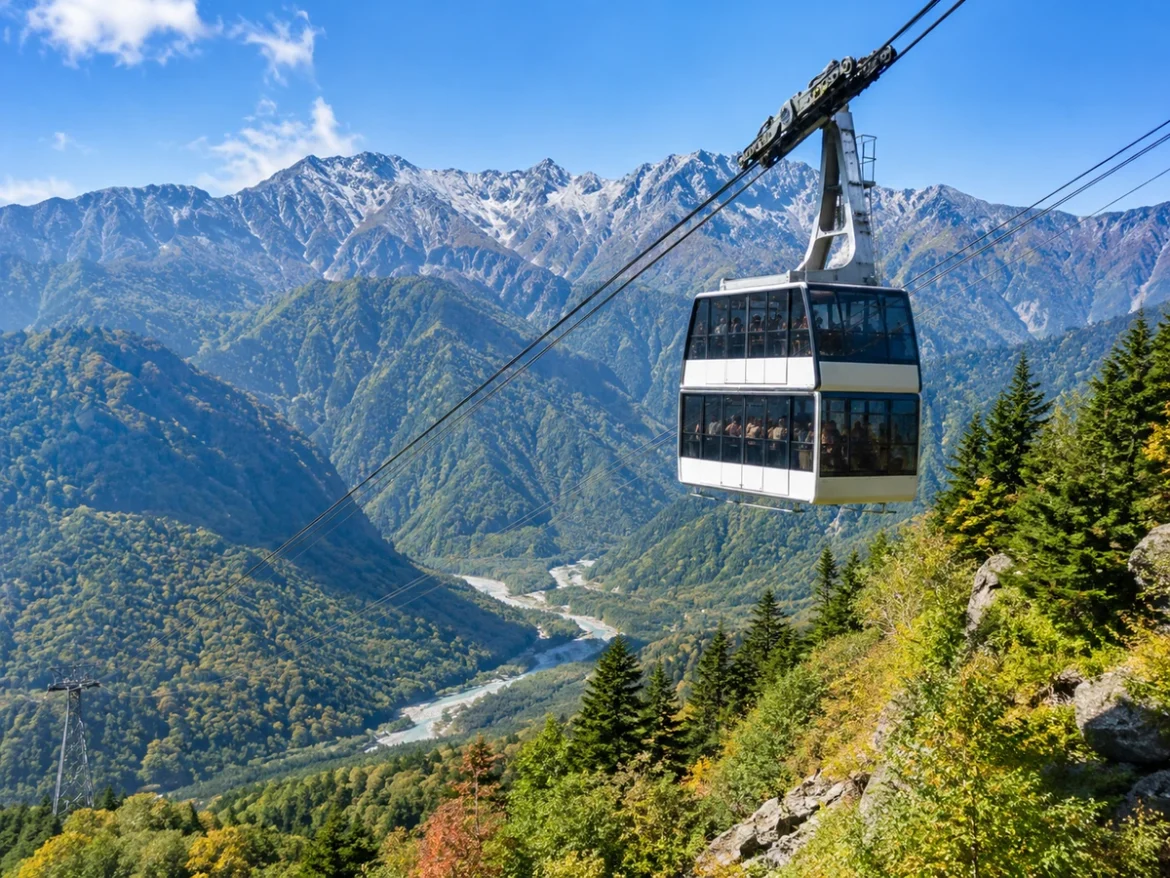
Shinhotaka Ropeway is one of the most rewarding mountain trips within reach of Nagoya, but the difficult part is not riding the ropeway. It is getting from Nagoya into Okuhida with enough time to enjoy the summit and still make the last useful return connection.
For most first-time visitors, the most practical independent route is Nagoya → Takayama → Nohi Bus → Shinhotaka Ropeway. You can reach Takayama by Limited Express Hida or highway bus, then take the local bus that finishes directly in front of the ropeway.
There is one important 2026 exception that many guides miss: on selected dates, Meitetsu Bus operates an overnight Nagoya→Kamikochi service that drops passengers at Shinhotaka Ropeway at 04:23. It is genuinely direct, but it arrives several hours before the ropeway opens and the return bus to Nagoya does not stop at Shinhotaka. For ordinary sightseeing, “direct” does not necessarily mean “easiest.”
Road conditions also matter: Nohi Bus warns of significant delays, and Meitetsu has published a Route 158 landslide-detour notice for its seasonal overnight service. Check the notice for your operator rather than assuming every route has the same diversion.
If Shinhotaka is one of the main reasons for your trip, an overnight stay in Takayama or Okuhida is usually the better experience. If you have only one day, independent public transport is possible, but a direct group tour from Nagoya removes the Takayama transfer and makes the day less fragile.
Before choosing the first leg, see our Nagoya to Takayama transport guide. If you are building a wider stay, our Nagoya travel guide and Takayama travel guide are useful companions.

Official Maps for the Takayama Transfer and Ropeway Stations
Use the Nohi route timetable and linked bus-stop maps to locate Takayama Bus Terminal, Hirayu Onsen and the final Shinhotaka Ropeway stop. At Takayama, use the bus centre beside the JR station’s east side; at Shinhotaka, stay on to the ropeway terminus rather than getting off at a similarly named onsen stop.
The official access and parking maps distinguish the lower No.1 station from the No.2 parking approach. The official English visitor-map brochure (PDF) is useful for the walking transfer from Nabedaira Kogen to Shirakabadaira and the facilities around each station. Download it before travelling, then check current closures separately. The brochure’s area map is on PDF page 4. Its Soyoka Forest trail is currently covered by a closure notice after bear sightings, issued July 14, 2026, with no reopening date stated. Use the station transfer route and obey local barriers. The map’s trail towards Kamikochi is a mountain-hiking route, not a casual sightseeing shortcut; ordinary visitors transfer by bus at Hirayu.
Quick Answer: What Is the Best Way from Nagoya to Shinhotaka Ropeway?
| Route | Best for | Main advantage | Main drawback |
|---|---|---|---|
| Limited Express Hida → Takayama → Nohi Bus | Comfort-first independent travellers | Comfortable rail journey and straightforward Takayama transfer | Usually reaches Shinhotaka around midday on a same-day start from Nagoya |
| Highway bus → Takayama → Nohi Bus | Budget-first independent travellers | Lower Nagoya–Takayama fare | Two long road journeys; delays can affect the connection |
| Seasonal direct overnight bus | Travellers who specifically want an overnight transfer | No transfer from Nagoya to Shinhotaka | 04:23 arrival, long wait before opening, no Shinhotaka→Nagoya return stop |
| Nagoya group day tour | One-day visitors who dislike transfers | Direct organised transport and a fixed return | Less flexibility; itinerary and admission depend on selected package |
| Rental car | Groups continuing around Okuhida | Maximum flexibility between onsen areas and nearby sights | Mountain roads, current detours and winter driving requirements |
Editor’s verdict: if you are visiting independently and can spare one night, go to Takayama first, sleep there, then take an early Nohi Bus to Shinhotaka the next morning. If you insist on a Nagoya day trip, the highway-bus route can be cheaper while the train is usually more comfortable. If you want the least mental load, use a direct day tour.
Is Shinhotaka Ropeway Worth a Day Trip from Nagoya?
| Question | Practical answer |
|---|---|
| Worth travelling from Nagoya? | Yes if alpine scenery is a priority and the mountain forecast is reasonably clear. Less compelling if visibility is poor. |
| Standard ropeway return fare | ¥3,800 adult / ¥1,900 elementary-school child |
| Recommended time at Shinhotaka | About 2.5–4 hours for a normal sightseeing visit, longer if you want relaxed meals or walking |
| Journey difficulty from Nagoya | High for a day trip; the attraction itself is much easier than the transport day |
| Main highlight | Two-stage ascent to the 2,156 m upper station and Northern Alps viewpoints |
| Main risk | Weather suspension or road delay causing missed onward transport |
| Families | The ropeway is family-friendly; the long same-day journey from Nagoya is the tiring part |
| Older travellers | The ropeway facilities are comparatively accessible, but an overnight stay is more comfortable than a rushed Nagoya return |
| Best base | Takayama for transport convenience; Hirayu/Okuhida for a slower mountain-and-onsen trip |
The trip is most rewarding when Shinhotaka itself is a major objective, not something squeezed between Takayama Old Town, Shirakawa-go and Kamikochi. A clear half-day at the ropeway is more sensible than collecting four mountain-area stops in one rushed itinerary.
Latest 2026 Transport and Closure Information
Road notices: distinguish the overnight bus from the local route
Meitetsu’s 2026 overnight-service notice warns of delays due to a Route 158 landslide diversion, with no fixed end date. Separately, Nohi’s local-bus timetable warns of snow and traffic delays and lists Takayama city-centre diversions on specified busy dates, including October 9–12, 2026. These are different notices; check the operator and boarding stop for your service.
This matters most on the return. A plan that depends on arriving at Takayama Bus Center only a few minutes before a reserved highway bus or Limited Express Hida is unnecessarily risky. Build a meaningful buffer or stay overnight.
Full ropeway maintenance closures in 2026
Both No.1 and No.2 Ropeways are scheduled to be fully suspended from November 24–27, 2026. The earlier June 15–26, 2026 maintenance closure has already ended. Shops and food facilities at the ropeway stations also close during these maintenance periods. See the official 2026 maintenance announcement.
Do not book Nagoya transport first and check the ropeway calendar later. The closure makes the journey pointless for ordinary sightseeing.
Weather can still stop an otherwise normal day
Shinhotaka Ropeway operates year-round in principle, but strong wind and poor weather can suspend service. The upper station is at high altitude, so conditions can differ substantially from Nagoya or Takayama. Check the official operating status on the morning of travel.
Route 1: Nagoya → Takayama by Limited Express Hida → Shinhotaka by Nohi Bus
This is the most comfortable independent public-transport route for many first-time visitors.
The sequence is:
JR Nagoya Station → Limited Express Hida → JR Takayama Station → walk to adjacent Takayama Nohi Bus Center → Nohi Bus bound for Shinhotaka → final stop “Shinhotaka Ropeway” → lower ropeway station.
The Limited Express Hida generally takes roughly 2 hours 15 minutes to 2 hours 40 minutes between Nagoya and Takayama depending on the service. A normal-period reserved-seat journey is made up of the base fare plus the limited-express charge, so check the exact fare for your travel date before booking.
From Takayama, the Nohi Bus to Shinhotaka Ropeway takes roughly 1 hour 35 minutes to 1 hour 45 minutes. The current one-way adult fare is ¥2,200; see the official Nohi fare and timetable.
The important misconception is the final walk: there is no extra 20- or 30-minute hike from the bus stop. Shinhotaka Ropeway is the final stop and the bus stops immediately beside the lower station.
Is the train automatically faster than the highway bus?
Not necessarily for a Nagoya day trip. The early Hida can reach Takayama quickly, but the next useful Nohi departure may still determine when you arrive at Shinhotaka. In practice, an early train and the first practical highway-bus connection can both put you at the ropeway around midday.
The train’s main advantage is comfort and a journey that is less exposed to highway traffic. The highway bus’s main advantage is price.
Route 2: Nagoya → Takayama by Highway Bus → Shinhotaka by Nohi Bus
The official Nagoya–Takayama highway bus is the budget route to compare first. Current adult pricing is ¥3,600 one way, or ¥3,300 with the applicable web fare when booked and paid online.
The earliest regular departure shown in the current timetable leaves Meitetsu Bus Center at 07:00 and reaches Takayama Nohi Bus Center at 09:50. A practical onward Nohi service leaves Takayama at 10:40 and reaches Shinhotaka at 12:25.
That makes the route usable as a day trip, but it is already a long morning before you step onto the ropeway.
Example same-day public-transport plan
| Approx. time | Plan | Why it matters |
|---|---|---|
| 07:00 | Highway bus from Meitetsu Bus Center | Early enough to make a useful Takayama connection |
| 09:50 | Arrive Takayama Nohi Bus Center | Leaves a reasonable transfer window |
| 10:40 | Nohi Bus to Shinhotaka | Current practical mid-morning service |
| 12:25 | Arrive Shinhotaka Ropeway | Start sightseeing around lunchtime |
| 15:55 | Recommended earlier through bus to Takayama | 16:55 remains the last through service, not the target |
| 17:31 | Arrive Takayama | Do not assume this arrival will be perfectly punctual |
| 19:00 | Possible highway bus toward Nagoya | Planned 89-minute buffer from the 15:55 bus; major road delays can still affect it |
This timetable demonstrates why the trip is possible but not ideal. You can get several hours at Shinhotaka, yet the whole day depends on road punctuality twice. If the ropeway is a high-priority experience, sleeping in Takayama removes most of that stress.
Klook also lists a separate shared-bus service between Nagoya and Takayama. It is not the same as the official Meitetsu/Nohi highway bus, so meeting points, luggage rules and cancellation conditions differ.
Route 3: The Seasonal Direct Overnight Bus from Nagoya
This is the route most likely to surprise people researching the trip.
On selected 2026 operating dates, Meitetsu’s Nagoya→Kamikochi overnight highway bus leaves Meitetsu Bus Center at 23:10 and stops at Shinhotaka Ropeway at 04:23. The current adult one-way fare to Shinhotaka is ¥8,000 at the standard counter rate or ¥7,800 with the applicable web fare.
The 2026 season runs on selected dates from late April to mid-October, with daily departures during specified peak periods. Reservations open in advance and this is not a year-round daily service.
Why the direct bus is not the default recommendation
First, 04:23 is extremely early. During the normal green season, the first No.1 Ropeway departure is usually 08:30, with earlier starts in certain peak periods. You may therefore have to wait roughly four hours before the attraction begins operating.
Second, the Nagoya-bound return bus does not stop at Shinhotaka Ropeway. If you buy a round-trip ticket, you must make your way to Hirayu Bus Terminal for the return boarding.
Third, the overnight highway route is also affected by the current road-detour environment, so arrival can vary.
Use this bus if the overnight transfer itself solves a specific problem—for example, you want to be in Okuhida before breakfast and are comfortable with the wait. Do not choose it simply because “zero transfers” sounds easier.
Route 4: Direct Nagoya Day Tour
If you only have one day and your main objective is to ride the ropeway rather than independently explore Takayama, a group day tour is the easiest logistical alternative.
The linked Klook product combines Shinhotaka with Hida Great Limestone Cave. Its listed group itinerary runs approximately 08:30–19:00, with about one hour at the cave and 2.5 hours at Shinhotaka; the schedule is indicative and may change. Guide languages listed are Chinese and Japanese, so do not assume an English-speaking guide. Ropeway admission is included in some package choices and excluded in others, so select the package rather than assuming every option includes the ticket.
The trade-off is straightforward: you give up independent timing in exchange for avoiding the Takayama transfer and the risk of stitching together separate return services.
Shinhotaka Ropeway Tickets and Which One to Buy
| Ticket | Adult | Child | Best use |
|---|---|---|---|
| No.1 + No.2 through round trip | ¥3,800 | ¥1,900 | Standard sightseeing visit from the bottom station |
| No.1 + No.2 through one way | ¥2,400 | ¥1,200 | Primarily hikers with a separate mountain route |
| No.2 only round trip | ¥3,700 | ¥1,850 | Drivers starting from the upper parking area when accessible |
The child fare applies to elementary-school children. Preschool children ride free when accompanied by an adult. Junior-high-school students and older pay the adult fare.
For a normal visitor arriving on the Nohi Bus, buy the No.1 + No.2 through round trip. The No.2-only ticket does not make sense when the bus has delivered you to Shinhotaka Onsen Station at the bottom.
Should you buy the Klook e-ticket?
Klook currently sells a round-trip e-ticket covering both No.1 and No.2 Ropeways. It is valid on the selected date, requires a live mobile ticket screen and is listed as non-cancellable. Screenshots and printed copies are not accepted under the current redemption instructions.
It is a reasonable choice for drivers or travellers who are paying for the ropeway separately. However, if you are travelling from Takayama by Nohi Bus, compare it with the ¥7,700 Okuhida All-in-One Value Ticket first, because that pass combines the local bus and ropeway and can be cheaper overall.
The Best Pass from Takayama: Okuhida All-in-One Value Ticket
For most independent travellers doing Takayama→Shinhotaka→Takayama, this is the ticket calculation that matters.
| Option | Adult cost | What it includes |
|---|---|---|
| Pay separately | ¥8,200 | Takayama→Shinhotaka ¥2,200 + return ¥2,200 + ropeway return ¥3,800 |
| Okuhida All-in-One 2-Day | ¥7,700 | Unlimited eligible Nohi buses Takayama–Shinhotaka + one ropeway return + listed benefits |
| Okuhida All-in-One 3-Day | ¥8,200 | Same concept with three-day validity |
Even if you only need the basic Takayama–Shinhotaka return and one ropeway ride, the two-day version is currently ¥500 cheaper than buying those components separately.
What it does not cover is Nagoya→Takayama. You still need a separate train or highway-bus ticket for that leg.
What about the Kamikochi & Okuhida version?
If you are staying in the region and genuinely plan to visit Kamikochi, the separate Kamikochi & Okuhida All-in-One ticket adds a Hirayu–Kamikochi return trip. From Takayama, the current two-day adult version is ¥10,500 and the three-day version is ¥11,000.
This is designed for a multi-stop Okuhida stay, not for cramming Kamikochi and Shinhotaka into a rushed Nagoya day trip.
Do JR Passes Cover Shinhotaka Ropeway?
No rail pass should be treated as an all-the-way Shinhotaka ticket.
A JR product can help with the Nagoya→Takayama rail leg when its coverage and eligibility fit your trip, but Shinhotaka Ropeway is reached from Takayama by Nohi Bus and then by the privately operated ropeway. Those final components need their own ticket or a relevant Nohi/Okuhida combination ticket.
Do not buy a regional rail pass simply because the route involves Takayama. Calculate the journeys you will actually take.
What Happens When You Arrive at Shinhotaka?
The final approach is easier than many mountain attractions.
Nohi Bus → Shinhotaka Ropeway final stop → a few steps to Shinhotaka Onsen Station → No.1 Ropeway → Nabedaira Kogen Station → short walking transfer to Shirakabadaira Station → No.2 Ropeway → Nishi-Hotakaguchi Station.
No.1 Ropeway normally departs at :00 and :30. No.2 normally departs at :15 and :45. The operator may add extra services during busy periods.
Allow roughly 25 minutes for the complete one-way ropeway journey under normal conditions, including the connection between the two stages. Do not treat it like one continuous gondola ride.
Opening Times and the Last Ride
| Season | Typical first No.1 ascent | Typical last No.1 ascent | Typical last descent from top |
|---|---|---|---|
| April–November | 08:30 | 16:00 | 16:45 |
| August | 08:00 | 16:00 | 16:45 |
| October weekends/holidays | 08:00 | 16:00 | 16:45 |
| December–March | 09:00 | 15:30 | 16:15 |
These times make the seasonal 04:23 direct-bus arrival easier to understand: the bus can put you at the attraction several hours before you can ride.
Near closing, do not think only about the last ropeway. If you are returning to Takayama, the local bus timetable is equally important.
The Real Return Constraint: The Last Bus to Takayama
Under the current Nohi timetable, 16:55 is the last Shinhotaka Ropeway departure that continues through to Takayama, arriving around 18:31 under scheduled conditions.
Later departures from Shinhotaka serve Hirayu/Okuhida but do not continue all the way to Takayama. This distinction is easy to miss when you look only at the first column of departure times.
For a Nagoya return, aim for the 15:55 bus where possible. The final 16:45 descent from the top during the green season connects to a later No.1 descent and cannot be treated as a connection to the 16:55 bus. If using that last bus, descend from the top well before the final ropeway, allowing for the walk between stages, queues and boarding time.
More importantly, do not build a non-refundable onward booking around a near-zero Takayama connection. The bus operator explicitly warns that heavy snow, traffic and road conditions can cause significant delays.
Best Time to Visit Shinhotaka Ropeway
| Timing | Advantages | Trade-offs |
|---|---|---|
| First opening | Best chance of a calmer visit and maximum return flexibility | Requires staying in Takayama/Okuhida or using unusual overnight transport |
| Late morning | Good balance for Takayama-based visitors | Can become busy in popular seasons |
| 12:00–13:00 arrival | Typical for a same-day start from Nagoya | Less weather and transport buffer |
| Late afternoon | Softer light can be attractive | Poor choice for Nagoya day-trippers because the return bus becomes the limiting factor |
For a first visit, weather visibility matters more than chasing an exact clock time. The reason to travel this far is the mountain setting; low cloud can remove much of the payoff even if every train and bus runs perfectly.
Families with Children
The attraction itself is considerably easier with children than the long Nagoya journey suggests. Elevators, ramps and other accessibility features are provided across the ropeway facilities, and the operator lists baby-changing facilities at the main stations. A nursing room is available at Shirakabadaira Station.
Preschool children ride the ropeway free with an accompanying adult. Elementary-school children use the child fare.
The hard part for a family is duration. A same-day independent trip can involve four to five hours or more of transport and transfers before the ropeway, several hours at the attraction, then another four-plus hours home. For toddlers or children who struggle with long bus journeys, one night in Takayama is a much better design.
Also consider altitude and temperature. The top is far colder than Nagoya, even when the lower city feels mild. Carry an extra layer rather than judging clothing by the weather outside Nagoya Station.
Older Travellers and Limited Mobility
Shinhotaka Ropeway itself is relatively manageable. The operator states that wheelchair users can travel from Shinhotaka Onsen Station to Nishi-Hotakaguchi Station using elevators, ramps and stair lifts, and wheelchairs are available to borrow at selected stations.
The more important question is stamina for the journey. A train-plus-bus itinerary from Nagoya creates a very long seated travel day and can become stressful if roads are delayed.
If your group includes older travellers, the strongest itinerary is usually Nagoya → Takayama overnight → early Shinhotaka visit → return at a relaxed time. If budget allows, an organised tour can also reduce transfers, but check the tour’s walking and vehicle-accessibility conditions before booking.
Luggage: What First-Time Visitors Often Miss
Nohi Bus has shared underfloor luggage space, but the operator warns that large items may be refused when space is limited. Do not assume an oversized suitcase, ski bag or multiple large cases will always fit.
The ropeway separately requires a baggage ticket for items weighing more than 6 kg: ¥1,000 return or ¥500 one way for the combined No.1 and No.2 route. Certain equipment, including skis, snowboards and ice axes without protected tips, is not permitted onboard.
If you are transferring through Takayama, storing large luggage before heading into Okuhida makes the day much easier. Bring only the layers, water and small bag you need for the mountain.
Driving from Nagoya
Driving gives you flexibility, especially if you are staying in Okuhida and visiting onsen areas that are awkward to connect by bus. The official approach from Takayama uses National Route 158, National Route 471 and Prefectural Route 475.
Check road closures and the official access information before setting off; do not assume a bus diversion automatically describes your car route. In winter, the ropeway operator warns that this is a heavy-snow area and winter equipment such as snow tyres is required, typically from around mid-November to early April.
The lower Shinhotaka Onsen parking area has roughly 160 spaces. Current parking is ¥800 per six hours, and the lower station is about a two- to five-minute walk away.
If you are not experienced with Japanese mountain roads in snow, public transport is the better choice.
Half-Day Itinerary: Best for Travellers Staying in Takayama
07:00–08:00: Take an early Nohi Bus from Takayama toward Shinhotaka.
08:45–09:30: Arrive near opening, buy or activate your ticket and take No.1 Ropeway.
09:15–10:00: Transfer at Nabedaira Kogen/Shirakabadaira and continue on No.2 Ropeway.
10:00–11:30: Upper-station viewpoints and a short walk around the summit area, weather permitting.
11:30–12:30: Descend and have lunch or a snack around Shirakabadaira/Shinhotaka.
12:55–14:55: Take a comfortable early-afternoon bus back toward Takayama rather than waiting for the final through service.
This is the cleanest version of the trip because you experience the mountain in the morning and still have an afternoon or evening in Takayama.
One-Day Itinerary from Nagoya
07:00: Leave Nagoya by highway bus, or take an early Limited Express Hida according to your date’s timetable.
09:50–10:20: Reach Takayama and transfer to the Nohi Bus.
10:40: Practical Nohi departure toward Shinhotaka.
12:25: Arrive Shinhotaka. Use the next realistic ropeway departure rather than assuming you can board immediately.
13:00–15:15: Ropeway, upper station, viewpoints and a simple meal/snack; start descending early enough to finish both ropeway stages before the bus.
15:55: Take the recommended earlier through bus to Takayama. Keep 16:55 as the final backup, not the planned departure.
17:31: Scheduled arrival in Takayama. A reserved 19:00 highway bus leaves an 89-minute planned buffer; severe road delays can still affect that connection.
This itinerary is feasible, but it is not robust. A delay on the mountain road can affect the evening connection, and bad wind can turn a long transport day into a poor-value outing. If you dislike that risk, use the day tour or stay overnight.
Recommended 2-Day Itinerary from Nagoya
Day 1: Nagoya → Takayama
Travel from Nagoya to Takayama at a comfortable time. Spend the afternoon in the old town, eat Hida beef or another local dinner and sleep near Takayama Station/Bus Center.
This is a good place to use our Takayama 2-day planning guide.
Day 2: Early Shinhotaka → Takayama → Nagoya
Take an early Nohi Bus, ride the ropeway near opening, spend several unhurried hours in the alpine area, then return to Takayama in the afternoon. Continue to Nagoya once you have a comfortable transport buffer.
This structure gives you better weather flexibility, avoids a midday first arrival and is much easier for families and older travellers.
Can You Combine Shinhotaka with Kamikochi?
Yes, but not sensibly as a Nagoya day trip.
Hirayu is the transfer hub between the Shinhotaka and Kamikochi corridors. The official Kamikochi & Okuhida combination ticket exists precisely because travellers often pair the two areas over multiple days.
If both are priorities, stay in Takayama, Hirayu or another Okuhida onsen area and use two days. Attempting Nagoya → Shinhotaka → Kamikochi → Nagoya in one day turns a scenic mountain trip into a timetable exercise.
Can You Combine Shinhotaka with Shirakawa-go?
Not comfortably in one day from Nagoya.
Shirakawa-go lies on a different bus corridor from Shinhotaka. Both connect naturally with Takayama, but combining them creates backtracking and leaves too little time for the ropeway.
A stronger plan is one night in Takayama with Shinhotaka on one day and Shirakawa-go on another.
Can You Combine Shinhotaka with Hida Great Limestone Cave?
This pairing is more realistic because the cave lies on the Takayama–Okuhida road corridor, and some organised day tours combine the two.
Independent bus travellers still need to watch the timetable carefully because stopping at the cave interrupts the simple Takayama–Shinhotaka through journey. A tour or car is usually easier for this combination than public transport.
Food at Shinhotaka: When Should You Eat?
There are food and shopping facilities around the ropeway stations, including options at Shirakabadaira and the upper station. However, operating details can vary with the ropeway schedule and maintenance.
For a Nagoya day trip arriving around lunchtime, do not spend so long on a full meal at the bottom that you sacrifice the mountain. A quick lunch or snack, followed by the ropeway, is usually the better sequence.
If you are staying in Takayama, eat breakfast before the early bus and plan a relaxed lunch after your descent.
Where Should You Stay?
Takayama: best for first-time transport planning
Takayama is the easiest overnight base because the JR station and Nohi Bus Center sit together and you have many onward choices. It works particularly well if you are also visiting the old town or Shirakawa-go.
Hirayu Onsen: best transport hub for Okuhida and Kamikochi
Choose Hirayu if the mountain region itself is the focus. It gives you easier access to both Shinhotaka and Kamikochi and lets you avoid repeating the full Takayama road section every day.
Shinhotaka/Okuhida: best for the slowest mountain experience
Stay closer to Shinhotaka if you want onsen time, an early ropeway start and minimal morning transport. This is especially attractive for couples, older travellers and anyone who does not want the ropeway squeezed into a long Nagoya return day.
First-Time Mistakes to Avoid
- Assuming there is no direct Nagoya bus. A seasonal overnight direct service exists on selected 2026 dates, but its 04:23 arrival and one-way Shinhotaka stop pattern make it unsuitable for many ordinary visitors.
- Assuming “direct” means convenient. Arriving four hours before the attraction opens can be worse than making a well-timed Takayama transfer.
- Planning the return from the ropeway closing time alone. The through bus to Takayama is the real constraint; the current last through departure is 16:55.
- Booking a tight Takayama connection. Nohi Bus explicitly warns of possible significant delays, and seasonal city-centre diversions can affect intermediate boarding stops.
- Using an old ropeway fare. The current through adult round trip is ¥3,800.
- Paying separately without checking the Okuhida ticket. The ¥7,700 two-day Takayama version is currently cheaper than a basic bus return plus ropeway return bought separately.
- Assuming the Okuhida pass covers Nagoya. It starts from Takayama or Hirayu; Nagoya→Takayama is separate.
- Assuming a JR pass covers the whole trip. The Nohi Bus and ropeway are separate from the rail leg.
- Carrying oversized luggage into Okuhida. Bus trunk capacity is shared and limited, while the ropeway charges separately for baggage over 6 kg.
- Ignoring maintenance dates. Full closures make even a perfectly timed Nagoya journey useless.
- Judging mountain weather from Nagoya. Wind, cloud and temperature at 2,156 m can be completely different.
- Trying to add Shirakawa-go and Kamikochi to the same day. They belong in a multi-day Takayama/Okuhida itinerary.
- Assuming every Klook tour package includes the ropeway ticket. Check the selected package; current tour options can differ.
FAQ: Nagoya to Shinhotaka Ropeway
Is there a direct bus from Nagoya to Shinhotaka Ropeway?
Yes, on selected 2026 dates. The Meitetsu overnight Nagoya→Kamikochi bus stops at Shinhotaka Ropeway at 04:23, but it is not a normal daytime sightseeing bus.
Can I take the same direct bus from Shinhotaka back to Nagoya?
No. The Nagoya-bound service does not stop at Shinhotaka Ropeway. You need to reach Hirayu Bus Terminal or use the Takayama route for the return.
What is the most practical route for a first visit?
Nagoya→Takayama by Limited Express Hida or highway bus, then Nohi Bus to Shinhotaka. It has the clearest year-round structure.
Can I do Shinhotaka Ropeway as a day trip from Nagoya?
Yes, but it is long and connection-sensitive. Expect to arrive around midday on a normal independent itinerary and aim for the 15:55 through bus to Takayama, keeping the final 16:55 departure as a backup.
Is a day tour easier?
Yes if your priority is removing transfers. A current Nagoya group tour provides direct organised transport, but you sacrifice independent timing.
How much is the Shinhotaka Ropeway return ticket?
The current standard through round trip for No.1 and No.2 Ropeways is ¥3,800 for adults and ¥1,900 for elementary-school children.
Do preschool children need a ropeway ticket?
Preschool children ride free when accompanied by an adult under the current official fare rules.
How much is the bus from Takayama to Shinhotaka?
The current adult fare is ¥2,200 one way.
Is there a cheaper bus-and-ropeway combination?
Yes. The current two-day Okuhida All-in-One Value Ticket from Takayama is ¥7,700 and includes eligible Nohi bus travel plus one ropeway return.
Does the Okuhida ticket include Nagoya to Takayama?
No. Buy the Nagoya–Takayama train or highway bus separately.
How far is the walk from the Shinhotaka bus stop?
Only a very short walk. The local bus terminates directly in front of Shinhotaka Ropeway’s lower station.
Do I change gondolas?
Yes. Ride No.1 Ropeway to Nabedaira Kogen, walk to Shirakabadaira Station, then transfer to the double-decker No.2 Ropeway for Nishi-Hotakaguchi.
How long is the complete ropeway ascent?
Allow around 25 minutes under normal conditions for the two-stage journey and transfer.
What is the last bus from Shinhotaka to Takayama?
The current timetable shows 16:55 as the last Shinhotaka departure that continues through to Takayama. Later services terminate in the Hirayu/Okuhida area.
Is the ropeway wheelchair accessible?
The operator provides elevators, ramps and stair lifts along the route and states that wheelchair users can travel from the lower station to the upper station. Travellers who need specific assistance should still allow extra time.
Is it suitable for older visitors?
The ropeway itself is relatively accessible, but the same-day journey from Nagoya is tiring. An overnight stay in Takayama or Okuhida is the more comfortable plan.
Can I bring a large suitcase?
It is better not to. Nohi Bus trunk space is shared and large items may not be accepted when capacity is limited. The ropeway also requires a baggage ticket for items over 6 kg.
What happens if the weather is bad?
Strong wind or other adverse conditions can suspend the ropeway. Check the official operating status before leaving Takayama or Nagoya.
Does the ropeway close for maintenance?
Yes. The next announced full closure is November 24–27, 2026; the June 15–26 closure is already past.
Is winter a good time to visit?
Winter can offer impressive snow scenery, but transport is more vulnerable to heavy snow and road delay. The summit is also substantially colder, so allow more buffer and dress appropriately.
Can I combine Shinhotaka and Kamikochi in one day?
It can be done from an Okuhida base with careful timing, but it is not a sensible same-day combination from Nagoya. Give the area two days.
Can I combine Shinhotaka and Shirakawa-go?
Use separate days. Both connect through Takayama, but they lie on different corridors and combining them leaves too little time at each.
Should I book the Klook ropeway e-ticket?
It is useful when you need only the ropeway ticket. If you are travelling from Takayama by Nohi Bus, compare the Okuhida combination ticket first because it may reduce your total cost.
Should I stay in Takayama or Hirayu?
Choose Takayama for the simplest Nagoya connection and city sightseeing. Choose Hirayu if you want a deeper Okuhida/Kamikochi trip with less repeated mountain-road travel.
Starting from Sakae, Kanayama or Chubu Centrair Airport
From Sakae, use the Higashiyama subway line to Nagoya Station; from Kanayama, reach Nagoya by JR or Meitetsu before joining the long-distance leg. Allow time to find the correct railway platform or highway-bus boarding point: Meitetsu Bus Center and the JR Nagoya bus stop are separate locations. From Chubu Centrair Airport, take Meitetsu to Nagoya first. Immigration, baggage collection and the long onward journey make an arrival-day ropeway visit a poor plan; stay in Nagoya or Takayama instead.
Private Charter and Ordinary Trains
A private charter can reduce transfers for families or groups, but confirm that a quote actually covers the full Nagoya–Shinhotaka return, driver waiting, tolls, parking, overtime, baggage and winter equipment. A city-only charter allowance is not enough for this mountain journey. Ordinary JR trains via Gifu and Mino-Ota involve additional changes and are a poor choice for a time-limited ropeway day trip; compare the complete journey rather than just the rail fare.
Keep power banks in the bus cabin where you can monitor them, not in the underfloor luggage compartment. Takayama and Hirayu departures on the local Shinhotaka route do not require reservations; certain small stops between Nakaoyakedake-tozanguchi and Shinhotaka Onsen require advance contact for ropeway-bound travel. Buy tickets before boarding at the main terminals when their counters or machines are open.
The Okuhida combination ticket is non-refundable. If the ropeway stops after travel has begun, Nohi’s published terms provide a facility service voucher rather than a cash refund of the difference. Check the official pass terms before activating it.
Final Verdict
Shinhotaka Ropeway is worth the journey from Nagoya when alpine scenery is one of your trip priorities, but it should not be treated like a quick suburban day trip.
For most independent travellers, the strongest route is Nagoya → Takayama → Nohi Bus → Shinhotaka Ropeway. Choose the Limited Express Hida for comfort or the highway bus for a lower fare.
The seasonal direct overnight bus is useful information, but not the automatic winner. Its 04:23 arrival leaves a long pre-opening wait, and you cannot board the return Nagoya service at Shinhotaka.
If you travel from Takayama, check the ¥7,700 two-day Okuhida All-in-One Value Ticket before buying the local bus and ropeway separately. For a standard return trip, it currently beats the ¥8,200 combined pay-as-you-go cost.
If you have only one day from Nagoya and do not want to manage transfers, the direct group tour is the simplest structure. If you value flexibility, stay one night in Takayama and visit Shinhotaka early the next morning.
Most importantly, allow for road delays and confirm ropeway operation before departure. The journey succeeds when you protect time for the mountain instead of trying to make every connection as tight as mathematically possible.