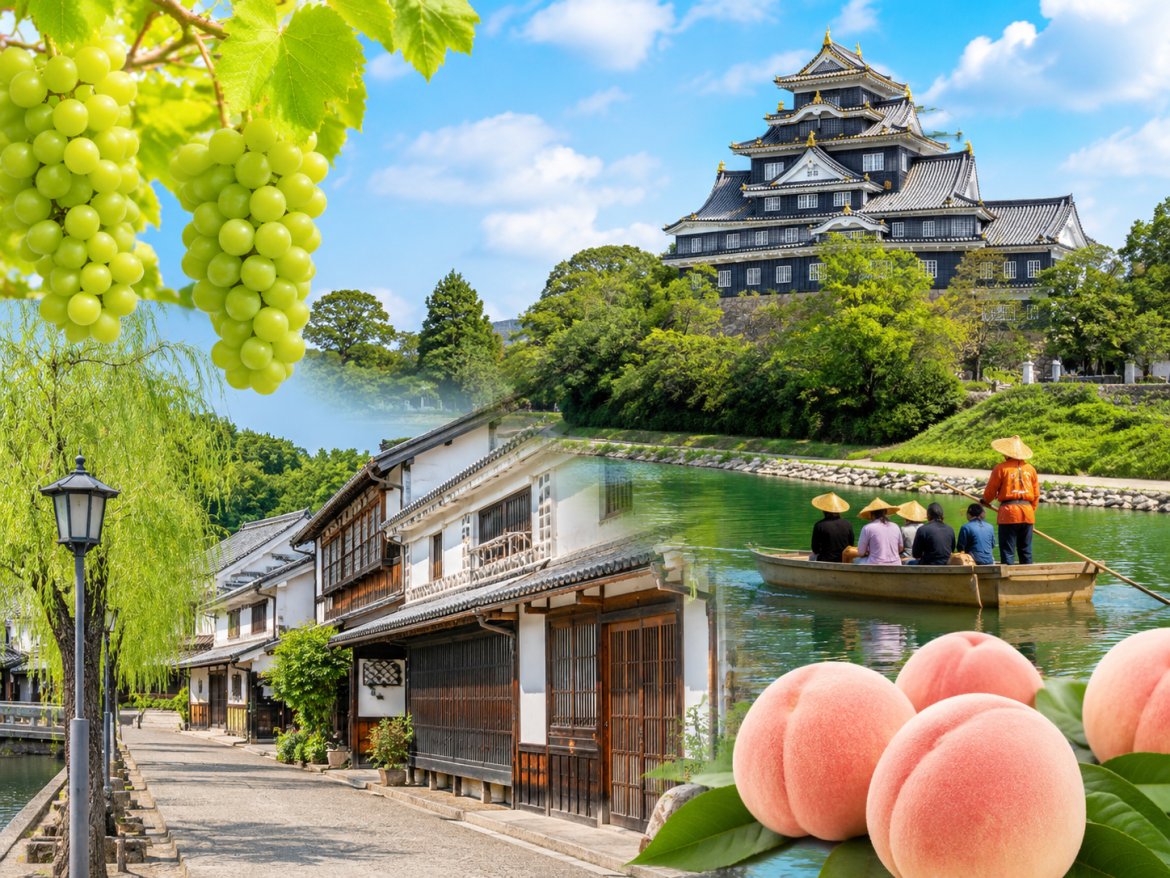
Okayama works especially well when you want a Japanese garden, a historic canal district and an art island in the same trip. The most comfortable first visit gives each its own full sightseeing day: Okayama city for Korakuen and the castle, Kurashiki for the Bikan Historical Quarter, and Naoshima for contemporary art and coastal scenery.
The difficult part is not finding enough attractions. It is fitting Naoshima’s ferries, museum opening calendar and timed tickets together. Choose the island day first, then place the more flexible city and Kurashiki days around it. Three calendar days with a late arrival and early departure are not the same as three full days on the ground.

Is Okayama worth a dedicated trip?
For garden lovers, photographers, art visitors and travellers who enjoy unhurried streets, yes. Okayama offers a useful contrast to a trip built entirely around Osaka and Kyoto. It is less compelling if your priorities are major theme parks, late-night entertainment and a packed shopping schedule.
| Planning question | Practical answer |
|---|---|
| How long? | Three full sightseeing days for city + Kurashiki + Naoshima |
| Best first base | Near JR Okayama Station, usually without changing hotels |
| Car needed? | Usually not for this three-day route |
| Hardest day | Naoshima: ferries, island transfers and museum reservations |
| Only two full days? | Choose city + Kurashiki, or replace one with Naoshima if art is the priority |
Count your usable days before booking
If you arrive in the evening and leave on the third morning, keep the plan close to the city. Use arrival time for dinner and settling in, then spend the full day on Korakuen, Okayama Castle and a carefully shortened Kurashiki visit. Do not force a Naoshima excursion into the only full day unless the island is the real reason for the trip.
With two genuine full days, city plus Kurashiki is the simplest classic combination. Art-focused travellers may prefer city plus Naoshima, or Kurashiki plus Naoshima if museum visits matter more than a castle. Families and travellers who dislike timed connections often gain more by leaving the island for another trip.
Where to stay: Okayama, Kurashiki or Uno?
Okayama Station: the easiest all-round base
Stay near JR Okayama Station if you want one hotel for all three days. It brings together the Shinkansen, trains towards Kurashiki and Uno, airport transport, city buses and trams. Shops and restaurants around the station are useful after a long island day, and you can swap the city and Kurashiki days without rearranging luggage.
Kurashiki: choose it for early and late walks
A night in Kurashiki gives you access to the canal area before day-trippers arrive and after many shops close. It suits slow photography, the Ohara Museum of Art and time in the surrounding old streets. On a short trip that also includes Naoshima, weigh that atmosphere against the time needed to pack, check out and move hotels.
Uno: useful when island travel is the main event
Uno makes sense for an early museum reservation, multiple island days or a trip centred on Naoshima and Teshima. For a single island day within a first Okayama visit, moving there solely to catch one early boat is often unnecessary. Choose accommodation based on the full trip rather than the shortest distance to a single attraction.
A realistic three-day Okayama itinerary
| Day | Main route | Planning allowance | Key decision |
|---|---|---|---|
| 1 | Korakuen → Okayama Castle → city streets or station | A relaxed 6–8-hour sightseeing day | Do the garden before the hottest part of a summer day |
| 2 | Kurashiki Bikan Quarter → Ohara Museum → old streets | Half a day to a full day | Museum, canal boat or shopping: leave room for your priorities |
| 3 | Okayama → Uno → Naoshima → Okayama | A full day, often 10–12 hours door to door | Reserve the anchor museum and work backwards through the ferry connection |
These are planning allowances, not transport timetables. Put Naoshima on a date when the museums you want are open and reservations are available, then arrange the other days. Leave space for lunch, queues and the final transfer back to the hotel.
Day 1: Korakuen, Okayama Castle and the city
Start with the garden, then cross to the castle
Check the castle’s access guide and Korakuen’s seasonal hours, admission and pamphlets. The tram ride to Shiroshita still leaves about ten minutes on foot to the castle.
Korakuen and Okayama Castle are on opposite sides of the Asahi River and can be linked on foot. There is no need to return to the station between them. An early garden visit is practical in warm weather; the castle interior can follow after the outdoor walking.
Allow roughly one and a half to two hours for Korakuen if you want to enjoy the ponds, lawns, tea-house scenery and changing views of the castle. It is a landscape to walk through, not just an entrance photo stop. In winter, check the shorter opening day before deciding to leave the garden until late afternoon.
| Attraction | Current basic information | What to compare |
|---|---|---|
| Korakuen | March 20–September 30: 7:30–18:00; October 1–March 19: 8:00–17:00; last admission 15 minutes before closing | Adult ¥500; ages 0–14 free; students up to 18 temporarily free with school proof; ages 65+ ¥200 |
| Okayama Castle | 9:00–17:30; last admission 17:00; closed December 29–31, with possible weather or inspection closures | Adult ¥500; check the current child-admission policy |
| Both together | Walk across the river between the sites | Adult combined ticket ¥800; compare this before buying separate admissions |
Okayama Castle’s black exterior is striking, but the present keep is an exhibition-oriented reconstruction rather than an intact original timber tower. Enter if you want the exhibits and local history. If exterior photography is your priority, the surrounding park and riverside can still be worthwhile without buying a keep ticket.
An advance castle ticket can be convenient, but it is not automatically the best value when you also want Korakuen. Compare the combined ticket before making two separate purchases.
Keep the afternoon flexible
After the garden and castle, have lunch around the castle-side streets, Omotecho or the station. Use the afternoon for a shopping-street walk, a café or another museum if you still have energy. Families and older travellers can simply return to the hotel; a flat-looking garden still involves a meaningful amount of walking.
Station-area shops and AEON Mall work well towards the end of the day. They are practical for food, supplies and souvenirs, rather than another compulsory attraction to squeeze in before closing.
Day 2: give Kurashiki more than a quick photo stop
Kurashiki is a short JR journey from Okayama, typically around 20 minutes, followed by a walk from the station to the historic quarter. Two hours can cover the main canal and a few photographs, but it leaves little room for a museum, a boat ride, lunch and the quieter streets. Reserve at least half a day, or a full day if art and small shops interest you.
A coherent route is Kurashiki Station → canal-side Bikan Historical Quarter → Ohara Museum of Art → Honmachi and Higashimachi streets → a café or Achi Shrine → the station. The shrine adds steps and walking, so it is optional rather than a requirement.
Choose the museum and boat ride deliberately
The Ohara Museum deserves real viewing time if you enjoy Western art, modern Japanese works and crafts. If museums are not your interest, use that time for the canal, side streets, cafés and independent shops instead. A good Kurashiki day does not require entering every attraction.
For the canal boat, check the day’s operating conditions and ticket arrangements when you arrive. Weather, water conditions and seasonal schedules can affect service. Do not build the whole day around an assumed departure that you have not confirmed.
Check that the Kurashiki rambler coupon’s stated redemption period explicitly covers your travel date before considering a purchase. Until that is confirmed, budget for individual purchases rather than coupon savings. Then compare the participating venues with what you actually want to do.
Outlet shopping is a separate priority
The outlet area is on the north side of Kurashiki Station, in the opposite direction from the historic quarter. Add it before returning to Okayama if shopping matters, but do not quietly take the time from the museum or canal area. An overnight stay makes it easier to separate daytime culture, late-afternoon shopping and an evening walk.
Day 3: build Naoshima around one main museum
The usual route is JR from Okayama to Uno, a short walk to the port, then a ferry to Miyanoura on Naoshima. The train leg is around 50–60 minutes depending on the service and any transfer; the Uno–Miyanoura ferry crossing is around 20 minutes. Connection, ticket and boarding time are additional.
Use the Okayama to Naoshima transport guide to choose the port and connect the stages. Some trains require a change at Chayamachi. A short sea crossing does not make this a short city excursion.
Pick the island route that matches your interest
| Route | Suggested focus | Main trade-off |
|---|---|---|
| Museum-focused | Miyanoura → Chichu → selected southern museum-area stops → Miyanoura | Timed tickets and onward transport set the pace |
| Village-focused | Miyanoura → Honmura → Art House Project / ANDO MUSEUM → Miyanoura | Choose individual projects and check their reservations |
| Cycling-focused | A manageable loop between port, village and selected coastal art | Hills, heat and rain still matter, even on an electric bike |
Trying to see every museum in every district usually creates a day of chasing buses and admission slots. Choose one anchor museum, then one or two complementary areas. Chichu Art Museum requires a date-and-time reservation; consult the current Benesse calendar and ticket system before booking the rest of the day.
Monday closures and holiday exceptions vary by facility, and maintenance periods can change the wider opening calendar. Check the individual sites rather than assuming every museum follows the same rule. Add the newer museum options only by replacing another stop, not by pretending the island has become smaller.
An electric bicycle can reduce effort on hills, but it is not automatically the best choice for children, older travellers, heavy rain or summer heat. A guided cycling or public-bus option may suit a small group that values interpretation and coordinated movement. Confirm exactly what admissions, bicycles and transport are included.
Compare the Naoshima guided tour options
Make the return journey part of the plan
Use Shikoku Kisen’s Uno–Miyanoura timetable and boarding map. The operator does not accept ordinary boarding reservations; passengers board first come, first served. A museum reservation does not reserve a ferry place. Build in port walking, ticket queues and a backup sailing.
If online slots for Chichu Art Museum are sold out, no on-site tickets are sold. Use the island maps and bus information to distinguish the town bus, day-visitor shuttle and Benesse House guest-only shuttle. Do not plan to use the guest bus unless you are eligible; day-visitor services change by season and museum closure days.
Save the return ferry and mainland train options before beginning sightseeing. Do not leave the final museum at the last possible minute, and avoid carrying a large suitcase around the island. For young children, check age restrictions, stroller access, quiet-viewing rules and meal breaks at each selected facility.
If the family is not especially interested in contemporary art, replace Naoshima with a slower Okayama or Kurashiki day. You do not need to take a ferry simply because an island appears in the standard itinerary.
Getting to Okayama and choosing a rail pass
From the airport
The airport bus is the normal starting point for travel to Okayama Station. Check the timetable for your flight date and leave room for immigration and baggage if arriving internationally. The listed private-transfer product offers one-way journeys between Okayama Airport and hotels in the stated Okayama Station area. It can be useful for several passengers or bulky luggage, but confirm the exact pickup and drop-off addresses, luggage allowance, total price and meeting arrangements before booking.
From Osaka and Kyoto
The Sanyo Shinkansen serves Okayama from Shin-Osaka. Remember that Shin-Osaka and Osaka Station are different stations. A single one-way journey does not automatically justify a regional rail pass; list the other long-distance travel within the pass’s validity period before deciding.
The Kansai Wide Area Pass can be relevant when Okayama is combined with several covered JR journeys. If you continue to Hiroshima, compare the different coverage of the Kansai–Hiroshima Area Pass. For a simple local Okayama–Kurashiki–Uno trip, ordinary tickets are usually the clearer starting point. Do not assume a JR pass includes the Naoshima ferry, island bus or museum admissions.
Compare the JR Kansai Wide Area Pass
Compare the JR Kansai–Hiroshima Area Pass
Seasons, rain alternatives, food and shopping
Spring and autumn are useful starting points for walking, with blossom and foliage timing depending on the year and site. Summer brings fruit-season interest but also heat in Korakuen, Kurashiki and Naoshima’s outdoor areas. Start earlier, use museum or café breaks and avoid planning a long ordinary-bike circuit as the only island transport.
Winter can suit the city and canal streets if you are prepared for cooler weather and shorter opening days. For rain, Kurashiki’s museum and town cafés are often easier to combine than exposed island stops, but check the museum’s opening calendar. Existing timed tickets and ferry disruption require a different decision from ordinary light rain.
Leave space for Okayama’s fruit, local sweets and a regional meal rather than making every lunch a rushed station purchase. White peaches and grapes are seasonal products; availability and price vary. Kibi-dango and other packaged sweets are straightforward souvenirs. Buy fragile or perishable items near the end of the trip and check transport and import restrictions before carrying fresh food home.
Okayama travel FAQ
Is three days enough for Okayama, Kurashiki and Naoshima?
Three full sightseeing days work well. Three calendar days with an evening arrival and morning departure do not provide the same time. In that case, prioritise the city and Kurashiki or make Naoshima the explicit main purpose.
Should I stay in Okayama or Kurashiki?
Okayama Station is the simpler base for trains, airport access and an island day. Kurashiki is more atmospheric for early and late canal walks. Choose an overnight there for that experience rather than assuming it saves transport time.
Can I visit Korakuen and Okayama Castle together?
Yes. They are close together across the Asahi River and fit naturally into the same day. Compare the combined ticket before buying separate admissions, and check seasonal garden hours.
Do I need a car for this itinerary?
Usually not. JR trains, city transport and ferries cover the classic route. A car can add parking and ferry complications without improving a garden, canal and art-island trip.
Is Kurashiki only a two-hour stop?
Two hours gives a brief canal walk. Allow at least half a day if you want a museum, lunch, boat ride or side streets; a full day works better for an unhurried visit.
Should I buy a JR pass just for Kurashiki and Uno?
Normally start with ordinary fares for those local journeys. A regional pass becomes worth comparing when your wider trip includes several covered long-distance trains within its validity period.
Which Naoshima museum should I reserve first?
Reserve the one that matters most to you, often Chichu for a first architecture-and-art visit. Its timed entry should fit your ferry and island transport. Avoid reserving several sites with unrealistically tight connections.
Does a JR pass cover the Naoshima ferry?
Do not assume so. Check the exact pass’s valid transport map and conditions. Treat the Uno ferry, island buses and art facilities as separate items unless the product explicitly includes them.
Is Naoshima suitable for young children?
It depends on the selected facilities and the child’s tolerance for boats, quiet viewing and waiting. Check age and stroller rules, keep the museum count small and leave enough time for meals and the return ferry.
Can I add Teshima or Shodoshima to the same Naoshima day?
That usually makes a first island day too dependent on ferry connections and leaves little time for art. Give another island its own day, or redesign the trip around island-hopping with appropriate accommodation.