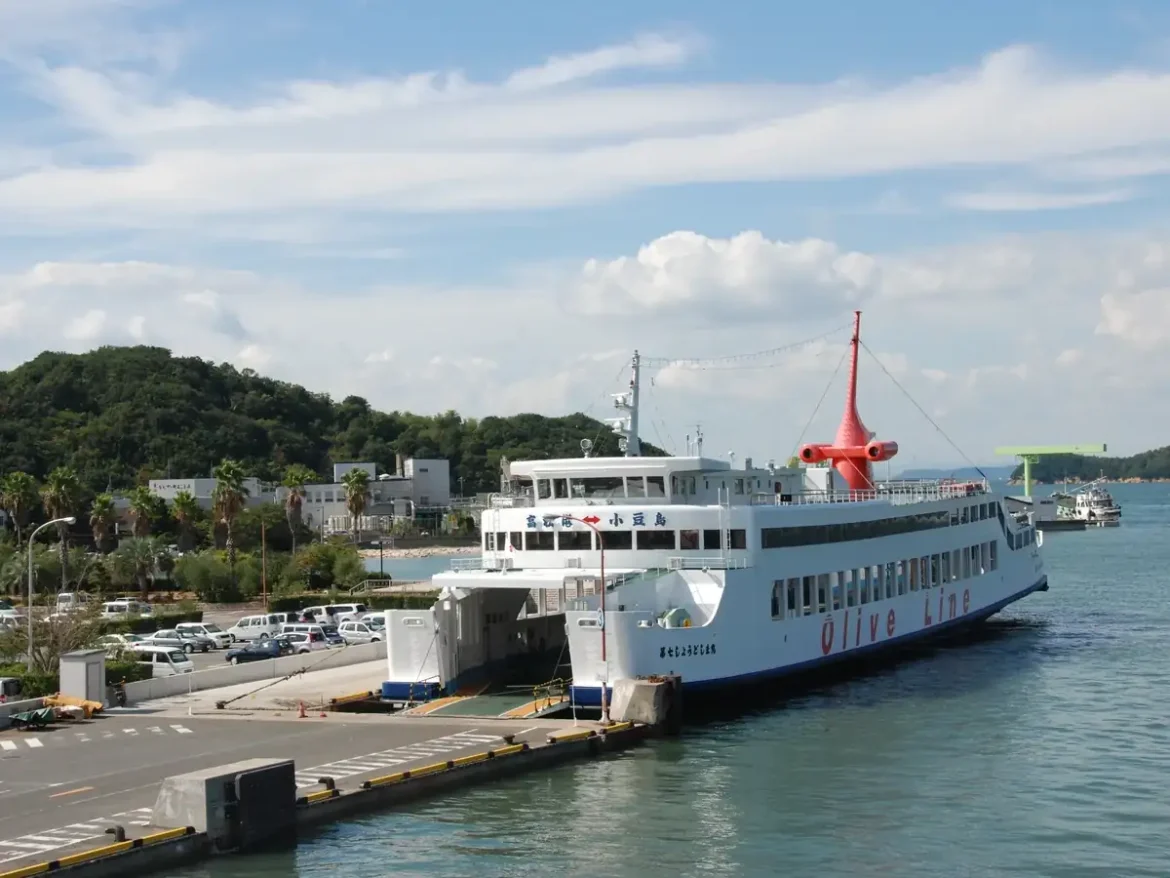
Shodoshima is easy to reach but surprisingly easy to plan badly. The island has several ferry ports, no railway, bus routes that are much less frequent than a city network, and major sights spread between the western coast, central mountains and eastern peninsula.
For most first-time visitors coming from Takamatsu without a car, Tonosho Port is the simplest all-round gateway. It has frequent ferries, a passenger-only high-speed boat, the main Shodoshima Olive Bus office, rental-car options and easy access to Angel Road. Ikeda Port is a strong alternative if you want Olive Park or are using the current Okayama–Kagawa Wide Pass.
The change introduced in October 2026 is about transport passes. Newly issued ALL SHIKOKU Rail Passes no longer include Shodoshima Ferry or Shodoshima Olive Bus from October 1 2026, and the KAGAWA Mini Rail & Ferry Pass is no longer sold. Do not build a Shodoshima itinerary around an old blog post, review or booking-page description that says these services are automatically covered.
Shodoshima is still very workable without driving, but the itinerary has to be narrower. Two or three well-connected sights can make a satisfying day. Angel Road, Olive Park, Kankakei and Twenty-Four Eyes Movie Village all in one public-bus day can become a timetable exercise with very little margin for delay.
If you want a broad one-day circuit, a rental car or scheduled sightseeing bus is usually the more practical solution. If you want a slower island trip, one overnight stay removes much of the pressure created by ferry and bus connections.

Shodoshima Transport: Quick Answer
| Question | Practical answer |
|---|---|
| Best gateway for a first visit? | Tonosho Port for most foot passengers, especially from Takamatsu or Okayama. |
| Fastest Takamatsu crossing? | The Takamatsu–Tonosho high-speed boat, about 35 minutes, passenger only. |
| Cheapest simple Takamatsu crossing? | Standard ferry to Tonosho or Ikeda, currently ¥700 adult one way. |
| Can you visit without a car? | Yes, but plan around the bus timetable and limit the number of distant stops. |
| When is a car worth it? | For Kankakei plus eastern-island sights, families with luggage, or a multi-stop full day. |
| Current Olive Bus 1-day ticket? | ¥1,600 adult and ¥800 child. |
| Does a new ALL SHIKOKU Rail Pass cover the island ferry and Olive Bus? | No, not for passes issued on or after October 1 2026. |
| Useful current regional pass? | The 3-day Okayama–Kagawa Wide Pass can be useful for travellers combining Okayama, Kagawa and selected Shodoshima ferry sectors. |
| Is a Shodoshima day trip worth doing? | Yes if you start early and choose a compact route. It is less rewarding if you try to cross the whole island by local bus in a few hours. |
| Is an overnight stay necessary? | No, but it is worthwhile for a relaxed island circuit, sunset, multiple distant attractions or a two-island itinerary. |
Which Shodoshima Port Should You Use?
The correct ferry is not simply the shortest sailing. The better question is: where do you want to start once you reach the island?
| Island port | Main mainland connection | Best suited to | Main drawback |
|---|---|---|---|
| Tonosho | Takamatsu, Shin-Okayama, Uno/Teshima | First visits, no-car trips, Angel Road, bus connections, rental cars | Western location means longer travel to eastern sights |
| Ikeda | Takamatsu | Olive Park, central island, travellers using the Okayama–Kagawa Wide Pass | Fewer mainland route choices than Tonosho |
| Sakate | Takamatsu East, Kobe | Eastern/southern island, direct Kobe ferry | Less flexible as a general no-car hub |
| Fukuda | Himeji | Travellers arriving from Himeji or eastern Kansai, especially with a car | Far from Tonosho and Angel Road; local transport requires more planning |
For a first visit without a car: choose Tonosho unless another route clearly matches your itinerary.
For a road trip: choose the port that reduces backtracking. Arriving at Fukuda from Himeji and leaving from Tonosho or Sakate can make sense if your ferry ticket and rental-car conditions allow the route you have planned.
Two ports on older maps are not current alternatives for these mainland crossings: the Takamatsu–Kusakabe service has been suspended since April 1, 2021, and Hinase–Obe since December 1, 2023. Kusakabe remains an important island bus interchange. Check the tourism association’s current port and access guide rather than treating every port symbol as an active mainland ferry route.
Shodoshima Ferry Routes Compared
| Route | Typical crossing | Current adult fare | Best use |
|---|---|---|---|
| Takamatsu → Tonosho standard ferry | About 60 min | ¥700 one way | Best general first-timer route; cars accepted |
| Takamatsu → Tonosho high-speed boat | About 35 min | ¥1,400 one way | Saving time as a foot passenger |
| Takamatsu → Ikeda | About 60 min | ¥700 one way | Olive Park/central island and selected pass itineraries |
| Takamatsu East → Sakate | About 70–75 min | ¥700 one way | Eastern island or Jumbo Ferry connections |
| Shin-Okayama → Tonosho | About 70 min | ¥1,300 adult during the announced October–December 2026 surcharge period | Direct route from the Okayama side |
| Himeji → Fukuda | About 100 min | ¥2,100 one way | Himeji/eastern Kansai, particularly drivers |
| Kobe → Sakate | Varies by sailing; some direct patterns are around 3 hr 20 min | ¥1,990 base adult fare plus applicable fuel/holiday charges | Direct Kansai-to-island journey without first travelling to Takamatsu |
| Uno → Teshima → Tonosho | Depends on service and intermediate stops | Check the dated operator timetable | Teshima/Shodoshima island hopping rather than the fastest Okayama route |
Ferry fares and fuel adjustments can change independently, particularly on the Okayama and Kobe routes. Check the operating company’s dated fare page for your exact sailing rather than relying on a route-planner price saved months earlier.
Takamatsu to Tonosho: Best for Most First-Time Visitors
The standard Takamatsu–Tonosho ferry takes about 60 minutes and currently costs ¥700 for an adult or ¥350 for an elementary-school child one way. There are frequent services from early morning into the evening, making this the most forgiving route when your day-trip schedule changes.
Vehicle spaces can be reserved online on eligible sailings from two months ahead until four hours before departure. Foot passengers and passengers with bicycles or motorcycles use first-come procedures rather than the vehicle reservation system.
If time matters more than price, the high-speed boat cuts the crossing to about 35 minutes. It currently costs ¥1,400 adult and ¥700 child one way. It is passenger-only: cars, motorcycles and bicycles are not carried.
The high-speed boat is most useful when the 25-minute saving protects an important bus connection or gives you meaningful sightseeing time. It is less compelling if you arrive early only to wait for the next island bus.
Takamatsu to Ikeda: Better Than Tonosho for Some Routes
Ikeda is often overlooked because Tonosho appears in more English-language guides. The crossing is also about 60 minutes and currently costs ¥700 adult or ¥350 child one way, with an adult round trip of ¥1,330.
Ikeda can be a smart arrival point when Olive Park and the central island are priorities. Official driving guidance places Olive Park at about 10 minutes by car from Ikeda Port, compared with a west-to-east approach from Tonosho.
A 4–5 m car currently costs ¥6,330 one way or ¥12,030 round trip on this route, including one driver. That difference from the ¥700 foot-passenger fare is why travellers already renting a car on the mainland should compare the complete vehicle-ferry cost against renting after reaching Shodoshima.
Klook currently lists a Takamatsu–Ikeda round-trip ferry product for both foot passengers and eligible vehicle packages. Compare its conditions with the operator fare before booking, especially if you need a vehicle space.
Okayama to Tonosho: Use Shin-Okayama Port, Not Uno
For a direct Okayama–Shodoshima journey, travel from Okayama Station to Shin-Okayama Port, then take the approximately 70-minute ferry to Tonosho. The ferry currently runs eight scheduled crossings each way.
During the announced October–December 2026 fuel-adjustment period, the passenger fare is ¥1,300 adult and ¥650 child one way. The current Kamome Bus Ticket combines the Okayama Station–Shin-Okayama Port bus and the ferry to Tonosho for ¥1,600 adult or ¥800 child from October 1 2026.
This is much simpler than travelling to Uno if Shodoshima is your only island destination. Uno becomes more interesting when Teshima or Naoshima is part of the itinerary.
If your trip begins at Okayama Airport and you are considering the Setouchi art islands as well, the Okayama Airport to Naoshima transport guide explains the separate Okayama–Uno connection in detail.
Himeji to Fukuda: Useful from Eastern Kansai
The Himeji–Fukuda ferry takes about 100 minutes. After the August 2026 fare revision, the published one-way passenger fare is ¥2,100 adult and ¥1,050 child.
This route can save a large overland detour for travellers already in Himeji, but Fukuda is on Shodoshima’s northeast side. A foot passenger who wants Angel Road first still has a substantial island journey after disembarking.
It becomes more attractive if you are driving, staying on the eastern side or building a one-way island circuit instead of returning immediately to Himeji.
Kobe to Sakate: Direct, but Not the Fastest Island Day Trip
Jumbo Ferry links Kobe with Sakate. The base adult passenger fare is currently ¥1,990 one way, before applicable fuel and holiday surcharges. Direct sailing patterns can take around three hours and twenty minutes, while other departures route via Takamatsu and take much longer.
This is useful when you prefer a direct sea journey from Kansai or want to avoid changing trains with luggage. It is not the route to choose merely because “Kobe is closer than Takamatsu”; the complete schedule matters more than the map distance.
If you are arriving in Kansai by air and considering a Kobe departure, the Kansai Airport to Kobe transportation guide can help you judge whether the extra transfer into Kobe fits your arrival day.
Uno to Teshima to Tonosho: Best for Island Hopping
The Uno–Teshima–Tonosho services are valuable when Shodoshima is part of a Setouchi island sequence. They are usually not the simplest way to travel from central Okayama directly to Shodoshima.
For a Naoshima-focused trip, see the Osaka to Naoshima route guide. Trying to visit Naoshima, Teshima and Shodoshima as one hurried day trip is a poor use of the ferry network; the waiting time and attraction opening hours leave very little margin.
Return boats and boarding maps
On schedules checked October 9, 2026, the last Tonosho–Takamatsu fast boat leaves at 17:50, the last Ikeda–Takamatsu ferry at 19:00, the last Tonosho–Shin-Okayama ferry at 18:30 and the last Fukuda–Himeji ferry at 19:30. Treat these as dated reference points, then check your travel date and the bus that actually gets you to that port. A late ferry is no help if the final island bus has already gone.
The operator route pages include boarding maps. At Takamatsu, conventional ferries and fast boats have different boarding areas; Jumbo Ferry uses Takamatsu East Port, separate from the station-side Sunport facilities. The Tonosho fast boat rejects bicycles even inside a bicycle bag. Foot passengers and two-wheelers on Shodoshima Ferry do not use the car-reservation system.
Which Shodoshima Transport Pass Is Worth Buying in 2026?
This is the section most likely to be wrong in an older Shodoshima guide. The pass landscape changed on October 1 2026.
| Ticket or pass | Current price | What it is useful for | Important limitation |
|---|---|---|---|
| Shodoshima Olive Bus 1-day ticket | ¥1,600 adult / ¥800 child | Multiple qualifying island-bus rides in one day | Do not assume every seasonal municipal shuttle is included; check the dated route notice. |
| Kamome Bus Ticket | ¥1,600 adult / ¥800 child | Okayama Station → Shin-Okayama Port → Tonosho | One mainland-to-island transport chain, not an island bus pass. |
| Okayama–Kagawa Wide Pass | ¥3,600 adult / ¥1,800 child | 3 days of specified JR, bus and ferry travel, including Shin-Okayama–Tonosho and Takamatsu–Ikeda sectors | Shodoshima Olive Bus should be budgeted separately. |
| ALL SHIKOKU Rail Pass issued on/after Oct 1 2026 | ¥12,000 adult for 3 days; ¥20,000 for 7 days | Wider Shikoku rail/tram travel | No longer includes Shodoshima Ferry or Shodoshima Olive Bus. |
| KAGAWA Mini Rail & Ferry Pass | Discontinued | None for new purchases | Sales ended September 30 2026. |
Shodoshima Olive Bus 1-Day Ticket
The current 1-day ticket is ¥1,600 for adults and ¥800 for children. It is sold at the Olive Bus office in Tonosho Port, on buses, at several island ports, selected hotels and tourist facilities.
Do not buy it automatically. If you are taking only one or two short bus rides, individual fares may cost less. The pass becomes more attractive when your day has several paid sectors and the routes you need are covered.
More important than the pass price is the timetable. A pass does not make the buses more frequent.
Okayama–Kagawa Wide Pass
The current 3-day Okayama–Kagawa Wide Pass costs ¥3,600 adult and ¥1,800 child. It covers specified conventional JR lines plus selected buses and ferries, including the Okayama Station–Shin-Okayama Port–Tonosho chain and the Takamatsu–Ikeda ferry route.
This can be unusually useful for an itinerary such as Okayama → Shodoshima → Takamatsu → Kotohira or Kurashiki/Okayama combinations. It is not a blanket Shodoshima sightseeing pass, and the island’s regular Olive Bus costs should be calculated separately.
Check the current coverage map on the official Okayama–Kagawa Wide Pass page before purchase.
ALL SHIKOKU Rail Pass: The Important 2026 Change
If your ALL SHIKOKU Rail Pass was issued on or after October 1 2026, do not present it at the Shodoshima ferry or Olive Bus expecting the old free-ride benefit. Those services were removed from the new pass coverage.
Passes purchased on or before September 30 2026 retain the Shodoshima Ferry and Olive Bus benefits under the old conditions. Keep proof of the original purchase and check those conditions; the transition rule does not extend the benefits to a new purchase.
The discontinued KAGAWA Mini Rail & Ferry Pass creates a similar trap: older trip reports may describe it as an easy Shodoshima solution, but it is no longer sold.
The dated JR Shikoku announcement confirms the old-purchase exception. The Okayama–Kagawa Wide Pass coverage and use instructions require a live tabiwa smartphone ticket screen and, for some ferries, an exchange for a boarding ticket. Use the named operator and route, not just a matching island destination.
The ¥1,600 Olive Bus day ticket is the standard fare shown on the operator’s ticket page. For November or special-event travel, check the fare offered for your actual date before buying; do not assume the ordinary price applies to every seasonal product.
Can You Get Around Shodoshima Without a Car?
Yes. The key is to plan fewer stops with better connections.
Shodoshima Olive Bus serves Tonosho, Ikeda, Sakate, Fukuda, Olive Park, the movie-village area and other settlements and attractions through several routes. Some services have weekday/weekend differences, and Kankakei mountain transport is seasonal.
Major nationwide IC cards such as Suica, PASMO and ICOCA are accepted on Shodoshima Olive Bus, which removes the need to prepare exact change for every ordinary ride.
| Travel style | Public bus verdict |
|---|---|
| Angel Road + Tonosho town | Easy; bus plus short walks, or taxi/walking for selected sections. |
| Angel Road + Olive Park | Very manageable if the timetable aligns. |
| Olive Park + Twenty-Four Eyes Movie Village | Possible, but check the return service before entering the attraction. |
| Kankakei + another distant attraction | Possible on selected dates, but seasonal mountain transport makes timing important. |
| Angel Road + Olive Park + Kankakei + Movie Village | Technically possible under favourable schedules, but not the most relaxed local-bus day. |
| Family with stroller and luggage | Usable for a simple route; a car, taxi or sightseeing bus is easier for multiple stops. |
| Older traveller with limited walking tolerance | Choose a compact route and confirm vehicle accessibility; not every bus is wheelchair-compatible. |
Do Not Plan by Distance Alone
On a map, two Shodoshima attractions can look close. The problem is often not kilometres but waiting for the next bus, changing lines, or discovering that the useful return service has already departed.
Build the day backwards from your last ferry. Then choose the last island bus that still gives you a sensible buffer at the port. Only after that should you add attractions.
Luggage on a No-Car Day
Avoid carrying full-size suitcases between attractions. Tonosho is the easiest place to organise the first and last part of a no-car trip because the ferry terminals, transport services and tourist facilities are concentrated around the port.
If you are changing hotels or leaving from a different port, confirm luggage storage or forwarding before committing to a cross-island route. Do not assume every small ferry terminal has the same facilities as Tonosho.
Open the official Olive Bus route map beside the current individual route timetables. For Kankakei, check the separate municipal Kusakabe–Koun-tei service and its operating dates. Buying an Olive Bus ticket does not establish coverage for another operator’s seasonal service.
Scheduled Sightseeing Bus: A Strong Option for Non-Drivers
A scheduled sightseeing bus is more expensive than building the day from local buses, but it solves the hardest part of Shodoshima transport: coordinating distant attractions with infrequent services.
The currently listed Tonosho-based full-day sightseeing bus runs for roughly six hours and includes major island highlights such as Kankakei, Twenty-Four Eyes Movie Village and Olive Park. The current product includes a smartphone audio guide with English support while the live guide is primarily Japanese.
This option is best for a first-time visitor who wants a broad island overview in one day and does not want to drive. It is less suitable if you want long photography stops or independent meal timing.
Should You Drive on Shodoshima?
If your target list includes Kankakei, Twenty-Four Eyes Movie Village and two western or central sights, driving changes the day from a timetable problem into a normal road trip.
The island is not tiny. Mountain roads, coastal roads, villages and attraction parking all add time, but a car lets you stop where public-bus connections would otherwise force long waits.
Bring a Mainland Rental Car or Rent on the Island?
| Option | Advantages | Disadvantages |
|---|---|---|
| Bring mainland rental car on ferry | No need to change vehicles; luggage stays in the car; useful for a wider road trip | Vehicle ferry fare is much higher than passenger fare; vehicle reservations may matter |
| Walk onto ferry and rent on Shodoshima | Much cheaper ferry crossing; rental offices are concentrated around key ports | Requires rental availability and paperwork after arrival |
| No car | No driving, parking or vehicle-ferry cost | Needs disciplined bus planning and fewer distant stops |
For example, Takamatsu–Ikeda currently costs ¥700 for one adult foot passenger but ¥6,330 one way for a typical 4–5 m car including one driver. That does not automatically mean renting on the island is cheaper—the rental price varies by date and vehicle—but it is a large enough ferry difference that you should compare both complete costs.
Reserve early for weekends, public holidays, autumn foliage season and major island events. Tonosho has the greatest concentration of rental-car choices, while operators also serve other ports.
Vehicle Ferry Reservations
Reservation rules differ by route. On Takamatsu–Tonosho, eligible vehicle sailings can be booked online and advance booking is recommended when you need a car space. Foot passengers do not use the same reservation process.
International Ryobi Ferry also accepts vehicle bookings for the Takamatsu–Ikeda and Okayama–Tonosho routes, while retaining some first-come space. Its current booking deadlines differ by route, so use the operator’s live booking page rather than assuming one rule applies to every ferry.
Is Cycling a Good Way to See Shodoshima?
Cycling works well when the route is the goal: a coastal section, Olive Park and nearby areas, or a shorter ride with time to stop.
It is a poor substitute for a car if your plan is “see everything.” Shodoshima has substantial hills, Kankakei is mountainous, summer heat can be intense, and a ferry day trip leaves less riding time than the map suggests.
Do not assume every cycle-rental facility shown in an old guide is still open. The tourism association currently lists Shodoshima Cycle Station as closed, although other rental options exist.
Correct First-Time Route: Choose One of These Three Plans
Plan A: Easy No-Car Day
Tonosho Port → Angel Road → Olive Park → return toward Tonosho
This is the safest first-time public-transport structure. Angel Road is close to the western gateway, while Olive Park sits farther east but remains one of the more practical major attractions to combine with it.
If the bus timetable gives you enough margin, add one additional stop. Do not add Kankakei and the far-eastern movie village simply because both look feasible on Google Maps.
Plan B: Full-Day Sightseeing Bus
Tonosho Port → guided island circuit → Tonosho Port
This is the strongest no-driving option when you want Kankakei and the eastern side in one day. The trade-off is fixed time at each stop.
When booking, check that your inbound ferry arrives with enough time for check-in rather than matching the ferry arrival minute to the bus departure minute.
Plan C: Rental-Car Full Day
Tonosho or Ikeda → Angel Road → Olive Park → Kankakei → Twenty-Four Eyes Movie Village → departure port
This sequence is much more realistic by car than by ordinary local buses. Allow a full sightseeing day, not only the sum of driving times. Kankakei, lunch, attraction admission and parking all consume time.
If your group wants an English-speaking guide instead of self-driving, a private full-day product is currently available from Takamatsu with Shodoshima sightseeing and the Kankakei ropeway included in the itinerary.
How Much Walking Is Involved?
Shodoshima is not a single walking attraction, so the physical difficulty depends heavily on the transport plan.
- Tonosho Port: the transport facilities are concentrated around the port, so changing from ferry to bus or taxi is straightforward.
- Angel Road: the nearest useful bus stop leaves only a short walk to the coast, but the sandbar itself is tide-dependent and the surface is uneven.
- Olive Park: the bus stop serving the park leaves a short approach, but the grounds are spread over slopes rather than one flat indoor complex.
- Kankakei: a bus or car can remove much of the mountain approach, but the exact walking load depends on which viewpoint, ropeway station or trail you use.
- Twenty-Four Eyes Movie Village: once you reach the site, the visit is more contained than the cross-island journey required to get there.
The bigger physical problem for some travellers is not walking inside an attraction but standing with luggage, waiting for transport and repeatedly boarding buses. That matters for families with toddlers and for older visitors.
Families, Strollers and Older Travellers
Travelling with Young Children
A standard ferry is often easier than the high-speed boat for families who value space over speed. Some larger ferries publish barrier-free toilets, wheelchair access and changing facilities, while the 35-minute high-speed service is designed around fast passenger transport.
For a stroller day, reduce transfers. Tonosho plus one or two major sights is easier than trying to change bus routes repeatedly across the island.
A rental car becomes particularly useful when you need child gear, spare clothing or a midday nap schedule. Confirm child-seat availability with the rental company in advance.
Older Travellers and Limited Mobility
Do not interpret “bus access” as guaranteed step-free transport. Shodoshima Olive Bus asks wheelchair users to contact the operator in advance because not every vehicle is compatible.
The Takamatsu–Ikeda and Okayama routes use larger ferries with accessibility facilities, and the Okayama operator publishes elevator availability on its current sailings.
If walking tolerance is limited, a sightseeing bus, taxi or rental car gives better control over rest periods than a day built around several local-bus connections.
Best Time of Day for a Shodoshima Day Trip
| Timing | Transport effect | Recommendation |
|---|---|---|
| Early morning ferry | Maximises bus and attraction options | Best for a day trip |
| Mid-morning arrival | Still workable for a compact route | Choose two or three stops, not a whole-island loop |
| After lunch | Limited long-distance sightseeing before return services | Best for Tonosho/Angel Road or an overnight stay |
| Late afternoon | Local transport thins and attractions close | Treat it as an arrival evening, not a sightseeing day |
| Autumn foliage period | Kankakei demand increases | Reserve cars/tours early and verify seasonal transport |
| Bad weather | Sea conditions may delay or cancel sailings | Protect the return connection and check same-day operator notices |
Half-Day Shodoshima Itinerary
A half day only makes sense if you keep the geography tight.
| Approximate time | Plan |
|---|---|
| 09:00–10:00 | Ferry from Takamatsu to Tonosho |
| 10:15–11:45 | Angel Road and nearby Tonosho area |
| 12:00–13:00 | Lunch |
| 13:00–14:30 | One additional nearby or well-connected stop |
| 14:30 onward | Return to Tonosho with a generous ferry buffer |
Do not call this a complete island tour. A half day is suitable for getting a taste of Shodoshima, not for Kankakei plus the eastern peninsula plus western sights.
One-Day Shodoshima Itinerary Without Driving
| Approximate time | Plan |
|---|---|
| Early morning | Leave Takamatsu or Okayama on a ferry that gives a full sightseeing day |
| Morning | Angel Road or first Tonosho-area sight |
| Late morning | Bus toward Olive Park |
| Midday | Olive Park and lunch |
| Afternoon | One additional attraction chosen from the actual return timetable |
| Late afternoon | Return toward departure port |
| Evening | Ferry back to the mainland |
If Kankakei and Twenty-Four Eyes Movie Village are both priorities, use the scheduled sightseeing bus or switch to a car rather than forcing them into this independent local-bus template.
One-Day Shodoshima Itinerary by Car
| Approximate time | Plan |
|---|---|
| 08:00–09:30 | Morning ferry and rental-car collection if renting on the island |
| 09:30–10:30 | Angel Road, subject to the tide if walking the sandbar is important |
| 10:50–12:00 | Olive Park |
| 12:00–13:00 | Lunch |
| 13:00–14:30 | Kankakei |
| 15:00–16:15 | Twenty-Four Eyes Movie Village or another eastern-island stop |
| 16:15 onward | Drive to the correct rental-return location and ferry port |
The exact order should change with your tide target, seasonal Kankakei transport, attraction closing times and departure port. Do not treat these approximate times as ferry reservations.
Can You Combine Shodoshima with Naoshima or Teshima?
Shodoshima + Naoshima
Not as a comfortable one-day first visit. Both islands reward several hours, and the inter-island transport chain creates too many fixed departures.
A better sequence is one island per day with an overnight in Takamatsu, Uno, Okayama, Naoshima or Shodoshima depending the direction of travel.
Shodoshima + Teshima
This is geographically more natural because the Uno–Teshima–Tonosho ferry network links the islands. It still works better as a two-day island-hopping plan than as a checklist-style single day.
Shodoshima + Takamatsu
This is the easiest combination. Stay in Takamatsu, take an early ferry to Shodoshima, return in the evening, and keep Takamatsu sightseeing for another half day or day.
Shodoshima + Okayama or Kurashiki
The Okayama–Kagawa Wide Pass makes this combination more interesting for travellers crossing between Honshu and Shikoku. A sensible pattern is Okayama/Kurashiki on one day, Shodoshima on another, then continue to Takamatsu.
If Shodoshima sits inside a wider western-Japan journey, the Hiroshima travel guide can help with the broader Okayama–Hiroshima side of the itinerary.
What to Eat Without Ruining the Transport Plan
Shodoshima is strongly associated with somen noodles, soy sauce, tsukudani and olives. The transport lesson is simple: do not build your day around a single restaurant unless its opening hours fit the bus route.
On a public-bus day, eat where your itinerary already has a natural stop—Tonosho, Olive Park, Kankakei or another attraction with confirmed food options. Travelling across the island only for lunch can cost more sightseeing time than the meal itself.
Drivers have much more flexibility, but even then some local restaurants keep shorter daytime hours. Have a backup rather than assuming you can eat anywhere at 15:00.
Where Should You Stay on Shodoshima?
Tonosho: Best for No-Car Travellers
Tonosho is the most practical base if you depend on ferries and buses. It reduces the risk of a complicated final transfer after a full sightseeing day and keeps the largest transport hub nearby.
Central or Southern Shodoshima: Better with a Car
Accommodation around the central/southern side works well if Olive Park, island scenery and a relaxed road trip matter more than being beside the main western ferry port.
Eastern Shodoshima: Useful for Slow Travel
Staying farther east can make sense if Twenty-Four Eyes Movie Village, Sakate or a quiet island stay is part of the plan. It is less practical for a foot passenger who needs an early departure from Tonosho the following morning.
Do You Need to Stay Overnight?
No. A Takamatsu–Shodoshima day trip is realistic.
Stay one night if you want sunset, a slow meal, a mountain-and-coast itinerary, two distant sightseeing zones, or an island-hopping route. The overnight is not about distance; it removes the pressure of coordinating the final local bus with a fixed ferry departure.
Staying overnight or exploring inland
A relaxed overnight plan is Tonosho, Angel Road and Olive Park on the first day, then Kankakei, the soy-sauce district and Twenty-Four Eyes Movie Village on the second, adjusting the order to your departure port. Nakayama’s terraced rice fields add a different inland landscape, but they are best treated as a deliberate countryside detour with a planned bus connection or car, rather than a quick extra on a tightly timed ferry day.
For accommodation across the islands, see the Seto Inland Sea hotel guide. Check the hotel’s pickup arrangements before booking a remote property without a car.
First-Time Shodoshima Transport Mistakes to Avoid
- Buying a new ALL SHIKOKU Rail Pass and assuming the ferry is free. Passes issued on or after October 1 2026 no longer include Shodoshima Ferry or Olive Bus.
- Searching for the discontinued KAGAWA Mini Rail & Ferry Pass. New sales ended on September 30 2026.
- Choosing a port only by sailing time. A fast crossing can be cancelled out by a poor island-bus connection.
- Using an old Okayama fare. The Okayama route has a current fuel adjustment, and the Kamome ticket price also changed on October 1 2026.
- Assuming the high-speed boat carries bicycles or cars. It is passenger-only.
- Planning four distant sights by local bus. Waiting time, not road distance, is usually the problem.
- Ignoring seasonal Kankakei transport. Mountain services do not operate like a city bus line all year.
- Taking luggage sightseeing. Store or transfer large bags whenever possible.
- Assuming all buses are wheelchair-accessible. The operator asks wheelchair users to contact it in advance.
- Bringing a rental car onto the ferry without pricing the vehicle fare. Passenger and vehicle fares differ substantially.
- Failing to reserve a vehicle during busy dates. Foot passengers are flexible; vehicle deck capacity is not unlimited.
- Arriving at the port at the ferry departure time. Ticketing, vehicle check-in and boarding all need time.
- Matching your last bus to the last possible ferry with no buffer. One delay can turn a day trip into an unplanned overnight.
- Assuming Kobe is automatically faster because it is in Kansai. Some Kobe–Sakate sailings are direct; others take much longer via Takamatsu.
- Trying to combine Shodoshima, Naoshima and Teshima in one day. The ferry network makes this technically imaginable but practically rushed.
Shodoshima Transportation FAQ
What is the easiest way to get to Shodoshima?
For most first-time visitors, travel to Takamatsu Port and take the ferry to Tonosho. It combines frequent sailings with the island’s most useful public-transport hub.
How long is the ferry from Takamatsu to Shodoshima?
The standard Takamatsu–Tonosho and Takamatsu–Ikeda ferries take about 60 minutes. The Takamatsu–Tonosho high-speed passenger boat takes about 35 minutes.
How much is the Takamatsu–Tonosho ferry?
The current standard one-way passenger fare is ¥700 adult and ¥350 child. The high-speed boat is ¥1,400 adult and ¥700 child.
Is the high-speed boat worth it?
It is worth the extra fare when the time saving protects an important bus connection or gives you more sightseeing time. If you will simply wait for the same island bus, the standard ferry is usually sufficient.
Can the high-speed boat carry a car or bicycle?
No. The Takamatsu–Tonosho high-speed service does not carry cars, motorcycles or bicycles.
Can I get to Shodoshima from Okayama?
Yes. Take a bus from Okayama Station to Shin-Okayama Port and the ferry to Tonosho. The current Kamome Bus Ticket combines those two sectors.
How much is the Kamome Bus Ticket?
From October 1 2026, the current fare is ¥1,600 adult and ¥800 child for the Okayama Station–Shin-Okayama Port–Tonosho chain.
Can I travel from Himeji to Shodoshima?
Yes. The Himeji–Fukuda ferry takes about 100 minutes. The current one-way fare after the 2026 revision is ¥2,100 adult and ¥1,050 child.
Can I travel directly from Kobe to Shodoshima?
Yes. Jumbo Ferry serves Kobe–Sakate. Check the exact sailing because direct and via-Takamatsu journey times differ substantially.
Can I visit Shodoshima without a car?
Yes. Use Shodoshima Olive Bus, but keep the itinerary compact. Two or three well-connected attractions are more realistic than a full island circuit.
How much is the Shodoshima Olive Bus day pass?
The current 1-day ticket is ¥1,600 adult and ¥800 child.
Can I use Suica or ICOCA on Shodoshima buses?
Yes. Shodoshima Olive Bus currently accepts major nationwide interoperable transport IC cards, including Suica, PASMO and ICOCA.
Does the ALL SHIKOKU Rail Pass cover the Shodoshima ferry?
Not for passes issued on or after October 1 2026. The Shodoshima Ferry and Shodoshima Olive Bus benefits were removed from newly issued passes.
Can I still buy the KAGAWA Mini Rail & Ferry Pass?
No. Sales ended on September 30 2026.
What is the Okayama–Kagawa Wide Pass?
It is a 3-day regional pass currently priced at ¥3,600 adult and ¥1,800 child. It covers specified JR, bus and ferry routes in Okayama and Kagawa, including useful Shodoshima access sectors, but it should not be treated as an unlimited Shodoshima Olive Bus pass.
Should I rent a car on Shodoshima?
Rent a car if you want Kankakei plus several distant coastal attractions in one day, are travelling with young children or luggage, or dislike planning around infrequent buses.
Is it better to bring a rental car from Takamatsu?
Not automatically. Compare the vehicle ferry fare with the price and availability of an island rental car. Bringing a vehicle is convenient, but the ferry price is much higher than a foot-passenger ticket.
Do I need to reserve the ferry?
Foot passengers on the main Takamatsu services generally buy tickets and board first-come. Vehicle reservation rules are different, and advance booking is sensible on busy dates.
Is Shodoshima suitable for older travellers?
Yes with a sensible route. Ferry travel can be comfortable, but repeated local-bus transfers and waiting can be tiring. Travellers using a wheelchair should contact the bus operator because not every bus is compatible.
Is Shodoshima suitable with a stroller?
Yes, especially with a car or a compact Tonosho-based route. A multi-transfer bus itinerary is less convenient because the island network is designed primarily as local transport, not a high-frequency sightseeing shuttle.
Can I see Angel Road and Olive Park in one day?
Yes. This is one of the more realistic no-car combinations, provided the bus timetable and Angel Road tide conditions suit your visit.
Can I add Kankakei on the same day?
Yes on selected schedules, but it makes the day less flexible. A sightseeing bus or car is more practical if Kankakei is a priority.
Can I see Twenty-Four Eyes Movie Village without a car?
Yes, but check the outbound and return bus times before entering. It is far enough east that a missed service can affect the rest of the day.
What happens if the weather is bad?
Ferry departures can be delayed or changed by wind, waves or other sea conditions. Check the operator’s same-day service notice before leaving for the port, particularly if you have a flight, Shinkansen or hotel connection after the return ferry.
Is Shodoshima a good day trip from Takamatsu?
Yes. It works particularly well if you take an early ferry and either choose a compact public-transport route, use a sightseeing bus or rent a car.
Should I stay overnight on Shodoshima?
Stay overnight if you want a slower mountain-and-coast itinerary, sunset, multiple distant attractions or island hopping. A single day is enough for a focused first visit.
Final Verdict
Shodoshima is straightforward once you stop treating “the ferry” as one single route. The best crossing depends on where you start on the mainland and where you want to begin on the island.
For a first no-car visit from Takamatsu, Tonosho remains the easiest choice because it combines frequent ferry service with the island’s strongest transport hub. The high-speed boat is useful when its 35-minute crossing genuinely improves a connection; otherwise the ¥700 standard ferry is the more economical option.
Public buses are sufficient for a focused day but not ideal for an ambitious island loop. If your wish list includes Kankakei, Olive Park, Twenty-Four Eyes Movie Village and western sights together, choose a rental car or scheduled sightseeing bus.
The main 2026 planning warning is pass coverage. A new ALL SHIKOKU Rail Pass no longer pays for Shodoshima Ferry or Olive Bus, and the KAGAWA Mini Rail & Ferry Pass has been discontinued. The current Okayama–Kagawa Wide Pass is more relevant for the right Okayama–Kagawa itinerary, while the Olive Bus 1-day ticket remains useful when you actually make enough island bus journeys to justify it.
For a day trip, leave the mainland early and plan backwards from the return ferry. For an overnight trip, use the extra time to reduce transfers rather than simply adding more attractions.
The most reliable Shodoshima itinerary is not the one with the highest number of stops. It is the one in which the ferry, island transport and attraction sequence still work when one connection takes longer than expected.