
If you are looking for autumn foliage in Hiroshima and want one easy-to-reach city attraction that will not take up an entire day, Shukkeien Garden is our first suggestion. Rather than a vast valley carpeted in autumn leaves, its appeal lies in ponds, stone bridges, tea pavilions and reflections of maple trees. It is especially rewarding for first-time visitors to Hiroshima who enjoy an unhurried walk and classic Japanese garden photography.
Allow one to two hours. A convenient plan is to visit in the morning or afternoon, walk to Hiroshima Castle, then finish with Hiroshima-style okonomiyaki in Hatchobori or Hondori. Start planning with our Hiroshima travel guide and Hiroshima transport guide.
If your visit falls during peak foliage season and you would rather sort out tickets beforehand, check Shukkeien Garden e-tickets. Buying at the gate is usually straightforward on weekday mornings; online tickets are mainly worth considering for weekends, illumination periods or a tightly planned day.


Shukkeien autumn 2026: admission, illuminations and nearby sightseeing
Normal autumn and winter hours are 09:00–17:00, with last admission at 16:30. The garden closes December 29–31. Admission is ¥350 for adults and ¥150 for university students. High-school students and younger visitors, and visitors aged 65 or over, qualify for free admission under the garden’s rules; visitors aged 65 or over must show official proof of age before entry. A combined ticket with the Hiroshima Prefectural Art Museum’s permanent collection costs ¥660 for adults or ¥350 for university students. It is not a universal ticket for all special exhibitions.
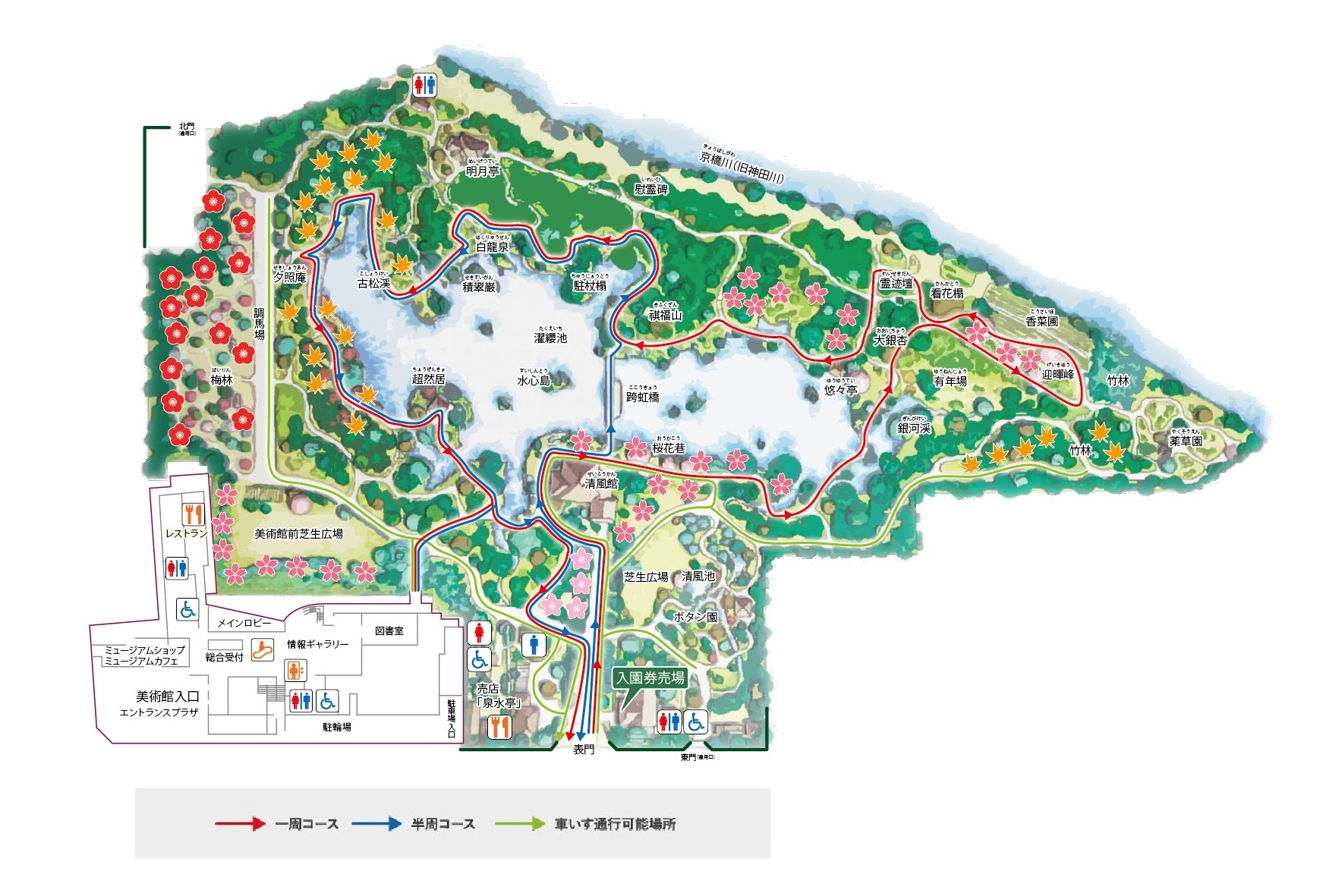
Late November to early December is a useful starting point for foliage planning, but actual color depends on the weather. Before arranging dinner and your trip home around a 2026 illumination visit, check the official events page. Dates from previous years are not confirmed dates for 2026. Use the garden map to locate Takuei Pond, Kokokyo Bridge and the maple-leaf symbols; a garden map is not a live foliage report.
For nearby Hiroshima Castle, plan an exterior, moat and castle-grounds walk: the castle keep closed to visitors on March 22, 2026, so climbing the keep is no longer an option. The reconstructed Ninomaru buildings and Sannomaru can still be visited during their respective opening hours.
Is Shukkeien worth visiting for autumn leaves? Our quick verdict
Yes, as long as you know what to expect. Come for a carefully composed garden, maple reflections and stone-bridge views, rather than mountains covered in red leaves or a long hike. If you have two or more days in Hiroshima, or already plan to visit Hiroshima Castle and Hatchobori, Shukkeien makes a worthwhile addition. With only one day, prioritize Peace Memorial Park and Miyajima, then decide whether there is time left.
Families, couples and older travelers can all enjoy the garden, but there are ponds, stone paths, slopes and arched bridges. Visitors with strollers or limited mobility do not need to tackle every path. We suggest visiting just after opening on a weekday, or before dusk on a confirmed illumination date, so you can see both daylight and evening views.
| Question | Our verdict |
|---|---|
| Worth a visit? | Yes, especially for Japanese-garden lovers and photographers |
| Time needed | A quick visit takes about 60 minutes; a fuller visit takes 90–120 minutes |
| Best for | First-time Hiroshima visitors, couples, photographers, families, older travelers and half-day outings |
| Less suitable for | Visitors seeking extensive mountain foliage, those with only a few hours in Hiroshima, or anyone uninterested in gardens |
| Best combination | Shukkeien, Hiroshima Prefectural Art Museum, Hiroshima Castle and Hatchobori |
| Reservations | Usually unnecessary for ordinary entry; check that year’s rules for illuminations and special events |
| In the rain? | Light rain is manageable; heavy rain and slippery conditions are less suitable |
| Autumn highlights | Maples, pond reflections, Kokokyo Bridge, tea pavilions and evening illuminations |
Shukkeien Garden: essential information
| Item | Details |
|---|---|
| Name | Shukkeien Garden / 縮景園 / しゅっけいえん |
| Address | 2-11 Kaminoboricho, Naka-ku, Hiroshima |
| Nearest stop | Shukkeien-mae, Hiroshima Electric Railway |
| Opening hours | March 16–September 15: 09:00–18:00; September 16–March 15: 09:00–17:00 |
| Last admission | 30 minutes before closing |
| Closed | December 29–31 |
| Standard admission | Adults ¥350; university students ¥150 |
| Free admission | High-school students and younger visitors, and visitors aged 65 or over, under the applicable rules. Bring any required supporting documents; those aged 65 or over must show official proof of age |
| Ticket advice | A reasonably priced paid attraction; an expensive sightseeing bundle is generally unnecessary for this garden alone |
| Suggested visit | One to two hours |
| Good for | Gardens, autumn foliage, photography, couples, families and older travelers |
| Official website | Shukkeien official website |
Admission prices, free-entry eligibility and opening arrangements may change for events. Illumination days may involve extended hours or a different entry process, so check the official annual calendar before traveling.
Shukkeien autumn tickets and reservations
Does Shukkeien charge admission?
Yes. Standard admission costs ¥350 for adults and ¥150 for university students. High-school students and younger visitors, and those aged 65 or over, can enter free under the garden’s rules. Combined tickets with Hiroshima Prefectural Art Museum are also available, so compare the options if you intend to visit both on the same day.
Basic admission is inexpensive, so we would not buy an expensive pass solely for Shukkeien. The more useful questions are whether you will take several tram rides that day, visit Miyajima or travel between cities.
Do tickets need to be booked ahead?
Ordinary daytime entry usually does not require a reservation: simply buy your ticket at the entrance. Peak-season weekends, holidays and illumination periods can be busy, but this is not an observation deck or theme park operating entirely on reserved time slots.
Illumination dates, extended hours, re-entry rules and special events can vary each year. Rather than relying on older social-media posts, check the 2026 arrangements on Shukkeien’s annual events page. Maple festivals and evening illuminations have been held during previous autumn seasons, but that does not mean they run every day throughout the foliage season.
Buy at the gate or online?
On weekday mornings and days without illuminations, buying at the gate is usually easy. There is no need to make an online booking simply to save a few minutes. Consider advance Shukkeien admission tickets if:
- You are visiting on a weekend or holiday
- Your dates fall around peak foliage
- Your schedule is tight
- You prefer not to handle cash or compare ticket types at the gate
- You want to keep e-vouchers together with your other bookings
Check the booking page for the actual online price, validity period and redemption instructions.
How to get to Shukkeien
From Hiroshima Station
There are three practical ways to reach the garden from Hiroshima Station.
Option 1: sightseeing loop bus
From the Shinkansen exit of JR Hiroshima Station, take the Orange or Lemon route and get off at Hiroshima Prefectural Art Museum / Shukkeien. This involves fewer transfers and suits first-time visitors, families and anyone who wants to minimize walking.
Option 2: tram
Take tram route 1, 2 or 6 from the south side of Hiroshima Station to Hatchobori, then change to route 9, the Hakushima Line, for Shukkeien-mae. The stop is close to the entrance, but changing at Hatchobori is less convenient with a large suitcase.
Option 3: walk
Walking from Hiroshima Station takes roughly 15–20 minutes. It is a pleasant option in comfortable weather without luggage. Autumn mornings and evenings can be chilly, so a bus or taxi may suit children and older travelers better.
Parking nearby is limited, so public transport is usually simpler from a city-center hotel.
From Hatchobori
Take tram route 9, the Hakushima Line, to Shukkeien-mae, then walk about three minutes. Hatchobori, Hondori and Kamiyacho have plenty of shops and restaurants, making it easy to visit the garden in the morning and return downtown for lunch.
From Peace Memorial Park
From the Atomic Bomb Dome or Kamiyacho area, take a tram to Hatchobori and change to route 9. A taxi is often more convenient for a larger group, older companions who walk slowly, or anyone who has already spent the day on foot.
From Hiroshima Airport
Take the airport limousine bus to Hiroshima Station, then continue by sightseeing loop bus, tram or taxi. Avoid going straight from your flight into the garden with a suitcase; leave your luggage at your accommodation first.
For airport buses, city trams and travel to Miyajima, see our Hiroshima transport guide.
From the nearest tram stop
Shukkeien-mae is the nearest Hiroshima Electric Railway stop, around three minutes on foot from the entrance. Route 9 links Hatchobori, Jogakuin-mae, Shukkeien-mae and Hakushima. It does not run directly from Hiroshima Station, so remember to change at Hatchobori.
Can you bring a suitcase?
It is not a good idea. Although the garden is close to Hiroshima Station, gravel, narrow paths, slopes and arched bridges make large luggage awkward. Use station lockers, your accommodation or a luggage-storage service first.
Is a transport pass worthwhile?
If you are only traveling between Hiroshima Station and Shukkeien, individual fares or an IC card are usually enough. A sightseeing transport pass is more worth comparing if the same day also includes the Atomic Bomb Dome, Peace Memorial Park, Hondori and other city attractions.
A pass generally provides value through included trams, buses or specified transport; it does not necessarily include garden admission. Count the rides you actually expect to take before buying.
What to see at Shukkeien in autumn
1. Autumn reflections in Takuei Pond
Takuei Pond is the garden’s visual centerpiece. The most rewarding autumn photographs combine maple leaves, pines, tea pavilions, stone bridges and reflections, rather than focusing on a single tree.
After entering, resist heading straight under the maples. First find a more open spot by the pond and look at the light. Calm conditions give the clearest reflections; a gentle breeze adds ripples and another layer of texture.
2. Kokokyo Bridge
This distinctive arched stone bridge is Shukkeien’s best-known feature. Its full curve is easier to appreciate from the pond’s edge than from the bridge itself. The sloping surface can be slippery after rain or when covered with fallen leaves, so children and older visitors should take their time.
During peak foliage season, avoid lingering in the middle for photographs. The narrow bridge quickly becomes a bottleneck. Photograph the whole bridge from the bank first, then take any portraits quickly when there is a gap in the crowd.
3. Tanpu-rin maple grove
Tanpu-rin is one of the key autumn areas, with concentrated maple plantings and layers of red, orange and yellow. Near peak season, fallen leaves may carpet the ground, giving your photos more autumn atmosphere than treetop-only shots.
The paths are fairly narrow. Check on-site tripod rules and the flow of visitors before setting up. Even where photography is permitted, keep tripod legs out of the main walkway.
4. Tea pavilions and pondside compositions
Shukkeien has several pavilions and tea-house buildings. Photographing them across the water creates more depth than a straight-on view of the facade. Use maple leaves in the foreground, water in the middle and a pavilion or city buildings in the background: this urban setting distinguishes Shukkeien from mountain foliage destinations.
Some buildings are not open inside every day. There is no need to disrupt your route just to enter a tea house; the exteriors, garden layout and reflections are central to the experience.
5. The atomic-bomb-surviving ginkgo and the garden’s history
Beyond its seasonal plants, Shukkeien preserves trees and features connected with Hiroshima’s history. The large ginkgo that survived the atomic bombing matters for more than its yellow autumn leaves: it helps visitors understand the garden’s recovery after wartime destruction.
If you are also visiting Peace Memorial Park, think of the garden as a quieter continuation of that history, rather than just a photo stop. The garden contains varied trees and seasonal plants, including trees used as specimens for Hiroshima’s weather observations.
6. Autumn evening illuminations
The appeal of an illuminated visit is the combination of maples, Kokokyo Bridge and reflections after dark. Daylight reveals the garden’s structure; evening lighting creates a different setting for couples and photographers.
If the confirmed 2026 arrangements permit, arrive before sunset, complete a daylight circuit and return to the pond as the sky darkens. Event dates, accessible areas, entry procedures and last admission can change from year to year, so follow the official calendar.
7. A tea and sweets break at Sensuitei
Near the entrance, Sensuitei serves matcha, sencha, sweets, coffee and some light meals, with possible seasonal menu changes. It is a convenient place to rest after your walk, wait for companions or sit out a brief shower.
Seats may be scarce during peak foliage season, so avoid treating it as a guaranteed full lunch stop at a fixed time. For a proper meal of okonomiyaki, oysters or tsukemen, Hiroshima Station and Hatchobori offer more choice.
How long to spend and suggested garden routes
Find the front gate and ticket booth at the bottom of the map before following Takuei Pond. Red marks a full circuit, blue a half circuit and green the wheelchair-passable locations. Choose according to your energy rather than crossing every bridge. Maple-leaf symbols help orient a foliage walk but are not a live color report; follow entrance signs for evening access and temporary closures.
A quick foliage visit: 60–75 minutes
This route suits a busy city-sightseeing day when you mainly want the principal pond views and photographs.
| Elapsed time | Plan |
|---|---|
| 00:00 | Arrive at the entrance and buy tickets |
| 00:10 | Photograph a broad garden view from the entrance side of Takuei Pond |
| 00:25 | Visit Kokokyo Bridge and nearby pondside photo spots |
| 00:40 | Walk through the concentrated foliage at Tanpu-rin |
| 00:55 | Return toward the entrance and Sensuitei |
| 01:10 | Leave for Hiroshima Castle or Hatchobori |
If the bridge is crowded, do not spend the whole visit waiting for a perfectly empty shot. Photograph the wider pond scene, walk around to the other side and try again on your way back.
A first-time visit: 90–120 minutes
This fuller circuit suits garden lovers and first-time visitors who want to explore at a comfortable pace.
| Elapsed time | Plan |
|---|---|
| 00:00 | Enter and check the day’s foliage conditions |
| 00:15 | Explore Takuei Pond and the crane and turtle islands |
| 00:35 | Visit Kokokyo Bridge and the main pond banks |
| 00:55 | Explore Tanpu-rin and the tea-pavilion exteriors |
| 01:15 | See the atomic-bomb-surviving ginkgo and historical features |
| 01:35 | Return toward the entrance, stopping for more reflection photos |
| 01:50 | Rest at Sensuitei or browse souvenirs |
| 02:00 | Leave the garden |
Bridges, islands and planting create changing scenes as you walk, so there is no need to follow only the shortest route. Try looking back across the pond after each bridge for a different composition.
A Hiroshima city half-day: three to five hours
This combines autumn color and historical sightseeing in one compact area, especially useful on a first visit to Hiroshima.
| Time | Plan |
|---|---|
| 09:00 | Enter Shukkeien shortly after opening |
| 10:30 | Visit Hiroshima Prefectural Art Museum if the exhibitions interest you |
| 12:00 | Walk to Hiroshima Castle for the exterior and grounds |
| 13:00 | Lunch in Hatchobori or Hondori |
| 14:00 | Finish the half-day route; continue to Peace Memorial Park or return to your hotel |
On a crowded day, keep the museum as an optional stop. Preserve time for the garden and castle grounds, then decide on the museum according to your interests and remaining time rather than rushing to tick off everything.
Best photo spots and timing
Photo spot 1: the banks of Takuei Pond
An open position by the water lets you frame autumn leaves, Kokokyo Bridge, pines and reflections together. This is the best place for wide-angle compositions and an essential stop for first-time visitors.
Photo spot 2: a diagonal view of Kokokyo Bridge
A head-on photograph can leave you with little besides the arch. Move slightly to one side to include maples and water. For portraits, avoid stopping for long at the top of the bridge and blocking the path.
Photo spot 3: the Tanpu-rin paths
Look here for closer shots of maple leaves, fallen foliage and portraits. A longer lens or portrait mode can reduce background distractions, but stay off lawns and planted areas.
Photo spot 4: tea pavilions across the pond
Use maple leaves as foreground, the pavilion as your subject and the water as negative space. This captures the character of Shukkeien more clearly than a photograph of one red tree.
Photo spot 5: pondside illuminations
After dark, prioritize reflections rather than pointing only at illuminated treetops. Lower your phone’s exposure to avoid blown-out lights, and leave popular pondside positions promptly once you have taken your pictures.
When are the autumn leaves usually best?
Shukkeien often reaches its more colorful period around late November, sometimes continuing into early December. Temperatures, wind, rain and the pace of cooling all affect the season, so do not base the whole itinerary on the same date from last year.
Closer to departure, check official events information, official social accounts and local foliage reports. Even before the entire garden reaches its peak, partial color around the pond and maple grove can create beautiful mixtures of red, yellow and green.
What time of day is best?
- For fewer crowds: shortly after the 09:00 opening on a weekday
- For clear reflections: a calm morning
- For both daylight and evening scenery: before dusk on a confirmed illumination date
- For a relaxed stroll: early afternoon
- Less ideal: arriving at the busiest midday-to-afternoon period on a weekend
Will rain spoil the photography?
Light rain can deepen leaf colors and add texture to the water, but stone bridges, gravel and fallen leaves become slippery. Photos can still be attractive even when the walk is less comfortable.
In heavy rain or strong wind, or when traveling with someone whose mobility is limited, make the adjacent art museum the main stop or shorten the garden visit to the entrance and principal pond banks.
Photography etiquette
- Do not shake branches to create falling leaves
- Stay off moss, lawns and planted areas
- Do not linger on narrow bridges
- Check on-site rules before using a tripod
- Follow the garden’s application rules for wedding photography, commercial shoots and large equipment
- Do not shine bright lights at other visitors at night
Who will enjoy Shukkeien?
First-time visitors to Hiroshima
It is a good fit, but prioritize according to your length of stay. With two days or more, Shukkeien works well on arrival day, before departure or as part of a city half-day. With one day, prioritize Peace Memorial Park and Miyajima.
Our Hiroshima travel guide helps you avoid cramming the city center, Miyajima and outlying attractions into the same day.
Families with children
The garden suits a short walk and nature spotting, and admission is affordable. Ponds, slopes, stone bridges and narrow paths mean children need close supervision near the water.
With a stroller, focus on the entrance, main pond banks and flatter paths rather than completing every circuit, then rest at Sensuitei.
Couples and anniversaries
It is especially appealing during autumn illuminations. The slower pace suits a garden stroll, photographs and tea.
A simple date route is Shukkeien, the outside of Hiroshima Castle and dinner in Hatchobori. There is no need to cross the city chasing another night-view spot.
Photography-focused travelers
Very suitable, provided your interest is garden composition rather than sheer quantities of red leaves. Photographers drawn to reflections, bridges, tea pavilions and portraits are likely to be happier here than visitors seeking mountains covered in foliage.
Rainy-day visitors
Light rain is fine; heavy rain is not ideal. This is an outdoor garden, not a complete substitute for an indoor attraction.
A short garden visit combined with Hiroshima Prefectural Art Museum is the safer wet-weather plan. If the rain becomes heavy, skipping the outdoor portion will be more comfortable.
Visitors traveling with older relatives
Keep the route shorter. The main pond banks already offer the signature scenery, without needing to cross every bridge or explore every side path.
Autumn can be cold, so consider late morning or early afternoon and leave time for a break at Sensuitei or the art museum.
Half-day visitors
This is an excellent option. One to two hours in the garden, followed by Hiroshima Castle and lunch in Hatchobori, makes a natural half-day route.
If you have visited the Peace Memorial Museum in the morning, an afternoon garden walk can also provide a gentler change of pace.
Travelers with a rental car
You can drive, but this is not an attraction that particularly needs a car. Parking at and around the garden is limited and more likely to fill during foliage season.
If you are staying in central Hiroshima, a tram, bus or taxi is usually simpler.
Nearby attractions and convenient combinations
| Attraction | Distance / transport | Why combine it? | Suggested timing |
|---|---|---|---|
| Hiroshima Prefectural Art Museum | Next door | Art exhibitions, a rainy-day option and combined tickets | Before or after Shukkeien |
| Hiroshima Castle | About 10–15 minutes on foot | Castle grounds, moat, history and an autumn stroll | After Shukkeien; exterior and grounds only for the keep |
| Hatchobori | Walk or tram | Restaurants, department stores and convenient transfers | Lunch or dinner |
| Hondori shopping street | Walk from Hatchobori | Shopping, food and more shelter in wet weather | Afternoon or evening |
| Peace Memorial Park | Tram or taxi | Hiroshima’s essential historical visit | Allow at least half a day |
| Hiroshima Station | Walk, bus or taxi | Shinkansen, shopping, okonomiyaki and accommodation | Arrival day or before departure |
A half-day combination
Shukkeien → Hiroshima Prefectural Art Museum → Hiroshima Castle grounds → lunch in Hatchobori
Short travel distances make this especially suitable for first-time visitors, families and older travelers. If the museum does not appeal, walk directly from the garden to the castle.
A full day in the city
Shukkeien → Hiroshima Castle grounds → Kamiyacho → Atomic Bomb Dome → Peace Memorial Park → Peace Memorial Museum → dinner in Hondori
This brings gardens, castle history and Hiroshima’s peace-related sites into one day. The Peace Memorial Museum has substantial exhibits: check ticket arrangements ahead and allow at least 1.5–2 hours inside.
A more complete Hiroshima autumn trip
Spend day one at Shukkeien, Hiroshima Castle and the city center. On day two, visit Miyajima’s Momijidani Park, Itsukushima Shrine and Mount Misen. Shukkeien offers carefully composed garden foliage; Miyajima adds wooded scenery and a stronger shrine-and-temple atmosphere. There is no need to rush both into one day.
Plan your transfers, tide-dependent sightseeing and visiting order before heading to Miyajima. Travelers who prefer not to arrange transfers can compare Hiroshima and Miyajima ferry day tours.
Food, shopping and places to stay near Shukkeien
Where to eat
The immediate entrance area is better for cafés and light meals. For a fuller choice of Hiroshima specialties, head to Hiroshima Station or Hatchobori.
- Hiroshima-style okonomiyaki: plenty of choice around the station, Hatchobori and Hondori
- Hiroshima tsukemen: a good option for spice lovers
- Hiroshima oysters: particularly appealing in autumn and winter
- Soupless tantanmen: easy to find downtown
- Matcha and Japanese sweets: check Sensuitei’s daily menu
- Momiji manju maple-shaped cakes: readily available at the station and major shopping streets
Use our Hiroshima food guide to plan meals by area rather than making a long detour for one restaurant.
Where to shop
- Hatchobori: department stores, clothing shops and restaurants
- Hondori shopping street: drugstores, chains and souvenirs
- Hiroshima Station: shopping complexes such as ekie for convenient last-minute purchases
- Sensuitei at Shukkeien: small souvenirs, drinks and sweets
Where to stay
Hiroshima Station is practical for the Shinkansen, airport bus and Miyajima connections. Hatchobori, Hondori and Kamiyacho are convenient for evening meals, shopping and trams.
There is no need to book right beside the garden just to visit Shukkeien. It is close to both the station and Hatchobori, so choose accommodation around your overall itinerary.
Compare neighborhoods and hotels in our Hiroshima accommodation guide.
Planning mistakes to avoid
Do not expect Hiroshima’s largest expanse of autumn foliage
Shukkeien excels at central-city convenience, garden compositions and reflections. If hiking and wooded mountains are your main goal, Miyajima’s Momijidani, Mount Misen or other natural attractions in Hiroshima Prefecture are better fits.
Do not squeeze Miyajima, Shukkeien and Peace Memorial Park into one day
It may appear possible on a map, but Miyajima deserves half a day to a full day, and the Peace Memorial Museum also takes time. Packing all three together can reduce the trip to transfers and quick photos.
Do not arrive at midday on a peak-season weekend if photos matter
Midday and afternoon weekends tend to be busier, especially around the pond and bridge. Just after opening on a weekday is the more reliable choice for less crowded pictures.
Do not bring a large suitcase into the garden
Being near the station does not make the garden luggage-friendly. Gravel, stone bridges and narrow paths make suitcases cumbersome and can obstruct other visitors.
Do not assume illuminations run every autumn evening
They generally operate only on designated event dates. Finalize illumination-dependent accommodation and dinner plans after the official 2026 dates are announced.
Do not insist on every bridge and path in the rain
Sloping bridge surfaces and wet leaves can be slippery. With children or older companions, the main pond banks still provide the characteristic views.
Do not buy a major JR Pass only for Shukkeien
The garden is in central Hiroshima, where local transport tickets or an IC card are enough. Evaluate larger JR passes against long-distance journeys between Kansai, Sanyo, Yamaguchi or Fukuoka, rather than this single garden.
Activities, transport and ticket options
Shukkeien Garden e-tickets
Shukkeien e-tickets can suit peak foliage dates, weekends and visitors who prefer sorting out admission in advance. On quiet weekdays with a flexible schedule, gate purchases are equally convenient; advance booking is optional.
Hiroshima sightseeing transport passes
These are worth comparing if you will ride trams, buses and other covered services several times in one day. For a single return trip between the station and Shukkeien, individual fares are often simpler.
Hiroshima Peace Memorial Museum tickets
Consider museum ticket arrangements if combining Shukkeien and Peace Memorial Park. The exhibits are emotionally demanding, so avoid putting the visit immediately before the garden’s closing time or a fixed dinner reservation.
JR Kansai–Hiroshima Area Pass
If you are coming from Osaka, Kyoto or Kansai Airport and will take several Shinkansen and JR journeys within a few days, compare the JR Kansai–Hiroshima Area Pass.
A one-way Osaka–Hiroshima journey followed by departure from another city does not automatically make a pass worthwhile. Use our Osaka–Hiroshima transport guide to price each leg first.
Hiroshima and Miyajima ferry day tours
These suit visitors who prefer not to work out the Shinkansen, Miyajimaguchi connections, ferries and city transport themselves.
Such tours usually focus on Peace Memorial Park and Miyajima and may not include Shukkeien. If the garden is a priority, leave a separate half-day rather than assuming every Hiroshima day tour stops here.
Hiroshima autumn foliage 2026: frequently asked questions
1. When is the best time for autumn foliage in Hiroshima?
City foliage usually begins changing through mid-to-late November, with some places retaining color into early December. Shukkeien’s peak depends on that year’s temperatures, strong winds and rain; check official updates in the week before your visit.
2. Is Shukkeien worth visiting for autumn leaves?
Yes, particularly for Japanese gardens, pond reflections and a relaxed walk. It may not be your first choice if you only want expansive mountain foliage.
3. Does Shukkeien require a ticket?
Yes. Standard admission is ¥350 for adults and ¥150 for university students. High-school students and younger visitors, and visitors aged 65 or over, qualify for free admission under the current rules. Those aged 65 or over must show official proof of age; check the latest official prices and eligibility.
4. Must Shukkeien tickets be reserved?
Ordinary daytime visits usually do not require reservations; you can buy at the gate. Illuminations, tea gatherings and special events may use different admission arrangements, so check the 2026 event announcements.
5. What is the easiest way from Hiroshima Station?
For fewer transfers, take a sightseeing loop bus to Hiroshima Prefectural Art Museum / Shukkeien. To experience the tram, travel to Hatchobori and change to route 9, the Hakushima Line, for Shukkeien-mae.
6. Which stop is closest to Shukkeien?
Shukkeien-mae on the Hiroshima Electric Railway is about three minutes away on foot. From Hiroshima Station, tram passengers need to change to route 9 at Hatchobori.
7. How long should I spend in the garden?
Allow around 60 minutes for the main pond views or 90–120 minutes for a first visit. Photography, tea or waiting for illuminations can extend the visit to two or three hours.
8. Is Shukkeien suitable for children?
Yes, with supervision around ponds, slopes, narrow paths and stone bridges. Families with strollers can focus on the main pond banks instead of exploring every path.
9. Can I visit Shukkeien in the rain?
Light rain is manageable and can make the foliage colors richer, although paths and bridges become slippery. In heavy rain, choose the adjacent art museum or shorten your garden visit to the main route near the entrance.
10. What can I visit nearby?
Hiroshima Prefectural Art Museum is next door, and Hiroshima Castle is within walking distance. Continue to Hatchobori, Hondori, the Atomic Bomb Dome or Peace Memorial Park; see our Hiroshima travel guide for a practical order.
11. Do Hiroshima transport passes cover Shukkeien?
Transport passes mainly cover trams, buses or specified services and do not necessarily include garden admission. A pass is usually unnecessary for a single garden visit; it is more likely to pay off when you take several rides that day.