
Choose Kyoto ramen by the bowl you want and the neighborhood you will already be visiting. The station area has long-established shoyu shops; Ichijoji is a useful destination for rich chicken broth; and dried-fish, shellfish and sea-bream dashi offer other directions around central Kyoto and Gion.
These 20 restaurants are all within Kyoto City and each meets a 3.4 minimum on its individual Japanese Tabelog page. The guide is organized geographically, rather than as a ranking, with exact branch addresses, station approaches and the reservation or queue rules that affect your day.
Information checked October 12, 2026. Scores, menus and queue arrangements can change; consult the linked restaurant information before traveling.

Kyoto ramen at a glance: choose a style and area
| What you want | Start with | Area | Planning detail |
|---|---|---|---|
| Classic shoyu | Daiichi Asahi, Shinpuku Saikan | Kyoto Station | Walk-in queues; Daiichi Asahi closes Thursdays |
| Rich white broth | Gokkei, Takayasu, Kataguruma | Ichijoji / Tambaguchi | Kataguruma links LINE arrival registration |
| Fish or shellfish dashi | Inoichi, Kitada, Nishiki | Kawaramachi / Kyoto Station / Gion | Inoichi requires a same-day ticket |
| Tsukemen | Kubota, Takamatsu, Sugari | Gojo / Shijo Karasuma | Sugari is cashless; no transit IC |
| An ingredient-led bowl | Gion Duck Noodles, Mugi no Yoake | Gion / Nishishichijo | Duck, or sansho paired with scallop |
| Clear chicken and soy | Touhichi | Shugakuin | Paid FastPass provides queue priority |
Around Kyoto Station: shoyu classics, shellfish and miso
1. Honke Daiichi Asahi Honten (本家 第一旭 本店)

Daiichi Asahi is a straightforward introduction to Kyoto-style shoyu ramen. Japanese pork chashu and Kujo green onions accompany the soy-seasoned bowl, making this a useful first choice when you want a traditional style close to Kyoto Station.
The main shop opens at 6am, so ramen for breakfast is a real option. Allow room for a queue if you have a train to catch, and remember that Thursday is its regular closing day.
- Address: 京都府京都市下京区東塩小路向畑町845
- Getting there: About 4 minutes on foot from JR Kyoto Station.
- Reservations / queue: No reservations; follow the queue arrangements at the restaurant.
2. Shinpuku Saikan Honten (新福菜館 本店)

Shinpuku Saikan’s dark soy-sauce broth makes it one of the most recognizable ramen stops around Kyoto Station. It is a useful counterpart to nearby Daiichi Asahi if you are exploring the city’s long-established shoyu tradition.
Choose one for your main meal rather than building a tight schedule around two consecutive queues. The shop has announced a closure on October 20–21, 2026, so travelers arriving on those dates should choose another stop.
- Address: 京都府京都市下京区東塩小路向畑町569
- Getting there: About 7 minutes from JR or subway Kyoto Station, or 9 minutes from Keihan Shichijo Station.
- Reservations / queue: No reservations; follow the queue arrangements at the restaurant.
3. Kaidashi Men Kitada (貝だし麺 きた田)
Kitada gives station-area ramen a different focus: shellfish dashi. Put it on your shortlist when you want a seafood-led bowl rather than another stop devoted to Kyoto’s older shoyu styles. The dishes labeled “kaidashi” are the clearest starting point for that choice.
Its address is northwest of Kyoto Station. The walk is shorter from the Nishinotoin exit by the Sagano Line platforms than from the main station approach, so check which exit your journey actually uses.
- Address: 京都府京都市下京区北不動堂町570-3
- Getting there: About 8 minutes from JR Kyoto Station, or around 5 minutes from the Nishinotoin exit by the Sagano Line platforms.
- Reservations / queue: No reservations; follow the queue arrangements at the restaurant.
4. Ginjo Ramen Kubota (吟醸らーめん 久保田)
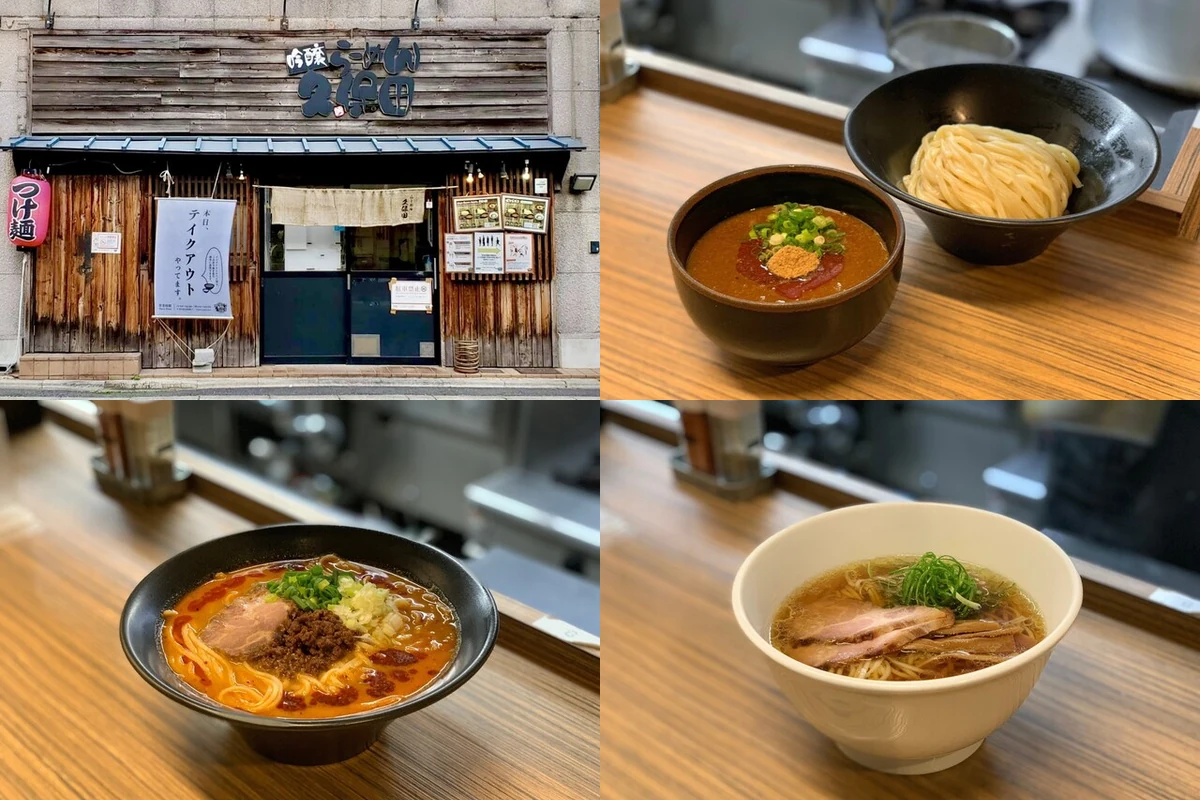
Kubota is a strong choice when miso tsukemen is the goal. Its signature dipping sauce is described by the operator as a spicy meat-miso blend made with three kinds of miso, giving this stop a distinct place among Kyoto’s many soy-seasoned bowls.
With tsukemen, the noodles and dipping sauce arrive separately. Dip each mouthful as you eat. The shop sits between Gojo and Kyoto Station, making it convenient on foot from a north-side station hotel or from Gojo’s exit 8.
- Address: 京都府京都市下京区西松屋町563 フジ萬ビル 1F
- Getting there: About 7 minutes from Gojo Station exit 8 on the Karasuma subway line, or 13 minutes from JR Kyoto Station.
- Reservations / queue: No reservations; follow the queue arrangements at the restaurant.
Shijo, Kawaramachi and Karasuma Oike: central Kyoto choices
5. Menya Inoichi Main Shop (麺屋 猪一)

Inoichi builds its noodle soups around dried-fish dashi, thin noodles and a choice of white or dark soy seasoning. It suits travelers who want to focus on the broth while exploring Teramachi and Kawaramachi. A broth without animal fat is not a vegan broth here: fish dashi and meat toppings still matter.
This entry is for the main shop in Ebisunocho. Plan around its same-day ticket system before deciding when to explore the neighborhood, and return with your whole party at the time shown on your ticket.
- Address: 京都府京都市下京区恵美須之町寺町通仏光寺下ル542
- Getting there: About 6 minutes from Hankyu Kyoto-kawaramachi Station exit 10.
- Reservations / queue: No advance reservations. Collect a same-day ticket at the shop, first come, first served: lunch tickets from 10:30am and dinner tickets from 4pm. The time on the ticket is a return time for the queue, not a guaranteed seating time. Return together; late arrival can invalidate the ticket. Main-shop ticket rules
6. Menya Yuko (麺屋 優光)

Yuko makes its noodles each morning, blending whole-wheat flour with flour used for udon. The operator emphasizes wheat aroma and a firm texture, with Hachiku, Madake and Kurochiku forming the main ramen choices. It is a good central stop for travelers who care about the noodles as much as the broth.
The Karasuma Oike shop has a café-like design, with counter seats downstairs and tables upstairs. Use the address at 588 Banocho when navigating; the group also operates other Yuko locations.
- Address: 京都府京都市中京区場之町588
- Getting there: About 1 minute from Karasuma Oike subway station exit 6.
- Reservations / queue: No reservations; follow the queue arrangements at the restaurant.
7. Menya Takakura Nijo (麺や高倉二条)
Takakura Nijo offers ramen and tsukemen north of Karasuma Oike. Choose a soup bowl if you want the noodles immersed in hot broth, or dipping noodles if you prefer to control how much sauce accompanies each bite. It is a practical option for a meal around central Kyoto’s northern streets.
Payment needs a little preparation. The shop is cashless and does not accept transit IC cards, so cash and an ICOCA card alone will not cover the bill. Consult the operator’s sugari.net website for the current shop information.
- Address: 京都府京都市中京区観音町64-1
- Getting there: About 6 minutes from Karasuma Oike Station exit 1 or Marutamachi Station exit 7.
- Reservations / queue: No reservations; follow the queue arrangements at the shop. There is no restaurant phone line, and the website contact form is not a booking service.
8. Mensho Takamatsu Honten (麺匠 たか松 本店)
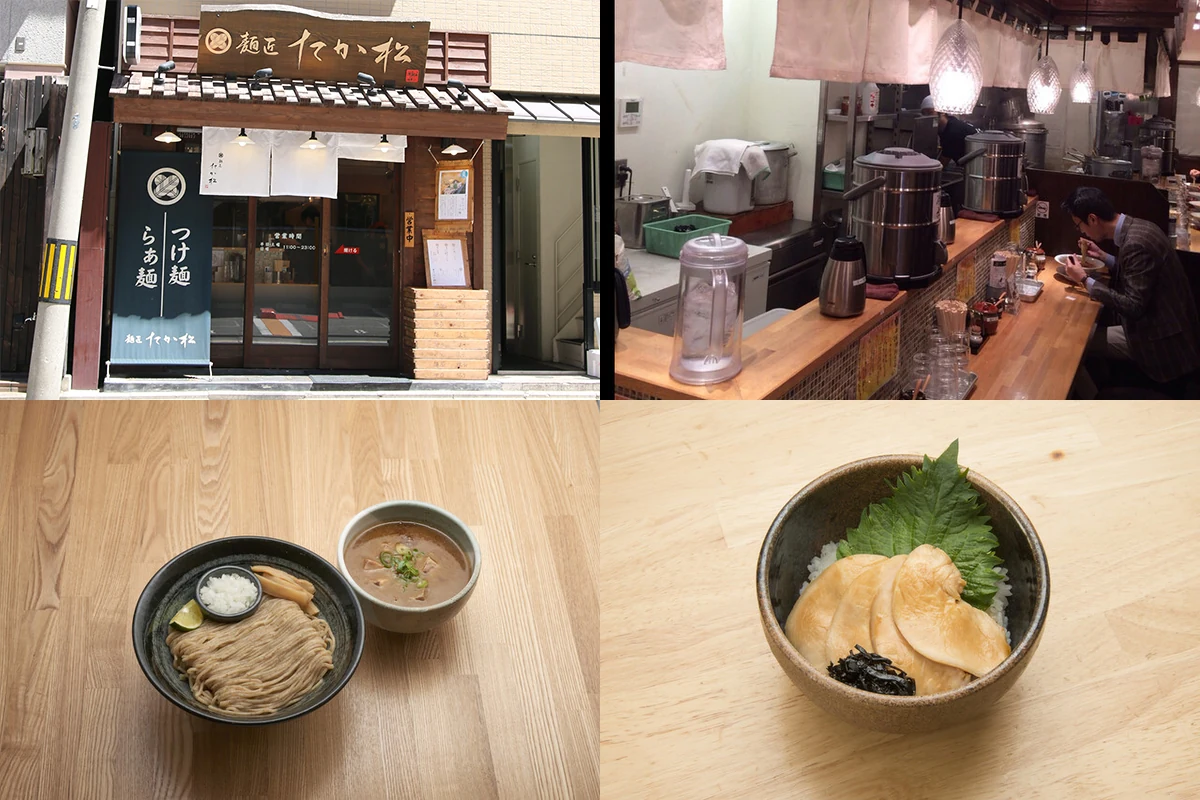
Takamatsu pairs stone-milled whole-wheat noodles with a chicken-and-seafood dipping broth. It is particularly convenient if you want to explore wheat-forward tsukemen while staying close to the shopping streets around Shijo Karasuma.
The original shop is in Ichirenshacho. Keep that address in your map rather than choosing the first Takamatsu result: the station-building and Kawaramachi branches are separate destinations.
- Address: 京都府京都市中京区一蓮社町312
- Getting there: About 4 minutes from exit 21 of the underground passages serving Hankyu Karasuma and subway Shijo stations.
- Reservations / queue: No reservations; follow the queue arrangements at the restaurant.
9. Wajo Ryomen Sugari (和醸良麺 すがり)
Wajo Ryomen Sugari is worth considering if motsu ramen or tsukemen is what you want. Motsu means offal, so make sure that is an ingredient your party actually wants before choosing the shop on the strength of its name alone.
This is the Wajo Ryomen Sugari at 471-1 Kannondocho, distinct from the other Sugari at number 178 in Tsuchinoyacho. Payment is cashless, and transit IC cards are not accepted.
- Address: 京都府京都市中京区観音堂町471-1
- Getting there: About 2 minutes from Karasuma or Shijo Station exit 24. Walk west on Shijo-dori, pass Shijo Muromachi, then turn north into the next narrow lane and look for the small Wajo Ryomen sign.
- Reservations / queue: No reservations; join the queue at the shop. The restaurant has no phone line.
Gion: duck broth or sea-bream dashi
10. Gion Duck Noodles, Gion
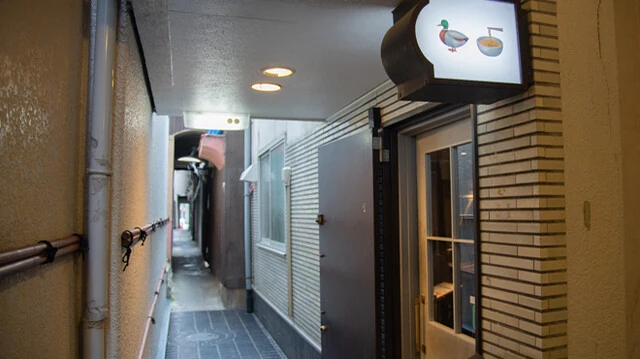
Kishu duck broth and house-made rye noodles give Gion Duck Noodles a clearly defined identity. Duck ramen is the direct choice for a soup bowl; its fruit-accented tsukemen offers another direction if you enjoy an unusual dipping-sauce pairing.
The Gion shop is tucked into an alley at 329 Gion Kitagawa. The group’s Arashiyama restaurant has its own arrangements, so an Arashiyama booking link will not reserve a place at this address.
- Address: 京都府京都市東山区祇園北側329 1F D号
- Getting there: About 5 minutes from Keihan Gion-shijo Station, in an alley between Shijo-dori and Tominagacho.
- Reservations / queue: No reservations; follow the queue arrangements at the restaurant.
11. Ramen Nishiki (らーめん錦)
Nishiki uses sea bream from Uwajima in Ehime for its dashi, pairing it with house-made noodles that include whole-wheat flour and oats. Choose it when fish broth is the attraction; nearby Gion Duck Noodles offers a different ingredient focus.
Despite the name, this shop is in Gion’s Hashimotocho. Navigate using the full address rather than assuming it is near Nishiki Market, and check the restaurant’s latest notice before setting out.
- Address: 京都府京都市東山区新橋通大和大路通東入2橋本町416
- Getting there: About 5 minutes from Keihan Gion-shijo Station exit 9.
- Reservations / queue: No reservations; follow the queue arrangements at the restaurant.
Ichijoji and Shugakuin: a trip north for ramen
12. Menya Gokkei Ichijoji Honten (麺屋 極鶏 一乗寺本店)
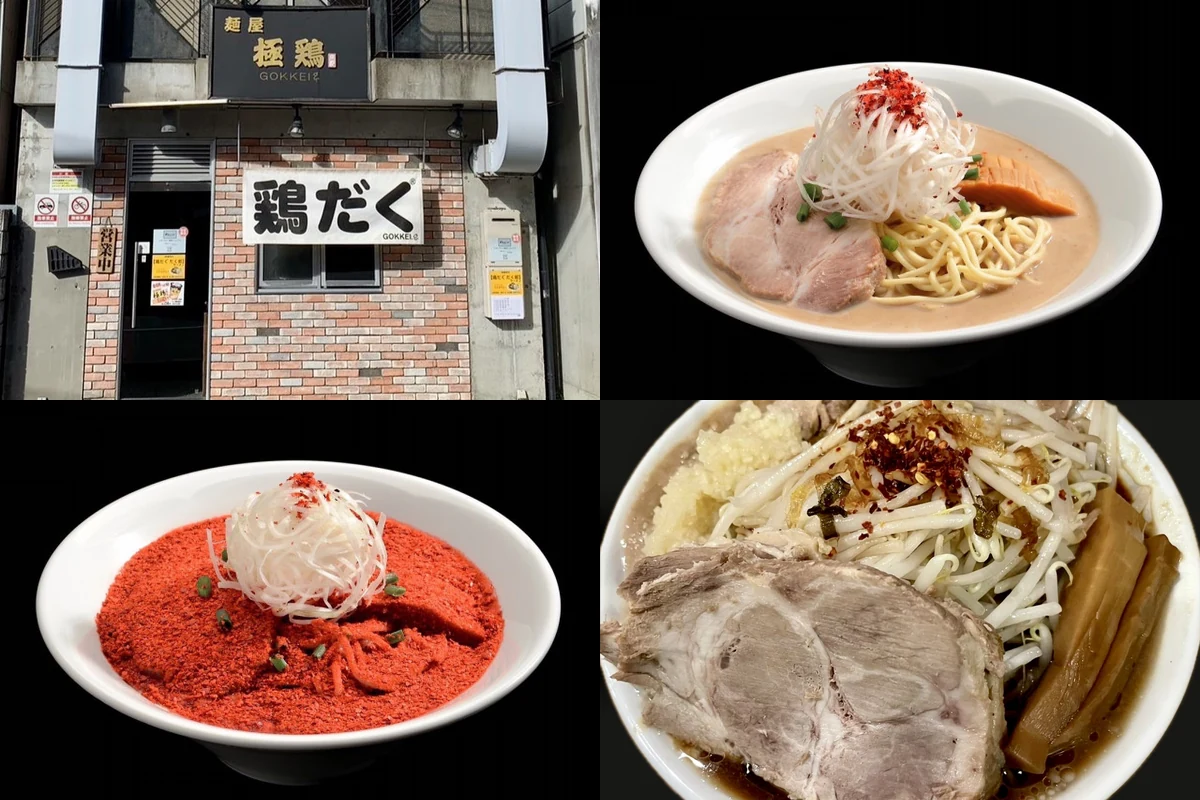
Gokkei’s signature Toridaku is for people who actively want a very thick chicken-paitan bowl. Broth concentration is the reason to make this stop in Ichijoji, especially if a clear, delicate dashi is not what you are craving that day.
The main shop is an easy walk from Ichijoji Station. Service can finish when the broth sells out, so do not rely on arriving just before the advertised closing time.
- Address: 京都府京都市左京区一乗寺西閉川原町29-7
- Getting there: About 5 minutes from Eizan Railway’s Ichijoji Station.
- Reservations / queue: No reservations; follow the queue arrangements at the restaurant.
13. Chuka Soba Takayasu (中華そば 高安)

Takayasu combines a pork-and-chicken white broth with karaage as a signature side. It is an appealing Ichijoji option when your party wants a substantial fried-chicken addition as well as a bowl of noodles.
Use the menu focus to choose between this and Gokkei: Takayasu offers the pork-and-chicken combination and karaage, while Gokkei centers on concentrated chicken paitan. Neither offers advance seat reservations.
- Address: 京都府京都市左京区一乗寺高槻町10
- Getting there: About 4–5 minutes from Eizan Railway’s Ichijoji Station.
- Reservations / queue: No reservations; follow the queue arrangements at the restaurant.
14. Ramen Touhichi (らぁ麺 とうひち)
Touhichi’s signature soy-sauce ramen starts with a broth made from chicken and water, combined with raw soy-sauce seasoning. It is a focused choice for understanding how chicken dashi and kaeshi work together; chicken paitan and dipping noodles provide other options.
The current shop is by Shugakuin Station, not at its old Kita-ku address. An optional paid FastPass can change your position in the queue, but it does not reserve a seat.
- Address: 京都府京都市左京区山端壱町田町8-6 京福修学院マンション 1F
- Getting there: About 1 minute from Eizan Railway’s Shugakuin Station, on the ground floor of Keifuku Shugakuin Mansion.
- Reservations / queue: Join the walk-in queue or use the official TableCheck FastPass, ¥500 per person and nonrefundable, including cancellations. It moves you to the front of the queue at the selected time; it is not a seat reservation. Maximum four people, with the whole party arriving together and one noodle dish per person. Pay separately for food in cash at the shop. Official FastPass terms and selection
Umekoji, Mibu and Saiin: six options in western Kyoto
15. Kobushi Ramen (拳ラーメン)
Kobushi brings a Japanese-cooking background to ramen, with Kyoto duck and dried nodoguro fish among its characteristic combinations. It is a useful stop if you are interested in how different dashi ingredients shape a bowl rather than choosing solely by broth color.
The location near Umekoji Park works well with a Railway Museum visit. If a particular seasonal bowl is the reason for your trip, check the shop’s current notice rather than assuming a dish in an older review is still available.
- Address: 京都府京都市下京区朱雀正会町1-16
- Getting there: About 5 minutes from Umekoji-Kyotonishi Station on the JR Sagano Line.
- Reservations / queue: No reservations; follow the queue arrangements at the restaurant.
16. Aitsu no Ramen Kataguruma Honten (あいつのラーメン かたぐるま 本店)

Kataguruma pairs a foamed white broth with house-made flat noodles. It belongs on the shortlist if you are interested in both a rich soup and a different noodle shape, and are willing to walk from Tambaguchi rather than stay immediately around Kyoto Station.
Families should check the entry rule first: the main shop does not admit preschool-age children. The operator also links a LINE arrival-registration service; follow the current page and the restaurant’s instructions for how to join.
- Address: 京都府京都市下京区西七条西八反田町77 ガーディアン青山 1F
- Getting there: About 10 minutes from Tambaguchi Station on the JR Sagano Line.
- Reservations / queue: Use the LINE arrival-registration link below and follow the day’s instructions. Do not treat this service as a guaranteed seat reservation for a fixed time. LINE arrival registration
17. Seabura no Kami Mibu Honten (セアブラノ神 壬生本店)

Seabura no Kami combines pork back fat with dried-sardine dashi and noodles from Kyoto maker Teigaku. Choose the Mibu main shop when you want both an oily richness and a dried-fish component in the same bowl.
The Mibu restaurant reopened after renovation in September 2026. The brand has other locations and shared social content, so check that any menu or seasonal special you are considering actually belongs to Mibu Honten.
- Address: 京都府京都市中京区壬生相合町25-4 デイスターアベニュー 1F
- Getting there: About 6 minutes from Hankyu Omiya Station.
- Reservations / queue: No reservations; follow the queue arrangements at the restaurant.
18. Mugi no Yoake (麦の夜明け)
Mugi no Yoake explores sansho pepper through two distinctive combinations: scallop broth and beef-fat soy seasoning. It is worth a dedicated trip if that aromatic pepper is part of what you want from the meal, rather than treating it as a convenient station-side bowl.
The restaurant is some distance from the nearest railway stations. From Kyoto Station, route 205 toward Kinkakuji serves Nishioji Hanayamachi, close to the shop. Leave flexibility for road traffic and the queue.
- Address: 京都府京都市下京区西七条掛越町12-5
- Getting there: Take city bus 205 from Kyoto Station toward Kinkakuji, get off at Nishioji Hanayamachi and walk about 1 minute. Alternatively, walk around 16 minutes from Hankyu Nishikyogoku Station.
- Reservations / queue: No reservations; follow the queue arrangements at the restaurant.
19. Ramen Tsurumusha (らーめん 鶴武者)
Tsurumusha makes its noodles with Kyoto-grown wheat and serves ramen, Japanese-style ramen and tsukemen. It is a useful Saiin choice if flour and noodle-making are part of your interest in ramen, with both soup and dipping formats to consider.
The roughly six-minute walk from Saiin makes it easy to fit into a west-Kyoto itinerary. It closes on Thursday evenings and all day Friday, an important detail if you are arriving just before the weekend.
- Address: 京都府京都市右京区西院矢掛町28-2
- Getting there: About 6 minutes from Saiin Station on Hankyu or Randen.
- Reservations / queue: No reservations; follow the queue arrangements at the restaurant.
20. Menya Sanda (麺屋 さん田)
Sanda offers tsukemen, ramen and mixed noodles, giving a west-Kyoto meal several possible formats. Choose dipping noodles if you want to control each mouthful of sauce, a soup bowl for hot broth, or check the day’s mixed-noodle choices when you want little or no soup.
Allow around 15 minutes on foot from Hankyu Saiin Station. This is a destination lunch rather than an immediate station-exit stop; consult the official X account before traveling for a specific dish.
- Address: 京都府京都市右京区西院追分町7-4
- Getting there: About 15 minutes from Hankyu Saiin Station.
- Reservations / queue: No reservations; follow the queue arrangements at the restaurant.
Build the day around tickets first, then transport
For Inoichi, put the main shop’s 10:30am or 4pm ticket distribution into your schedule before planning time around Teramachi and Kawaramachi. For Touhichi, decide whether the paid FastPass is worthwhile and bring separate cash for the meal. Kataguruma’s LINE arrival registration follows its own instructions. These three systems should not be treated as interchangeable table bookings.
Budget, children and payment: the details to check
A planning allowance of roughly ¥1,000–2,000 per person covers the listed spending range at many of these shops, but special toppings, sides and particular bowls can push the bill higher. This is not a fixed set-menu price. Touhichi’s FastPass is a separate charge.
Check entry rules before traveling with children: Kataguruma Honten does not admit preschool-age children. Larger parties should also allow flexibility; a walk-in policy does not promise that everyone can sit together.
Carry cash, but note the exceptions. Takakura Nijo and Wajo Ryomen Sugari are cashless and do not accept transit IC cards. If you avoid particular ingredients, ask the restaurant directly: fish dashi, duck broth or a soup without animal fat should not be assumed to be vegetarian.
For a first choice, match the broth to the day’s route. Daiichi Asahi, Shinpuku Saikan and Kitada suit the station area; Inoichi, Yuko and Takamatsu fit central Kyoto. Save Ichijoji, Shugakuin and Nishishichijo for a day when the meal itself can justify the extra travel.