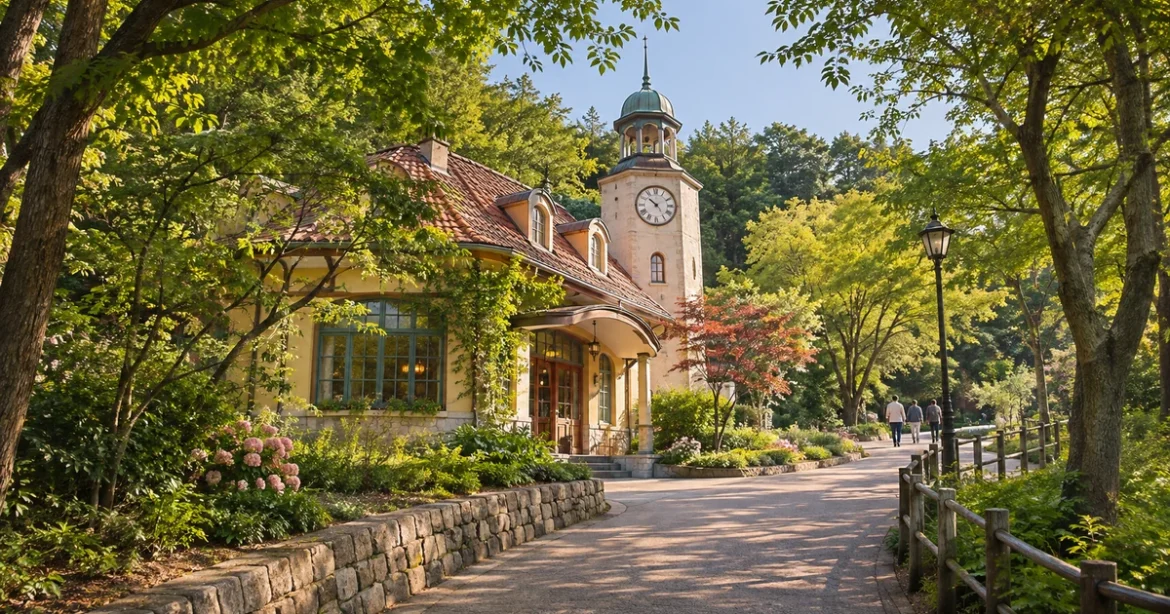
Ghibli Park is not a conventional theme park built around roller coasters, character parades and a packed ride schedule. Its appeal comes from walking into carefully reconstructed environments from Studio Ghibli films, opening drawers, noticing small objects, entering familiar houses and spending time with exhibitions that reward patient observation.
For committed Ghibli fans, it is one of the most distinctive attractions in Japan. For visitors with only a casual interest in the films, however, the ticket price, advance-booking process and amount of walking may make a central Nagoya sightseeing day more satisfying. The experience works best when you already know which films and areas matter to you.
The biggest planning decision is the ticket. The Premium ticket provides the most complete visit, including all five areas and the principal reconstructed house interiors. The cheaper Standard ticket covers only Ghibli’s Grand Warehouse, Mononoke Village and Valley of Witches, and does not automatically include Howl’s Castle, Okino Residence or The House of Witches.
Visitors who are comfortable using a third-party booking platform can check the current Ghibli Park ticket availability on Klook. Read the selected package carefully because the Standard and Premium experiences are significantly different.
From July 2026, the previous 15:00 Ghibli’s Grand Warehouse entry slot is no longer offered. Standard ticket holders also face a revised same-day voucher process if they want to enter the three major Valley of Witches buildings. These changes make route planning more important than many older guides suggest.
For a first visit, reserve a complete day, stay in Nagoya the night before when possible, arrive before the park opens and arrange the route around your assigned Grand Warehouse time. The park is spread across Expo 2005 Aichi Commemorative Park, so attempting the areas in a random order can consume a surprising amount of time.
Travellers building a longer stay can use this Nagoya travel guide to combine Ghibli Park with central Nagoya food, museums and family attractions.

Is Ghibli Park Worth Visiting?
| Decision | Practical answer |
|---|---|
| Is it worth visiting? | Yes for Studio Ghibli fans who enjoy immersive sets, exhibitions and film details. It is less compelling for travellers mainly seeking rides or live entertainment. |
| Best suited to | Ghibli fans, couples, families with film-loving children, photographers and travellers who enjoy slow exploration. |
| Who may prefer to skip it | Visitors unfamiliar with the films, travellers with less than half a day, and anyone expecting a ride-heavy theme park. |
| Best ticket | Standard for the three-area core visit; Premium for all five areas and the included house interiors. |
| Recommended duration | Seven to eight hours for Premium; around six hours for a selective Standard visit. |
| Transport difficulty | Easy from Nagoya, but the park itself involves substantial walking between separate areas. |
| Main highlight | Entering detailed environments such as Howl’s Castle, World Emporium and Satsuki and Mei’s House. |
| Main disadvantage | Advance booking, timed entry and the distance between areas require more planning than a compact museum. |
| Children | Very suitable for children who know the films, although some play features are restricted to visitors aged 12 or younger. |
| Older travellers | Possible with a selective route, regular rests and use of the free internal bus. |
| Limited mobility | The principal areas can be enjoyed, but some buildings, elevated features and forest paths are not fully step-free. |
| Overnight stay | Not essential, but staying near Nagoya Station the night before makes an early start much easier. |
Ghibli Park deserves a full day when the visitor cares about the films and can obtain a Premium ticket. The value comes from the cumulative experience rather than one dramatic ride or viewpoint. Entering Howl’s Castle, examining the interiors of World Emporium and walking through Satsuki and Mei’s House are more meaningful when you recognise their stories.
A Standard ticket can still produce a strong visit, particularly if Ghibli’s Grand Warehouse is the priority. It becomes less satisfying when the main reason for visiting is to enter Howl’s Castle or complete every area. In that situation, saving money on the base ticket can lead to disappointment or a stressful attempt to secure limited same-day vouchers.
Essential Ghibli Park Information
The usual closure day is Tuesday, shifting to the next weekday when Tuesday is a public holiday; year-end and maintenance closures also apply. Check the official date calendar before fixing transport and accommodation.
| Item | Current information |
|---|---|
| Official name | Ghibli Park |
| Location | Expo 2005 Aichi Commemorative Park, Nagakute, Aichi Prefecture |
| Nearest station | Ai-Chikyuhaku Kinen Koen Station on the Linimo |
| Recommended exit | Exit 2 |
| Weekday hours | 10:00–17:00 |
| Weekend and holiday hours | 09:00–17:00 |
| Final area admission | 16:30 |
| Regular closed day | Tuesday, with exceptions during major school-holiday periods |
| Reservation | Advance admission ticket required |
| Timed entry | Ghibli’s Grand Warehouse only |
| Recommended visit | Full day for Premium; at least four hours for Standard |
| Children aged 0–3 | Free |
| Large luggage | Not accepted inside the paid areas |
| Dedicated car park | None; visitors use the shared Expo park car parks |
Opening days may change during maintenance periods, national holidays and school vacations. Confirm the official operating calendar before booking transport or accommodation.
Latest Ghibli Park Updates for 2026
The 15:00 Grand Warehouse Slot Has Been Removed
Ghibli’s Grand Warehouse remains the only area with a fixed admission time, but the former 15:00 slot was removed beginning with July 2026 admission. Current entry choices generally run from the morning through 14:00.
You must enter within the permitted period shown on your ticket. Early entry is not allowed, so arriving at 10:00 with a 13:00 ticket does not provide access to the warehouse before 13:00. Use the earlier part of the day for other areas.
Standard Ticket Building Entry Now Uses Vouchers
Standard ticket holders who want to enter Okino Residence, Howl’s Castle or The House of Witches must collect a limited same-day voucher near the Ticket Truck in Valley of Witches.
The voucher shows when the visitor may return to buy the building ticket. It is not the admission ticket itself. Quantities are limited, and distribution can finish before every interested visitor receives one.
This makes Valley of Witches the logical first stop for Standard ticket holders who consider the building interiors essential. Arriving after completing the warehouse and Mononoke Village may leave no vouchers available.
New Exhibition and Original Short Film
These additions began on 8 July 2026. The 9 October announcement extends the short film to approximately June 2027, with a precise end date to follow. Check the screening programme for your visit rather than assuming a permanent film schedule.
Ghibli’s Grand Warehouse now includes the Panorama Box Exhibition, a collection of 31 three-dimensional works created by Hayao Miyazaki. Cinema Orion is also screening A Night in the Valley of Witches, the first original Studio Ghibli short produced specifically for Ghibli Park.
Both additions strengthen the case for allowing at least two to three hours inside the warehouse rather than treating it as a quick indoor stop.
Ghibli Park Tickets Explained
Premium Ticket
Collect the Premium wristband by noon, even with an afternoon Grand Warehouse reservation. Everyone must enter the first area and the Warehouse with the named ticket holder. The Warehouse still requires the ticket QR code, not just a wristband; other areas can then be entered individually with wristbands. Premium allows area re-entry, with Warehouse re-entry only after 15:00. Standard allows re-entry only to Valley of Witches. The other areas have a 16:30 final-entry deadline, so leave a queueing buffer.
The Premium ticket is the best choice for a first visit when the aim is to experience the complete park. It covers:
- Ghibli’s Grand Warehouse
- Hill of Youth
- Dondoko Forest
- Mononoke Village
- Valley of Witches
- World Emporium
- Satsuki and Mei’s House
- Okino Residence
- Howl’s Castle
- The House of Witches
| Visitor | Weekday | Weekend or holiday |
|---|---|---|
| Adult | ¥7,300 | ¥7,800 |
| Child aged 4–12 | ¥3,650 | ¥3,900 |
| Child aged 0–3 | Free | Free |
A separate ticketing service charge may apply. The Premium ticket is expensive compared with a museum admission, but it avoids the uncertainty of same-day house vouchers and provides access to the two areas omitted from Standard admission.
Standard Ticket
The Klook admission product offers Standard and Premium, with 10:00 or 14:00 Warehouse options. Those reseller options are narrower than the park’s general timetable; use the selected package and final voucher for your actual time.
The Standard ticket covers:
- Ghibli’s Grand Warehouse
- Mononoke Village
- Valley of Witches
| Visitor | Weekday | Weekend or holiday |
|---|---|---|
| Adult | ¥3,300 | ¥3,800 |
| Child aged 4–12 | ¥1,650 | ¥1,900 |
| Child aged 0–3 | Free | Free |
The Standard ticket does not include Hill of Youth, Dondoko Forest or automatic entry to the three principal houses in Valley of Witches. It is therefore best for visitors who mainly want the warehouse exhibitions and the outdoor atmosphere of Mononoke Village and Valley of Witches.
Same-Day Valley of Witches Building Tickets
Building vouchers are distributed near the Ticket Truck in Valley of Witches. This is distinct from the Ticket Hut by Okino Residence used for the separate Carousel and Flying Machine ride tickets.
| Building | Adult | Child aged 4–12 | Important condition |
|---|---|---|---|
| Okino Residence | ¥400 | ¥200 | Limited same-day voucher required |
| Howl’s Castle | ¥1,000 | ¥500 | Limited same-day voucher and assigned purchase time required |
| The House of Witches | ¥400 | ¥200 | Limited same-day voucher required |
These add-ons can make Standard admission appear close to Premium value, but they do not provide Hill of Youth or Dondoko Forest. More importantly, the vouchers are not guaranteed. Do not choose Standard while assuming you will definitely add Howl’s Castle after arrival.
Which Ghibli Park Ticket Should You Buy?
| Booking option | Best suited to | Main advantage | Main limitation | Recommendation |
|---|---|---|---|---|
| Premium ticket | First-time visitors and serious fans | All five areas and the major building interiors | Highest price and still difficult to complete without planning | Best overall choice |
| Standard ticket | Visitors prioritising the warehouse and lower cost | Much cheaper | No Hill of Youth, Dondoko Forest or guaranteed house interiors | Good for a selective visit |
| Standard plus same-day interiors | Early arrivals willing to accept uncertainty | Can add selected Valley buildings | Vouchers are limited and require another timed return | Not recommended as the only plan for Howl’s Castle |
| Klook admission ticket | Overseas visitors who prefer an English interface | Mobile voucher and convenient booking flow | Available package may be Standard only | Useful when the package matches your priorities |
| Nagoya bus tour | Visitors who want admission and transport arranged | Return bus, ticket and guide included | Standard admission and fixed group timetable | Best for simple logistics |
For a once-only visit, the Premium ticket is the strongest recommendation. The Standard ticket saves a meaningful amount only when you are genuinely comfortable skipping Hill of Youth, Satsuki and Mei’s House, Dondoko-do and potentially the Valley house interiors.
Klook inventory varies by visit date. Check whether the displayed package is Standard or Premium before payment rather than relying on the product page title alone.
When Do Ghibli Park Tickets Go on Sale?
A booking is limited to six tickets; free-entry children aged three or younger do not count toward that limit. The named applicant must attend and bring their passport. Buying for absent friends, gifting or transferring tickets is prohibited. The direct booking does not allow changes to dates, times, ticket types or party size, or ordinary refunds.
General ticket sales normally open at 14:00 Japan time on the tenth day of the month, two months before the visit month. For example, tickets for a visit in the tenth month would normally be released on the tenth day of the eighth month.
Popular weekends, school holidays and Premium tickets can sell quickly. Prepare your preferred dates, backup dates, visitor names and payment method before the release time.
Tickets are date-specific and tied to the named purchaser. They generally cannot be cancelled, changed, transferred or resold. The named ticket holder should enter with the group and carry identification.
Best Time to Visit Ghibli Park
| Arrival period | Crowd and route conditions | Recommendation |
|---|---|---|
| Before opening | Best position for Valley vouchers and early access to untimed areas | Strongly recommended |
| Opening to 11:00 | Cooler conditions and shorter outdoor queues | Best for Hill of Youth, Dondoko Forest or Valley vouchers |
| 11:00–13:00 | Restaurants become busier and warehouse entry periods overlap | Eat slightly before or after the main lunch rush |
| 13:00–15:00 | Good indoor time but popular shops and photo points may be crowded | Suitable for Grand Warehouse |
| After 15:00 | Less time remains for remote areas and final building admission | Use for Valley of Witches or shopping, not a first visit to Dondoko Forest |
| After 16:00 | Hill of Youth and Dondoko Forest may receive late-arriving visitors | Do not rely on this period for essential areas |
The best season is subjective. Spring and autumn offer more comfortable walking weather, while summer can be hot and humid across the large outdoor park. Winter is quieter on some dates but can be very cold, with occasional ice or snow.
A weekday can offer a calmer visit and also carries the lower ticket price. Avoid combining the park with another major attraction on the same day.
Planning a First-Time Ghibli Park Route
There is no single perfect route because Ghibli’s Grand Warehouse has a fixed entry time. The smoothest itinerary uses that time as the anchor and avoids repeatedly crossing the park.
With a 10:00 or 11:00 Grand Warehouse Entry
- Arrive before opening.
- Visit Hill of Youth briefly if your ticket includes it.
- Enter Ghibli’s Grand Warehouse at the assigned time.
- Allow two to three hours inside.
- Eat an early or late lunch.
- Continue to Mononoke Village.
- Visit Dondoko Forest before late afternoon.
- Finish in Valley of Witches, where shops, food and detailed outdoor scenery make a satisfying final area.
With a 12:00, 13:00 or 14:00 Grand Warehouse Entry
For a 14:00 Warehouse booking, visit Valley of Witches beforehand or leave the Warehouse early enough to reach the Valley gate well before 16:30. Do not combine a late arrival within the allowed Warehouse admission window, a full two-to-three-hour exhibition visit and an end-of-day first entry to the Valley. Prioritise one experience rather than relying on an impossible sequence.
- Start with Hill of Youth or Dondoko Forest.
- Continue to Mononoke Village.
- Eat before the warehouse entry time.
- Enter Ghibli’s Grand Warehouse at the assigned time.
- Finish with Valley of Witches.
Standard Ticket Route When Howl’s Castle Is Essential
- Arrive before opening.
- Go directly to Valley of Witches.
- Collect the required same-day building voucher near the Ticket Truck.
- Plan the rest of the route around the voucher time and Grand Warehouse time.
- Visit Mononoke Village during the gap.
- Enter Ghibli’s Grand Warehouse at the assigned time.
The biggest mistake is entering the warehouse first and assuming a Howl’s Castle voucher will still be available later. Standard ticket holders should prioritise the limited item, not the attraction with guaranteed timed admission.
The Five Ghibli Park Areas
Ghibli’s Grand Warehouse
Ghibli’s Grand Warehouse is the largest concentration of indoor exhibitions, film references, shops and food inside the park. It is also the only area with a mandatory entry time.
Highlights include the Cinema Orion screening room, the central open warehouse environment, character scenes designed for photography, rotating exhibitions, the Panorama Box Exhibition and displays that reveal the craft behind Studio Ghibli productions.
Allow at least two hours. Three hours is more realistic when you want to watch the short film, queue for popular photography scenes, browse the shop and eat at the café.
Hill of Youth
Hill of Youth centres on World Emporium from Whisper of the Heart and the Cat Bureau from The Cat Returns. The interiors are compact but rich in everyday detail, making this area more rewarding for visitors familiar with the films than for someone expecting a large attraction.
The Elevator Tower outside the paid area provides a useful landmark, but the most meaningful experience requires Premium or the relevant area ticket.
Allow approximately 30–45 minutes. It is one of the easiest areas to visit shortly after arrival because it is relatively close to the park’s northern side.
Dondoko Forest
Dondoko Forest is based on My Neighbour Totoro and includes Satsuki and Mei’s House, a wooded landscape and the Dondoko-do play structure on the hill.
The house is the real highlight for adults. Visitors can examine rooms, cupboards and domestic objects that make the setting feel lived in rather than staged behind barriers. Dondoko-do itself is reserved for children aged 12 or younger.
This is the park’s most remote area and should not be left until the final hour. The woodland setting also means more walking, slopes and possible weather restrictions.
Mononoke Village
Mononoke Village recreates the rural atmosphere of Princess Mononoke. Its main visual feature is Lord Okkoto, while Tatara-ba offers a hands-on local food experience based on gohei-mochi.
The area is smaller than Ghibli’s Grand Warehouse or Valley of Witches. It works best as a 45–60 minute stop between Dondoko Forest and Valley of Witches rather than the centrepiece of the day.
Lord Okkoto is an outdoor children’s play feature and may close in wet weather.
Valley of Witches
Valley of Witches draws from Howl’s Moving Castle, Kiki’s Delivery Service and Earwig and the Witch. It contains Howl’s Castle, Okino Residence, The House of Witches, Guchokipanya bakery, Hatter’s Millinery, restaurants, shops and two small amusement rides.
This is the area most likely to resemble what first-time visitors imagine when they hear “Ghibli theme park.” The moving details of Howl’s Castle, the bakery façade and the streetscape provide some of the park’s strongest exterior photography.
Premium ticket holders can enter the three principal houses. Standard ticket holders may walk through the area but need limited same-day tickets for the interiors.
Rides and Paid Activities
Ghibli Park is not ride-focused, but Valley of Witches has two small attractions:
| Attraction | Typical price | Important notes |
|---|---|---|
| Carousel | ¥1,000 adult; ¥500 child | Ages 3–12 pay ¥500; ages 13+ pay ¥1,000. Ages 0–2 are free under the bench-seat rules. Children aged 6 or younger need a companion aged 16+. A seated companion needs a ticket; a standing companion does not. Weather closures and sell-outs are possible. |
| Flying Machine | ¥500 | At least age 3 and 90 cm; under 120 cm needs a ticketed companion aged 13+. Solo use requires age 7+ and 120 cm. Weather dependent. |
These ride charges are separate from park admission. Buy early when they are important to your family, particularly on weekends.
Walking, Slopes and Physical Difficulty
Ai-Chikyuhaku Kinen Koen Station Exit 2 opens beside the northern side of Expo 2005 Aichi Commemorative Park, so reaching the park itself is easy. The physical challenge begins after arrival because the five paid areas are distributed across a much larger public park.
Expect a full day to involve sustained walking, standing in queues and moving between indoor and outdoor environments. Dondoko Forest is the most demanding area because it is farther from the station and incorporates wooded paths and an elevated play area.
A free internal park bus connects major stops including Mononoke Village, Valley of Witches, Ghibli’s Grand Warehouse and Dondoko Forest. It is useful for families and older travellers, although waiting for the bus can sometimes take longer than walking a short section.
The paid APM Cat Bus links the Mononoke Village side of the park with Dondoko Forest. A one-way trip costs ¥1,000 for adults and ¥500 for children aged 4–12. It can reduce walking but should be treated as an experience and convenience rather than the only reliable way to follow the itinerary.
Wear supportive walking shoes. Large bags, wheeled suitcases and rigid tripods will make the day substantially harder and may not be permitted inside the paid areas.
Ghibli Park with Children
The paid charcoal-grilled gohei-mochi workshop at Tatara-ba is for ages 10 and above; participants aged 10–12 need an adult with them. Younger children may enter the building but cannot join that cooking activity.
Best Age Range
School-age children who recognise Totoro, Kiki, Howl or the Cat Bus are likely to gain the most from the visit. Toddlers can still enjoy the environments, but the large distances and limited conventional rides may test their patience.
Several play features, including Dondoko-do, the indoor Cat Bus area, Children’s Town and Lord Okkoto, are limited to children aged 12 or younger.
Strollers and Baby Carriers
Strollers are useful for moving through the wider Expo park but generally cannot be taken inside the reconstructed buildings. Stroller parking is available near relevant entrances.
Bring a baby carrier for interiors. Relying only on a stroller can result in repeatedly carrying a tired child while the stroller remains outside.
Baby-Care Facilities
Diaper-changing facilities are available in each main area. Nursing and baby rooms are available in Ghibli’s Grand Warehouse and Valley of Witches.
Families should avoid trying to complete every attraction. A child-friendly priority list is usually Ghibli’s Grand Warehouse, Valley of Witches and either Dondoko Forest or Mononoke Village.
For additional family ideas before or after the park, see the best things to do in Nagoya with kids.
Older Travellers and Visitors with Limited Mobility
Ghibli Park can still be worthwhile for older visitors, but a selective itinerary is more comfortable than an attempt to complete all five areas.
Ghibli’s Grand Warehouse and Valley of Witches provide the highest concentration of attractions with fewer long forest sections. Use the free internal bus, schedule seated meal breaks and avoid leaving Dondoko Forest until late in the day.
Wheelchairs can access much of the park, but not every reconstructed house, elevated feature or woodland path is fully step-free. Accessible toilets are available in the wider park and principal visitor areas.
Visitors who cannot access every interior can still enjoy substantial parts of the warehouse exhibitions and Valley of Witches streetscape. However, Premium admission may offer less additional value when the main house interiors are inaccessible to someone in the group.
Discounted tickets are available for eligible disability-certificate holders and one accompanying person. Check the accepted documentation and ticket category before purchase.
How to Get to Ghibli Park from Nagoya
Train and Linimo: Best Overall Option
The most flexible route is:
- Take the Nagoya Municipal Subway Higashiyama Line from Nagoya Station to Fujigaoka.
- Follow signs to the Linimo station. Allow time for the walking transfer.
- Take the Linimo to Ai-Chikyuhaku Kinen Koen Station.
- Use Exit 2.
- Follow the signs into Expo 2005 Aichi Commemorative Park and toward your first Ghibli Park area.
The complete trip takes approximately one hour and costs about ¥670 each way. Trains operate more frequently than the direct bus, making this the more predictable route when you have a strict Grand Warehouse entry time.
Direct Bus from Nagoya Station: Easiest When the Schedule Fits
Check the operator’s Ghibli Park route page for your outbound and return departures.
Meitetsu Bus operates direct services from the Meitetsu Bus Center beside Nagoya Station. The journey is approximately 40 minutes in normal traffic and costs around ¥1,200 one way.
Use the current Meitetsu Bus timetable and departure display to confirm the platform and payment method. Some designated departures are cashless; do not rely on an old blog’s stop number or assume cash is accepted on every service.
The direct bus is attractive for families because it avoids the subway-to-Linimo transfer. Its disadvantage is frequency: missing the intended departure can seriously disrupt the route.
Klook Bus Tour from Nagoya
The Ghibli Park one-day bus tour from Nagoya combines return coach transport, a Standard park ticket, an English-speaking guide and a second Aichi attraction selected according to the operating day.
This is the easiest choice for visitors who do not want to manage ticket release times, subway transfers and the return journey separately. It is not the best option for someone whose priority is seeing all five areas because the included admission is Standard rather than Premium.
Which Nagoya Transport Option Is Best?
| Method | Approximate time | Transfers | Main advantage | Main disadvantage | Best suited to |
|---|---|---|---|---|---|
| Subway and Linimo | About 60 minutes | One | Frequent and predictable | Standing and transfer walking | Most independent visitors |
| Direct Meitetsu bus | About 40 minutes | None | Simple seated journey | Fewer departures and traffic risk | Families and light travellers |
| Klook bus tour | Full-day programme | Managed by operator | Ticket and transport arranged together | Fixed schedule and Standard admission | Visitors prioritising convenience |
| Rental car | Varies | None | Useful for a wider Aichi road trip | No dedicated parking and shared lots may fill | Travellers continuing elsewhere by car |
Access from Chubu Centrair International Airport
A direct airport bus may operate between Chubu Centrair International Airport and the Expo park area. The journey is roughly 80 minutes when the timetable and traffic run normally.
Do not schedule an important timed entry shortly after an international arrival. Immigration, baggage collection, flight delays and limited bus departures create too much risk. The smoother plan is to stay near Nagoya Station and visit Ghibli Park the following morning.
When no direct bus fits, take the Meitetsu railway from the airport to Nagoya and continue by subway and Linimo.
Can You Visit Ghibli Park from Tokyo or Osaka?
A same-day visit is technically possible from both cities, but it is not the ideal first-time plan.
From Tokyo
Take the Tokaido Shinkansen to Nagoya, transfer to the Higashiyama Subway Line, continue to Fujigaoka and change to the Linimo. The door-to-door journey can consume a substantial part of the day in both directions.
Choose a later Grand Warehouse slot, travel with no large luggage and avoid a final Shinkansen that leaves no margin for local delays. Staying in Nagoya the night before remains the better experience.
From Osaka
Travel from Shin-Osaka to Nagoya by Tokaido Shinkansen and continue by subway and Linimo. Osaka is closer than Tokyo, but the day still requires an early departure and disciplined return timing.
Shinkansen and Admission Package
The Ghibli Park and Shinkansen package from Tokyo or Osaka combines intercity rail, local transfer arrangements and a selected park ticket. One-way and return variations may be shown.
This package is useful when the reader cannot add a Nagoya hotel night and wants fewer separate bookings. It does not shorten the journey, and a full five-area Premium visit may still feel rushed.
Driving and Parking
Ghibli Park does not operate a dedicated car park. Drivers use the shared parking areas of Expo 2005 Aichi Commemorative Park.
Parking capacity can become tight on weekends and holidays. Road congestion also removes the predictability that matters when holding a timed Grand Warehouse ticket.
Driving makes sense mainly when Ghibli Park forms part of a wider Aichi or Chubu road trip. For a simple Nagoya day trip, the subway and Linimo are more reliable.
Where to Leave Luggage
Do not bring a suitcase to Ghibli Park. Large luggage is not accepted in the paid areas, and there is no full luggage-storage service inside the attraction.
A limited number of lockers are available at facilities elsewhere in Expo 2005 Aichi Commemorative Park, including the North Gate, Global Center and West Gate areas. These should be treated as a backup rather than a guaranteed plan.
Leave large bags at a Nagoya Station locker, hotel reception or luggage service before travelling to Nagakute. Keep the ticket QR code, identification, water, weather protection and essential child supplies in a compact day bag.
Half-Day Ghibli Park Itinerary
A half-day visit should be selective. It is not realistic to experience all five areas properly in four hours.
Recommended Standard Half-Day Route
For a genuinely short visit, centre the day on the assigned Grand Warehouse slot and choose one outdoor area. Allow roughly two to three hours in the Warehouse and time for walking, admission and a short break. Adding both outdoor areas, a building voucher and lunch turns this into a longer visit; around six hours is more comfortable for the complete Standard route.
- If Howl’s Castle matters, reach Valley of Witches at opening to seek a limited voucher, while accepting that none may be available.
- Keep the Warehouse reservation fixed and leave the outdoor area early enough to arrive within the allowed window.
- Skip Mononoke Village when the remaining time would force a rushed Warehouse visit.
Full-Day Premium Itinerary
The exact order should change according to the Grand Warehouse time. The following version assumes a 13:00 entry.
| Time | Plan |
|---|---|
| 08:20–08:40 | Arrive at Ai-Chikyuhaku Kinen Koen Station before weekend opening |
| 09:00–09:40 | Hill of Youth and World Emporium |
| 09:40–11:00 | Travel to and explore Dondoko Forest |
| 11:00–12:00 | Mononoke Village |
| 12:00–12:40 | Early lunch |
| 13:00–15:30 | Ghibli’s Grand Warehouse |
| 15:30–16:50 | Valley of Witches and included house interiors |
| Before 17:00 | Exit and return to the station |
This is still a busy day. Reduce shop browsing or skip a minor feature when queues become long rather than sacrificing an entire area that matters more.
Family-Friendly One-Day Route
This route assumes Premium if you add Hill of Youth or Dondoko Forest. Standard holders should stay with the three included areas. Collect a Premium wristband by noon and allow time to reach each area before its entry deadline.
- Start at Valley of Witches for the bakery streetscape and outdoor atmosphere.
- Use the free internal bus rather than walking every connection.
- Visit Mononoke Village and Lord Okkoto if weather permits.
- Eat before the main lunch rush.
- Spend the longest block in Ghibli’s Grand Warehouse.
- Choose either Dondoko Forest or Hill of Youth rather than forcing both.
- Allow time for stroller collection, toilets and snack breaks.
Children often enjoy the warehouse and Valley of Witches more consistently than a rushed circuit of every reconstructed house.
Rainy-Day Ghibli Park Plan
Ghibli Park remains partly enjoyable in rain because Ghibli’s Grand Warehouse contains extensive indoor exhibitions. The house interiors in Valley of Witches and other areas also provide shelter once admitted.
However, Lord Okkoto, the Dondoko Forest walking trail, the Carousel and the Flying Machine may close. Heavy rain also makes the long movement between areas less comfortable.
On a wet day:
- Prioritise Ghibli’s Grand Warehouse.
- Use the free internal bus.
- Wear waterproof shoes rather than carrying only an umbrella.
- Protect the ticket QR code and identification.
- Reduce Dondoko Forest time when trails are restricted.
- Check the official operating announcements before departure.
Food and Dining
Flying OVEN
Flying OVEN in Valley of Witches is the most substantial sit-down dining option. Main meal service generally begins at 11:00, with final orders around 16:00.
Eat close to opening or after 13:30 when possible. A lunch queue can consume the time reserved for another area.
Transcontinental Flight Café
The café inside Ghibli’s Grand Warehouse serves sandwiches, pizza and lighter food. It usually begins service at 11:00 on weekdays and slightly earlier on weekends and holidays, with last orders around 16:30.
This is convenient when your warehouse slot overlaps with lunch, but entering hungry and joining a long café queue reduces exhibition time.
Guchokipanya Bakery
The bakery in Valley of Witches is visually appealing and popular with Kiki’s Delivery Service fans. Treat it as a snack stop rather than the only dependable full meal, especially when visiting with children.
Can You Bring Food?
Outside food cannot be eaten inside Ghibli Park’s paid areas. Visitors may eat their own food in designated lawns and seating areas elsewhere in Expo 2005 Aichi Commemorative Park.
After returning to Nagoya, consider local dishes such as hitsumabushi, miso katsu, tebasaki chicken wings or kishimen noodles.
Photography Rules
Outdoor photography is one of the pleasures of Ghibli Park, especially in Valley of Witches and around the Elevator Tower. Indoor photography and video recording are prohibited in many locations, with limited exceptions clearly marked on site.
Camera stands, tripods and selfie sticks are not permitted. A compact, non-extending handheld model may be used only while held below head height, where photography itself is allowed. Do not build the itinerary around recreating every social-media photograph; queues at designated scenes inside the warehouse can be long.
The best outdoor light is usually during the morning or later afternoon, but the assigned warehouse time should remain the priority.
Nearby Attractions and Longer Chubu Itineraries
Expo 2005 Aichi Commemorative Park itself is free, but facilities outside the five ticketed Ghibli areas are not all free. The Valley of Witches Scenic Lookout charges on weekends, national holidays and some school-holiday weekdays; check separate playground and facility rules. These stops do not replace admission to the Warehouse or reconstructed house interiors.
Central Nagoya
Do not combine Ghibli Park with Nagoya Castle, the Toyota Commemorative Museum and Osu in the same day. Use a separate Nagoya day for central attractions and local food.
A three-day plan can allocate one full day to Ghibli Park, one day to central Nagoya and one flexible day for family attractions or a regional excursion.
SCMAGLEV and Railway Park or LEGOLAND Japan
These attractions suit families, but both are on the opposite side of the Nagoya metropolitan area from Ghibli Park. Combining them on the same day creates excessive travel and limited time at each venue.
Takayama and Shirakawa-go
Ghibli Park can form the first part of a longer Chubu journey. Stay near Nagoya Station after the park, then continue the following morning using the Nagoya to Takayama transportation guide.
Travellers continuing through the mountains can also use this Takayama and Shirakawa-go itinerary rather than attempting a long transfer immediately after Ghibli Park closes.
Where to Stay for Ghibli Park
The Premium ticket and Nagoya accommodation package includes a stay with breakfast at The Cypress Mercure Hotel Nagoya, ticket collection at hotel check-in on day one, and a 10:00–11:00 Warehouse entry on day two. It is an independent itinerary without an accompanying guide. Confirm the selected dates, room and voucher before booking.
Nagoya Station: Best for Most Visitors
Nagoya Station is the most practical base because it provides:
- Direct Shinkansen access from Tokyo, Kyoto and Osaka
- The Higashiyama Subway Line to Fujigaoka
- The Meitetsu Bus Center for direct park coaches
- Airport railway connections
- Restaurants and late-evening dining after the park closes
- Easy luggage storage
Stay the night before when you have an early ticket, a Premium pass or children who need a slower morning routine.
Fujigaoka: Best for the Shortest Morning Journey
Fujigaoka places the visitor directly at the Linimo transfer point. It can be useful for an especially early park start, but the area has fewer major hotel choices and is less convenient for evening sightseeing.
Sakae: Best for Nightlife and Shopping
Sakae provides stronger evening dining and shopping than the immediate park area. The morning journey is still manageable on the Higashiyama Subway Line, although Nagoya Station remains easier for Shinkansen travellers.
Is a Tokyo or Osaka Day Trip Recommended?
A day trip is possible but not ideal. The final experience depends on a long intercity journey, local transfers and a fixed park schedule. Stay in Nagoya whenever accommodation time and budget allow.
First-Time Mistakes to Avoid
- Buying Standard admission while expecting the full five-area experience. Standard excludes Hill of Youth and Dondoko Forest.
- Assuming Howl’s Castle is automatically included. Standard visitors need a limited same-day voucher and separate ticket.
- Using an itinerary built around the removed 15:00 Grand Warehouse slot. Current admission times finish earlier.
- Arriving only a few minutes before the warehouse time. The station is near the public park, not beside every paid area.
- Leaving Dondoko Forest until after 16:00. It is remote, weather-sensitive and may become crowded with late arrivals.
- Bringing a suitcase. Large luggage is not accepted inside and park lockers are limited.
- Trying to visit every shop and photography queue. Premium admission does not guarantee enough time for every minor activity.
- Relying on the direct bus without checking the timetable. Missing one service may create a long delay.
- Expecting thrill rides and character performances. The park focuses on environments, houses, exhibitions and detail.
- Using only a stroller with a toddler. Strollers generally remain outside building interiors, so a carrier is useful.
- Planning a major second attraction after Ghibli Park. The park deserves the full operating day.
- Ignoring rain restrictions. Several outdoor play areas and rides may stop operating.
Tickets and visit information: Ghibli Park tickets · Visitor rules and accessibility · Calendar · Short-film screening period.
More planning resources
Ghibli Park Frequently Asked Questions
Do I need to reserve Ghibli Park in advance?
Yes. General park admission requires an advance ticket for a specific date. Do not travel to Nagakute expecting to buy a complete park ticket at the entrance.
How far in advance do tickets go on sale?
Tickets normally go on sale at 14:00 Japan time on the tenth day of the month, two months before the visit month.
Which ticket is best for a first visit?
Choose Standard for the three-area core visit; choose Premium when all five areas or the included house interiors are important to you.
What does the Standard ticket include?
It includes Ghibli’s Grand Warehouse, Mononoke Village and Valley of Witches. It does not include Hill of Youth or Dondoko Forest.
Is Howl’s Castle included with Standard admission?
No. Standard ticket holders need a limited same-day voucher and must then purchase a separate building ticket at the indicated time.
Can I buy the Howl’s Castle ticket in advance?
Not as a guaranteed Standard add-on through the regular overseas Standard ticket. Buy Premium when entering Howl’s Castle is essential.
Can I enter Ghibli’s Grand Warehouse before my time?
No. Early entry is not allowed. Enter no later than one hour after the reserved Warehouse time, and present the ticket QR code even if you have a Premium wristband.
How long should I spend at Ghibli Park?
Allow seven to eight hours with Premium. A Standard visit focusing on three areas needs around six hours.
Can I see all five areas in half a day?
No. A short half-day visit should focus on Ghibli’s Grand Warehouse and one nearby outdoor area; allow longer for the complete Standard route.
Is Ghibli Park suitable for young children?
Yes, particularly when they recognise the films. The long walking distances mean families should reduce the number of planned areas.
Can I use a stroller?
You can use a stroller around the wider park, but it generally cannot enter the reconstructed buildings. Bring a baby carrier.
Is Ghibli Park wheelchair accessible?
Many principal routes and facilities are accessible, but some houses, forest paths and elevated features have restrictions.
Is there much walking?
Yes. The station is close to the public park entrance, but the five Ghibli areas are spread across a large site.
Is there an internal shuttle?
Yes. A free park bus connects several major areas. A paid APM Cat Bus also links the Mononoke Village side with Dondoko Forest.
Can I bring a suitcase?
No. Leave large luggage at your hotel or Nagoya Station. Storage within the wider Expo park is limited.
Can I bring my own food?
You may eat outside food in designated public areas of Expo 2005 Aichi Commemorative Park, but not inside Ghibli Park’s paid areas.
Can I take photographs inside?
Photography is prohibited inside many buildings and exhibitions except where signs explicitly permit it. Camera stands, tripods and selfie sticks are prohibited. The limited exception is a compact, non-extending handheld model held below head height, and only where photography is allowed.
Does Ghibli Park close when it rains?
The whole park does not necessarily close in ordinary rain, but outdoor trails, rides and play structures may suspend operation.
What is the easiest route from Nagoya?
The subway and Linimo provide the most frequent and reliable connection. The direct bus is easier only when its departure time matches your schedule.
Can I visit from Tokyo in one day?
Yes, but it is a long and rushed day. Staying near Nagoya Station the night before is strongly preferable.
Is parking available?
There is no dedicated Ghibli Park car park. Drivers use the shared Expo park parking areas, which may fill on busy days.
Are Ghibli Park tickets refundable?
General tickets are normally non-refundable and cannot be changed or transferred. Check the exact conditions before payment.
Is the Klook ticket the same as the official Premium ticket?
Not necessarily. Klook packages vary by date, and the available product may be Standard. Check the included areas before booking.
Is the Nagoya Klook bus tour worthwhile?
It is worthwhile for visitors who want transport and admission organised together. It is less suitable for travellers determined to complete all five areas.
Final Recommendation
Ghibli Park is worth prioritising when Studio Ghibli films already carry personal meaning for you. Its strongest moments are quiet and detailed: opening a cupboard in a familiar house, examining Howl’s rooms, spotting objects from Whisper of the Heart or discovering how a film scene has been transformed into a physical environment.
For a first and possibly only visit focused on the houses and all five areas, choose Premium. The price is higher, but it removes the uncertainty surrounding Valley of Witches building vouchers and provides access to Hill of Youth and Dondoko Forest. Standard is a sensible first-visit choice when the Warehouse, Valley of Witches and Mononoke Village are enough for your interests.
Reserve the entire day. Stay near Nagoya Station the night before, travel by subway and Linimo, and arrive before opening. Arrange the route around the assigned Ghibli’s Grand Warehouse entry rather than following a fixed itinerary copied from someone with a different ticket time.
Families should prioritise Ghibli’s Grand Warehouse, Valley of Witches and one child-focused outdoor area. Older travellers should use the free bus and consider skipping the Dondoko Forest hill. Everyone should leave large luggage in Nagoya.
The independent train route is the best balance of frequency, price and reliability. Choose the Nagoya bus tour when securing admission and avoiding transfers matter more than seeing every area. Consider the Shinkansen package only when a Nagoya overnight is impossible.
Most importantly, do not rush through the park as though it were a checklist of five gates. Ghibli Park is at its best when the route leaves enough time to look inside, notice the small details and spend longer in the film worlds that matter most to you.