
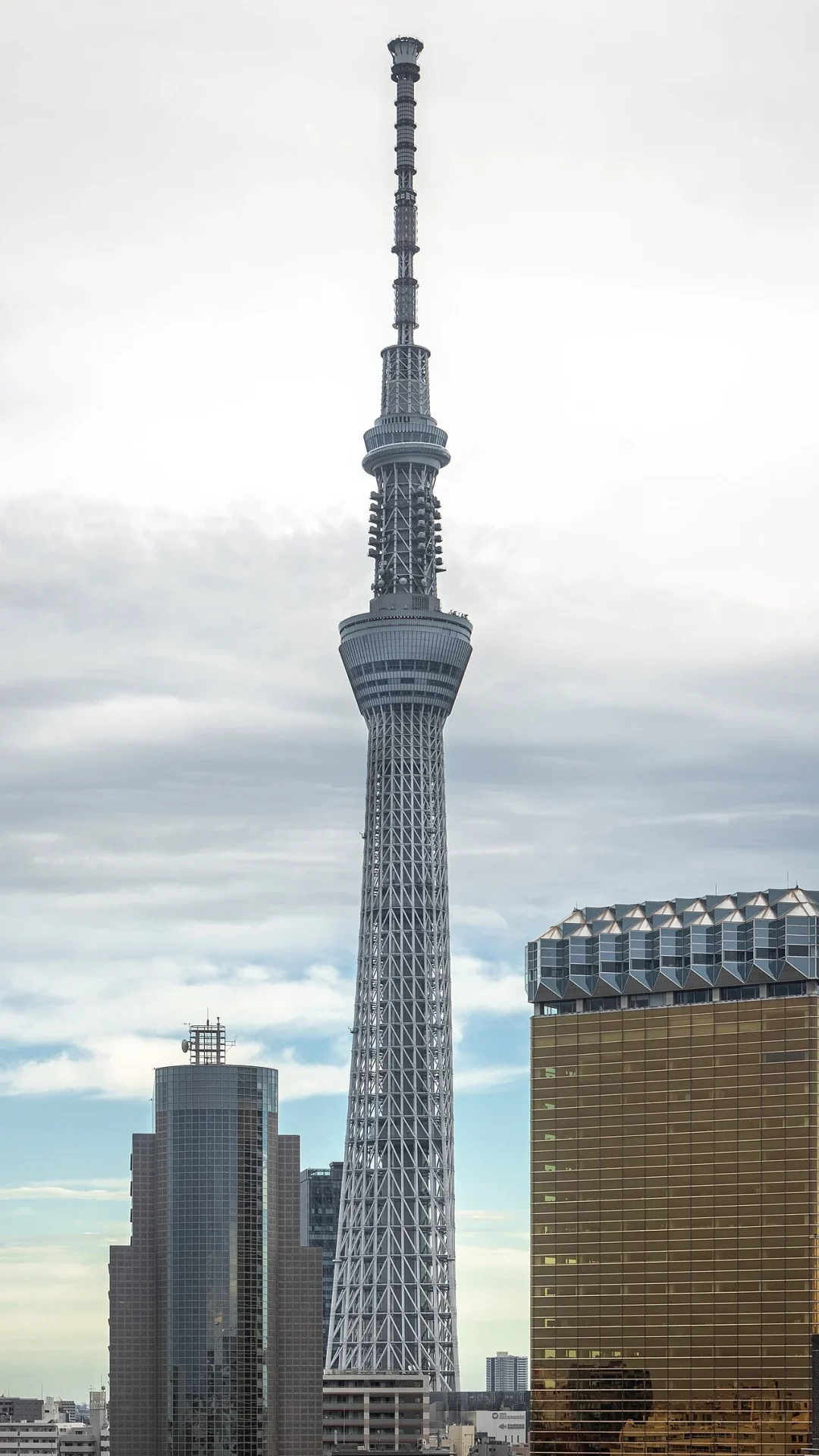
Tokyo Skytree is more than a tall landmark on the eastern side of Tokyo. Its observation decks provide one of the widest views over the capital, while the connected Tokyo Solamachi complex makes it possible to combine the tower with shopping, restaurants, an aquarium and indoor activities in one convenient visit.
It is worth prioritising if this is your first trip to Tokyo, you enjoy city views, or you want a sunset and night-view experience that can be combined naturally with Asakusa. It is less essential if you have already booked another paid observation deck, the forecast shows low cloud, or your Tokyo itinerary is heavily focused on western districts such as Shibuya and Shinjuku.
The most important ticket detail in 2026 is that admission uses date-dependent pricing. Buying at the fourth-floor counter also adds a ¥500 issuance charge to each Deck-only or Deck-and-Galleria ticket bought on 4F, so reserving online usually makes sense even when availability is not a concern.
A temporary suspension involving one observation elevator earlier in 2026 has already been resolved. Cable replacement, inspections and final safety checks were completed, and the elevator returned to service on April 1 2026. There is no continuing closure connected with that incident.
For most first-time visitors, the main decision is whether to buy the 350-metre Tembo Deck ticket or upgrade to the 450-metre Tembo Galleria. The Tembo Deck already includes the main panoramic experience, cafés and glass floor. The Galleria is best for travellers who want the highest publicly accessible viewpoint and do not mind paying more for an additional elevated walkway.
You can compare the current packages through this Tokyo Skytree admission ticket page. For broader trip planning, the Tokyo travel guide and best things to do in Tokyo guide can help you decide where the tower fits in your itinerary.
Tickets, tours and transport products are separate purchases; check the selected package, date, price and cancellation terms.

Is Tokyo Skytree Worth Visiting?
| Decision point | Practical answer |
|---|---|
| Is it worth visiting? | Yes for first-time Tokyo visitors, skyline fans, families and travellers combining Asakusa with eastern Tokyo. |
| Best suited to | Visitors who want a high, enclosed observation deck with extensive indoor facilities nearby. |
| Who may prefer to skip it | Budget travellers who already have another paid observatory, or anyone visiting during low cloud that hides the city. |
| Suggested duration | About 90 minutes to two and a half hours for the tower; four to six hours with Tokyo Solamachi or Sumida Aquarium. |
| Main highlight | The vast 360-degree view from the 350-metre Tembo Deck, with the option to continue to 450 metres. |
| Main disadvantage | The experience depends heavily on visibility, and sunset times can feel crowded. |
| Best ticket for most visitors | Tembo Deck only, booked online. |
| Best ticket for a first visit | Tembo Deck plus Tembo Galleria when the forecast is clear and the extra cost is acceptable. |
| Children | Family-friendly, with lifts, baby-care facilities, cafés and indoor attractions in the same complex. |
| Older travellers | The tower itself is not physically demanding, but queues and walking through the large complex can be tiring. |
| Accessibility | Step-free station routes, observation-deck lifts, accessible toilets and limited wheelchair loans are available. |
| Overnight stay required? | No. Tokyo Skytree is easy to visit from most central Tokyo districts. |
| Best time | A clear morning for Mount Fuji or approximately 60–90 minutes before sunset for day and night views. |
Tokyo Skytree deserves space in a one-day itinerary when it is paired with places in the same part of the city. Asakusa in the morning, Tokyo Solamachi for lunch and Tokyo Skytree near sunset is a much smoother plan than crossing Tokyo solely for a short observation-deck visit.
The tower is not automatically the best observatory for every traveller. Those staying near Shibuya may prefer a western Tokyo viewpoint, while budget-conscious visitors can find free city views elsewhere. What Tokyo Skytree offers is exceptional height, an easy family environment and one of Tokyo’s most complete indoor attraction complexes.
Tokyo Skytree Essential Information
| Item | Details |
|---|---|
| Name | Tokyo Skytree |
| Address | 1-1-2 Oshiage, Sumida City, Tokyo |
| Overall tower height | 634 metres |
| Main observation level | Tembo Deck, with floors around 340, 345 and 350 metres |
| Upper observation level | Tembo Galleria, running from approximately 445 to 450 metres |
| Main entrance | Fourth floor of Tokyo Skytree Town |
| Nearest stations | Oshiage Station and Tokyo Skytree Station |
| Opening hours | Vary by date; many days operate from 9:00 or 10:00 until 22:00 |
| Final admission | Normally one hour before closing |
| Reservation | Not always mandatory, but strongly recommended for sunset, weekends and holiday periods |
| Typical visit duration | 90 minutes to two and a half hours |
| Re-entry | Not permitted after leaving the observation area |
| Strollers | Allowed, with stroller parking and limited rental strollers available |
| Wheelchair access | Step-free routes and lifts serve the main observation experience |
| Luggage | Coin lockers and staffed baggage storage are available in the Tokyo Skytree Town complex |
Opening hours and ticket prices should be checked for the exact date of your visit. Tokyo Skytree does not operate one permanent price or opening schedule throughout the year.
Latest Tokyo Skytree Opening Status in 2026
Tokyo Skytree is open, and its principal observation facilities are operating. The observation elevator that was temporarily suspended after an incident on February 22 2026 completed cable replacement and safety inspections before returning to service on April 1 2026.
This should not be confused with a continuing partial closure. Visitors can use the normal route from the fourth-floor entrance to the Tembo Deck and, with the correct ticket, continue to the Tembo Galleria.
Daily hours can still change because of special operating schedules, maintenance, weather or events. Always check the operating calendar for your selected date, particularly when planning a late-night visit close to final admission.
Strong wind or severe weather can affect operations, while rain and cloud can reduce visibility even when the tower remains open. An open observation deck does not guarantee a clear skyline.
Tokyo Skytree Tickets, Reservations and Passes
An aquarium-first route works when you buy the two admission tickets separately. If you select the Skytree–Sumida Aquarium combo within the linked package, collect the tickets at Skytree on 4F, visit Skytree first, then the aquarium. With that combo, plan the tower before the aquarium.
Ticket Prices and Categories
The age headings have school-stage exceptions: junior-high students use the child category, while high-school students use the adult category. Children aged five and under, plus six-year-olds who have not yet started school, enter free. The ¥1,400 adult/¥700 child Galleria add-on bought inside the Tembo Deck does not carry the ¥500 4F issuance charge. See the ticket details.
| Ticket | Adult aged 15 or above | Child aged 6–14 | Who should choose it? |
|---|---|---|---|
| Tembo Deck online ticket | From ¥1,800 | From ¥900 | Most visitors who want the main panoramic experience |
| Tembo Deck and Tembo Galleria online ticket | From ¥3,000 | From ¥1,500 | First-time visitors who want the tower’s highest experience |
| On-site ticket | Applicable date price plus ¥500 | Applicable date price plus ¥500 | Spontaneous visitors who cannot or do not wish to book online |
| Galleria upgrade inside the tower | ¥1,400 | ¥700 | Visitors who bought the Deck ticket but decide to continue upward |
Children aged five or below enter free. A child aged six who has not yet started primary school is also admitted free under the age rules.
Check the amount shown for your chosen date and package before paying. Starting prices do not establish an upper limit, and an old screenshot may no longer describe your visit.
Online Ticket or On-Site Ticket?
Check the cancellation and date-change conditions for the exact ticket and seller before paying. A direct-purchase ticket, a reseller voucher and a special-event package can have different terms; no refund or change option should be assumed from the general entry price.
The online ticket is the sensible default. Buying at the venue adds ¥500 to each Deck-only or Deck-and-Galleria ticket bought on 4F, and popular sunset slots may have limited availability. Online booking also lets you confirm the applicable dynamic price before travelling to Oshiage.
An on-site purchase remains useful when your schedule or the weather is uncertain. The disadvantage is that you accept the additional fee and the risk that your preferred time or upper-deck option is unavailable.
What Happens If You Arrive Late?
Tokyo Skytree uses timed admission rather than an unrestricted ticket. If you miss the selected entry time, you may still enter later on the same day, but you must join the end of the admission queue. A late arrival can therefore create an additional wait, especially during busy periods.
There is no priority-entry system that allows you to bypass the normal admission process. Arrive at the fourth-floor entrance with enough time for navigation, ticket preparation and security.
Can You Leave and Re-enter?
No. Re-entry is not permitted after you exit the observation area. Visit the cafés, glass floor, shop and other observation-deck facilities before taking the final elevator to the fifth-floor exit.
Does a Tokyo Attraction Pass Make Sense?
The Klook Pass Greater Tokyo can make sense when Tokyo Skytree is one of several eligible paid attractions already included in your plan. It is not a sensible purchase for the tower alone.
Before buying, calculate the current individual price of every attraction you will realistically visit. Do not build an overcrowded itinerary simply to extract theoretical value from a pass.
Tembo Deck or Tembo Galleria: Which Should You Choose?
| Feature | Tembo Deck | Tembo Galleria |
|---|---|---|
| Approximate height | 340–350 metres | 445–450 metres |
| Main experience | Large panoramic windows, cafés, glass floor and city views | Sloping enclosed skywalk leading to the highest observation point |
| View difference | Already exceptionally high and comprehensive | Higher, more open-feeling perspective, but not a completely different skyline |
| Time required | About 60–90 minutes for an unhurried visit | Add approximately 30–45 minutes |
| Best for | Budget-conscious visitors, families and anyone short on time | First-time visitors, photographers and height enthusiasts |
| Value judgement | Best value for most visitors | Worth upgrading on a clear day when reaching 450 metres matters to you |
Editor’s recommendation: buy the Tembo Deck ticket when you mainly want the skyline, glass floor and night view. Choose the combined ticket when Tokyo Skytree is a major highlight of your trip and the weather forecast is favourable.
The upper deck does not replace the lower one. Visitors first reach the Tembo Deck and then transfer to the dedicated elevator leading to Floor 445. The Galleria route rises gradually to Sorakara Point near 450 metres before returning visitors to the lower observation floors.
Buying only the Deck ticket and deciding later provides flexibility, but the Galleria add-on can be suspended when congestion is high. Pre-booking the combined ticket is safer if the upper level is important to you.
Best Time to Visit Tokyo Skytree
| Time | Main advantage | Main disadvantage | Best suited to |
|---|---|---|---|
| Opening time | Lower crowds and often clearer air | No sunset or night lights | Mount Fuji views and relaxed photography |
| Late morning | Bright city visibility and convenient for families | Haze may build later | Visitors combining the tower with lunch and shopping |
| Mid-afternoon | Easier to combine with Asakusa beforehand | Light can be harsh and reflections stronger | Flexible itineraries |
| 60–90 minutes before sunset | Daylight, sunset and night views in one visit | Usually the most sought-after period | First-time visitors and couples |
| After 19:30 | Strong night views and potentially smoother than sunset | No daylight panorama | Night photography and evening itineraries |
| Near final admission | May feel quieter | Little time to recover from transport delays | Experienced visitors with a simple evening plan |
Best Time to See Mount Fuji
A cold, dry and clear morning gives you the best chance of seeing Mount Fuji. Winter often produces better long-distance visibility than humid summer weather, but the mountain is never guaranteed.
Do not buy a ticket solely because a general weather application shows sunshine. High cloud, haze and humidity can still hide distant scenery. Look for good long-range visibility and check current observation conditions before travelling.
Best Time for Sunset
Select an entry approximately 60–90 minutes before the published sunset time. This gives you enough time to enter, reach the windows and find a preferred viewing area before the light changes.
Do not select the exact sunset minute as your admission time. Station navigation, admission queues and elevator movement can cause you to miss the transition.
Is a Rainy-Day Visit Worthwhile?
Light rain does not automatically ruin the trip. The observation decks are indoors, and the connected aquarium, shopping centre, restaurants and planetarium make Tokyo Skytree Town useful in poor weather.
Low cloud is the greater problem. When cloud surrounds or sits below the observation floors, the skyline can disappear almost completely. On such a day, a flexible visitor may be better postponing the tower or buying only after checking current visibility.
The Correct First-Time Tokyo Skytree Route
- Arrive at Oshiage Station or Tokyo Skytree Station.
- Follow signs through Tokyo Skytree Town to the fourth-floor main entrance.
- Allow six to seven minutes from the station rather than assuming the entrance is beside the platform.
- Present your timed-entry QR code and complete the admission process.
- Take the observation shuttle elevator to Floor 350 of the Tembo Deck.
- Walk around the windows before deciding whether to continue to the Tembo Galleria.
- If included, transfer to the Galleria elevator and begin the route from Floor 445 to Sorakara Point near Floor 450.
- Return to the lower observation floors and visit Floor 345, the cafés and the glass floor on Floor 340.
- Take the exit elevator to the fifth floor.
- Continue into Tokyo Solamachi, Sumida Aquarium or the restaurant area.
The smoothest order is to walk one complete circuit of Floor 350 before rushing toward the upper deck. This helps you understand the city’s orientation and prevents you from missing the eastern or northern views.
Do not save the glass floor or café for after leaving. Re-entry is not permitted once you have taken the final exit route.
Tokyo Skytree Main Highlights
360-Degree View from Floor 350
The main appeal is the scale of the panorama. Large windows wrap around the observation floor, revealing central Tokyo, the Sumida River, Asakusa, Tokyo Bay and the wider Kanto region when visibility is good.
The height also changes the way Tokyo looks. Individual landmarks become reference points inside a much larger urban landscape rather than dominating the view.
Tembo Galleria Skywalk
The Galleria is an enclosed, sloping walkway extending from approximately 445 to 450 metres. Its gradual rise creates a more dramatic sense of height than simply stepping out of an elevator onto another flat floor.
The route ends around Sorakara Point, the highest part of the public observation experience. The upgrade is most satisfying when visibility is clear enough to appreciate the broader horizon.
The Glass Floor
The reinforced glass section on Floor 340 allows visitors to look directly down through the tower. It is included with Tembo Deck admission, so a Galleria ticket is not required.
The area can attract a queue for photographs. It is a brief highlight rather than a reason to schedule a separate hour.
Day-to-Night Transformation
A sunset visit reveals Tokyo in three stages: daytime geography, changing sky colours and the illuminated city. This is why sunset admission is popular, even though the sun itself may not always be visible because of cloud or seasonal direction.
Cafés and Sky-High Dining
Cafés on the observation floors provide drinks and light food without requiring you to leave the paid area. They are useful when you want to wait for changing light or give children a break.
Sky Restaurant 634 provides a more formal meal at altitude. A restaurant reservation does not remove the need for the appropriate observation-deck admission, so check the conditions before planning a special-occasion meal.
Tokyo Skytree Town
The surrounding complex is one of the tower’s strongest advantages over a standalone viewpoint. Tokyo Solamachi contains restaurants, shops, character stores, regional-speciality shops and indoor attractions, making the visit adaptable for different ages and weather conditions.
Walking, Elevators and Physical Difficulty
The entrance and barrier-free routes include a short outdoor section on 4F. A direct station connection therefore does not mean that every step stays indoors. Route and visit durations below are planning estimates, with additional time needed for lifts, transfers and queues.
The observation experience itself is relatively easy physically. Visitors reach the main decks by high-speed elevators, and there is no requirement to climb hundreds of stairs.
The part many first-time visitors underestimate is navigating the surrounding complex. Allow approximately seven minutes from Oshiage Station to the fourth-floor entrance and six to seven minutes from Tokyo Skytree Station. Add more time when travelling with children, luggage or someone who walks slowly.
The Tembo Galleria includes a gently rising corridor, but it is not comparable to an outdoor mountain path. Travellers who can manage a shopping centre normally find the route manageable.
Long queues can be more tiring than the walking. Older visitors may prefer an opening-time reservation or a non-sunset weekday slot to reduce standing.
Large suitcases are inconvenient on the observation floors and inside crowded elevators. Use the lockers or staffed baggage service in Tokyo Solamachi before entering.
Tokyo Skytree with Children, Older Travellers and Limited Mobility
Families with Children
Tokyo Skytree works well for families because the entire observation experience is indoors and connected to food, toilets, shopping and child-friendly attractions.
- Children aged five or below normally enter free.
- Strollers can be used, although staff may direct visitors during congestion.
- Stroller parking is available near the admission area.
- Limited rental strollers are available on a first-come basis.
- Baby-care and nursing facilities are available within the complex and on observation levels.
- Sumida Aquarium provides a useful second attraction without another train journey.
Families planning both attractions should compare the Tokyo Skytree and Sumida Aquarium combination ticket with separate admission for their selected date.
Older Travellers
The lifts make the tower more manageable than viewpoints that require slopes or stairs. The main difficulties are the size of the complex, standing in queues and travelling during the busiest evening period.
An opening-time or late-morning visit is usually easier than sunset. Build in time for a café break and avoid adding several distant attractions on the same day.
Travellers with Limited Mobility
Step-free access is available from both nearby stations, and lifts serve the principal observation route. Accessible toilets are provided throughout the facility.
A limited number of wheelchairs can be borrowed on the day, but they cannot normally be reserved in advance. Bringing your own mobility aid may be safer when it is essential.
Visitors using an overseas disability document should not assume it qualifies for the discounted disability admission price. The published discount conditions refer to eligible certificates issued in Japan, so confirm eligibility before budgeting.
How to Get to Tokyo Skytree
Which Station Should You Use?
Oshiage Station is the most useful choice for visitors arriving on the Tokyo Metro Hanzomon Line, Toei Asakusa Line or Keisei airport services. Tokyo Skytree Station is more convenient when travelling from Asakusa on the Tobu Skytree Line.
| Starting point | Recommended route | Approximate rail time | Final access | Best suited to |
|---|---|---|---|---|
| Asakusa | Tobu Skytree Line to Tokyo Skytree Station | About five minutes including local access | Six to seven minutes to the fourth-floor entrance | Fastest and easiest connection |
| Tokyo Station | JR Sobu Rapid Line to Kinshicho, then Hanzomon Line to Oshiage | Approximately 20 minutes overall before entrance walking | About seven minutes from Oshiage | Visitors arriving by Shinkansen or staying near Tokyo Station |
| Shibuya | Hanzomon Line toward Oshiage | Approximately 35 minutes depending on service | About seven minutes from Oshiage | Travellers wanting a simple subway route |
| Haneda Airport | Keikyu and Toei Asakusa through service toward Oshiage | Approximately 39 minutes on a suitable service | About seven minutes from Oshiage | Airport travellers without a JR Pass |
| Narita Airport | Keisei Narita Sky Access service toward Oshiage | Approximately 49 minutes on a suitable service | About seven minutes from Oshiage | Travellers seeking a direct airport connection |
| Self-drive | Use the paid Tokyo Skytree Town parking facilities | Traffic-dependent | Lifts through the shopping centre | Groups with a car, although rail is normally easier |
From Asakusa
The Tobu Skytree Line is the simplest transport option. The journey between Asakusa and Tokyo Skytree Station is very short, making it easy to visit Sensoji Temple and Tokyo Skytree on the same day.
Walking is also possible. A route via the Sumida River, Tokyo Mizumachi and Sumida River Walk generally takes around 20–30 minutes depending on pace and stops. It is attractive in mild weather but less suitable with large luggage, summer heat or heavy rain.
From Tokyo Station
Take the JR Sobu Rapid Line to Kinshicho and change to the Tokyo Metro Hanzomon Line for Oshiage. The train portion is efficient, but you should still allow time for the transfer and the final walk through Tokyo Skytree Town.
A taxi can be more comfortable for a family or group with luggage, but traffic can make the journey slower and more expensive than rail.
From Haneda Airport
Some Keikyu Airport Line trains continue onto the Toei Asakusa Line toward Oshiage. Check the destination before boarding because not every train provides the same through service.
Travellers carrying full-size luggage should store it before entering the observation decks. The Haneda Airport to Tokyo transportation guide explains the broader airport-transfer choices.
From Narita Airport
Keisei’s Narita Sky Access services can provide a direct route to Oshiage. Confirm that the train serves Oshiage rather than assuming every airport express follows the same route.
For comparisons with Skyliner, airport buses and other city connections, use the Narita Airport to Tokyo transportation guide.
Is a Tokyo Subway Ticket Worth Buying?
The Tokyo Subway Ticket covers Tokyo Metro and Toei Subway services, including the Hanzomon and Toei Asakusa lines serving Oshiage. It does not cover JR trains or every private railway.
It is useful when Tokyo Skytree is part of a full day containing several subway journeys. A single return trip to Oshiage rarely justifies buying a pass by itself.
Tokyo Skytree Half-Day and Full-Day Itineraries
Easy Half-Day Itinerary
- Arrive at Oshiage around opening time.
- Visit the Tembo Deck and Tembo Galleria if included.
- Allow 90 minutes to two hours inside the tower.
- Explore Tokyo Solamachi shops.
- Have lunch in the complex.
- Visit Sumida Aquarium or leave for another district.
This plan suits families, rainy days and travellers who prefer a compact itinerary with minimal outdoor transport.
Asakusa and Sunset Itinerary
- 08:30–09:00: Arrive in Asakusa before the largest crowds.
- Visit Sensoji Temple, Nakamise and the surrounding lanes.
- Have an early lunch in Asakusa.
- Walk across the Sumida River or take the Tobu train to Tokyo Skytree.
- Explore Tokyo Solamachi during the afternoon.
- Enter Tokyo Skytree approximately 60–90 minutes before sunset.
- Remain for the night view and have dinner in the complex.
This is the strongest first-time itinerary because the two districts provide different experiences without a long cross-city transfer. Travellers who want local context rather than independent sightseeing can consider an organised Asakusa and Tokyo Skytree experience.
Family Rainy-Day Itinerary
The aquarium-first plan below assumes separately purchased admission. The linked Skytree–Sumida Aquarium combo currently directs visitors to collect both tickets at Skytree on 4F and visit the tower before the aquarium. Follow your chosen package and voucher instructions, and reverse this order if using that combo.
- Travel directly to Oshiage Station using the mostly indoor station connection, followed by a brief outdoor approach on 4F.
- Visit Sumida Aquarium in the morning.
- Have lunch in Tokyo Solamachi.
- Check live visibility conditions.
- Enter Tokyo Skytree if the skyline remains visible.
- Use the shopping centre or planetarium if cloud obscures the view.
The advantage of this itinerary is flexibility. The tower, aquarium, shops and restaurants are concentrated in one complex, so families do not need to move repeatedly through wet weather.
Full-Day Eastern Tokyo Itinerary
- Begin at Sensoji Temple and Asakusa.
- Walk or take the Tobu train to Tokyo Skytree Town.
- Have lunch and browse Tokyo Solamachi.
- Visit Sumida Aquarium or the Postal Museum.
- Enter Tokyo Skytree near sunset.
- Have dinner in Oshiage or return to Asakusa.
Do not add Ueno, Akihabara, Ginza and Shibuya to the same plan merely because they appear close on a simplified map. Two or three well-connected areas create a more enjoyable day than a checklist of rushed stops.
Nearby Attractions to Combine with Tokyo Skytree
Asakusa and Sensoji Temple
Asakusa is the most logical combination. Visit the temple district in the morning, when Nakamise and the surrounding streets are easier to explore, then move to Tokyo Skytree during the afternoon.
The combination suits first-time visitors, photographers and families. Walking provides river views, while the short Tobu train ride is better in poor weather or for anyone with limited mobility.
Sumida Aquarium
Sumida Aquarium is inside Tokyo Skytree Town, making it the easiest second paid attraction. It works particularly well for families, rainy days and visitors who want four to six hours in one location.
Allow roughly one to two hours for the aquarium. Visiting it before a late-afternoon Skytree reservation works with separate tickets; the linked combo instead requires Skytree first, followed by the aquarium.
Tokyo Solamachi
Tokyo Solamachi surrounds the base of the tower and contains hundreds of shops and restaurants. It is useful for lunch, souvenir shopping and filling time before a timed ticket.
Families should identify the shops they genuinely want to visit rather than trying to cover the entire complex. Its size can consume several hours.
Sumida River and Tokyo Mizumachi
The riverside route between Asakusa and Tokyo Skytree provides a calmer contrast to the indoor observation experience. It is best in spring, autumn or clear winter weather.
During humid summer afternoons, use the train instead of forcing the walk. The exposed route can feel much longer in high heat.
Ryogoku and the Sumida Hokusai Museum
Ryogoku can be combined with Tokyo Skytree for travellers interested in sumo culture or Japanese art. Visit Ryogoku earlier in the day and continue by local transport to Oshiage.
This combination is better for adults and repeat Tokyo visitors than for young children who may prefer the aquarium.
Seasonal and Weather Planning
Winter
Winter often provides the clearest long-distance views and the best chance of seeing Mount Fuji. Sunset also occurs earlier, making a day-to-night visit easier for families.
The decks are indoors, but outdoor riverside walks between Asakusa and Tokyo Skytree can feel cold and windy.
Spring
Spring is attractive for combining the tower with cherry blossoms along the Sumida River. Blossom timing varies annually, so do not assume the same peak dates every year.
Book sunset slots early during major blossom and holiday periods because both Asakusa and the Oshiage area can be busy.
Summer
Summer offers long daylight hours but frequently brings haze, humidity and intense heat at street level. The observation decks are air-conditioned, while the outdoor walk from Asakusa may be uncomfortable in the afternoon.
Evening admission is generally more pleasant than a midday outdoor itinerary, although distant visibility may remain limited.
Autumn
Autumn can provide comfortable walking weather and improving visibility. It is a strong season for combining Asakusa, the river and a sunset reservation.
Rain and Low Cloud
Rain alone is manageable because most of the experience is indoors. Low cloud around the observation floors is the real warning sign.
Visitors with flexible plans should check the live view before committing. Those with a fixed ticket can still enjoy the tower’s interior atmosphere, cafés and lighting, but should adjust expectations.
Food and Dining around Tokyo Skytree
Tokyo Solamachi provides the widest choice, from quick meals and desserts to restaurants suitable for a longer dinner. Eating before your timed reservation is safer than planning a meal immediately before final admission.
For a sunset visit, have a late lunch or early snack in the complex, enter the tower and eat dinner after returning to the fifth floor. This prevents hunger from forcing you to leave before the night view develops.
Cafés inside the paid observation area sell drinks and light food. Outside food is restricted, so do not arrive expecting to have a picnic beside the windows.
Travellers who want a formal high-altitude meal can investigate Sky Restaurant 634. Reserve independently and confirm that you also hold the required observation admission.
Asakusa is better for traditional Tokyo foods and older local restaurants, while Tokyo Solamachi is easier for families, groups with mixed preferences and poor-weather dining.
Where to Stay for Tokyo Skytree
An overnight stay near Tokyo Skytree is not necessary for most visitors. Oshiage is well connected to central Tokyo, Asakusa and both airports.
Staying in Asakusa is the best strategy when you want early temple sightseeing, a relaxed river walk and an evening tower visit. It also provides access to the Tobu network for travellers continuing north. The Tokyo to Nikko transportation guide is useful when Asakusa is part of a longer regional itinerary.
Staying around Oshiage is useful for families, travellers arriving through Narita Airport and visitors who prefer a quieter base than Shinjuku or Shibuya. The disadvantage is that nightlife and late-night dining are more limited than in major western districts.
For a first Tokyo trip covering many districts, choose accommodation based on the entire itinerary rather than one attraction. Tokyo Skytree is easy enough to visit as a half-day journey from most central locations.
Tokyo Skytree Mistakes to Avoid
- Buying at the counter without checking the surcharge. On-site issuance adds ¥500 to each Deck-only or Deck-and-Galleria ticket bought on 4F.
- Using an outdated fixed ticket price. Current admission changes according to date and package.
- Arriving at the station at your reservation time. The fourth-floor entrance is still six to seven minutes away.
- Selecting the exact sunset minute. Enter 60–90 minutes earlier so queues do not make you miss the changing light.
- Assuming sunshine guarantees Mount Fuji. Humidity, haze and distant cloud can hide the mountain.
- Buying the Galleria upgrade automatically. The Tembo Deck already contains the main panorama and glass floor.
- Waiting to buy the Galleria add-on during a busy period. On-site upgrade sales can be suspended.
- Bringing large luggage upstairs. Store it before entering the observation area.
- Leaving before visiting every observation feature. Re-entry is not permitted.
- Buying a subway pass for one return journey. The pass works only when the rest of the day includes enough covered rides.
- Planning too many distant districts. Pair Tokyo Skytree with Asakusa, Sumida or Ryogoku rather than crossing Tokyo repeatedly.
- Ignoring low cloud. The tower may be open even when the skyline is almost invisible.
For other trip options, browse our Japan travel deals collection and check the dates and conditions of each package.
Tokyo Skytree FAQ
Is Tokyo Skytree worth visiting?
Yes, particularly for first-time Tokyo visitors, families and travellers combining it with Asakusa. It is less essential if you have already booked another paid observation deck.
How much are Tokyo Skytree tickets in 2026?
Adult online prices start at ¥1,800 for the Tembo Deck and ¥3,000 for the Deck plus Galleria. The selected date determines the actual amount; these are starting prices, not a quote for every day.
Is it cheaper to buy Tokyo Skytree tickets online?
Usually yes. Buying at the fourth-floor counter or ticket machine adds a ¥500 issuance charge per Deck-only or Deck-and-Galleria ticket bought on 4F.
Do Tokyo Skytree tickets sell out?
Popular periods such as sunset, weekends and public holidays can become limited. Advance booking is recommended when your timing is not flexible.
Which ticket should a first-time visitor buy?
Choose the Tembo Deck plus Tembo Galleria when the weather is clear and Tokyo Skytree is a major trip highlight. The Deck-only ticket is sufficient for most budget-conscious visitors.
Can I upgrade to the Tembo Galleria inside?
Yes, subject to availability. The add-on can stop selling during congestion, so pre-book the combined ticket when the upper deck is important.
How long should I spend at Tokyo Skytree?
Allow 90 minutes to two and a half hours. Add extra time for Tokyo Solamachi, food or Sumida Aquarium.
What is the best time to visit?
Visit at opening for clearer views and smaller crowds, or enter 60–90 minutes before sunset for daylight and night scenery in one trip.
Can you see Mount Fuji from Tokyo Skytree?
Yes when visibility is excellent, especially on clear, cold mornings. The view is weather-dependent and never guaranteed.
Is Tokyo Skytree good in the rain?
The indoor decks remain comfortable, but low cloud may hide the city. The surrounding aquarium, restaurants and shops make the complex useful on a rainy day.
Is Tokyo Skytree suitable for young children?
Yes. The lifts, indoor environment, baby-care rooms, cafés and nearby aquarium make it one of Tokyo’s easier observation decks for families.
Are children admitted free?
Children aged five or below are free. Six-year-olds who have not yet started primary school also qualify for free admission.
Can I take a stroller onto Tokyo Skytree?
Strollers are generally accommodated, and stroller parking and limited rentals are available. Staff may provide directions during crowded periods.
Is Tokyo Skytree wheelchair accessible?
The principal observation experience has step-free access and lifts. Accessible toilets and limited wheelchair loans are available.
Which station is best for Tokyo Skytree?
Use Oshiage Station for the Hanzomon, Toei Asakusa and Keisei routes. Use Tokyo Skytree Station when arriving from Asakusa on the Tobu line.
How far is the entrance from Oshiage Station?
Allow approximately seven minutes to reach the fourth-floor main entrance, even though the station connects directly with the complex.
Can I travel directly from Haneda Airport?
Some Keikyu services continue onto the Toei Asakusa Line toward Oshiage. Check the destination because service patterns vary.
Can I travel directly from Narita Airport?
Suitable Keisei Narita Sky Access services run to Oshiage. Confirm the train destination before boarding.
Can I bring a large suitcase?
Use the coin lockers or staffed baggage service in Tokyo Solamachi. Large luggage is inconvenient in the observation elevators and crowded deck areas.
Can I re-enter Tokyo Skytree?
No. Once you exit the paid observation area, re-entry is not permitted.
What happens if I miss my timed entry?
You may normally enter later on the same day, but you must join the end of the admission queue and may need to wait.
Is the Tokyo Subway Ticket useful for Tokyo Skytree?
It covers the Hanzomon and Toei Asakusa lines serving Oshiage. Buy it only when your wider itinerary includes enough additional Metro and Toei journeys.
Should I combine Tokyo Skytree with Sumida Aquarium?
Yes for families, rainy days and visitors who want a compact half-day itinerary. Both attractions are in the same complex.
Can I visit Asakusa and Tokyo Skytree on the same day?
Yes. Visit Asakusa in the morning and Tokyo Skytree in the afternoon or near sunset. The districts are connected by a short train ride or riverside walk.
Final Recommendation
Tokyo Skytree is worth visiting when you treat it as part of an eastern Tokyo itinerary rather than an isolated photo stop. Its height, indoor facilities and connection with Tokyo Solamachi make it particularly suitable for first-time visitors and families.
The Tembo Deck is the best-value choice for most travellers. It already provides the central panoramic experience, cafés and glass floor. Upgrade to the Tembo Galleria when the forecast is clear, reaching 450 metres matters to you and the additional cost fits your budget.
Book online rather than automatically buying at the entrance. The date-dependent price still applies, but advance booking avoids the additional ¥500 on-site issuance charge and secures a better chance of obtaining a preferred sunset slot.
Use Oshiage Station for most subway and airport journeys, or Tokyo Skytree Station when coming from Asakusa. In either case, allow six to seven minutes to reach the fourth-floor entrance.
The smoothest first visit begins in Asakusa, continues through Tokyo Solamachi and ends at Tokyo Skytree approximately 60–90 minutes before sunset. Families or rainy-day visitors can add Sumida Aquarium without another transport journey.
Prioritise advance booking for weekends, holidays, sunset and any visit where the Tembo Galleria is non-negotiable. Visitors with flexible schedules should check long-range visibility before committing, since low cloud affects the value of the experience more than ordinary rain.