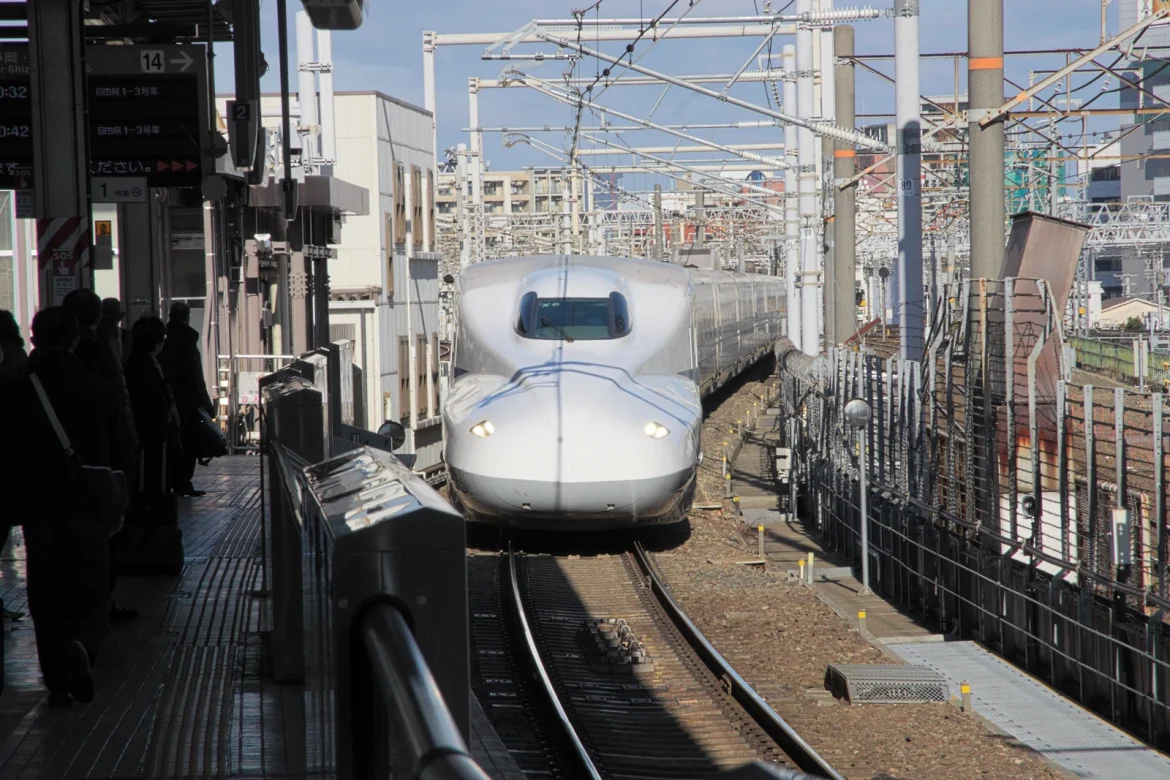

Kyoto to Nagoya: choose by time, budget and ticket type
Kyoto and Nagoya look close on a map, but the transport choices are surprisingly different. The Tokaido Shinkansen can cover the trip in roughly 33 to 55 minutes, while the cheapest mainstream alternatives take more than two hours.
For most first-time visitors, the Shinkansen is the practical answer. It is direct, frequent, easy with luggage when the correct seat is reserved, and fast enough to make Nagoya a realistic day trip from Kyoto.
The budget decision is more interesting. The highway bus costs ¥2,800 at the standard fare and can be much cheaper with an eligible advance fare. Local JR trains cost about ¥2,640 but usually require transfers and consume a similar amount of time, so saving only a small amount over the bus rarely justifies the extra effort unless you specifically prefer rail travel.
There is also a reason not to assume that a non-reserved Shinkansen seat is always the cheapest train choice. SmartEX offers EX Hayatoku 7 on Hikari and Kodama between Kyoto and Nagoya; when seats are available and you book at least seven days ahead, the current adult fare is ¥4,700 for a reserved seat.
If this is your first trip, use the Shinkansen unless your budget matters more than two hours of additional travel. For broader planning after arrival, see our Nagoya travel guide.
Kyoto to Nagoya: Which Transport Should You Choose?
| Option | Typical journey | Typical one-way adult fare | Transfers | Best suited to | Main drawback |
|---|---|---|---|---|---|
| Shinkansen Nozomi | About 33–36 min | ¥5,170 non-reserved when available; reserved fare higher | None | Fastest practical travel, flexible departure times | Costs roughly twice the highway bus |
| Shinkansen Hikari | About 35–45 min | ¥5,170 non-reserved; SmartEX reserved options vary | None | Travelers who want Shinkansen speed without needing Nozomi specifically | Less frequent than Nozomi |
| Shinkansen Kodama | About 50–55 min | ¥5,170 non-reserved; advance reserved discounts may be available | None | Fixed-date travelers using an eligible advance fare | Slower than Nozomi and Hikari |
| Highway bus | About 2 hr 15–35 min, traffic dependent | ¥2,800 standard; eligible advance fares may be lower | None | Budget travelers with flexible timing | Road delays can disrupt onward plans |
| JR local trains | About 2 hr 15 min–3 hr | About ¥2,640 | Usually at least one; many practical journeys require two | Rail enthusiasts or travelers using a suitable existing ticket | Little saving compared with the bus for much more effort than Shinkansen |
| Kintetsu | Roughly 2.5–3 hr using suitable Limited Express connections; slower without them | Depends on route, pass and limited-express use | Required | Multi-stop trips through Nara, Mie or Ise-Shima | Not efficient for Kyoto–Nagoya alone |
Editor’s verdict: choose the Shinkansen for a normal Kyoto–Nagoya trip. Choose the highway bus when saving roughly ¥2,000–¥3,000 matters more than saving around two hours. Local JR is a niche choice because the ¥160 difference from the standard bus fare is too small to compensate for the longer and less convenient journey for most visitors.
Is the Shinkansen Worth Paying For?

| Question | Practical answer |
|---|---|
| Is it worth paying more? | Usually yes, especially for a day trip, family journey or onward connection. |
| Fastest journey | Roughly 33–36 minutes on the fastest direct services. |
| Standard non-reserved fare | ¥5,170 one way when non-reserved seating is offered. |
| Advance-discount opportunity | EX Hayatoku 7 can reduce an eligible Hikari/Kodama reserved seat to ¥4,700 when booked at least seven days ahead. |
| Main advantage | You save roughly two hours each way compared with the slower alternatives. |
| Main difficulty | Understanding the ticket type, station gates and luggage reservation rules. |
| Families | Reserved seating is generally the easiest option. |
| Older travelers | Direct Shinkansen travel minimizes transfers and platform changes. |
| Day trip | Strongly recommended over the bus or local JR because it preserves sightseeing time. |
The important comparison is not simply ¥5,000 versus ¥2,800. A Kyoto–Nagoya day trip by Shinkansen can give you roughly four extra hours in the day compared with making both directions by bus or local train. If your goal is sightseeing rather than simply reaching Nagoya as cheaply as possible, that time has real value.
The bus makes more sense when Nagoya is your final destination for the night and you are not in a hurry. In that situation, giving up two hours may be an acceptable trade for a lower fare.
Shinkansen Fares: What You Actually Pay
The easiest fare to remember is ¥5,170. That is the current adult non-reserved one-way fare between Kyoto and Nagoya. However, it should not be treated as the universal Shinkansen fare.
| Ticket | Current adult one-way fare | Important condition |
|---|---|---|
| Non-reserved | ¥5,170 | Only useful when the train offers non-reserved seating. |
| Conventional Nozomi reserved, regular season | ¥5,910 | Standard ticket bought at a station; seasonal adjustments apply. |
| Conventional Hikari/Kodama reserved, regular season | ¥5,700 | Standard ticket bought at a station; seasonal adjustments apply. |
| SmartEX Nozomi reserved, regular season | ¥5,710 | Reserved-seat seasonal adjustments can apply. |
| SmartEX Hikari/Kodama reserved, regular season | ¥5,500 | Reserved-seat seasonal adjustments can apply. |
| EX Hayatoku 7 Hikari/Kodama | ¥4,700 | Book by 23:30 seven days before travel; limited inventory and exclusion dates apply. |
SmartEX is JR Central’s official online booking service. A SmartEX ticket combines the basic fare and Shinkansen limited-express fare, and eligible bookings can be associated with a registered IC card or used with the issued QR boarding method. Conventional JR travel before Kyoto Station or beyond Nagoya Station costs extra with SmartEX. Compare the combined price with a conventional through ticket to your actual JR origin and destination; this short route does not automatically include every JR station in either city.
Reserved-seat prices are not completely static. Regular SmartEX reserved fares can be adjusted for off-peak, peak and super-peak periods, so use the displayed checkout fare for your actual date rather than assuming every departure will cost exactly the same.
EX Hayatoku 7: a cheaper reserved seat for fixed plans
If your travel date is fixed at least seven days ahead, check EX Hayatoku 7 before buying a standard non-reserved ticket. On this route, the current ¥4,700 adult Hikari/Kodama reserved fare is lower than the ¥5,170 standard non-reserved fare.
The catch is flexibility. Availability is limited by train, the product has blackout periods during busy travel seasons, and it requires advance purchase. It is therefore excellent for a fixed itinerary but not something to rely on for a spontaneous same-day transfer.
Booking the Shinkansen through Klook
Travelers who prefer an English-language third-party booking flow can use the route-specific Kyoto–Nagoya Shinkansen page on Klook. Compare the final displayed ticket conditions with SmartEX before paying, particularly if you want an advance-discount product or need to change trains later.
Nozomi vs Hikari vs Kodama: Which Train Should You Take?
Nozomi: best when you want the next fast departure
Nozomi is the highest-frequency fast service and commonly completes Kyoto–Nagoya in roughly 33 to 36 minutes. Its main advantage on such a short route is frequency rather than a dramatic journey-time difference over a well-timed Hikari.
During designated major peak travel periods, Nozomi operates with all seats reserved. Do not arrive expecting to use a normal Nozomi non-reserved car on those dates.
Hikari: often the smartest fixed-time choice
Hikari can cover the route in roughly 35 to 45 minutes depending on the service. A well-timed Hikari may be only a few minutes slower than Nozomi, and it is eligible for the EX Hayatoku 7 advance fare.
If your date is fixed and a convenient Hikari is available at ¥4,700 through EX Hayatoku 7, there is little reason to pay more simply for the Nozomi name.
Kodama: slower, but sometimes financially useful
Kodama stops more frequently and commonly takes around 50 to 55 minutes. At a standard fare, that makes it less compelling. With an eligible advance discounted reserved seat, however, it can still be a sensible option when your schedule is flexible.
Reserved or Non-Reserved Seat?
For a solo traveler with a small bag on an ordinary day, a ¥5,170 non-reserved ticket can be perfectly reasonable. The trip is short, so standing for a portion of the journey would be inconvenient rather than disastrous.
For couples who want to sit together, families with children, anyone carrying large luggage, and travelers making an important onward connection, a reserved seat is more practical. You remove the uncertainty of hunting for seats after boarding and can organize your luggage before departure.
The calculation changes again if EX Hayatoku 7 is available. A ¥4,700 reserved Hikari/Kodama seat costs less than the normal non-reserved fare, although the advance product is more restrictive.
Oversized Luggage Rules on the Kyoto–Nagoya Shinkansen
Do not arrive with a very large suitcase and assume it can simply be left behind the last row. On the Tokaido Shinkansen, baggage with total external dimensions of more than 160 cm and up to 250 cm requires a seat with an oversized-baggage area.
- Up to 160 cm total dimensions: no oversized-baggage seat reservation is required under this rule.
- Over 160 cm and up to 250 cm: reserve a seat associated with the designated oversized-baggage area.
- Over 250 cm: the item cannot be brought onto the Shinkansen.
There is no extra baggage fee simply for reserving the appropriate oversized-baggage seat, but the number of suitable spaces is limited. Book earlier if you are traveling during a busy period. Bringing an oversized suitcase without the required reservation incurs a ¥1,000 charge and staff will direct where it goes. Unreserved deck-storage areas for smaller bags do not cancel the over-160-cm reservation rule. See JR Central’s illustrated baggage guide.
Strollers and certain sporting items are treated differently from ordinary oversized luggage, but if you want to use the dedicated storage space you should still reserve the corresponding seat.
Kyoto Station: The Correct First-Time Route
Kyoto Station is large enough that “take the Shinkansen from Kyoto” is incomplete advice. The Shinkansen facilities sit primarily on the Hachijo side of the station, but there are several relevant Shinkansen gates and internal transfer routes.
If you arrive at Kyoto Station on a JR conventional line, follow the signs for the Shinkansen transfer gates rather than leaving the entire paid area unnecessarily. Station walking time depends on the arrival platform, gate and whether you need a lift.
If you arrive on the Kyoto City Subway or Kintetsu Railway, allow time for the separate gates, walking and platform access, especially with luggage or children.
Which platform direction?
Kyoto to Nagoya is eastbound toward Tokyo. At the Shinkansen platform area, follow signs for the Tokyo direction rather than the Shin-Osaka/Hakata direction. Kyoto Station’s Tokyo-bound Shinkansen services use the eastbound platform area including platforms 11 and 12.
How early should you arrive?
For a first visit, aim to reach Kyoto Station about 20 to 30 minutes before the Shinkansen you intend to board. That allows time to find the gate, collect a ticket if needed, use the restroom and buy food.
If you already have your boarding method ready and know Kyoto Station, you can cut that margin. Do not build a first-time itinerary around a last-minute dash through an unfamiliar station.
Arriving at Nagoya Station: Do Not Follow the Wrong Railway
Official station maps
- JR Central Kyoto Station map: zoom in on the Hachijo side, transfer gates and Tokyo-bound platforms
- JR Central Nagoya Station map: find the Shinkansen gates before following signs for JR local trains, Aonami or another railway
Kyoto–Nagoya Shinkansen services arrive at JR Nagoya Station. The eastbound Shinkansen platforms are in the Tokyo direction side of the station complex.
The bigger first-time problem comes after the ticket gate. “Nagoya Station” can refer in conversation to several connected but separate systems: JR Nagoya, Meitetsu Nagoya, Kintetsu Nagoya, the Nagoya Municipal Subway and the Aonami Line.
If your onward journey uses Meitetsu, Kintetsu or the subway, do not assume the next platform is inside the same JR paid area. Follow the railway-specific signs and allow walking time through the station complex.
For a first Nagoya visit, our Nagoya travel guide explains how the station fits into the city’s main sightseeing areas.
Which ticket helps after you reach Nagoya?
A Nagoya Subway 24-Hour Ticket costs ¥760 for an adult; the municipal Bus & Subway 1-Day Ticket is ¥870. The ¥620 Weekend Eco Ticket is available on eligible weekends, holidays and the 8th of the month. These city tickets do not pay for Kyoto–Nagoya, Meitetsu, Kintetsu, Aonami or Linimo; choose one only after counting your actual city rides. See Nagoya’s official ticket guide.
Kyoto to Nagoya by Highway Bus
The highway bus is the strongest low-cost alternative to the Shinkansen. The regular one-way fare between Kyoto Station and Nagoya Station is currently ¥2,800.
Eligible advance fares can be considerably lower. The current fare table lists ¥1,600 advance fares for qualifying Monday–Thursday services and ¥2,200 on specified dates. These are not universal walk-up prices, so do not plan your budget around ¥1,600 until the booking system shows it for your departure.
The Meishin Kyoto-route bus departs from Kyoto Station’s central Karasuma-side bus area and arrives at Nagoya Station’s Shinkansen side. Other operators may use different stops; follow the boarding point on your ticket. That distinction matters if you are coming from a hotel or arriving by another train.
Depending on the service, scheduled travel is generally around two hours and fifteen minutes to two hours and thirty-five minutes. Road conditions can make it longer.
Who should take the bus?
The bus works well if you are transferring to a Nagoya hotel, have no fixed attraction reservation immediately after arrival and value the fare saving more than sightseeing time.
It is a weaker choice before a timed Ghibli Park ticket, a flight, an important limited-express train or any other reservation that would be expensive to miss. Highway-bus operators explicitly warn that traffic may affect arrival times.
Daytime bus booking and timetable checks
The timetable was revised on April 1, 2026. Use the current Kyoto–Nagoya daytime timetable and date-specific booking results rather than copying a departure from an older guide. A ¥5,000 adult return ticket is valid for three days; compare it with two available advance fares before buying.
For travel from November 1, 2026, Highway Bus Net lists this route as “Nagoya ⇔ Kyoto” instead of the combined Kyoto/Kobe name. The operator says this booking-name change does not alter fares or the timetable. See the JR Tokai Bus notice.
Is there an overnight bus?
Yes. The separate Osaka Dream Nagoya service calls at Kyoto: the published timetable shows Kyoto Karasuma Gate at 23:50 and Nagoya at 05:44 the following morning. The reverse service lists Nagoya at 23:30 and Kyoto at 04:50. This is an overnight journey, not the daytime route’s roughly 2.5-hour ride. The ordinary adult Kyoto–Nagoya night-bus fare table lists ¥3,360–¥3,770, with date-specific discounts available.
Check the Nagoya-bound night timetable and return timetable for your date. Choose it only if sleeping on a coach and arriving before hotel check-in suit your plans. Seats may sell out, so it is not a guaranteed rescue after the last Shinkansen.
Kyoto to Nagoya by Local JR Trains
This conventional JR journey crosses the ICOCA and TOICA areas. A Suica or ICOCA balance is not a through ticket across that boundary: buy a paper ticket for the whole Kyoto–Nagoya trip before boarding, or use a valid pass. That is different from using an IC card linked to a purchased SmartEX Shinkansen booking. See JR Central’s IC-card area rules.
Ordinary JR trains cost about ¥2,640 one way. Take the JR Biwako Line from Kyoto to Maibara, then the Tokaido Main Line through Ogaki and Gifu toward Nagoya. A direct Maibara–Nagoya service means one change; other connections also require a change at Ogaki. Check the destination on the departure display rather than assuming every Maibara train runs through.
Journey time is usually around two hours and fifteen minutes to three hours. This means local JR saves only about ¥160 compared with the standard ¥2,800 highway-bus fare while giving up the bus’s no-transfer simplicity.
Local JR makes sense if you enjoy ordinary train travel, already hold a ticket that makes the journey effectively cheaper, or deliberately want to stop somewhere en route. It is not the option most travelers should choose merely because “local train” sounds economical.
It is especially poor value for a Nagoya day trip. Spending four to six hours of the day on local trains to save a few thousand yen over a round-trip Shinkansen changes the entire character of the trip.
Does a Kansai Rail Pass Cover Kyoto to Nagoya?
Do not assume that a pass sold for Kyoto, Osaka and wider Kansai automatically covers Nagoya.
JR West’s Kansai-area products are designed around JR West territory. The Kansai WIDE Area Pass covers the Sanyo Shinkansen between Shin-Osaka and Okayama, but it does not make the Kyoto–Nagoya Tokaido Shinkansen free.
If a pass map stops before Nagoya or excludes the relevant Tokaido Shinkansen section, buy the Kyoto–Nagoya ticket separately.
Japan Rail Pass: Is Kyoto to Nagoya Included?
Hikari and Kodama services on the Tokaido Shinkansen are the straightforward choices for Japan Rail Pass holders traveling between Kyoto and Nagoya.
Nozomi requires a separate special “ONLY WITH JAPAN RAIL PASS” Nozomi/Mizuho ticket. Do not board a Nozomi simply because you already hold the nationwide pass.
A nationwide Japan Rail Pass is not economical for one Kyoto–Nagoya journey by itself. Its value depends on your complete long-distance itinerary.
There is also a 2026 sales change to keep in mind: the official 7-day Ordinary Japan Rail Pass remains listed at ¥50,000 for direct online purchase at the time checked, while overseas-agency exchange orders purchased from October 1 2026 are listed at ¥53,000.
If your itinerary includes multiple expensive intercity journeys, you can compare the current nationwide Japan Rail Pass options before deciding. Do not buy it solely to save money on Kyoto–Nagoya.
What About Kintetsu Railway?
Kintetsu can connect the wider Kyoto/Nara/Mie/Nagoya region, but it is not the sensible point-to-point answer for most Kyoto–Nagoya travelers. The route is much slower than the Shinkansen and requires a more involved journey, typically connecting at Yamato-Yagi. Some Limited Express trains continue from there to Kintetsu-Nagoya; changing again at Ise-Nakagawa is not compulsory on every itinerary.
The reason to consider Kintetsu is itinerary shape. If your trip already includes Nara, Ise-Shima or other Kintetsu destinations, a network pass can turn Nagoya into the end of a multi-stop rail journey rather than a standalone Kyoto–Nagoya transfer.
The current digital KINTETSU RAIL PASS 5day costs ¥4,900 for an adult and covers Kintetsu Railway and Iga Railway for five consecutive days. The ¥6,700 5day Plus adds specified bus areas; the 1day and 2day versions do not cover Nagoya. Limited Express trains still require a separate Limited Express ticket.
The Kintetsu Rail Pass is therefore worth checking when your route includes several Kintetsu destinations, not when your only goal is to get from Kyoto to Nagoya as quickly as possible.
Driving From Kyoto to Nagoya
Driving normally takes roughly two to three hours before allowing for congestion, rest stops, tolls and city parking. For two city centers connected by a 30–50 minute Shinkansen, a rental car is rarely the most efficient transport.
A car becomes more useful when Kyoto and Nagoya are only two points in a road trip that includes places poorly served by direct public transport. It can also make sense for a group carrying substantial luggage and planning rural stops.
If you are simply moving from a Kyoto hotel to a Nagoya hotel, the train avoids expressway tolls, parking and the work of navigating two major urban areas.
Families With Children
For families, the direct Shinkansen is usually worth the extra cost because it removes transfers and dramatically shortens the time children spend in transit.
Reserve seats if sitting together matters. This is particularly useful with a toddler, multiple suitcases or a stroller. If your luggage exceeds the oversized-baggage threshold, make the appropriate storage-area reservation at the same time.
Kyoto Station and Nagoya Station have elevators, but both are large stations. A stroller makes a technically short transfer slower, so build a larger margin than a solo adult would need.
The highway bus can save money for a family, but consider motion sickness, the longer sitting time and traffic uncertainty. A cheap bus ticket loses its appeal quickly if it creates a stressful arrival before a timed attraction.
Older Travelers and Limited Walking
The Shinkansen is also the easiest option for older travelers because the core journey is direct. The main physical challenge is not the train ride; it is navigating large stations before and after it.
Use elevators rather than searching for the closest staircase, keep the Kyoto Station transfer unhurried, and reserve a seat rather than relying on a non-reserved car.
If the group has difficulty walking long station corridors, do not schedule a tight interchange from the Shinkansen to Meitetsu, Kintetsu or another line at Nagoya. The station complex is connected, but “connected” does not mean the platforms are beside one another.
How Much Time Should You Allow Door to Door?
A 33-minute Shinkansen does not mean a 33-minute hotel-to-hotel transfer.
| Stage | Practical allowance for a first visit |
|---|---|
| Kyoto hotel to Kyoto Station | Depends on district; often 15–40+ min |
| Station buffer before Shinkansen | About 20–30 min |
| Kyoto to Nagoya Shinkansen | About 33–55 min depending on service |
| Exit and orient yourself at Nagoya Station | About 10–20 min |
| Transfer to subway/Meitetsu/Kintetsu | Add walking and waiting time separately |
For hotel-to-hotel planning, a realistic Shinkansen transfer can therefore consume around 1.5 to 2.5 hours even though the train itself may take little more than half an hour.
Can You Visit Nagoya as a Day Trip From Kyoto?
Yes. This is one of the strongest arguments for using the Shinkansen.
A morning departure can place you in central Nagoya before many attractions have been open for long, and an evening Shinkansen lets you return to Kyoto without devoting half the day to transport.
What does not work well is trying to make every Nagoya-area attraction part of the same day. Nagoya Castle, central shopping districts, LEGOLAND Japan and Ghibli Park are not one compact attraction cluster.
Shorter Nagoya sightseeing day from Kyoto
- 08:00–08:30: reach Kyoto Station and prepare to board.
- Around 09:00: arrive at Nagoya Station on a fast Shinkansen.
- 09:30–12:00: visit one major central attraction.
- 12:00–13:30: lunch around Nagoya Station, Sakae or Osu depending on the next stop.
- 13:30–15:30: add one nearby central district or museum rather than crossing the whole metropolitan area.
- 16:00 onward: return to Nagoya Station and continue to Kyoto, or stay for dinner if energy allows.
If your priority is the castle area, use our Nagoya Castle guide before fixing the order.
Full-day Nagoya itinerary from Kyoto
- 07:00–07:30: leave central Kyoto for Kyoto Station.
- Around 08:00: take a direct Shinkansen to Nagoya.
- Morning: Nagoya Castle area or another major city attraction.
- Lunch: choose a Nagoya specialty near the next sightseeing district rather than returning to the station unnecessarily.
- Afternoon: Osu, Sakae or another central-area stop.
- Early evening: dinner in central Nagoya or at the station complex.
- 19:00–20:30: take a Shinkansen back to Kyoto, depending on your dinner and hotel plans.
This is a comfortable city day. Replacing the central itinerary with LEGOLAND Japan or Ghibli Park is possible, but each should normally become the main attraction rather than an extra stop.
Returning to Kyoto after dinner
The suggested 19:00–20:30 return is an itinerary choice, not a statement of the last train. For a later evening, check the JR Central timetable and your date’s booking results, then work backward from your reserved Nagoya–Kyoto departure. Japan Rail Pass holders should check the last suitable Hikari or Kodama separately instead of treating a later Nozomi as a free fallback.
Also check the Kyoto subway, bus or suburban connection to your hotel. Reaching Kyoto Station does not guarantee you can complete that last leg by public transport. Leave at least one earlier-train option where practical and know the taxi or overnight alternative before staying late.
Kyoto to LEGOLAND Japan via Nagoya
LEGOLAND Japan is not beside Nagoya Station. After the Shinkansen, you still need to transfer to the Aonami Line for the trip toward Kinjo-futo.
For a dedicated LEGOLAND day, the Shinkansen from Kyoto is practical. A highway bus from Kyoto followed by another rail journey is possible, but it uses much more of the day.
See the full Nagoya to LEGOLAND Japan transport guide before building your connection time.
Kyoto to Ghibli Park via Nagoya
Ghibli Park is farther from central Nagoya than many first-time visitors expect. Reaching Nagoya Station is only the first stage; you still need to continue toward the park.
If you hold a timed park reservation, the Shinkansen is the safer Kyoto–Nagoya leg because it is much less vulnerable to highway congestion than a bus. Do not schedule a bus arrival with only a narrow margin before timed entry.
Our Ghibli Park guide covers the park itself and the additional planning required after you reach Nagoya.
Should You Stay Overnight in Nagoya?
An overnight stay is not necessary for a normal Nagoya city day trip. The short Shinkansen ride makes Kyoto a workable base.
Stay in Nagoya instead if you are continuing early to Takayama, Shirakawa-go, Ghibli Park or LEGOLAND Japan, or if you want two substantial Nagoya-area sightseeing days without repeatedly paying for intercity transport.
For travelers continuing into the Japanese Alps, compare our Nagoya to Takayama guide and Nagoya to Shirakawa-go guide. In those itineraries, Nagoya is usually more useful as an overnight transport hub than as a same-day side trip.
If you are staying in Kyoto and only want another easy nearby excursion, Kyoto to Lake Biwa involves far less intercity travel.
Best Time of Day to Travel
| Time | Best for | What to consider |
|---|---|---|
| Early morning | Nagoya day trips, timed attractions | Allow extra time reaching Kyoto Station from your hotel. |
| Morning | Normal sightseeing transfers | Good balance between sleep and usable time in Nagoya. |
| Midday | Hotel-to-hotel transfer | You lose part of the sightseeing day but avoid an early start. |
| Late afternoon | Travel after Kyoto sightseeing | Useful when sleeping in Nagoya; avoid overpacking the final Kyoto day. |
| Evening | Returning from a Nagoya day trip | Keep enough buffer to reach Nagoya Station and find the correct JR Shinkansen gate. |
For a day trip, leave early enough to arrive in Nagoya before your first attraction rather than trying to save money with a two-and-a-half-hour bus. For an overnight transfer, the bus becomes much more competitive because sightseeing time is less valuable.
First-Time Mistakes to Avoid
- Assuming every Shinkansen seat costs ¥5,170. That figure is the normal non-reserved fare; reserved and advance-booking fares differ.
- Missing EX Hayatoku 7. A fixed-date Hikari/Kodama booking made early enough can currently cost less than a normal non-reserved ticket.
- Expecting a Nozomi non-reserved car during major peak periods. JR Central operates Nozomi with all seats reserved during designated peak travel periods.
- Using an ordinary IC card as if it were automatically a Shinkansen ticket. Buy the Shinkansen product first; eligible SmartEX bookings can then be linked to a registered IC card.
- Ignoring oversized-luggage rules. Bags over 160 cm in total dimensions and up to 250 cm require the appropriate seat/storage reservation.
- Arriving at Kyoto Station at the last minute. The train may take only around half an hour, but the station transfer still requires time.
- Going to the wrong side of Kyoto Station. Shinkansen facilities are concentrated around the Hachijo side, while the Kyoto–Nagoya highway bus uses the central Karasuma-side bus area.
- Buying a Kansai pass and assuming Nagoya is covered. Check the actual pass map and Shinkansen validity before travel.
- Buying a nationwide JR Pass for this trip alone. One short Shinkansen sector cannot justify the pass price.
- Choosing local JR only because it is the cheapest railway. The saving over the highway bus is small while the journey requires more effort.
- Scheduling a timed attraction immediately after a highway bus. Traffic can make the arrival late.
- Assuming all “Nagoya Station” platforms belong to one railway. JR, Meitetsu, Kintetsu, subway and Aonami facilities require separate navigation.
- Trying to combine central Nagoya, LEGOLAND and Ghibli Park in one day. The city and outer attractions require additional transport time.
- Returning to Kyoto when Nagoya is your next transport hub. If you continue to Takayama or Shirakawa-go the next morning, sleeping in Nagoya can remove unnecessary backtracking.
FAQ: Kyoto to Nagoya Transportation 2026
What is the fastest way from Kyoto to Nagoya?
A direct Nozomi takes roughly 33–36 minutes between the two stations. A convenient Hikari can be nearly as fast; allow more time for station access and your onward journey.
How much does the Shinkansen cost?
An ordinary non-reserved seat is ¥5,170. Regular-season conventional reserved tickets cost ¥5,910 on Nozomi or ¥5,700 on Hikari/Kodama. SmartEX reserved fares are ¥5,710 and ¥5,500 respectively; seasonal adjustments apply.
Can a reserved seat cost less than a non-reserved ticket?
Yes. EX Hayatoku 7 offers eligible direct Hikari/Kodama reserved seats for ¥4,700 when booked by 23:30 Japan time seven days before travel, subject to inventory and excluded dates. It is not a Nozomi offer on this route.
Does the Japan Rail Pass cover the journey?
The nationwide pass covers eligible Hikari and Kodama services; Nozomi requires the separate pass-holder special ticket before boarding. Kansai-area JR passes do not cover the Kyoto–Nagoya Tokaido Shinkansen. Buying a nationwide pass for this trip alone is poor value.
Is the cheapest bus fare always available?
No. The daytime bus’s ¥2,800 standard fare differs from limited advance offers: the fare table lists ¥1,600 for qualifying Monday–Thursday services and ¥2,200 on specified dates. Overnight buses are a separate service with their own fares and arrival day.
Can I use Suica or ICOCA on the local JR route?
Do not tap through the whole journey using only stored value: it crosses separate IC-card areas. Buy a through paper ticket or use an eligible pass. A purchased SmartEX booking linked to an IC card is a different arrangement.
Do I need a special luggage reservation?
For a suitcase with total length, width and height over 160 cm and up to 250 cm, reserve a seat with an oversized-baggage area. It costs no extra beyond the reserved-seat fare. Bags over 250 cm cannot be carried.
Is a Nagoya day trip from Kyoto practical?
Yes by Shinkansen. Pick a central-city itinerary or make LEGOLAND Japan or Ghibli Park the main attraction. Reserve a suitable return and check the last connection from Kyoto Station to your hotel; an overnight bus arrives the following morning.
Should I use SmartEX or Klook?
Compare the final price, seat type, boarding method and change conditions. SmartEX sells JR’s direct products including EX Hayatoku 7; the retained route-specific Klook link is an alternative booking channel and does not guarantee identical discounts.
Final Verdict
For most travelers, Kyoto to Nagoya is a Shinkansen journey. The route is short enough that the train’s speed fundamentally changes what you can do with the day.
Nozomi is the easiest choice when you want frequent fast departures. Hikari deserves more attention than many first-time visitors give it because journey times can be similar on this short sector and eligible advance bookings can be cheaper.
If your date is fixed at least seven days in advance, check EX Hayatoku 7 before purchasing a normal non-reserved ticket. The current ¥4,700 Hikari/Kodama reserved fare is a useful discount for a fixed itinerary.
The highway bus is the genuine budget alternative. At ¥2,800 standard and potentially less with an eligible advance fare, it is sensible for a relaxed hotel-to-hotel transfer. It is much less attractive for a Nagoya day trip or before a timed reservation.
Local JR is technically cheaper, but the saving over the standard bus fare is only around ¥160. Unless you enjoy local trains or already hold a suitable ticket, the extra transfers and travel time make it hard to recommend.
Families, travelers with large luggage and older visitors should prioritize a reserved Shinkansen seat. The train itself is easy; the parts that deserve planning are Kyoto Station navigation, baggage rules and the onward walk through the Nagoya Station complex.
For a Nagoya day trip, take an early Shinkansen, keep the sightseeing plan concentrated in one part of the city, and return by Shinkansen in the evening. If you are continuing to the Japanese Alps or spending a full day at an outer Nagoya attraction, staying overnight in Nagoya is usually the cleaner itinerary.