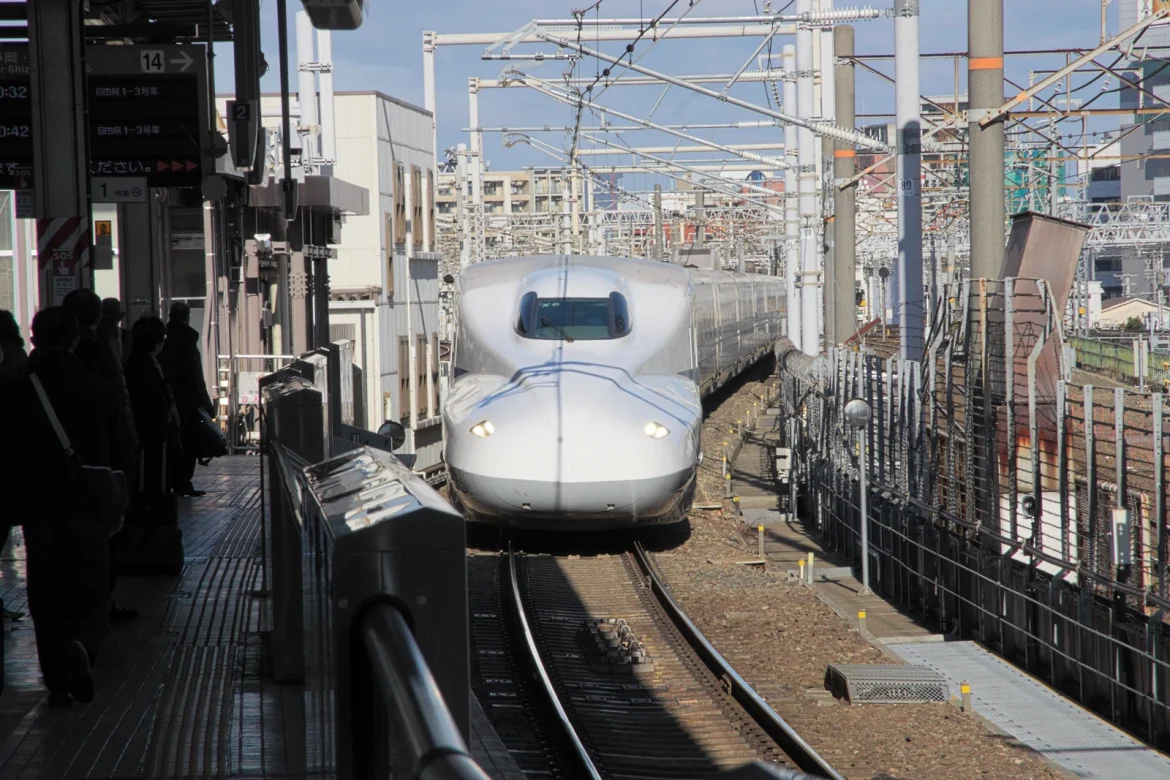
The Tokaido Shinkansen is the simplest way to travel from Nagoya to Tokyo: a Nozomi takes about 1 hour 40 minutes from Nagoya Station to Tokyo Station, with no change of train. A highway bus costs less on many dates, but uses much more of your day. An overnight bus can also save a hotel night, provided you are comfortable sleeping in a seat.
For most first-time visitors, families and short trips, a reserved Shinkansen seat is the best balance of speed and convenience. Compare Nagoya to Tokyo Shinkansen tickets, or look at Tokyo–Nagoya overnight buses if keeping costs down matters more. Select the Nagoya departure direction before booking.
Finish planning your stay with our Nagoya travel guide, then use the Tokyo accommodation guide to choose a convenient arrival station. Where your hotel is located can matter more than saving a few minutes on the intercity train.

Nagoya to Tokyo: which transport should you choose?
| Option | Journey time | Cost and booking | Best for | Main drawback |
|---|---|---|---|---|
| Nozomi Shinkansen | About 1 hr 40 min to Tokyo | ¥11,300 for a regular-season adult ordinary reserved seat | Most city-to-city trips | Higher fare than many buses |
| Hikari Shinkansen | About 2 hr; varies by service | ¥11,090 on the same fare basis; covered by the nationwide JR Pass | Travelers who already have a valid JR Pass | Fewer departures than Nozomi |
| Kodama Shinkansen | About 2 hr 40 min; allow roughly 2.5–3 hr | ¥11,090 on the same fare basis; separate discounts may be available | Intermediate stops or a worthwhile discounted offer | All-stations service |
| Daytime highway bus | Roughly 5.5–7 hr, sometimes a little less | Date- and service-dependent fare | Flexible, budget-focused trips | Traffic delays and a large part of the day in transit |
| Overnight bus | Typically 6–8 hr | Varies with date, seat layout and operator | Travelers happy to sleep on a bus | Early arrival and uncertain sleep quality |
| JR local and rapid trains | Allow roughly 6–8 hr and several changes | Compare the through fare with buses and any eligible seasonal ticket | A slow trip with stops along the Tokaido corridor | Frequent transfers with luggage |
| Rental car | Allow much of a day including breaks | Rental, tolls, fuel, parking and possible one-way fee | A road trip through Shizuoka, Fuji or Hakone | Usually poor value for the two city centers alone |
The rail times above are station-to-station estimates, not hotel-to-hotel timings. Standard reserved-seat fares include the basic fare and Shinkansen surcharge; peak dates, seat classes and discounted products change the amount. A bus can be good value when you have time to spare, but compare the cost of the whole travel day rather than the ticket alone.
Taking the Nozomi from Nagoya to Tokyo
Board a Tokyo-bound Tokaido Shinkansen at JR Nagoya Station. Nozomi services stop at Shin-Yokohama and Shinagawa before reaching Tokyo. Use about 1 hour 40 minutes as a sensible planning figure to Tokyo Station; check the actual arrival station and time on your chosen service rather than a booking site’s city-wide “fastest train” headline.

A regular-season adult ordinary reserved seat is ¥11,300. Hikari and Kodama reserved seats are ¥11,090 on the same basis, so choosing the slowest train does not automatically produce a large saving. Seat reservations are particularly useful for groups, weekends and busy travel dates. The JR Central Tours comparison explains the standard fare basis.
Booking and boarding without a last-minute rush
You can book through SmartEX, buy at a JR ticket office or machine, or use a reseller such as Klook. Compare the final price, cancellation conditions and boarding method. Discount products can have stricter change rules; do not assume that every missed train can be replaced free of charge.
JR Nagoya, Meitetsu Nagoya and Kintetsu Nagoya are connected but have different gates. Allow around 20–30 minutes at the station on a first visit, especially if you need to collect tickets or find an elevator. Follow signs for the Tokaido Shinkansen and confirm your train number, departure time and platform on the live display. The official station maps help you locate the JR Shinkansen area.
Ordinary reserved tickets normally go on sale at 10:00 Japan time one month before travel. Eligible SmartEX reservations can be made earlier, with restrictions and later confirmation of the detailed train and seat assignment. Follow the rules of the particular product you select.
When Nozomi has no unreserved seats
Nozomi operates with all seats reserved during designated peak periods. The upcoming dates listed by JR Central as of 9 October 2026 are 10–12 October and 21–23 November 2026; 25 December 2026–5 January 2027; 9–11 January 2027; and 20–22 March 2027. These are specific operating dates, not a rule that applies to every weekend. Check the official Nozomi calendar and reserve a seat for your journey.
Tokyo or Shinagawa: where should you get off?
Tokyo Station is convenient for Marunouchi, Nihombashi, Ginza, Ueno and onward travel on the Chuo Line. Shinagawa is useful for hotels around Shinagawa, the southern Yamanote Line and Keikyu services toward Haneda Airport. For Shibuya or Shinjuku, compare the complete route to your hotel: Shinagawa can work well, but it is not automatically faster for every address.
Hikari and Kodama: when are they worth choosing?
Hikari is the natural starting point if you already have a nationwide JAPAN RAIL PASS. It is covered without the special Nozomi supplement and usually takes around two hours between Nagoya and Tokyo. Stopping patterns vary, so compare departures rather than assuming every Hikari has the same journey time.
Kodama stops at every station. It can be useful for Hamamatsu, Shizuoka, Mishima or Shin-Fuji, or when a discounted product makes the longer ride worthwhile. For a straightforward trip to Tokyo at standard fares, the saving versus Nozomi is small. Check any discount’s train-change and missed-departure restrictions before buying.
If your broader route also includes Osaka, Kyoto or Hiroshima, price the complete itinerary before buying a pass. Already owning a pass changes the decision; buying one just for this journey usually does not.
Daytime highway buses from Nagoya to Tokyo
Day buses connect Nagoya with Tokyo Station and Shinjuku. JR Tokai Bus’s Shin-Tomei Super Liner services are one option; Meitetsu and Keio also operate a Nagoya–Shinjuku route. Departure points differ: the JR bus terminal on the Shinkansen side of Nagoya Station is not the same place as Meitetsu Bus Center or a roadside stop used by another company.
Allow roughly 5.5–7 hours, depending on the service and traffic. JR Tokai Bus lists a Nagoya–Tokyo Shin-Tomei service at about 5 hours 19 minutes; slower routes and congestion take longer. The JR Tokai route information and Meitetsu Nagoya–Shinjuku page identify the services and scheduled timings.
Bus prices fluctuate, so a fixed ¥3,000–¥6,000 budget is not reliable for every date. Compare the actual departure, fare and baggage allowance. A cheap ticket is most useful on a day when you do not also have a timed activity, flight or another important connection waiting in Tokyo.
Overnight buses: saving a hotel night
An overnight bus normally leaves Nagoya late in the evening and reaches Tokyo early the next morning. Allow about 6–8 hours for many services. A four-across seat usually costs less than a roomier layout, but the best option depends on how well you sleep sitting up. If losing a night’s sleep will wipe out your first day in Tokyo, the apparent saving may not be worth it.
The Tokyo–Nagoya night-bus listing includes departures from Nagoya and Tokyo-area stops such as Shinjuku or Akihabara. Check the precise stop in the package you book: do not assume every bus goes to Tokyo Station. Also check the departure date carefully for services leaving after midnight.
Compare seat layout, reclining space, toilet provision, charging, curtains and any women-only seating options. Amenities are service-specific. Bus luggage limits are also separate from Shinkansen rules; a large suitcase or mobility aid needs to meet the actual operator’s acceptance conditions.
Plan the first few hours after arrival. Confirm whether your hotel can store luggage before check-in, locate a suitable locker or staffed storage facility and leave room for breakfast and a break. For a demanding Disney day or an important morning appointment, arriving by train the evening before is generally the more comfortable plan.
Is taking local JR trains cheaper?
You can follow the Tokaido corridor by local and rapid trains through Toyohashi, Hamamatsu, Shizuoka, Atami and Yokohama. Expect several changes and roughly 6–8 hours, depending on connections. A through local-train fare does not automatically beat a discounted bus, and repeatedly moving a suitcase between platforms can make the journey tiring.
This route makes more sense when the stops are part of the trip. Spend time in Shizuoka or Atami (Chinese guide), then continue to Tokyo, rather than treating the entire day as a cheaper substitute for a short Shinkansen ride.
The seasonal Seishun 18 Ticket now uses three or five consecutive days for one traveler, rather than five freely separated travel days. The published prices are ¥10,000 and ¥12,050 respectively. It covers eligible JR local and rapid services, not the Tokaido Shinkansen. Check the official release for validity periods and conditions. It is worth examining for a multi-day slow-rail itinerary, not buying impulsively for this one transfer.
Driving from Nagoya to Tokyo
The Tomei and Shin-Tomei expressways are the main road corridors. Treat this as a substantial driving day, with time for breaks, city traffic and congestion. A car is much more useful if you are visiting Hamamatsu, Shizuoka, the Mount Fuji area, Gotemba or Hakone along the way.
Add rental charges, expressway tolls, fuel, city parking and any one-way return fee before comparing the cost with individual train tickets. Shared costs can help a group, but a long drive followed by Tokyo traffic is a different proposition from a direct train between central stations.
Compare Nagoya rental cars once you know your pickup and drop-off points. Confirm the driver’s eligibility and the rental company’s document requirements before booking. If both ends of your trip are simply city-center hotels, the Shinkansen is usually easier.
Which tickets and passes cover the journey?
| Ticket | Use | Key limitation | Our view |
|---|---|---|---|
| Single Shinkansen ticket | Your selected Nagoya–Tokyo journey | Seat class, train and change rules depend on the product | The practical choice for a single trip or return |
| Nationwide JAPAN RAIL PASS | 7, 14 or 21 consecutive days; Hikari and Kodama covered | Nozomi requires a separate pass-holder ticket | Calculate the value of every long-distance leg |
| Seishun 18 Ticket | Eligible local and rapid trains during the seasonal validity period | Consecutive-day format; no Tokaido Shinkansen | For slow, multi-day rail travel |
| Tokyo Subway Ticket | 24, 48 or 72 hours on Tokyo Metro and Toei Subway | No Shinkansen or JR lines | A separate sightseeing decision after arrival |
The nationwide JR Pass alone does not cover Nozomi, including its unreserved seats. To use it, buy the special pass-holder Nozomi/Mizuho ticket before boarding and use it with your valid pass. The published adult supplement for Tokyo–Nagoya is ¥4,180. See the official Nozomi/Mizuho ticket rules.
For this route alone, buying tickets normally costs much less than a nationwide pass. As a simple benchmark, two regular-season Nozomi ordinary reserved seats total ¥22,600; the seven-day ordinary JR Pass is ¥50,000 through the official online service, with a different price for overseas agency exchange orders. Add up your actual itinerary and current purchase-channel price rather than assuming a pass pays for itself.
You can compare nationwide JR Pass options if several long-distance journeys fall within the pass period. JR TOKYO Wide Pass does not cover the Tokaido Shinkansen. For travel around the capital, a Tokyo Subway Ticket covers Tokyo Metro and Toei Subway only, not JR Yamanote, Chuo or Keiyo trains.
Starting in Sakae, Kanayama or at Centrair Airport
| Starting point | Route to the Shinkansen | What to allow for |
|---|---|---|
| JR Nagoya Station | Follow Tokaido Shinkansen signs | Ticket collection, gates and finding the right platform |
| Sakae or Fushimi | Higashiyama subway line to Nagoya | The walk from the subway to the JR Shinkansen gates |
| Kanayama | JR or Meitetsu to Nagoya | JR can make the railway transfer simpler; compare your departure |
| Chubu Centrair Airport | Meitetsu μ-SKY or a suitable limited express to Meitetsu Nagoya, then walk to JR | Airport formalities, waiting time and the transfer between operators |
From Sakae or Fushimi, the subway is straightforward, but reaching Nagoya subway station is not the same as reaching the Shinkansen platform. Allow a comfortable walking margin, especially with luggage or children.
The fastest μ-SKY journey from Centrair to Meitetsu Nagoya is about 28 minutes. Adding the transfer and a Nozomi ride gives a rough airport-station-to-Tokyo planning window of 2.5–3 hours with a sensible connection. This does not include immigration, baggage reclaim, customs or getting from the arrival gate to the airport station. Do not book a tight Shinkansen connection based solely on your flight’s scheduled landing time.
Use our Centrair to Nagoya transport guide for the first leg. If you are arriving late, check the final useful connection through to Tokyo rather than assuming that any airport train will connect.
Getting from Tokyo Station to your hotel or sights

| Destination | Practical route from Tokyo Station | Planning note |
|---|---|---|
| Marunouchi and the Imperial Palace outer gardens | Walk from the Marunouchi side | Choose the exit closest to your destination |
| Ginza | Marunouchi subway line or walk | The best option depends on your exact address and luggage |
| Ueno | JR Ueno-Tokyo, Yamanote or Keihin-Tohoku services as appropriate | Allow around 5–10 minutes aboard, plus station walking |
| Asakusa | JR to Kanda, then the Ginza subway line | Allow roughly 20–30 minutes with the transfer |
| Shinjuku | JR Chuo Line rapid service | About 15 minutes aboard; allow extra time for both large stations |
| Shibuya | JR Yamanote Line or an appropriate subway route | Compare with leaving the Shinkansen at Shinagawa |
| Tokyo Disney Resort | JR Keiyo or a Maihama-bound through Musashino service to Maihama | About 15–20 minutes aboard, plus a long walk to the Keiyo platforms |
These are broad planning estimates, not guaranteed connections. Tokyo Station has separate Marunouchi and Yaesu sides and distant underground platforms. Use the official Tokyo Station floor maps before choosing your exit or onward train.
For the resort transfer, read Tokyo to Tokyo Disneyland. If your plans include Asakusa and Oshiage, the Tokyo Skytree guide will help with timing; for a sunset visit in Shibuya, check the SHIBUYA SKY guide before fixing your arrival schedule.
Can you visit Tokyo as a day trip from Nagoya?
Yes, but the return train fare is a substantial part of the day. Book an early outward train and a suitable evening return, then keep your sightseeing focused. Two neighboring areas are more enjoyable than racing across six districts.
| Part of the day | Sample plan |
|---|---|
| Early morning | Take a booked Nozomi from Nagoya and have breakfast after arriving |
| Morning to early afternoon | Explore Senso-ji, Nakamise and nearby Asakusa streets; have lunch locally |
| Afternoon | Return toward Tokyo Station for Marunouchi and the station area, or choose nearby Ginza |
| Early evening | Have dinner, retrieve any stored luggage and return to the Shinkansen gates |
| Evening | Take your reserved train back to Nagoya with time to reach your hotel |
This is a sightseeing outline, not a timetable. Alternatively, focus the day on Harajuku, Omotesando and Shibuya. Avoid combining Tokyo Disney Resort, Asakusa, Odaiba, Shinjuku and Shibuya in a single Nagoya day trip.
Stay overnight if you want a full Disney day, several timed attractions or a more relaxed evening. With more time, our day trips from Tokyo guide covers options including Kamakura, Kawaguchiko and Yokohama.
Families, older travelers and large luggage
A reserved Shinkansen seat is a sensible default for families and travelers who prefer an easier journey. Allow time for elevators, keep each person’s luggage manageable and consider a hotel near your arrival station. For accessibility assistance or a wheelchair space, arrange the required service with the operator ahead of travel.
On the Tokaido Shinkansen, a suitcase whose length, width and height add up to more than 160 cm and no more than 250 cm needs a reserved seat with an oversized baggage area. Exactly 160 cm is not above the threshold. The reservation does not add a fee to the normal reserved-seat price; arriving with oversized baggage without it incurs a ¥1,000 charge and staff-directed storage. Baggage over 250 cm cannot be brought aboard. Read JR Central’s luggage rules before booking.
Keep doors and aisles clear. For smaller bags, use suitable racks or the space at your feet; do not assume an unreserved deck storage area replaces the oversized-baggage reservation requirement. After reaching Tokyo, leave luggage at your hotel or an appropriate storage service before sightseeing.
Overnight buses are less forgiving if anyone struggles to sleep sitting up, needs frequent toilet access or finds long bus journeys uncomfortable. Choose based on the needs of your group rather than age alone.
Common mistakes to avoid
- Using a city-wide “fastest train” headline as the time to Tokyo Station without checking the arrival station
- Assuming a reserved ticket lets you board any later train on the same terms
- Buying a JR Pass for this journey without comparing the complete itinerary
- Turning up with oversized baggage without the required seat reservation
- Booking a bus without checking its exact stop, luggage rules and after-midnight date
- Scheduling a Tokyo attraction immediately after an airport arrival or a long highway-bus journey
- Forgetting the walk to Tokyo Station’s Keiyo platforms when heading to Disney
Nagoya to Tokyo FAQs
What is the fastest practical way to travel?
A direct Nozomi Shinkansen is the best starting point for city-center travel. Plan around 1 hour 40 minutes from Nagoya Station to Tokyo Station, plus your local transfers.
How much is a Shinkansen ticket?
The regular-season adult ordinary reserved fare is ¥11,300 on Nozomi or ¥11,090 on Hikari and Kodama. Your date, seat class, booking channel and any special offer determine the actual purchase price.
Does the JR Pass cover Nozomi?
Only when you also buy the required pass-holder Nozomi/Mizuho ticket before boarding. Hikari and Kodama are the straightforward covered options for a valid nationwide pass.
Do I need to book a bus in advance?
Reserve the specific service you want, especially on weekends, holidays or when you need a particular seat layout. A route appearing in a search does not guarantee seats for your date.
Is an overnight bus worth it?
It can save transport and accommodation costs if you sleep well aboard. Factor in luggage storage and a gentle start after arrival; avoid relying on it before an important morning commitment.
Can I go straight from Centrair Airport to Tokyo?
Yes. Take Meitetsu to Nagoya and transfer to the Tokaido Shinkansen. The 2.5–3-hour rail planning window starts at the airport station, not at landing.
Should I arrive at Tokyo or Shinagawa?
Choose by your onward destination. Tokyo is convenient for the station district, Ueno and the Chuo Line; Shinagawa works well for its surrounding hotels, southern Tokyo and the Haneda direction.
Can I make it a day trip?
Yes. Reserve both trains and keep the day to one or two areas. An overnight stay is more comfortable for a full theme-park day or several timed attractions.
The best option for your Nagoya–Tokyo trip
Choose Nozomi for a simple, fast transfer; choose Hikari if a valid nationwide JR Pass is already part of your trip. A daytime or overnight bus is worth comparing when the saving matters more than speed, while local trains and driving work best when the places between the cities are part of the plan.
Before paying, settle three things: the station or bus stop nearest your Tokyo hotel, the amount of luggage you will carry, and how much flexibility you need if your plans change. Then compare train tickets or night-bus options for your actual date.