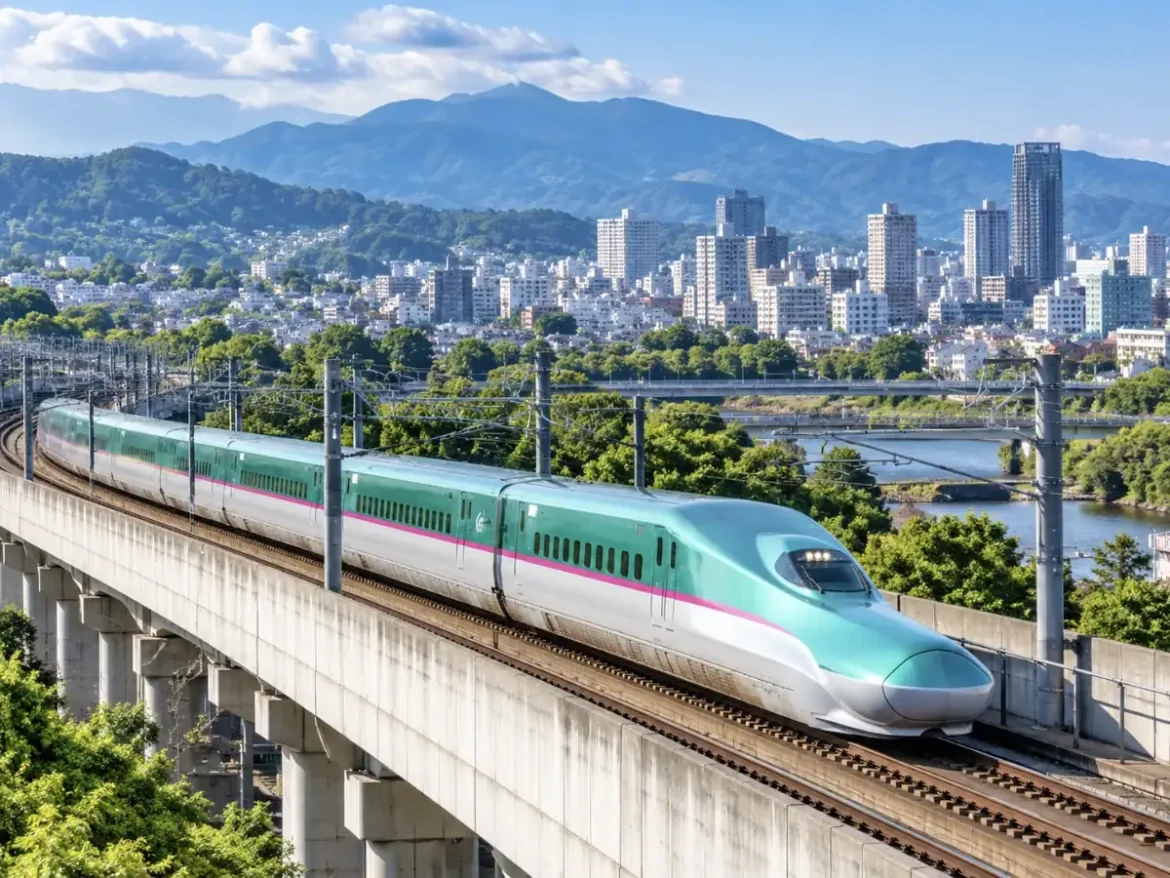
For most travelers, the best way from Tokyo to Sendai is straightforward: take the Tohoku Shinkansen. A fast Hayabusa service can cover the journey in roughly an hour and a half, arrives directly at JR Sendai Station and avoids the long highway journey required by a bus.
Price is the main reason to look beyond Hayabusa. Highway buses can cost much less, while Yamabiko may offer a lower rail fare if its slower journey suits your day. Direct Limited Express Hitachi trains also reach Sendai, but their longer coastal route makes them a specialist choice.
JR East revised fares and its timetable in March 2026 and replaced its former regional passes with the unified JR EAST PASS. The old Shinkansen Tokudane 1 and 14 products ended for travel after September 30, 2026. Compare the fare and conditions offered for your actual travel date.
For a first visit, use Hayabusa if time and simplicity matter most. Use a highway or overnight bus if saving money matters more than losing several hours. Consider Yamabiko when its schedule and actual fare work better for you. Buy a JR EAST PASS only when Sendai is part of a wider Tohoku itinerary rather than the sole long-distance trip.
If you are still deciding how Sendai fits into the trip, the Sendai travel guide explains how much time the city and Matsushima realistically need. Travelers staying around the capital before departure can also compare logistics in the Tokyo Station hotel guide.

Tokyo to Sendai: Quick Transport Comparison
| Option | Typical travel time | Cost pattern | Seat situation | Best for | Main drawback |
|---|---|---|---|---|---|
| Hayabusa Shinkansen | About 1 hr 25 min–1 hr 35 min | Usually the highest standard rail fare | All seats reserved | First visits, short trips, families, business travel | Costs much more than a bus |
| Yamabiko Shinkansen | Often around 2 hours or more | Compare the live fare; old Tokudane 1/14 offers have ended | Reserved and selected non-reserved seating depending on train | Travelers prioritizing fare over the fastest arrival | More stops and a longer journey |
| Highway / night bus | Roughly 5–7 hours depending on service and traffic | Operator advertises from ¥3,000; date-specific pricing | Reserved bus seat | Budget travelers and overnight travel | Long ride, traffic risk and date-specific schedules |
| Limited Express Hitachi | About 4.5–5 hours | Usually only modestly cheaper than fast Shinkansen travel | Reserved-seat-oriented limited express | Travelers intentionally using the Joban Line route | Too slow for most Tokyo–Sendai trips |
| Car | Usually 5+ hours before meaningful breaks or congestion | Tolls, fuel and parking | Private vehicle | Groups continuing to rural Miyagi or Tohoku | Poor value for city-center-to-city-center travel |
Editor’s verdict: Hayabusa is worth the higher fare when Sendai time matters. The bus is worth considering when your budget matters more than half a day of travel. Yamabiko becomes interesting when its actual fare offsets the longer journey. Driving is usually unnecessary if your plan centers on Sendai Station, central Sendai and Matsushima.
Compare travel date, train service and reserved-seat conditions. A one-way Shinkansen ticket and a multi-day rail pass are different products; assess the whole itinerary before buying a pass.
What Changed for Tokyo–Sendai Travel in 2026?
JR East fares changed in March 2026
JR East revised its base fares from March 14 2026. A current regular-period Hayabusa ordinary reserved-seat journey from Tokyo to Sendai is around ¥11,630 one way. The exact total can vary with travel date, train and class, so treat old screenshots quoting earlier fares as outdated.
Hayabusa frequency improved
The March 2026 timetable added Hayabusa service. During the morning period from 07:00 through 11:59, JR East now schedules at least two Tokyo-departing Hayabusa services per hour. This makes it easier to choose a fast train without building the entire day around one departure.
The old JR EAST PASS (Tohoku area) is gone
The former regional pass ended sales in March 2026. The replacement is simply called the JR EAST PASS. It covers all JR East lines plus specified partner lines and comes in 5-consecutive-day and 10-consecutive-day versions.
Use the bus timetable for your travel date
Tokyo–Sendai buses continue to operate. JR Bus Tohoku publishes separate schedules for travel through October 31, 2026 and from November 1, 2026. Check the direction, operating date and boarding terminal rather than treating a suspension notice for another operator as a route-wide closure.
Hayabusa: The Best Choice for Most First-Time Visitors
Hayabusa is the easiest recommendation because it minimizes both time and complexity. Board in the Tokyo area, remain on one train and arrive inside central Sendai at JR Sendai Station.
The key rule is that Hayabusa is all-reserved. Do not enter the platform assuming you can simply find an unreserved car. You need a valid seat reservation for the service you are taking.
Current timetables include Tokyo–Sendai Hayabusa journeys of roughly 90 minutes, with some services slightly faster. Stopping patterns vary, so a Hayabusa may stop at Ueno and Omiya, while another can skip Ueno.
Who should choose Hayabusa?
- First-time Japan visitors: it removes the uncertainty of bus terminals, traffic and long travel times.
- Families: a reserved seat and shorter journey are usually worth more than the bus saving.
- Older travelers: less time seated and easy station facilities reduce fatigue.
- Same-day visitors: the fast journey preserves enough daylight for meaningful sightseeing.
- Travelers with onward plans: Sendai Station is the natural hub for Matsushima, airport trains and further Tohoku rail travel.
Klook currently lists Tokyo–Sendai rail inventory, including Shinkansen services. Check the train name and seat type carefully before payment rather than choosing only by the lowest displayed price.
Yamabiko: Compare the Fare Before Choosing a Slower Train
Yamabiko uses the same Tohoku Shinkansen corridor but makes more stops. A Tokyo–Sendai journey can take around two hours or longer rather than roughly 90 minutes on a fast Hayabusa.
Compare the live Yamabiko fare with Hayabusa before committing to the slower train. The old ¥9,990 Tokudane 1 and ¥7,760 Tokudane 14 examples are not current October 2026 offers: Eki-net ended those products for journeys after September 30, 2026. Any remaining date-specific campaign has its own eligible trains, seats and booking deadline.
A promotional fare is worthwhile only if it is available for the journey you will actually take. Read change, cancellation and missed-train rules before paying; a restricted ticket should not be treated like a flexible ordinary fare.
Hayabusa vs Yamabiko
| Question | Hayabusa | Yamabiko |
|---|---|---|
| Fastest? | Yes | No |
| Tokyo–Sendai time | Roughly 1.5 hours | Often 2+ hours |
| All seats reserved? | Yes | No; selected services have non-reserved cars |
| Advance discounts? | Available only on applicable products/trains | Check current products; old Tokudane 1/14 examples have expired |
| Best for | Speed and simple planning | Travelers willing to trade time for a lower fare |
Tokyo Station, Ueno or Omiya: Where Should You Board?
The best boarding station is the one that reduces your total door-to-door journey, not necessarily the one with the shortest Shinkansen segment.
Tokyo Station
Choose Tokyo Station when you are staying around Marunouchi, Ginza, Nihonbashi, Yurakucho or along a convenient JR/Metro approach. It offers the largest selection of Tokyo-originating services and is the safest default when you want to board at the train’s starting station.
Tokyo Station is large. With luggage or children, do not plan to arrive from a local train only a few minutes before the Shinkansen departure. Allow enough time to follow Tohoku Shinkansen signs, pass the correct gates, buy food if needed and find the platform.
Ueno Station
Ueno can be more practical for stays around Ueno, Asakusa, Nippori and parts of northeast Tokyo. It avoids traveling south to Tokyo Station only to head north again.
The catch is that not every Hayabusa stops at Ueno. Check the exact service before assuming Ueno is available for your preferred departure.
Omiya Station
Omiya is logical if you are staying in Saitama or in northern parts of the metropolitan area with easy rail access to Omiya. It can also simplify a journey that already approaches Tokyo from the north.
Do not travel from central Tokyo all the way to Omiya solely to reduce the Shinkansen riding time. The local transfer often cancels out the saving.
How to Book Tokyo–Sendai Shinkansen Tickets
Option 1: JR-EAST Train Reservation / Eki-net
Use JR-EAST Train Reservation for its available tickets and JR EAST PASS reservations. The Japanese Eki-net service has separate product information; do not assume every Japanese-site promotion is sold through the English interface. Follow the selected product’s ticket-collection or linked-IC-card instructions.
Use this option when price optimization matters and you are comfortable with JR East’s booking system.
Option 2: Station ticket machine or ticket office
This is sufficient when you want a normal ticket and do not need a limited advance discount. It is also useful if your itinerary is still changing after arrival in Japan.
For Hayabusa, make sure you reserve an actual seat. During busy travel periods, waiting until departure day can leave fewer convenient train and seat choices.
Option 3: Klook
Klook’s live Tokyo–Sendai rail page is useful for travelers who prefer an English booking interface and want to compare available rail services in one place. Verify the train category, seat class, change/refund conditions and redemption method shown for your chosen departure.
Search your date before comparing prices: a route page is not a promise that a particular train still has seats.
Is the JR EAST PASS Worth It for Tokyo to Sendai?
Not for a simple Tokyo–Sendai round trip by itself.
The current JR EAST PASS costs ¥35,000 for 5 consecutive days or ¥50,000 for 10 consecutive days. It covers JR East lines and specified partner lines, including ordinary reserved seats on covered Shinkansen services.
A regular Tokyo–Sendai Hayabusa round trip is only around the low-¥20,000 range, so the pass needs additional substantial rail travel before it makes financial sense. Sendai city rides and a Matsushima day trip alone do not bridge that gap.
When the 5-day JR EAST PASS starts to make sense
Compare the pass when the same five-day period includes several long-distance journeys such as:
- Tokyo → Sendai
- Sendai → Morioka or Shin-Aomori
- A side trip on another covered JR East route
- A long return toward Tokyo or Narita Airport
The pass is designed for a regional itinerary, not as a discounted Tokyo–Sendai return ticket.
The JR EAST PASS requires a non-Japanese passport and runs for consecutive days. It covers ordinary reserved seats within its area; Green Car and GranClass require extra payment. It does not cover the Tokaido Shinkansen, highway buses or Sendai city subway. See the official coverage and validity rules.
What About the Nationwide Japan Rail Pass?
The nationwide Japan Rail Pass covers Hayabusa on the Tohoku Shinkansen, and ordinary reserved-seat reservations can be made within the pass rules. However, buying it only for Tokyo–Sendai is poor value.
The nationwide pass becomes relevant only when Tokyo–Sendai is one part of a much longer itinerary with expensive JR journeys elsewhere in Japan.
The nationwide pass uses different eligibility rules: most foreign visitors need Temporary Visitor status. Check the official eligibility requirements. The official online price for a 7-day Ordinary adult pass is ¥50,000; overseas-agency pricing is ¥53,000 from October 1, 2026. Neither is economical for this return trip alone.
Highway Bus and Night Bus: The Cheapest Practical Alternative
Highway buses are the main alternative when the Shinkansen fare matters more than travel time. JR Bus Tohoku advertises this corridor from ¥3,000, but actual fares vary by departure, date and available discount inventory. Treat that as a starting price, not a guaranteed quote.
Expect roughly five to seven hours rather than 90 minutes. A night bus can replace a hotel night, but only if you can sleep reasonably well on a bus and are prepared to begin sightseeing after an overnight journey.
Current 2026 bus warning
Tokyo–Sendai buses continue to operate. JR Bus Tohoku publishes separate schedules for travel through October 31, 2026 and from November 1, 2026. Check the direction, operating date and boarding terminal rather than treating a suspension notice for another operator as a route-wide closure.
Use live booking inventory for your actual date and confirm the Tokyo boarding terminal and Sendai arrival point. “Tokyo” can mean Shinjuku, Tokyo Station/Yaesu or another terminal depending on the service.
Who should take the bus?
- Solo budget travelers who would rather save several thousand yen than save several hours.
- Travelers using an overnight journey to avoid paying for one hotel night.
- People whose schedule is flexible enough to absorb traffic delays.
Who should avoid it?
- Families with toddlers who need frequent movement or breaks.
- Older travelers uncomfortable with a long seated journey.
- Anyone with a same-day event or fixed appointment in Sendai.
- Travelers who sleep badly on overnight buses.
For a Tokyo departure, use JR Bus Tohoku’s Tokyo-area → Sendai timetable through October 31, 2026. Follow its November timetable link for later trips. Tokyo Station departures use the Yaesu South Exit JR bus terminal; Shinjuku departures use Busta Shinjuku. Confirm the exact stop on your ticket. Check luggage limits, payment deadline, cancellation fee and three- versus four-across seating before booking.
Limited Express Hitachi: A Real Train, but a Niche Choice
Some direct Limited Express Hitachi services run from Tokyo via the Joban Line to Sendai. A current timetable example takes around four and a half hours.
This route is technically convenient because no transfer is required, but it is not the normal recommendation. You sacrifice roughly three hours compared with Hayabusa without receiving the dramatic bus-level saving.
Choose Hitachi only when its departure fits your itinerary unusually well, you specifically want the Joban Line route, or you have another reason to avoid the Shinkansen. For most visitors, Hayabusa or a highway bus creates a clearer time-versus-money trade-off.
Large Luggage on the Tohoku Shinkansen
Travelers familiar with the Tokaido Shinkansen often assume the same oversized-baggage reservation system applies everywhere. It does not.
JR East states that luggage storage reservations are not required on the Tohoku Shinkansen. Under its general carry-on rules, each permitted item can be up to 250 cm in combined dimensions, no more than 2 m long and up to 30 kg, with up to two pieces excluding personal items.
That does not mean unlimited luggage space is guaranteed. Dedicated storage areas are limited and may be first-come, first-served. Keep your suitcase manageable enough to use the overhead rack, designated space or your own seat-area space without blocking aisles.
If you are moving from an airport hotel or another city with several large suitcases, reserve extra station time. The difficult part is usually not the 90-minute Shinkansen ride but moving through Tokyo Station, escalators, gates and crowded platforms.
Families and Older Travelers
Traveling with children
Hayabusa is usually the best balance for families because the journey is short and the seats are reserved. Book seats together rather than depending on last-minute availability.
Allow more transfer time than a solo traveler would. Tokyo Station is large, and buying snacks, finding toilets and reaching the correct platform can take longer with a stroller or several bags.
A highway bus can save money for a family, but the saving comes with five or more hours in a fixed seat. For young children, that trade-off is often harder than the fare difference first appears.
Traveling with older family members
The Shinkansen again has the advantage because it minimizes the total time seated. Tokyo, Ueno, Omiya and Sendai are major stations with lifts and escalators, but there can still be substantial indoor walking.
If mobility is limited, choose the boarding station that minimizes local transfers even if another station trims a few minutes from the Shinkansen segment. A direct taxi to Tokyo Station or Ueno can sometimes make more sense than two crowded commuter-train changes.
Official Maps for the Journey
Use the JR East regional route maps to see the Tohoku corridor. At the stations, open the official Tokyo Station floor maps and official Sendai Station floor maps. Follow signs for the Tohoku Shinkansen at Tokyo; at Sendai, use the map to choose your hotel exit or transfer to local trains and the subway.
Arriving at Sendai Station
Sendai Station is not an out-of-town Shinkansen terminal. You arrive directly in the city center, with JR local lines, the subway, buses, taxis, shops and restaurants connected around the station complex.
If you are staying overnight, a hotel around Sendai Station is the simplest first-time choice. You can leave luggage before sightseeing and return without adding another transfer at the end of the day.
For sightseeing after arrival, the Sendai travel guide covers central Sendai, Matsushima and realistic multi-day planning.
Can You Visit Sendai as a Day Trip from Tokyo?
Yes. The railway journey is short enough that a same-day visit works, provided you keep the itinerary focused.
Practical same-day plan
The time bands below are an illustrative itinerary, not a train timetable. Select your outbound and return services in JR-EAST Train Reservation for the actual date before fixing sightseeing plans. Check the last usable return and leave a margin; evening departures changed in the March 2026 timetable.
| Time | Plan |
|---|---|
| 07:30–08:30 | Leave Tokyo on a morning Hayabusa |
| 09:00–10:00 | Arrive at Sendai Station, leave luggage if necessary |
| Morning | Central Sendai historical sights |
| Lunch | Gyutan or another Miyagi specialty |
| Afternoon | Continue central sightseeing, shopping or one focused nearby area |
| Evening | Dinner near Sendai Station |
| 19:00–21:30 | Return to Tokyo on a reserved Shinkansen |
The mistake is trying to add a full Matsushima visit to a packed Sendai city day. Matsushima deserves most of a separate day if temples, the waterfront and a bay cruise matter to you.
A Better One-Night Tokyo–Sendai Itinerary
Day 1: Tokyo → Sendai city
Take a morning Hayabusa, leave luggage at a Sendai Station hotel and spend the rest of the day in central Sendai. Eat gyutan at lunch or dinner and avoid using the afternoon for a rushed Matsushima detour.
Day 2: Matsushima → Tokyo
Travel from Sendai to Matsushima-Kaigan in the morning, spend most of the day around the bay and return to Sendai before taking an evening Shinkansen back to Tokyo.
This is a more satisfying first trip than compressing both areas into one day. The Sendai itinerary explains why Matsushima-Kaigan, rather than Matsushima Station, is normally the useful station for the main waterfront sights.
Should You Fly from Tokyo to Sendai?
For a journey starting in central Tokyo and ending in central Sendai, the Shinkansen is the practical fast option. An air itinerary adds airport access, check-in and security, then another transfer into Sendai. Do not assume that the presence of two airports guarantees a useful direct flight: check Sendai Airport’s current monthly domestic schedule for the route and date you need. Flying is a separate decision if Sendai is part of an existing airline connection rather than a city-to-city trip from Tokyo.
Tokyo to Sendai for a Flight from Sendai Airport
If Sendai Airport is your final destination, do not stay on the Shinkansen system looking for an airport station. Get off at Sendai Station and transfer to the Sendai Airport Access Line.
The airport line runs directly from Sendai Station to the airport without requiring a transfer at Natori. For the full station-to-terminal sequence, current fare and late-arrival considerations, use the Sendai Airport to Sendai Station guide.
From March 14, 2026, the airport line’s rapid services were converted to all-stations trains. Allow roughly 25 minutes or more according to the train, rather than using the old 17-minute rapid estimate. Leave additional time for the station transfer and your airline’s check-in deadline.
Should You Drive from Tokyo to Sendai?
Driving is rarely worthwhile for a straightforward city trip. The journey takes many hours once breaks, congestion and urban access are included, and you also pay expressway tolls, fuel and parking.
A car becomes more defensible when Sendai is only the first stop in a rural itinerary with places that are awkward by rail. If the plan is Tokyo → Sendai Station → central Sendai → Matsushima, public transport is simpler.
Where to Stay Before and After the Journey
In Tokyo
Stay near Tokyo Station if you want the easiest early Shinkansen start and are also using the station for airport or intercity rail. Ueno is a good alternative if your Tokyo sightseeing is concentrated around Ueno, Asakusa or northeast Tokyo and your chosen Hayabusa stops there.
The best hotels near Tokyo Station guide is useful when an early Tohoku departure matters more than nightlife. If Sendai follows several days in the capital, the Tokyo sightseeing guide can help sequence the Tokyo portion before heading north.
In Sendai
For a one- or two-night first visit, stay close to Sendai Station. This is especially useful with luggage, for an early Matsushima departure or when returning to Tokyo in the evening.
You do not need to stay beside the station for a longer city break, but transport convenience is hard to beat if most of the trip involves rail day trips.
Best Route by Traveler Type
| Traveler | Best starting choice | Why |
|---|---|---|
| First-time visitor | Hayabusa | Fast, direct and reserved |
| Budget backpacker | Highway or night bus | Lowest typical fare |
| Advance planner seeking rail discount | Compare live Yamabiko and Hayabusa fares | Worth choosing when its actual fare justifies the extra time |
| Family with children | Hayabusa | Short journey with seats booked together |
| Older traveler | Hayabusa from the easiest boarding station | Reduces total travel fatigue |
| Multi-city Tohoku trip | Compare JR EAST PASS | Regional long-distance travel may justify the pass |
| Nationwide multi-city Japan trip | Compare nationwide JR Pass against individual fares | Tokyo–Sendai alone is not enough to justify it |
| Joban Line enthusiast | Limited Express Hitachi | Direct but much slower |
First-Time Mistakes to Avoid
- Using an old JR EAST PASS name. The former Tohoku-area pass was discontinued; the current product is the unified JR EAST PASS.
- Assuming Hayabusa has an unreserved car. Hayabusa is all-reserved, so secure a seat before boarding.
- Buying a JR EAST PASS for only a Tokyo–Sendai return. The current 5-day pass costs substantially more than that simple round trip.
- Choosing Yamabiko without checking the time difference. A small saving may not justify losing another 30–60 minutes or more.
- Expecting an expired discount. Shinkansen Tokudane 1/14 ended with September 30, 2026 travel; check the product currently on sale.
- Going to Tokyo Station when Ueno is much closer to your hotel. Compare the total door-to-door journey.
- Assuming every Hayabusa stops at Ueno. Check the exact stopping pattern.
- Arriving at Tokyo Station five minutes before departure. The station is large and the Shinkansen platforms require extra walking.
- Applying Tokaido oversized-baggage rules to the Tohoku Shinkansen. JR East does not require a luggage-space reservation on this line.
- Using a future bus timetable for an October journey. Choose the schedule with the correct effective date and direction.
- Booking an overnight bus before considering sleep quality. Saving a hotel night is not useful if the following sightseeing day is lost to exhaustion.
- Trying to see central Sendai and Matsushima properly in one short day. Keep a same-day trip focused on one main area.
- Carrying large luggage around Sendai immediately after arrival. Leave it at the hotel or a suitable station facility first.
- Assuming flying will save time. For this city pair, rail is the practical high-speed option.
- Ignoring the return train while sightseeing. Reserve a sensible evening service rather than building the day around the absolute last possible departure.
Tokyo to Sendai Transportation FAQ
1. What is the fastest way from Tokyo to Sendai?
Take a Hayabusa Tohoku Shinkansen. Fast services take roughly an hour and a half.
2. How much is the Shinkansen from Tokyo to Sendai?
A current regular-period Hayabusa ordinary reserved-seat journey is around ¥11,630 one way. Exact fares depend on the train, date and class.
3. Is Hayabusa reserved seating only?
Yes. Hayabusa does not have ordinary non-reserved cars.
4. Is Yamabiko cheaper than Hayabusa?
It can be, but compare the live fare. The former Tokudane 1/14 price examples expired after September 30, 2026 travel.
5. What is the cheapest way from Tokyo to Sendai?
A highway or overnight bus is normally the cheapest practical direct option, with fares varying substantially by date and operator.
6. How long does the highway bus take?
Allow roughly five to seven hours depending on the service, stops and road conditions.
7. Are Tokyo–Sendai buses currently running?
Yes. Use the operator’s date-specific timetable and live booking inventory; JR Bus Tohoku has separate schedules through October 31 and from November 1, 2026.
8. Can I board the Shinkansen at Ueno?
Yes, when your chosen service stops there. Not every Hayabusa does, so check the train before booking.
9. Is Omiya better than Tokyo Station?
Only when Omiya is easier from where you are staying. From central Tokyo, traveling north to Omiya solely to shorten the Shinkansen segment usually saves little overall.
10. Is the JR EAST PASS worth buying for Sendai?
Not for only a Tokyo–Sendai round trip. It becomes relevant when you add several substantial JR East journeys within the pass period.
11. Does the JR EAST PASS cover Hayabusa?
Yes, the current JR EAST PASS covers ordinary reserved seating on eligible JR East Shinkansen services within its area.
12. Does the nationwide Japan Rail Pass cover Hayabusa?
Yes. Hayabusa is covered by the nationwide pass under its normal reservation rules.
13. Do I need to reserve large luggage on the Tohoku Shinkansen?
No. JR East does not require a special luggage-space reservation on the Tohoku Shinkansen, although storage capacity is limited.
14. Can I take a stroller?
Yes. Major stations have lifts and escalators, but allow extra time for station movement and avoid blocking train aisles with an unfolded stroller.
15. Is Tokyo to Sendai suitable as a day trip?
Yes. A focused central Sendai day works well with an early Hayabusa out and an evening return.
16. Can I combine Sendai and Matsushima in the same day from Tokyo?
Technically yes, but it is rushed. An overnight stay gives Matsushima enough time to be worthwhile.
17. Is Limited Express Hitachi a good alternative?
Only for a niche itinerary. It is direct but takes roughly four and a half to five hours, making it far slower than Hayabusa.
18. Should I book the Shinkansen in advance?
Advance booking is sensible for weekends, holidays, peak travel periods and groups who need adjacent seats. It is essential in practice if you want a limited discount product before its booking deadline.
19. Can I continue directly to Sendai Airport?
Transfer at Sendai Station to the Sendai Airport Access Line. The airport is not on the Shinkansen line.
20. Where should I stay in Sendai?
For a first visit, stay near Sendai Station. It simplifies arrival, luggage storage, Matsushima trips, airport transfers and the return Shinkansen.
Final Verdict: Which Tokyo–Sendai Route Should You Choose?
For most travelers, take Hayabusa. The journey is short enough that Sendai works as either an overnight destination or a realistic day trip from Tokyo, and the all-reserved seating makes the trip easy to plan.
Choose Yamabiko when its departure time or current fare gives you a concrete advantage. Saving money is useful, but not if the difference is small and you lose a large part of the morning.
Choose the highway bus when budget genuinely comes first. Check the schedule for your date, the actual boarding stop and the seat layout before booking.
Do not buy the JR EAST PASS automatically. The new 2026 pass is designed for broader regional travel. A Tokyo–Sendai round trip alone is not enough; add up every long-distance journey you actually intend to make.
If you have only one day, keep the visit centered on Sendai. If Matsushima is important, stay one night and give the coast most of the following day.
The most practical first-time sequence is simple: choose the Tokyo-area boarding station that minimizes your local transfer, reserve a Hayabusa seat, arrive at Sendai Station, leave your luggage, and start sightseeing from there.