
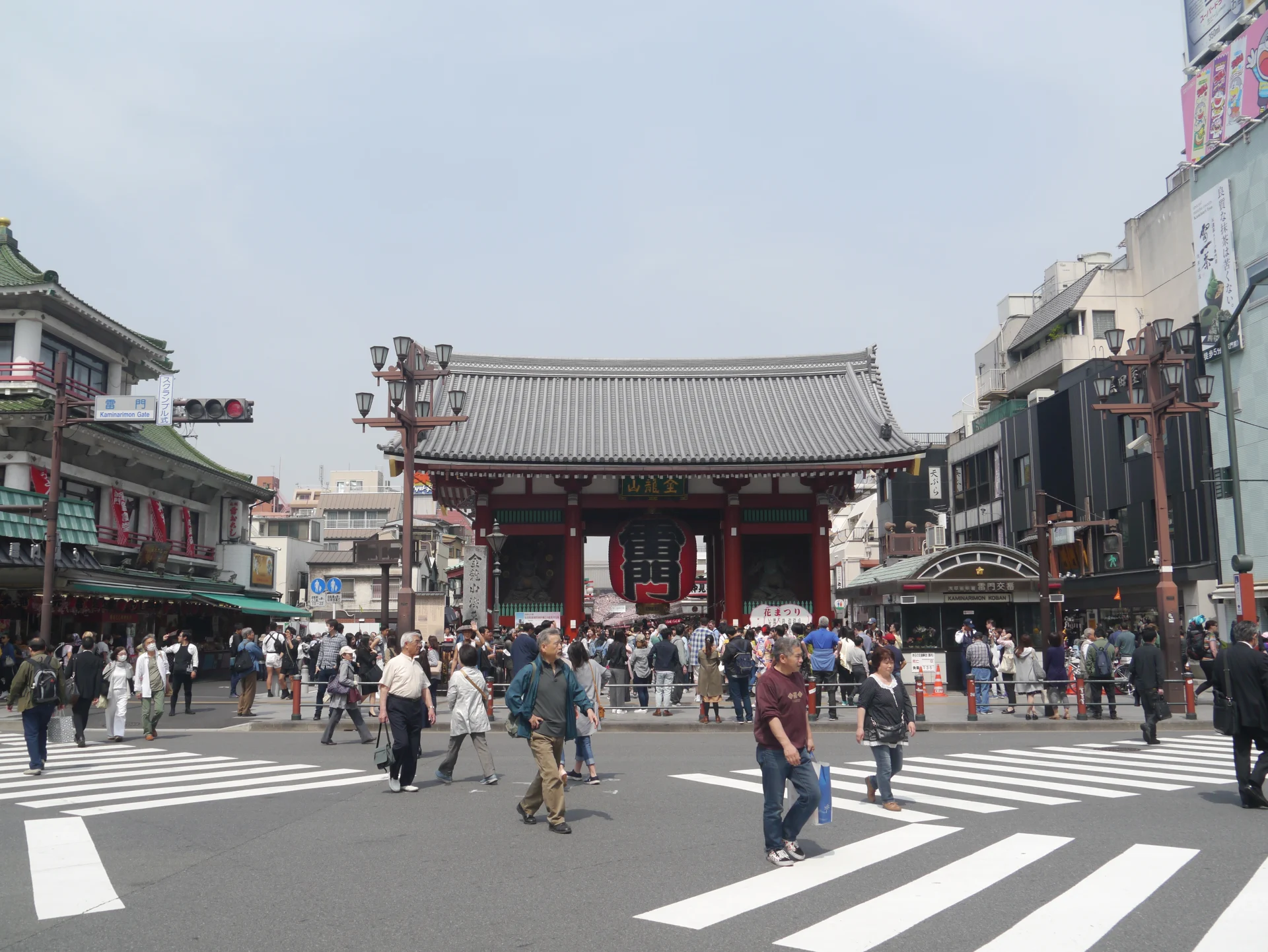
Choose between Meiji Jingu and Senso-ji for Tokyo hatsumode in 2027 by looking at your hotel and the kind of half-day you want. Meiji Jingu suits a western Tokyo base and a forested shrine approach. Senso-ji works well for an eastern Tokyo base and a visit centred on Asakusa. You do not need to visit both on New Year’s Day.
Hatsumode is the first shrine or temple visit of the New Year. A visit spanning December 31, 2026 and January 1, 2027 requires that season’s opening, crowd-control and transport notices. January 2026 arrangements are not a 2027 timetable.

Meiji Jingu or Senso-ji?
| Decision | Meiji Jingu | Senso-ji |
|---|---|---|
| Area | Harajuku and Yoyogi side of Tokyo | Asakusa |
| Religious setting | Shinto shrine | Buddhist temple |
| Good fit | Forest approach, worship, then rest or Harajuku | Worship followed by time in the Asakusa district |
| Time easily overlooked | The walk inside the grounds | New Year queues beyond the short station approach |
| Food planning | Check nearby holiday hours first | Nakamise shops and local restaurants set individual hours |


For anyone uncomfortable standing for long periods, an easy route back to the hotel matters more than choosing the most famous site. Daylight makes the approach easier to read, but does not guarantee small crowds.
Where to check 2027 opening arrangements
On Meiji Jingu’s hatsumode page, look for Reiwa 9, meaning 2027. A page labelled Reiwa 8 refers to 2026; its extended hours, garden entrances, amulet counters and prayer fees cannot be carried forward. The ordinary visiting-hours page is also separate from special New Year operation.
Senso-ji’s annual New Year prayer description describes the January 1–7 observance. It does not supply the 2027 entrance or Main Hall timetable. Check worship access, prayer reception, temple seals and shopping hours separately. Finalise a midnight plan only after finding the dated seasonal notice.
Meiji Jingu: the entrance is not the main shrine
The official access page warns that station-to-entrance walking estimates exclude at least another 10 minutes to the main shrine buildings. That is ordinary walking, before any New Year queue. A station next to the grounds does not make the entire visit a short stop.
Use the precinct map to understand the Harajuku, Yoyogi and Sangubashi approaches and locate facilities. It is a geography guide, not permission to ignore temporary crowd-control routes. Follow staff instructions rather than trying a path that is closed on the day.
As an itinerary choice, make the shrine your half-day anchor and decide on shopping or rest afterwards. The Inner Garden, museum and food outlets have their own operation; shrine access does not guarantee that every facility is open.
Senso-ji: specify which Asakusa Station
Senso-ji’s official access page lists Asakusa stations on Tobu, the Ginza Line, Tsukuba Express and the Toei Asakusa Line, with ordinary walks of around five minutes; the Toei listing specifies exit A4. These are different arrival points. Share the railway line and exact exit when meeting friends, not simply “Asakusa Station.”
The precinct guide helps you locate Kaminarimon, Nakamise, Hozomon and the Main Hall. New Year controls can change the approach, so do not assume Kaminarimon is always the only permitted entrance or walk against the queue for a photo. If shops are closed, complete worship and use a separately checked breakfast or lunch option instead of waiting outdoors for shopping to begin.
Worship etiquette differs
Meiji Jingu’s instructions describe two bows, two claps, prayer with hands together, then one bow. Senso-ji is Buddhist: its official introduction describes praying with joined hands at the Main Hall. Do not transfer the shrine-clapping routine to the temple.
Use the purification area according to its current layout and signs. Avoid intrusive photos of worshippers; Meiji Jingu also prohibits photos and video at its main sanctuary prayer area. Amulets, temple seals and formal prayer services have separate queues and reception arrangements. Paying for one is not a shortcut through the worship queue.
Make room for waiting, warmth and a change of plan
Do not put a prepaid lunch or intercity train immediately after the visit. Eat first, use the toilet, bring warm layers and a charged phone, and agree on a meeting point away from the main flow. Leave large luggage at your accommodation. For children or companions who dislike cold and crowds, a visit after a proper night’s sleep is often easier than midnight.
A weekday after New Year’s Day may be worth considering, but no hour is guaranteed queue-free. If the crowd exceeds what your group can comfortably manage, return another day rather than treating completion as an obligation.
For December 31, choose a return route supported by the current operator notice, or nearby accommodation with a checked street walk and overnight access. One JR service does not prove a connecting subway runs, and later last trains are not the same as all-night trains. A daytime January 1 visit and a confirmed lunch are enough for a meaningful New Year outing without spending the day crossing Tokyo.